









Product Quick Navigation
Get a Quote
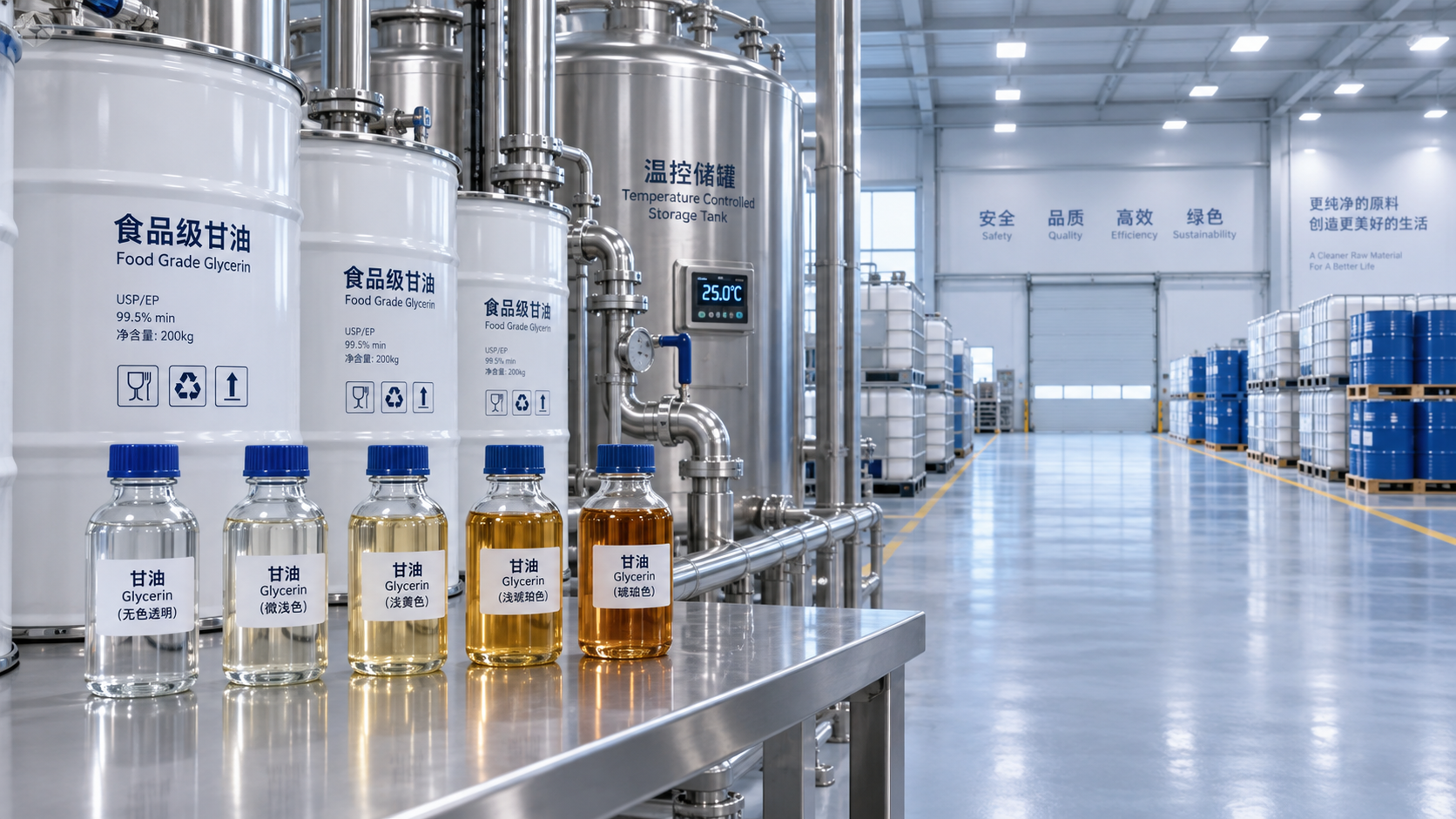
Why Does Glycerol Change Color During Storage?
Why does glycerol color change during storage? This question often arises when a shipment that was clear at loading arrives with a faint yellow, amber, or brown tint. For chemical buyers, distributors, formulators, and manufacturers, the concern is understandable. Glycerol is commonly expected to be transparent and colorless, especially when it will be used in pharmaceuticals, food processing, cosmetics, personal care, laboratory work, or high-purity industrial formulations. A color shift does not automatically mean that the material is unusable, but it should never be dismissed without investigation. The change may reflect storage conditions, package compatibility, contamination, or differences in glycerol grade and handling history.
In international supply chains, color can become a practical quality signal. A buyer may receive material after weeks in a container, through changing climates and repeated warehouse transfers. By then, the glycerol has experienced far more than the short period covered by a factory release test. Understanding what causes discoloration helps purchasing teams set realistic specifications, reduce avoidable claims, and choose storage practices that preserve product appearance and performance.
Glycerol Itself Is Usually Stable, but Its Environment May Not Be
Pure glycerol, also called glycerin, is a relatively stable, hygroscopic liquid. Under proper conditions, it should remain clear for a long time. However, commercial glycerol is not always chemically isolated from every trace component introduced during manufacturing, purification, transport, or repacking. Even very small amounts of organic residues, metal ions, residual salts, fatty matter, aldehydes, or process-derived impurities can contribute to gradual color development.
Glycerol can also absorb moisture from the air because of its strong affinity for water. Moisture uptake does not necessarily create color by itself, but it can alter the storage environment, dilute the material, support impurity reactions, or introduce contaminants through repeated opening of drums and tanks. The practical lesson is that discoloration is often not caused by one dramatic event. It is frequently the visible result of several minor factors acting together over time.
Heat Is One of the Most Common Contributors
High temperature is a familiar cause of glycerol yellowing during storage. Glycerol is sometimes warmed to improve pumping, unloading, or transfer, particularly in cold weather when its viscosity becomes difficult to manage. Controlled heating can be necessary, but prolonged exposure to excessive temperatures may accelerate oxidation, thermal degradation, and reactions involving trace impurities.
The risk is greater when a product remains in a heated storage system for extended periods rather than being warmed briefly for transfer. Uneven heating can make the situation worse. Material near a heating coil, steam trace line, or tank wall may reach temperatures far above the average tank temperature. Localized overheating can create a darker area that later disperses throughout the batch during circulation.
Buyers should therefore ask not only whether glycerol was heated, but how it was heated, for how long, and whether the temperature was monitored at more than one point. Direct flame heating, poorly controlled electrical heaters, and systems with stagnant zones deserve particular attention. Gentle, uniform warming with appropriate circulation is generally safer than allowing small portions of the product to become excessively hot.
Oxygen, Light, and Trace Metals Can Accelerate Discoloration
Oxidation is another important explanation for color change. Although glycerol does not oxidize rapidly under ordinary conditions, oxygen exposure can become more relevant when heat, light, or reactive contaminants are present. Repeatedly opening containers allows fresh air into the headspace. Partial drums stored for months may therefore be more vulnerable than sealed, full packages.
Metal contamination can also play a catalytic role. Iron, copper, and certain other metal residues may promote oxidation reactions or interact with impurities already present in the glycerol. Contamination can originate from transfer pumps, valves, pipework, rust particles, worn fittings, or unsuitable storage equipment. A product may leave the supplier in good condition but change after being handled through an unclean or incompatible downstream system.
Light exposure is usually less influential than heat or contamination, yet it should not be ignored. Transparent containers stored in direct sunlight can experience higher temperatures as well as light exposure. For this reason, glycerol should be kept away from windows, outdoor staging areas, and bright locations where packaging is exposed for long periods.
Packaging Is Part of the Quality Control System
When investigating why glycerol changes color during storage, packaging deserves as much attention as the liquid itself. New, clean drums or IBCs designed for chemical service are generally preferable to reused packaging with uncertain history. A container that previously held another chemical, oil, solvent, pigment, or cleaning agent may contain residues that are difficult to detect visually. Even a very small amount of carryover can alter color, odor, acidity, or downstream suitability.
Container closures matter as well. Damaged seals can permit moisture and oxygen ingress, while poor handling during repacking can introduce dust, fibers, rust, or foreign liquids. For bulk storage, tank material, gasket composition, pump seals, hoses, and filtration practices should be reviewed as one connected system. It is not enough for the main tank to be suitable if an old hose or corroded valve contaminates the product during transfer.
For sensitive applications, a documented packaging and loading protocol offers meaningful protection. This may include inspection of containers before filling, confirmation of product compatibility, sealed filling procedures, batch traceability, and retention samples. These controls are especially useful for export shipments where the buyer may not be able to inspect the material until long after dispatch.
Not Every Yellow Tone Means the Same Thing
A slight color change should be assessed against the agreed specification, intended use, and analytical results. Appearance alone is valuable, but it cannot identify the cause with certainty. A faint yellow cast may be linked to natural variation in raw material quality, while a more pronounced brown color may indicate stronger degradation, contamination, or unsuitable heat exposure. The trend matters: a stable pale shade is different from a product that continues darkening during storage.
Testing should be selected according to the application and grade. Useful checks may include color measurement, water content, odor, acidity or alkalinity, ash, density, refractive index, purity, and relevant impurity profiles. In regulated sectors, the applicable pharmacopoeia, food standard, or customer specification should guide the assessment. A shipment that meets one industrial requirement may still be unsuitable for a highly appearance-sensitive cosmetic or pharmaceutical formulation.
It is also important to compare samples correctly. Fresh material should be evaluated in clean, colorless glassware under consistent lighting. Looking through a thick plastic bottle, using different backgrounds, or comparing warm and cold samples can create misleading impressions. A retained sample from the original batch is often the best reference point when a quality discussion begins.
Storage Practices That Help Preserve Clear Glycerol
Good storage begins with a cool, dry, clean environment. Glycerol should be protected from unnecessary heat, direct sunlight, and repeated temperature cycling. Warehouses do not always need to be cold, but they should avoid conditions that cause prolonged overheating. If warming is required for pumping, use the lowest practical temperature and minimize residence time in heated equipment.
Keep containers tightly closed when they are not in use. Once a drum or IBC has been opened, avoid leaving it partially filled for long periods. Use clean, dedicated transfer equipment whenever possible, and ensure that hoses, pumps, and fittings are dry and free from residues. For bulk tanks, routine inspection for corrosion, sediment, water accumulation, and stagnant areas is worthwhile.
Stock rotation is equally important. First-in, first-out management reduces the chance that older inventory remains in difficult conditions while newer material is used first. Recording receipt date, opening date, storage temperature, and transfer history gives quality teams a clearer basis for tracing a color issue. These records can seem routine until a customer asks why one delivery differs from the last.
What Buyers Should Clarify Before Ordering
Color expectations should be discussed before the purchase order is issued, not after the product is received. Buyers should define the required glycerol grade, applicable standard, acceptable color range, packaging format, and intended application. If the material will be exposed to heat during the buyer’s process, that should also be communicated. A supplier cannot recommend suitable packaging or handling limits without understanding the real use case.
For export business, logistics planning is part of product protection. Long transit times, hot ports, container exposure, and seasonal temperature changes can affect appearance even when the material was compliant at loading. Shandong Huafeng Chemical Co., Ltd. supports overseas chemical buyers by coordinating product information, packaging considerations, export documentation, and responsive communication across supply chain stages. For glycerol, that coordination can help prevent avoidable misunderstandings between factory release conditions and arrival expectations.
If discoloration is observed, isolate the affected batch and review the full chain of custody: original certificate of analysis, retained sample, shipping duration, warehouse conditions, package integrity, heating history, and transfer equipment. This approach is more productive than assuming the issue began at one point. In many cases, the answer to why glycerol color changes during storage lies in the interaction between product quality, packaging, temperature, and handling discipline. Clear glycerol is not maintained by chance; it is maintained by consistent control from filling line to final use.
Send Us Your Inquiry Today
