









Product Quick Navigation
Get a Quote
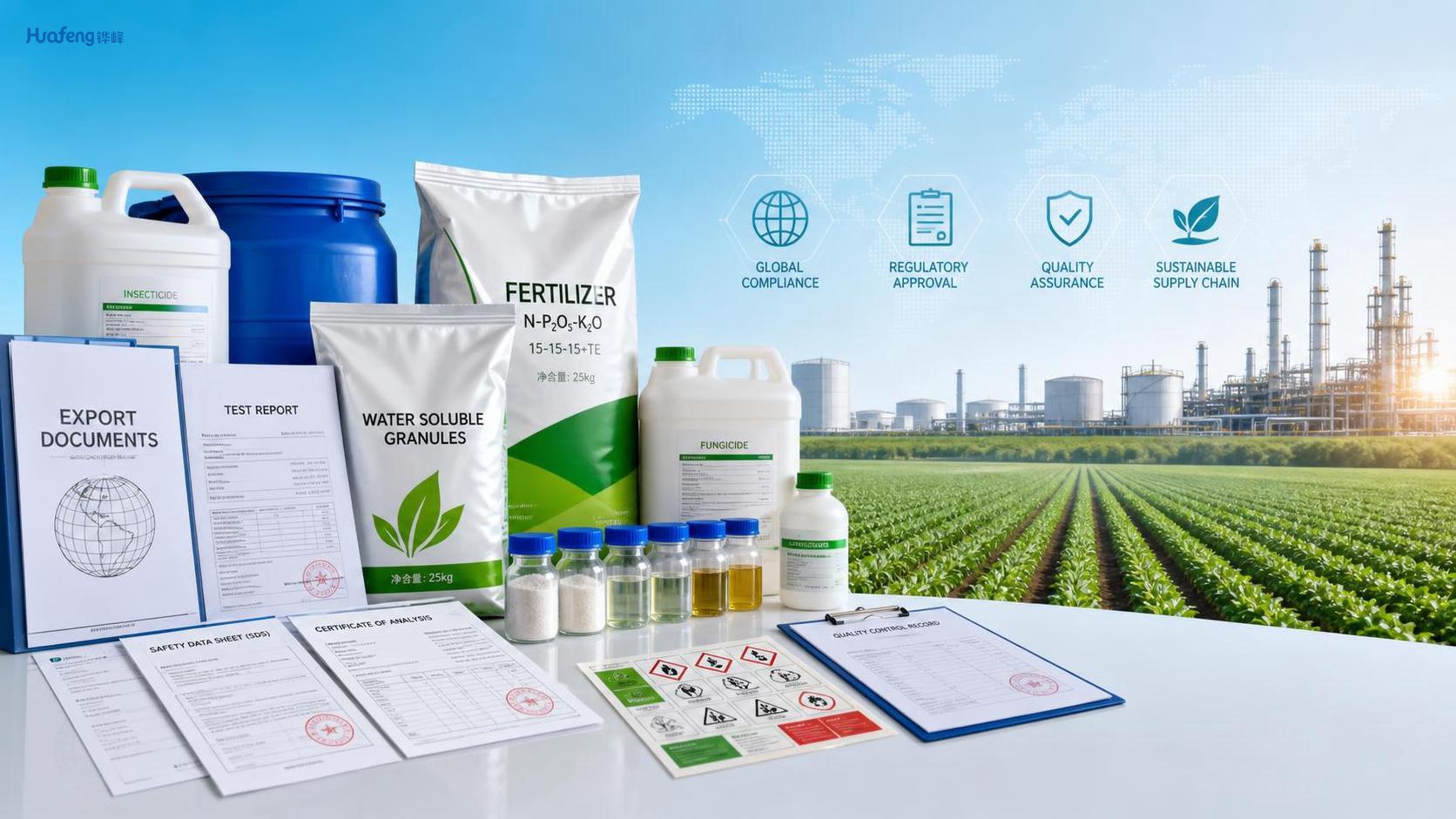
As global rules tighten and compliance expectations rise, Agricultural Chemical Solutions are undergoing a critical transformation. For business decision-makers, success now depends on balancing product performance, regulatory alignment, and supply chain resilience. In this shifting landscape, experienced chemical export partners with strong compliance capabilities and responsive service are becoming essential to maintaining market access and long-term competitiveness.
What used to be a fairly straightforward sourcing decision has become something much more strategic. In many markets, agricultural chemicals are no longer judged only by efficacy, price, or availability. They are being evaluated through the lens of residue restrictions, environmental impact, registration pathways, transport documentation, and supplier transparency. For importers, distributors, and manufacturers, this means the old model of simply finding a cost-competitive product is losing ground to a more complex standard: can the solution hold up under scrutiny from regulators, customers, and the supply chain itself?
Why the regulatory climate is changing so quickly
The pressure is coming from several directions at once. Governments are updating pesticide and plant growth regulator frameworks, food producers are setting tighter internal standards, and downstream buyers increasingly want traceable sourcing. On top of that, international trade has made compliance more layered. A product accepted in one market may face additional labeling, documentation, or registration hurdles in another.
This is especially relevant in the chemical industry, where regulatory differences between regions can alter commercial feasibility overnight. A formulation that seems viable during procurement discussions may become difficult to import if packaging classifications, impurity limits, or declaration requirements shift. That uncertainty is forcing companies to rethink how they evaluate Agricultural Chemical Solutions before contracts are signed, not after shipments are delayed.
Decision-makers are also recognizing that compliance is no longer a back-office issue. It affects inventory planning, margin control, customer trust, and speed to market. When the rules become stricter, the cost of choosing the wrong supplier rises sharply. One incomplete document set or one poorly handled export process can lead to clearance delays, rejected cargo, or damaged commercial relationships.
From product-first to risk-aware procurement
One of the biggest shifts in the market is that buyers are no longer looking only at what a product does; they are looking at how safely and consistently it can be brought to market. That may sound obvious, but in practice it changes nearly every part of the buying decision.
Instead of asking only whether an active ingredient meets technical specifications, procurement and strategy teams are asking broader questions. Can the supplier support changing registration needs? Are export documents handled accurately? Is there enough flexibility to respond when destination requirements change? How stable is the upstream supply situation? These questions are now central to competitiveness, especially in agricultural segments where timing, seasonal demand, and regulatory windows can all affect sales outcomes.
This shift has also raised the value of suppliers that understand the operational realities of cross-border chemical trade. A company that can coordinate products, documentation, communication, and shipping responsiveness offers more than supply. It reduces commercial friction. That distinction matters when procurement teams are under pressure to maintain continuity while avoiding regulatory surprises.
What tighter rules mean for Agricultural Chemical Solutions
In practical terms, stricter regulation is reshaping Agricultural Chemical Solutions in four main ways.
First, portfolio design is becoming more selective. Companies are reviewing which products remain commercially sustainable under current and expected regulations. Some products may still perform well in the field but become less attractive if approval pathways grow uncertain or stewardship obligations become too expensive.
Second, documentation quality is becoming a differentiator. Specifications, safety information, transport documents, and technical communication now play a larger role in sales execution. Even strong products can become difficult to move if the information around them is fragmented or inconsistent.
Third, formulation and application trends are evolving. Buyers increasingly favor solutions that fit lower-risk positioning, more precise usage, or niche agronomic value. In that context, plant growth regulators and specialized inputs can gain attention where they support yield quality, stress management, or more targeted crop strategies.
Fourth, supplier relationships are becoming longer-term and more collaborative. Rather than switching frequently on price alone, many buyers are looking for partners capable of adapting to market volatility. The conversation is shifting from “Who can quote fastest?” to “Who can still deliver reliably six months from now if regulations tighten further?”
The hidden cost of non-compliance in global sourcing
For senior decision-makers, the most serious risk is not always visible on the quotation sheet. A lower purchase price can be quickly offset by compliance-related disruption. Delays at customs, relabeling issues, port storage fees, rejected paperwork, or sudden re-sourcing needs can all erode profitability. In regulated categories, the wrong sourcing decision often creates indirect losses that are much larger than the initial cost gap.
There is also a commercial credibility issue. Distributors and brand owners depend on stable fulfillment to protect customer confidence during seasonal demand peaks. If a supplier cannot support regulatory consistency, downstream relationships become harder to defend. That is why compliance capability is increasingly treated as part of the product offering itself.
Many companies are now building internal sourcing frameworks that weigh risk in a more structured way. They assess supplier communication speed, export experience, product breadth, and the ability to provide clear technical support across markets. This is where experienced exporters stand out. They are better positioned to anticipate documentation requirements, coordinate shipment preparation, and reduce friction between purchasing and delivery.
How export service capability is becoming a competitive asset
As the market becomes more regulated, buyers need more than manufacturing access. They need a dependable bridge between production and international delivery. That is one reason companies such as Shandong Huafeng Chemical Co., Ltd. are drawing more attention from overseas customers. Based in Shandong Province, one of China’s major chemical industry hubs, Huafeng Chemical operates in an environment where product variety, industrial resources, and export demands meet every day.
For global buyers, the appeal of this kind of partner is not abstract. It lies in comprehensive foreign trade capabilities: the ability to manage communication efficiently, coordinate a broad product portfolio, understand compliance-sensitive processes, and respond when market conditions change. In a tighter regulatory era, responsiveness is not just about service attitude. It is about protecting timelines, avoiding avoidable mistakes, and keeping business moving.
This matters particularly in chemical sourcing because regulations do not stand still. Documentation standards, destination requirements, and handling expectations may shift between markets and even between shipment cycles. An export partner with practical experience can help buyers navigate these moving parts with less uncertainty.
Why specialized products are gaining attention
Another noteworthy trend is the growing interest in more targeted agricultural inputs rather than broad, one-size-fits-all approaches. As farming systems respond to climate variability, quality demands, and sustainability pressure, buyers are looking more closely at products that support crop physiology in specific ways.
That creates room for ingredients such as Abscisic Acid CAS#21293-29-8, which may attract interest in specialized agricultural programs where plant response management and precision application are increasingly important. In a stricter regulatory climate, such products are often evaluated not only for technical relevance but also for how clearly suppliers can support the surrounding export and compliance process.
This is a subtle but significant market change. Niche or advanced inputs are not automatically easier to commercialize than conventional products. In some cases, they require even more careful positioning, technical communication, and market-specific understanding. Buyers who approach these products strategically tend to focus on both agronomic fit and the supplier’s ability to support a smooth international transaction.
What business buyers should evaluate now
When reviewing Agricultural Chemical Solutions in today’s environment, it helps to move beyond checklist thinking. A few core evaluation areas can make the sourcing process more realistic and commercially sound.
One is regulatory adaptability. Not every supplier can react well when destination expectations evolve. Buyers should pay attention to whether a supplier communicates clearly about documentation, product details, and export procedures, especially across different markets.
Another is supply chain resilience. This includes production continuity, portfolio depth, and the practical ability to coordinate shipments under pressure. Agricultural demand cycles rarely wait for ideal conditions. Delays during key windows can create outsized consequences, so reliability matters more than ever.
Product range also deserves attention. A supplier with a broader portfolio may help buyers consolidate sourcing and reduce operational complexity. That can be especially useful when companies want to balance mainstream demand with more specialized products over time.
Finally, responsiveness should not be underestimated. In regulated trade, fast and accurate communication is not a courtesy; it is a risk-control tool. Questions about specifications, shipping arrangements, or destination requirements often need quick clarification. Slow responses can turn minor issues into operational problems.
The market is not simply getting stricter—it is getting smarter
It would be a mistake to view regulation only as a constraint. Yes, tighter oversight creates friction, but it also rewards more disciplined business models. Companies that improve compliance awareness, select export-capable partners, and build stronger sourcing processes are often better positioned than those still operating on short-term price logic.
In that sense, the future of Agricultural Chemical Solutions is not just about restriction. It is about refinement. Products, suppliers, and buyers are being pushed toward greater clarity, stronger documentation, and more deliberate market alignment. For decision-makers, that may be inconvenient in the short term, but it can lead to a healthier and more resilient operating model.
Suppliers that can combine product access with practical trade execution will likely become more valuable as this transition continues. Whether a buyer is sourcing established crop inputs or exploring options like Abscisic Acid CAS#21293-29-8, the market now rewards those who think beyond the immediate transaction.
The companies that adapt best will be the ones that understand a simple truth: in a tightly regulated global market, a chemical solution is no longer just a substance in a drum or bag. It is a package of performance, documentation, reliability, and trust. And for businesses trying to protect market access while staying competitive, that broader definition is quickly becoming the only one that matters.
Send Us Your Inquiry Today
