









Product Quick Navigation
Get a Quote
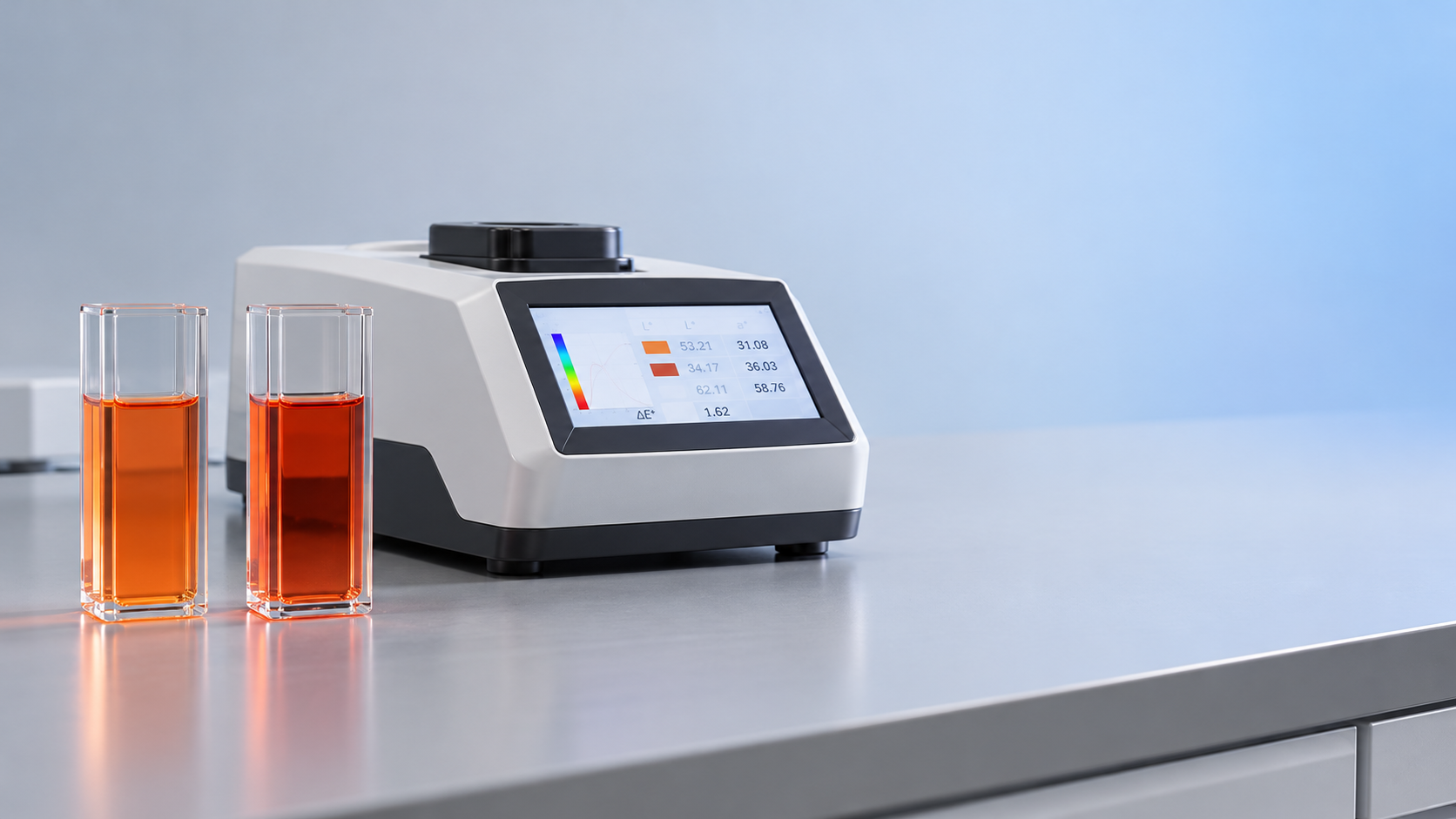
What Causes Color Variation Between Food Colorant Batches?
Even when food colorants meet the same specification, batch-to-batch shade differences can disrupt product consistency, delay shipments, and increase quality-control costs. Raw material variability, pigment concentration, processing conditions, and storage history can all contribute—but identifying the cause requires more than a visual comparison.
Can food colorant shade drift be corrected during production? Sometimes, particularly when the problem involves dosing, dilution, or incomplete dispersion. However, a correction that restores appearance does not necessarily resolve the underlying quality issue. Manufacturers need to distinguish an adjustable process variation from pigment degradation, an unsuitable formulation, or a material that should remain on hold.
The same specification does not guarantee the same finished-food color
A colorant specification may define identity, color strength, moisture, purity, and other relevant characteristics. Those limits serve a purpose, but they do not always describe how the ingredient will behave in a beverage, confectionery coating, dairy dessert, or baked product.
Two batches can fall within an agreed color-strength range while sitting at opposite ends of that range. At a fixed addition rate, the difference may become visible. Likewise, two materials with similar strength can differ in hue: one may appear slightly more yellow, while another appears redder. Increasing or reducing the dose cannot reliably eliminate that kind of difference.
The distinction matters commercially. A supplier may correctly report compliance, while a food manufacturer correctly reports an unacceptable finished-product appearance. The missing link is often an application-specific acceptance criterion, not necessarily a defective test or an incorrect certificate of analysis.
Where batch-to-batch variation begins
Raw materials and pigment composition
Botanical colorants can vary with crop variety, growing conditions, maturity, and extraction conditions. Standardization helps control these differences, but matching total pigment content does not necessarily produce an identical pigment profile. That distinction can affect both initial shade and subsequent stability.
Synthetic colors are not automatically free from variation. Differences in color content, moisture, permitted subsidiary coloring matter, and formulation can influence performance. For blended shades, small changes in the relative contribution of each component may shift the final hue even when the overall visual intensity looks similar.
Strength, carriers, and physical form
Commercial colorants may be supplied as powders, liquids, dispersions, emulsions, or lakes. Their performance depends on more than the name of the coloring substance. Carrier content, solids concentration, particle size, and dispersibility can all affect the result.
A liquid that has settled may deliver inconsistent concentration unless it is homogenized according to supplier instructions. A poorly dispersed powder may create specks or an apparently weak shade. With insoluble pigments and lakes, particle distribution and the surrounding food matrix can change light scattering. A stronger-looking sample is therefore not always evidence of higher pigment concentration.
Processing and storage history
Temperature, exposure time, oxygen, light, and moisture can alter susceptible colorants. The effect depends on the chemistry: anthocyanin shades are strongly pH-dependent, while carotenoid systems can be vulnerable to oxidation. Some colorants also interact with metals or other recipe ingredients.
This means a shade difference discovered when opening a new lot may not originate in its manufacture. Transport conditions, repeated opening, unsuitable storage, or an inadequately mixed container may contribute. Conversely, acceptable incoming material can develop a different shade after a longer heat treatment or a change in ingredient addition order.
Before changing the recipe, verify the comparison
Comparing two powders by eye is a weak basis for approving or rejecting a food colorant. Bulk appearance can differ without producing an equivalent difference in the finished food. The more useful question is whether both lots produce an acceptable result under the same controlled application conditions.
Prepare a reference lot and the incoming lot using the same water or food base, concentration, pH, mixing procedure, temperature, and holding time. For liquids, keep the measurement path length consistent. For opaque foods, control sample thickness, surface condition, and presentation. Bubbles, gloss, and uneven surfaces can distort comparisons.
Instrumental color measurement can then help separate lightness changes from shifts in hue or chroma. CIELAB values and a defined color-difference calculation are useful, but a reported ΔE value is incomplete without the measurement conditions and calculation method. Different formulas are not interchangeable, and there is no universal acceptance threshold suitable for every food.
Agree on an application-relevant tolerance and check visual appearance under defined lighting. For clear solutions, an appropriate absorbance or spectral comparison may help distinguish reduced strength from a changed spectral profile. A single-wavelength strength test alone may miss a meaningful hue difference.
Can food colorant shade drift be corrected during production?
Correction is most defensible when the cause is understood, the adjustment is permitted, and a controlled trial shows that the finished product remains compliant and stable. It should follow an approved deviation or rework procedure rather than an operator’s visual judgment alone.
- A strength difference: A dose adjustment may work if the hue profile is unchanged. Where strength measurements are comparable and response is approximately proportional, the reference dose multiplied by reference strength divided by incoming strength can provide a starting estimate. Confirm it in the application; it is not a universal production formula.
- Incomplete dispersion: Correcting premixing, addition sequence, or mixing conditions may restore uniformity. More shear is not always better, especially where it changes the food structure or destabilizes an emulsion.
- A process-related pH difference: Restoring the validated recipe pH may recover the intended shade for pH-sensitive systems. Changing pH solely to chase color can affect flavor, texture, preservation, and process safety.
- A genuine hue shift: An approved blend adjustment may be feasible, but it requires formulation control and regulatory review. Adding more of the original colorant may simply make the wrong shade darker.
Once a colorant has chemically degraded, adding fresh pigment does not reverse that degradation. Likewise, unexplained discoloration associated with contamination, abnormal odor, or packaging damage is not a routine shade-adjustment problem. Hold the affected material and investigate before considering release.
The final check must happen after the relevant processing step. A corrected beverage before heating may not match after pasteurization. A confectionery mass may change appearance as it cools or crystallizes. Where shelf-life stability matters, an immediate visual match is only part of the approval decision.
Build a short investigation that separates material from process
When shade drift interrupts production, changing several variables at once creates more uncertainty. A paired trial is usually more informative: run the retained approved lot and the suspect lot through the same laboratory preparation, then compare their behavior against the production batch.
If both colorant lots behave similarly in the laboratory but production differs, investigate the food base, dosing equipment, mixing, and thermal history. Check actual additions against recorded additions, including dilution water and premix concentration. A change in milk solids, syrup color, turbidity, or other ingredients may explain the apparent colorant problem.
If the suspect lot differs under controlled conditions, review its certificate of analysis, manufacturing date, storage history, and test method with the supplier. Ask whether formulation, carrier, raw-material source, or manufacturing conditions changed. A passing certificate does not make those questions irrelevant.
Record the original result, trial adjustments, final evaluation, and release decision. Without that record, a successful correction can become an undocumented recipe change—and the next batch may require the same investigation again.
Make purchasing specifications useful on the production floor
A purchasing specification should connect supplier testing to the intended food application. Identify the exact grade and formulation, the basis for color-strength reporting, preparation conditions, and any agreed application test. Define reference-sample storage and replacement procedures as well; an aging reference can turn an acceptable new lot into an apparent failure.
Regulatory suitability needs separate confirmation. Permission to use a colorant can depend on the destination market, food category, use level, and labeling requirements. An adjustment that increases dosage or introduces another coloring substance must be checked against the applicable requirements. Commercial availability or approval elsewhere is not sufficient evidence.
For international supply chains, these controls also depend on clear communication across commercial and technical teams. Shandong Huafeng Chemical Co., Ltd., based in Shandong Province, operates as a chemical export service provider with a broad product portfolio. In a food-colorant sourcing discussion, the practical value of that coordination lies in obtaining grade-specific documentation, clarifying destination requirements, and communicating application expectations before shipment—not simply matching product names.
The next purchase order should therefore resolve three points: what shade performance is acceptable, how it will be measured, and what happens if a lot passes its chemical specification but fails the agreed application test. Those decisions make incoming inspection more useful and give production a clear boundary between an authorized correction and a batch that needs to stay on hold.
Send Us Your Inquiry Today
