









Product Quick Navigation
Get a Quote
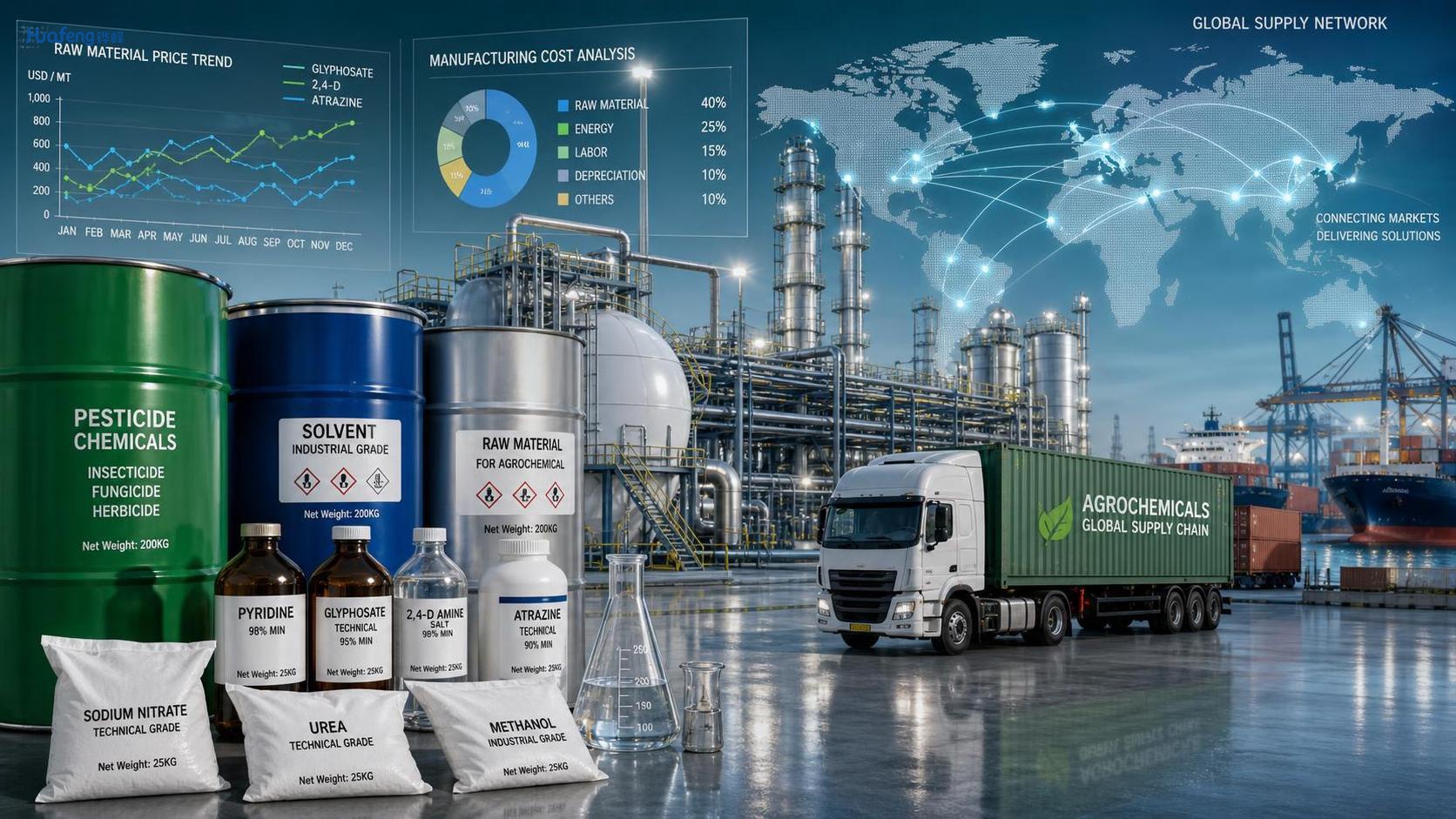
When raw material costs swing sharply, agrochemicals pricing rarely moves in a straight line. Procurement teams often expect a direct pass-through: technical material goes up, finished formulation follows; feedstock softens, supplier offers should ease. In practice, quotations respond to a wider set of pressures, and the timing of those pressures matters as much as their size. For buyers managing crop protection portfolios across seasons and regions, the real task is not predicting one number. It is understanding which cost drivers are temporary, which are structural, and which ones suppliers can or cannot absorb.
That distinction matters because agrochemicals are not bought in isolation. Purchase decisions sit between farm demand cycles, registration requirements, inventory exposure, shipping constraints, exchange-rate risk, and supplier reliability. A low offer can look attractive until it arrives late, fails a specification review, or becomes unusable in a target market because documentation is incomplete. In volatile periods, the cheapest quote is often the least informative data point.
Raw materials matter, but not all raw materials matter equally
In many procurement discussions, “raw material cost” is treated as a single variable. In reality, agrochemical cost structures vary significantly by active ingredient, synthesis route, formulation type, and packaging format. Some products are highly exposed to upstream intermediates derived from petrochemical chains. Others are more sensitive to specific chlorination, nitration, phosphorus, fluorination, or solvent-related inputs. The result is that two herbicides or insecticides may react very differently to the same upstream market event.
For procurement teams, the first practical question is whether a price move is being driven by broad feedstock inflation or by a bottleneck in a specific intermediate. Broad inflation tends to affect multiple suppliers at once and can justify a market-wide price reset. A bottleneck in one key intermediate may create sharp increases for selected products while leaving adjacent categories relatively stable. Buyers who do not separate these scenarios can overreact, either locking in too much inventory or accepting unjustified increases.
There is also a timing issue. Suppliers may be consuming older raw material inventory purchased at different cost levels. That means finished goods prices can lag upstream changes by weeks or months. During a falling market, buyers often expect immediate discounts that suppliers are not yet able to reflect. During a rising market, some suppliers push increases faster than their actual cost base would suggest. Understanding stock cycles at the supplier level becomes part of price evaluation.
Energy and utilities are often the hidden multiplier
In chemical manufacturing, feedstock is only part of the equation. Energy-intensive reactions, steam consumption, cooling demand, wastewater treatment, and emissions control can materially change the cost base. This is especially relevant in the production of technical-grade agrochemicals and certain intermediates where process conditions are tightly controlled and utility costs are not trivial overheads.
Natural gas, electricity, coal-linked utility costs, and regional power restrictions can all influence quotations. In some markets, environmental compliance has made utility costs less predictable because treatment, recovery, and operating controls are stricter than in previous years. A buyer reviewing offers from different origins should therefore avoid assuming that lower raw material prices automatically translate into lower manufacturing costs. If a production region faces power curtailment, elevated steam costs, or compliance-related operating downtime, pricing may remain firm even when upstream commodities soften.
This is one reason procurement teams should compare offers with an eye on manufacturing geography, not just supplier name. Two suppliers selling the same active ingredient may have different exposure to local energy pricing, industrial park operating rules, and environmental inspection intensity.
Capacity utilization changes pricing faster than many buyers expect
Agrochemicals markets are highly sensitive to operating rates. When plants run below efficient utilization, fixed costs are spread over fewer tons, and suppliers become more selective about which orders they accept. When capacity opens up after maintenance, regulatory interruption, or weak demand, price competition can return quickly. Neither trend is visible if buyers look only at feedstock charts.
Capacity utilization is affected by more than maintenance schedules. Export demand, domestic planting seasons, formulation order patterns, and working capital conditions all influence whether a producer is eager to move volume or reluctant to discount. In some cases, a supplier with stable production but weak cash flow may offer aggressive pricing for near-term shipment. In other cases, a producer with full order books may resist negotiations even if input costs are easing.
For purchasing managers, this means supplier behavior is often a market signal. Widespread refusal to hold offers, shorter validity periods, or volume allocation language can indicate tightening availability before formal price increases become visible. On the other hand, longer validity, flexible loading windows, and willingness to negotiate payment terms can suggest softening demand conditions.
Logistics costs can reverse the benefit of lower ex-works prices
In cross-border chemical trade, procurement cost is not the same as manufacturing cost. Ocean freight, inland transport, container availability, port handling, dangerous goods surcharges, insurance, and customs-related delays can alter the landed cost materially. This is particularly true for products classified as hazardous, temperature-sensitive, or subject to special packaging and documentation requirements.
When buyers compare suppliers, they often focus on FOB or ex-works levels and underestimate freight volatility. Yet during periods of shipping disruption, the logistics component can erase a nominal raw material decline. The effect is more pronounced for lower-value, higher-volume products, where freight makes up a larger share of the delivered cost.
There is also a service risk dimension. A supplier offering an attractive price but lacking export coordination capability may create hidden cost through delayed documentation, missed vessel cut-offs, or compliance issues in dangerous goods declaration. For agrochemicals procurement, this is not a secondary concern. A shipment that misses the application season can become more expensive than one purchased at a higher unit price but delivered on time.
Exchange rates influence both quoted price and supplier willingness
Currency movements do not affect all parties equally. Export-oriented suppliers may price in U.S. dollars while buying many inputs and paying operating expenses in local currency. A favorable exchange rate can temporarily support offer stability even when domestic costs rise. The reverse can also happen: a supplier may push export price increases not because production cost has changed sharply, but because currency movement has reduced margin comfort.
For buyers, exchange-rate exposure works in two directions. It affects the competitiveness of imported product versus regional alternatives, and it changes the real purchasing cost after internal currency conversion. Procurement teams that only negotiate nominal dollar prices may miss the opportunity to time purchases around currency windows or use contract structures that reduce volatility.
In volatile markets, price discussions should therefore include offer validity, currency basis, and adjustment logic. If a supplier cannot clearly explain whether a new quotation is driven by feedstock, utilities, exchange rate, or freight, the buyer has limited visibility into whether the increase is likely to persist.
Regulatory pressure reshapes cost more slowly, but often more permanently
Among all pricing drivers, regulation is one of the most misunderstood. It may not cause daily or weekly movements like solvents or freight, but it can reset the cost floor of the market. Environmental enforcement, safety inspections, registration requirements, labeling rules, packaging standards, and residue-related market restrictions all influence the economics of supplying agrochemicals internationally.
For example, tighter environmental and safety enforcement can increase operating costs through capital upgrades, lower effective run rates, or temporary shutdowns. Export compliance requirements can add cost in documentation, testing, classification, and packaging control. In destination markets, product registration and permitted use conditions may limit substitution options, reducing buyer flexibility when one source becomes expensive.
This is why procurement decisions should separate “available product” from “usable product.” A lower-cost alternative that lacks the right dossier support, labeling conformity, or destination-market acceptance is not a true price benchmark. Especially in crop protection, compliance failures can create larger downstream losses than the initial unit-price difference.
Formulation, packaging, and specification changes are often overlooked cost drivers
Buyers sometimes track the price of technical material closely but pay less attention to how formulation and packaging choices affect total cost. Yet emulsifiable concentrates, suspension concentrates, water-dispersible granules, and other formulations carry different solvent, adjuvant, processing, and quality-control demands. Changes in packaging material costs, especially for drums, HDPE containers, liners, labels, and outer cartons, can also move final prices in ways that are not obvious from active-ingredient trends alone.
Specification requirements matter as well. Tighter impurity limits, customized packaging, multilingual labels, special palletization, or customer-specific QC protocols all add cost. From a procurement perspective, it is risky to compare offers that appear similar but are built on different specification assumptions. A lower quote may simply exclude testing scope, packaging quality, or documentation standards that another supplier has already included.
Inventory strategy can amplify or soften price volatility
Price volatility becomes a procurement problem when inventory planning is weak. Buyers who purchase only on spot indications are more exposed to short-term swings and supplier opportunism. Buyers who overbuild inventory during a temporary spike risk carrying expensive stock into a falling market. In agrochemicals, this balancing act is more difficult because demand is seasonal and shelf-life management can restrict flexibility.
The better approach is usually not to “guess the bottom,” but to align purchasing rhythm with actual market structure. If supply is concentrated, registration limits source substitution, and lead times are long, waiting for a perfect price can create more risk than value. If supply is fragmented, logistics are stable, and input cost declines are broad-based, staggered buying may be safer than committing too early.
Procurement teams should also distinguish strategic products from transactional ones. Core molecules tied to key crop programs or contract obligations deserve a different buying model than interchangeable, non-critical items. The pricing question is not only “Is this quote high?” but “What is the cost of being wrong if supply tightens?”
What buyers should ask suppliers when prices move unexpectedly
When a quotation changes materially, the most useful response is not immediate resistance but targeted questioning. Buyers should ask which cost component changed, whether the change affects the whole product line or specific grades, what inventory position the supplier is working through, and how long the new level is expected to hold. They should also confirm whether any assumptions changed in freight, packaging, payment terms, or specification scope.
Good suppliers can usually explain price movement in operational terms. Weak explanations often rely on vague references to “market conditions” without identifying the driver. That is a warning sign, especially in export trade where hidden risk may sit outside the unit price.
It is also reasonable to ask about plant operating status, delivery queue, and export documentation readiness. In volatile markets, these factors influence procurement value as much as a narrow price concession.
A practical pricing view: total landed, compliant, on-time cost
For agrochemicals procurement, the most reliable pricing lens is not the lowest quoted number but the total landed, compliant, on-time cost. That includes manufacturing cost drivers, logistics, currency exposure, quality consistency, documentation readiness, and the supplier’s ability to deliver under changing market conditions. Procurement teams that evaluate only ex-works price are often forced to pay later through delay, rework, or non-compliance.
This is where experienced export-oriented chemical suppliers can create real value, not by eliminating volatility, but by making it more manageable. In a market shaped by fluctuating feedstocks, compliance pressure, and shifting logistics conditions, supplier capability in communication, documentation, and execution becomes part of the price equation.
Raw material fluctuations will continue to influence agrochemicals pricing, but they are only one layer of the procurement decision. Buyers who track upstream inputs, energy and freight costs, operating rates, exchange rates, and regulatory constraints together are better positioned to challenge unjustified increases, recognize genuine supply risk early, and build sourcing strategies that protect both margin and continuity.
Send Us Your Inquiry Today
