









Product Quick Navigation
Get a Quote
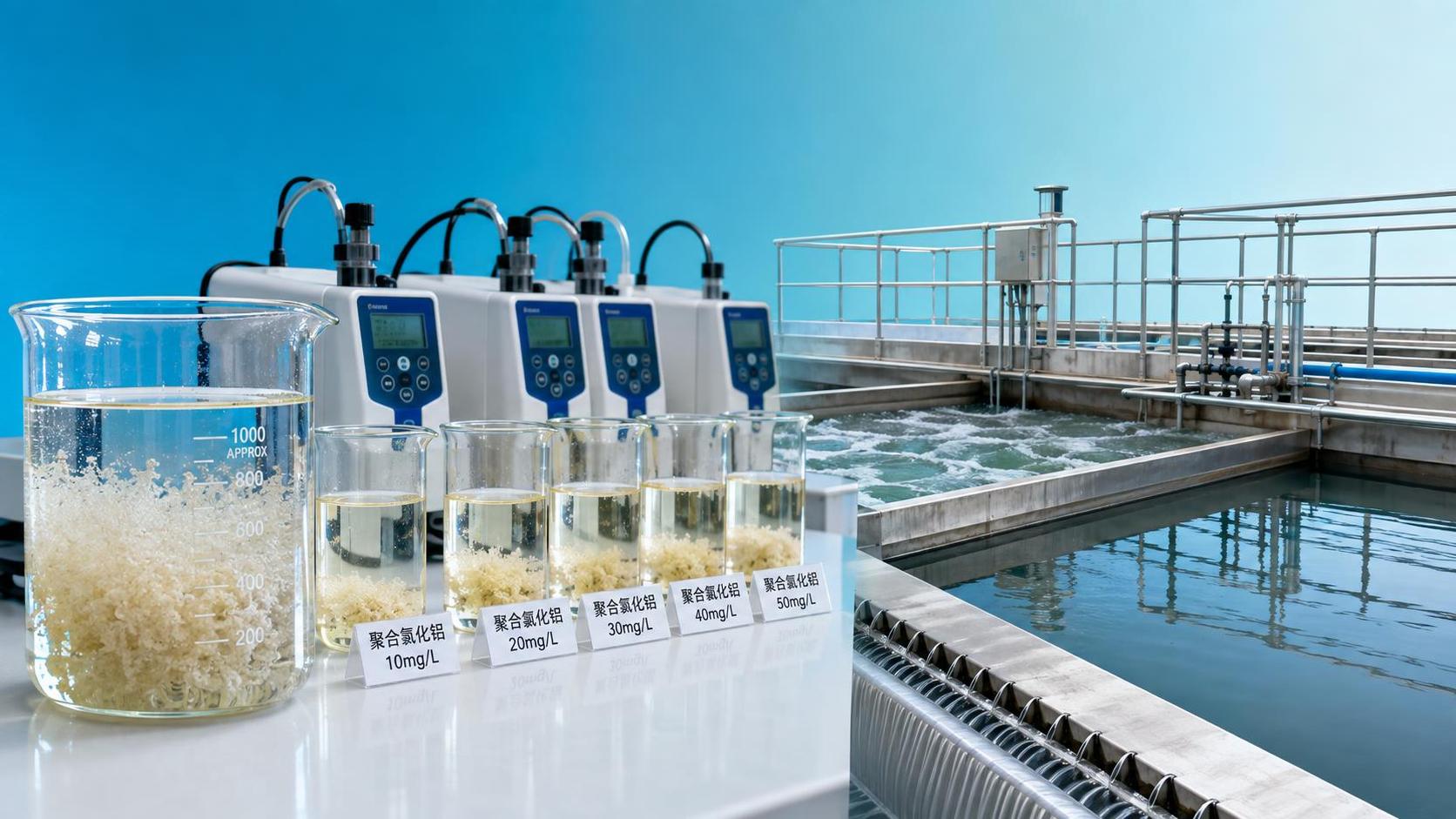
When clarification drops, treat it as a process problem first
A poor result after adding Polyaluminium Chloride can look like a product failure: turbidity remains high, flocs are weak, settled water deteriorates, or filters begin loading faster than usual. In many cases, however, the coagulant is being asked to work outside the conditions under which it can form and retain a usable floc.
For an operator, the immediate question is not simply whether to increase the dose. A higher dose may restore performance in some raw waters, but it can also produce overdosing, residual haze, pin floc, increased sludge, unstable pH, and unnecessary chemical consumption. The practical response is to identify where the coagulation sequence is breaking down: charge neutralization, rapid dispersion, floc growth, settling, or filtration.
Polyaluminium Chloride works by destabilizing fine suspended particles and helping them aggregate into settleable or filterable flocs. That outcome depends on the raw-water characteristics, PAC grade and concentration, dose point, mixing energy, pH and alkalinity, temperature, and any downstream polymer program. A change in any one of these conditions can make a previously reliable setting ineffective.
Start with the appearance of the failure
The water and floc appearance can narrow the investigation before large dose changes are made. Operators should observe the rapid-mix zone, flocculation basin, clarifier, and filtered-water quality together. Looking only at final turbidity can hide the actual source of the problem.
- No visible floc after dosing: The PAC dose may be too low, the chemical may not be dispersing quickly enough, the pH may be unsuitable, or the incoming particles may have changed substantially.
- Fine floc appears but does not grow: Check flocculation energy, detention time, coagulant aid dose, temperature, and whether shear is breaking early floc apart.
- Large but fragile floc forms and then disappears: Excessive mixing, pump shear, long transfer lines, sharp valves, or an excessive polymer dose can be responsible.
- Floc settles poorly or rises in the clarifier: The issue may involve sludge blanket control, hydraulic loading, gas formation, or a floc density problem rather than PAC dose alone.
- Clarifier water looks acceptable but filters foul quickly: Small carryover floc, poor settling, excessive coagulant or polymer, or a shift in particle size may be reaching the filters.
This visual check should be paired with basic operating records. Compare current raw-water turbidity, pH, alkalinity, conductivity where relevant, temperature, flow, PAC feed rate, solution strength, polymer feed, and settled-water turbidity with the last period of stable operation. A dose expressed only as pump speed or stroke length is difficult to interpret when flow or solution concentration has changed.
Do not correct an unknown dose with more chemical
Many dosing problems begin with an unreliable calculation. PAC may be delivered as a liquid of varying active content, or it may be diluted on site before use. If the feed system is calibrated by volume without confirming the actual solution concentration and process flow, the apparent dose can drift even when the pump setting has not changed.
The useful comparison is mass of commercial PAC product, or preferably mass of active component according to the site’s control method, per unit volume of water treated. The calculation must use the current plant flow, not a design value or a nominal flow. Flow changes can be large enough to turn a normal dose into an underdose during a peak event, particularly where chemical feed pacing is not linked correctly to the flow signal.
Before changing the target dose, check these practical points:
- Confirm that the day tank contains the intended PAC solution and that no dilution error occurred during make-up.
- Verify pump output by timed collection or another site-approved calibration method. A pump can run without delivering its expected volume because of air locking, suction restrictions, worn tubing, poor priming, or a sticking check valve.
- Inspect the injection quill or feed line for scaling, plugging, leaks, or a point of discharge that has moved out of the main flow path.
- Confirm that the control system uses the correct flow input, units, setpoint, and chemical concentration factor.
- Review whether the product was changed, including its concentration, basicity, storage history, or dilution instructions.
These checks matter because a chemical feed problem can imitate a raw-water problem. Increasing the setpoint without confirming delivery may only conceal the fault until the pump suddenly returns to normal output and causes an overdose.
Use jar testing to identify a dose range, not a single magic number
A jar test is most useful when it reproduces the plant’s decision sequence. Test the actual raw water, use the same PAC solution basis used at the plant, apply comparable rapid mixing and flocculation conditions, and evaluate settled water after a meaningful settling period. A test that uses clean laboratory water, arbitrary mixing, or only one dosage point can generate a misleading answer.
Run a dose series spanning below and above the normal operating dose. The aim is to find the lowest dose that consistently produces acceptable clarification and stable floc, while leaving room for normal raw-water variation. Include a blank sample where appropriate. If a coagulant aid is used, first establish the PAC range, then test polymer changes within that range. Changing both chemicals at once makes the results difficult to interpret.
The clearest jar is not always the best plant setting. Watch how rapidly floc appears, whether it remains intact during gentle handling, its settling behavior, and whether the clarified sample contains fine suspended material. A high PAC dose can create a visually rapid response but produce a light, poorly settling floc or create conditions that destabilize performance downstream.
If every jar remains poor across a reasonable PAC range, do not assume the product is weak. Investigate pH, alkalinity, raw-water chemistry, mixing, and the presence of interfering substances. A meaningful jar-test result is a process diagnostic, not merely a dose recommendation.
pH and alkalinity can limit PAC before the dose does
Polyaluminium Chloride hydrolyzes in water and consumes alkalinity as it coagulates. The degree of pH change depends on the raw water, PAC formulation, dose, and other treatment chemicals. Where alkalinity is low, an otherwise reasonable dose can depress pH enough to weaken coagulation or create inconsistent results from one shift to another.
The required pH range is not identical for every water source or PAC grade. Surface water with natural organic matter, groundwater with mineral turbidity, industrial process water, and wastewater each behave differently. For that reason, operators should use site-established operating limits and confirm performance through controlled testing rather than applying a universal pH target.
When PAC performance changes after a raw-water event, compare pH and alkalinity before and after coagulation. A declining post-dose pH, weak floc, and a need for steadily increasing dose can point to inadequate buffering. In that situation, adjusting alkalinity or pH upstream may be more effective than continuing to increase PAC.
There is also a practical sequencing issue. If lime, caustic soda, sodium bicarbonate, acid, oxidant, or another conditioning chemical is added close to the PAC point, inadequate contact time or local concentration gradients can alter the reaction. Chemical addition points should be assessed as a sequence, not as isolated feed systems.
Mixing failures are often mistaken for chemical failure
PAC needs rapid, uniform dispersion immediately after injection. If it enters a slow-moving channel, a dead zone, a poorly mixed tank, or a line where it contacts only part of the flow, some water receives too much coagulant while other water receives too little. The average calculated dose may look correct while clarification remains erratic.
Rapid mixing should distribute the chemical quickly without creating persistent shear that damages developing floc. After that, flocculation needs controlled, progressively gentler energy so collisions can build larger particles. Too little energy leaves particles separated; too much energy produces floc that forms and breaks repeatedly.
Common warning signs include floc appearing only near the injection point, uneven floc size across a basin, sudden changes after a mixer maintenance event, or improved performance when flow is lower. Inspect mixer operation, impeller condition, baffles, hydraulic short-circuiting, and any new pumping arrangement between coagulation and clarification.
When a polymer aid is used, its injection point deserves separate attention. Adding polymer before PAC has been dispersed can reduce effectiveness. Adding it where mixing is too violent can shear the polymer and destroy the bridging effect. Excess polymer can create stringy or floating solids, interfere with settling, and accelerate filter fouling.
Raw-water changes can shift the correct operating window quickly
A stable PAC dose is usually tied to a stable water source. Storm runoff, seasonal turnover, algae, color, organic matter, fine clay, industrial discharge variation, recycled process streams, salinity changes, and temperature shifts can all alter coagulation behavior. Turbidity alone does not describe these changes. Two waters with the same turbidity can require very different treatment because their particle charge, particle size, dissolved organic content, and alkalinity differ.
Cold water is a frequent source of slow or weak flocculation. Lower temperature can slow reaction and floc growth, while viscosity changes can affect mixing and settling. The correction may involve more flocculation time, adjusted mixing intensity, a modified coagulant-aid program, or a revised PAC dose. Adding a large PAC increment without testing may increase sludge while giving little improvement.
High organic content can also create a confusing response. The water may show color reduction but leave fine particles, or it may demand more coagulant while producing poor settling. In these conditions, jar testing should compare several PAC doses and, where permitted by the treatment design, pH or alkalinity adjustments. The goal is to establish whether the raw-water change has moved the plant outside its normal operating window.
A practical recovery sequence for operators
When clarification degrades, make one controlled correction at a time. A disciplined sequence avoids the common cycle of increasing PAC, increasing polymer, changing pH, and then being unable to tell which action helped or harmed performance.
- Check raw-water flow, turbidity, pH, alkalinity, temperature, and visible changes in the source water.
- Confirm actual PAC delivery: tank concentration, pump calibration, suction condition, feed line integrity, and injection point.
- Observe rapid mixing, flocculation, and clarifier behavior before adjusting chemicals.
- Run a focused jar-test series using current raw water and the current treatment chemical solutions.
- Adjust PAC within the tested range, then reassess settled-water quality and filter response.
- Only after PAC conditions are stable, optimize polymer or other downstream aids if they are part of the process.
- Record the final operating conditions so the response can be repeated during the next similar raw-water change.
A sudden failure after receiving a new PAC delivery should also be investigated methodically. Check product identification, storage conditions, solution preparation, and feed calibration first. If the process conditions have not changed and a controlled comparison still shows a different response, retain samples and follow the site’s supplier-quality procedure. Product evaluation is more reliable when it is separated from unresolved dosing and mixing variables.
Reliable coagulation comes from controlling the full treatment sequence: correct chemical delivery, suitable water chemistry, fast dispersion, protected floc growth, and prompt recognition of raw-water changes. Once those conditions are visible in routine operating data, PAC dosing becomes a manageable adjustment rather than a recurring trial-and-error exercise.
Send Us Your Inquiry Today
