









Product Quick Navigation
Get a Quote
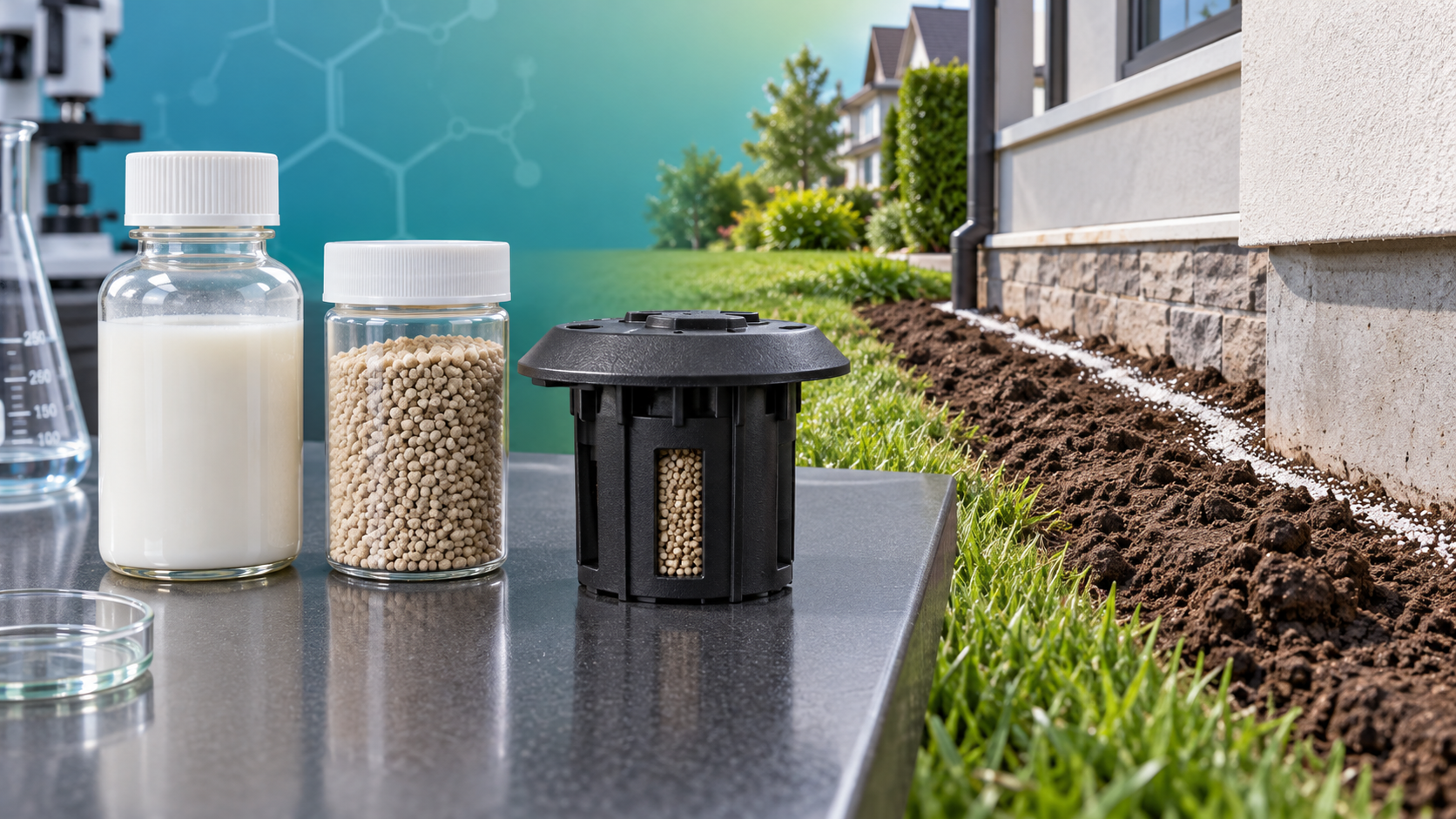
Fipronil Applications and Formulation Considerations for Professional Pest Control
Fipronil is a phenylpyrazole insecticide frequently assessed for professional pest control where broad activity, low-dose performance, and residual control are relevant. Its value is not simply that it kills susceptible insects. In practical programs, its performance depends on whether the active ingredient is delivered to the right location, remains available long enough, and fits the operating, safety, and regulatory limits of the treatment site.
For technical evaluators, the key question is rarely “Is Fipronil effective?” A better question is: “Which registered Fipronil formulation can reliably solve this pest problem in this environment, using this application method, under this market’s regulatory requirements?” That shift matters because a formulation suitable for a dry structural void may be unsuitable for a food-handling area, an exterior perimeter, or a bait-based termite program.
A sound evaluation therefore connects pest biology, formulation chemistry, application logistics, residue expectations, environmental exposure pathways, and supplier documentation. Treating these as separate purchasing topics often leads to avoidable field problems later.
Where Fipronil Fits in Professional Control Programs
Fipronil acts primarily on insect nervous-system ion channels associated with gamma-aminobutyric acid (GABA) signaling. This mode of action supports its use against a range of target insects, but it also places resistance management firmly on the evaluation agenda. Repeated reliance on one mode of action, especially where treatment coverage is inconsistent or bait acceptance is poor, can create selection pressure. Product choice should therefore be considered alongside sanitation, exclusion, monitoring, and rotation or integration with other approved control measures.
Professional applications commonly fall into several distinct use patterns. In termite management, Fipronil may be evaluated for soil treatment around structures, localized treatment of known entry points, or bait systems designed around colony-level exposure. The formulation and label directions determine whether a product is intended for one of these uses; active ingredient identity alone does not establish interchangeability.
For ants and certain household crawling insects, bait formulations can be attractive when insects must carry or share the active ingredient within a colony. Here, palatability, bait matrix stability, placement discipline, and competing food sources may influence the result as much as the nominal Fipronil concentration. A technically strong bait can underperform if deployed near attractive food residues or in locations with moisture conditions that degrade the matrix.
In perimeter or crack-and-crevice programs, liquid concentrates, suspensions, or granular presentations may be considered depending on the label, surface type, and treatment objective. These uses demand close attention to runoff potential, non-target exposure, and the difference between a residual barrier concept and a treatment that requires insects to contact a specific harborage zone. Outdoor perimeter treatment is not a substitute for correcting vegetation contact, gaps around service penetrations, or moisture conditions that support pest activity.
Formulation Determines More Than Convenience
Fipronil is not highly soluble in water, so formulation design is central to obtaining a stable, usable product. A technical evaluation should look beyond the percentage of active ingredient. The same active can behave very differently when supplied as a suspension concentrate, water-dispersible granule, emulsifiable concentrate, gel bait, granular bait, or ready-to-use treatment.
Suspension-based products are often assessed where water dilution and surface application are required. Their quality depends on particle-size control, dispersibility, sedimentation behavior, redispersibility after storage, and compatibility with the intended spray equipment. A concentrate that settles rapidly or forms a persistent compacted sediment can introduce dose variation, clogged screens, and inconsistent coverage. Evaluators should request batch-specific documentation and assess how the product behaves after realistic storage and transport conditions rather than judging only a fresh sample.
Bait formulations introduce a different set of constraints. The insecticide concentration must align with the bait’s intended exposure pathway, while the carrier must remain attractive and physically stable in the field. Oil separation, drying, mold growth, hardening, or excessive softening can reduce acceptance or prevent practical placement. For termite bait systems, the inspection interval, station design, moisture regime, and local termite species should be considered as part of the solution—not as issues that can be solved by active ingredient concentration alone.
Granular products may offer placement advantages in some outdoor settings, but granule integrity, dust generation, particle-size distribution, and release behavior deserve review. Fine particles can increase handling loss and drift risk, while excessive variation in granule size can affect coverage. On porous or heavily vegetated ground, field performance may also be shaped by soil condition and access to the target zone.
The active concentration is a starting point, not a conclusion
Comparing formulations solely by Fipronil percentage can be misleading. A higher concentration may reduce freight volume or simplify dilution, but it may also increase handling sensitivity and make accurate low-volume dosing more difficult. Conversely, a lower-concentration ready-to-use product can reduce mixing errors but may be impractical for large-scale applications. The appropriate choice depends on the treatment volume, operator training, local packaging rules, equipment accuracy, and approved label rate.
The co-formulant system should be examined with the same discipline. Surfactants, dispersants, solvents, preservatives, dyes, and bittering agents can influence wetting, adhesion, odor, storage stability, and use-site acceptability. They can also affect hazard classification and transport arrangements. If a formulation relies on flammable or volatile components, the safety and logistics assessment changes materially, even when the active ingredient is unchanged.
Application Environment Changes the Technical Answer
Surface type and exposure conditions should guide formulation selection. Smooth, non-porous surfaces may retain a deposited treatment differently from unfinished wood, concrete, soil, or masonry. High temperatures, ultraviolet exposure, rainfall, cleaning frequency, grease, and airborne dust can all influence residue persistence and contact opportunity. A residual claim should therefore be assessed against the actual treatment environment rather than treated as a universal performance promise.
Food-processing, healthcare, hospitality, and multifamily housing environments require additional caution. Access restrictions, re-entry procedures, cleaning schedules, ventilation, and the possibility of accidental contact with food or sensitive occupants can limit the use of otherwise suitable products. The governing label and local authorization define what is allowed. Technical teams should not infer a permitted use from a formulation’s physical properties or from registrations in another country.
Soil treatment deserves special attention because soil texture, organic matter, moisture, pH, drainage, and construction details can affect distribution and exposure pathways. The objective is controlled placement in accordance with approved directions, not indiscriminate saturation. Near drains, water bodies, utility conduits, or sensitive landscaping, site-specific risk controls may be necessary. These considerations are particularly important for Fipronil because non-target environmental protection must be part of any responsible use assessment.
A Practical Evaluation Framework
Before approving a Fipronil-based solution, technical evaluators can structure their review around a few connected questions:
- Target and behavior: Which pest species and life stages are present, and is contact, ingestion, transfer, or soil-zone interception the intended route of exposure?
- Use site: Is the work indoors, outdoors, in a structural void, around a perimeter, or in soil? What water, food, pollinator, or occupant exposure pathways exist?
- Formulation performance: Does the product remain physically stable, mix consistently, apply through available equipment, and maintain acceptable behavior under expected storage conditions?
- Compliance: Is the exact product formulation authorized in the destination market and use pattern, with current label, safety data sheet, and transport documentation?
- Operational control: Can technicians measure, mix, place, and document the product correctly? Are cleaning, spill response, waste handling, and storage procedures defined?
This framework also exposes common procurement errors. One is to approve material based only on a certificate of analysis for the technical active ingredient. Technical material quality is essential, but it does not prove that a finished formulation will disperse properly, remain stable after transport, or perform safely in a particular delivery system. Another is to overlook packaging compatibility. A formulation that is stable in bulk may still be vulnerable to leakage, swelling, cap failure, or settling after long-distance shipment if the packaging system has not been properly matched to the product.
Regulatory Review Must Precede Commercial Comparison
Fipronil regulatory status varies by country, use category, and specific formulation. Approval for agricultural, veterinary, public-health, or structural pest-control applications should never be assumed to transfer across jurisdictions. Restrictions may concern target organisms, application sites, concentration, packaging, professional-use status, environmental controls, or maximum application frequency. The product label, local registration record, and destination-market requirements are the controlling references.
For imported chemical products, the documentation package should be reviewed early: specification, certificate of analysis, safety data sheet in the required language and format, transport classification where applicable, batch traceability, shelf-life statement, and packaging information. If the project involves formulation rather than finished-product import, teams should also clarify impurity controls, applicable technical-equivalence expectations, and the regulatory acceptability of proposed co-formulants. These are not administrative details; they affect whether a technically viable formulation can actually enter and remain in the market.
Global trade has raised expectations for consistency and response speed as much as for price. Chemical buyers increasingly need suppliers that can align manufacturing information, shipping coordination, document control, and communication across time zones. Based in Shandong Province, a major Chinese chemical-production region, Huafeng Chemical supports overseas customers through comprehensive foreign-trade services and a broad chemical portfolio. For a pest-control project, that kind of support is most useful when it helps the buyer obtain clear, auditable information rather than substituting generic assurances for a formulation and registration review.
Related Chemical Handling Should Not Be Overlooked
Organizations that source Fipronil formulations may also manage chemicals for synthesis, process cleaning, extraction, or other industrial operations. Those materials should remain within separate hazard-assessment and storage workflows. For example, Tert-Butyl hydroperoxide CAS#75-91-2 is used in organic synthesis and certain industrial processes, but it is not a substitute component to be selected casually in a pesticide formulation review. Oxidizing materials, flammable solvents, and pesticide actives require different compatibility checks, segregation controls, and handling instructions.
This distinction is especially relevant in multiproduct supply chains. A reliable supplier relationship does not eliminate the need for separate technical files, approved storage conditions, and shipment planning for each chemical class. Combining unrelated materials into a single informal “chemical compatibility” decision is a frequent source of safety and compliance gaps.
Making the Final Selection
The strongest Fipronil selection is usually the one that makes field execution predictable. It matches the pest’s behavior, the treatment environment, the permitted use pattern, and the technician’s available equipment. It also arrives with consistent batch documentation, suitable packaging, and a supply plan that does not force operators to substitute products or extend treatment intervals unexpectedly.
Before moving from evaluation to deployment, confirm the exact target pest, destination-market registration status, formulation type, active concentration, application method, shelf-life requirements, packaging configuration, and supporting documents. If those elements are aligned, Fipronil can be assessed as part of a disciplined professional pest-management program rather than as a standalone chemical answer to every infestation.
Send Us Your Inquiry Today
