









Product Quick Navigation
Get a Quote
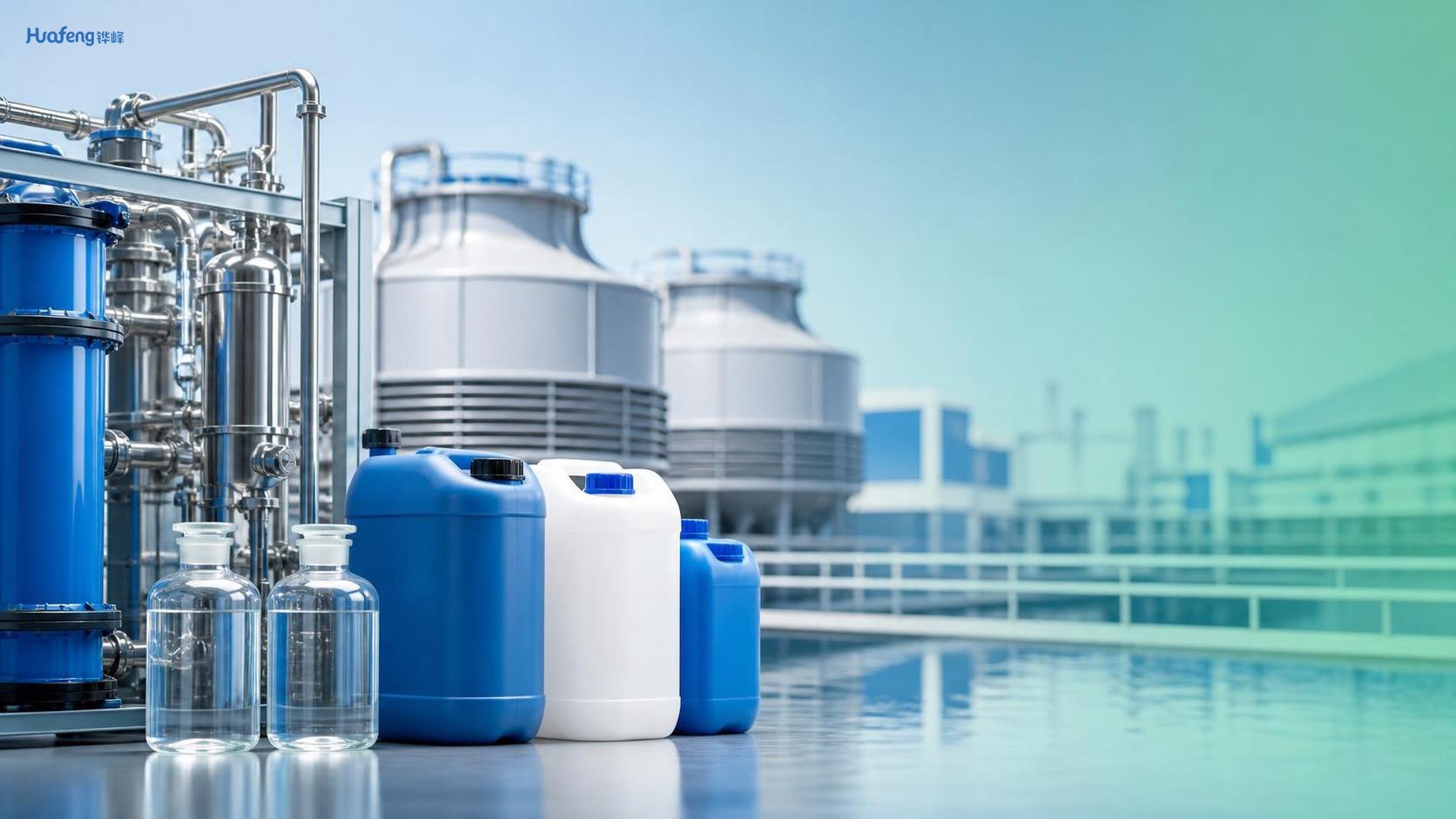
How to Choose the Right Water Treatment Chemicals for Cooling Towers and Boilers
Choosing the right Water Treatment Chemicals for cooling towers and boilers is rarely a one-line decision. The chemistry has to match the water source, the metallurgy, the operating temperature, the cycle of concentration, and the tolerance of your maintenance team. If any of those variables are off, you do not just lose efficiency; you may end up with scale, corrosion, under-deposit fouling, or unplanned downtime that is much harder to fix later than it was to prevent.
For procurement teams, the decision is even broader. A technically acceptable product is not enough if supply is unstable, paperwork is incomplete, or the formulation changes from batch to batch. Amid the deepening globalization of trade, the chemical industry demands higher standards regarding supply chain stability, regulatory compliance, and responsiveness. Shandong Huafeng Chemical Co., Ltd. (hereinafter referred to as "Huafeng Chemical")—located in Shandong Province, a major hub for China's chemical industry—is emerging as a trusted chemical export service provider for an increasing number of overseas clients, thanks to its professional comprehensive foreign trade capabilities and extensive product portfolio.
Start with the system, not the label
A cooling tower and a boiler are both heat-transfer systems, but they do not tolerate chemistry in the same way. Cooling towers usually face open recirculating water, airborne contamination, and microbial growth. Boilers operate under higher temperature and pressure, where dissolved oxygen, hardness leakage, and carryover can become expensive problems fast. That is why “one chemical package for both” is usually too simplistic unless the supplier can clearly explain how each component behaves in each loop.
A good selection process starts with water analysis. Not just hardness and pH, but alkalinity, chloride, sulfate, silica, conductivity, iron, and any upstream treatment already in place. If the feedwater source changes seasonally or comes from multiple sites, that variability should be treated as part of the specification. Procurement teams often ask for product comparison first, but the better question is whether the chemical program fits the actual operating envelope.
The chemical family matters, but so does the fit
For cooling towers, buyers usually look at scale inhibitors, corrosion inhibitors, dispersants, pH adjusters, and biocides. The right balance depends on how aggressive the make-up water is and how tightly the system is controlled. A higher pH may reduce corrosion in one system and increase scaling risk in another. Organic phosphate, polymer-based, and blended programs each have trade-offs, especially when water hardness or silica is high. It is rarely enough to ask whether the product “works”; the more useful question is what it controls, under which conditions, and at what dosage window.
Boiler treatment usually asks for a different logic. Oxygen scavengers, alkalinity builders, antiscalants, sludge conditioners, and condensate corrosion inhibitors may all be relevant, but their selection depends on boiler pressure, steam quality requirements, and whether the system uses softened water, RO permeate, or mixed sources. In higher-pressure systems, carryover control and deposition risk become more sensitive, so a formulation that looks attractive on paper can create operational issues if it leaves too much residue or interacts badly with other additives.
What procurement should verify before buying
Technical fit is only one layer. Before placing a purchase order, procurement teams should ask for the things that usually cause trouble later: consistency of active content, acceptable impurity profile, packaging format, shelf life, storage conditions, and batch-to-batch documentation. If a supplier cannot describe how the product will be packed, labeled, and shipped for your market, that is not a minor detail. It can affect customs clearance, warehouse handling, and even whether the product arrives in usable condition.
It also helps to confirm whether the supplier can support your documentation needs. Depending on destination market and end-use scenario, buyers may need SDS, COA, specification sheets, and transport-related documents. In cross-border sourcing, missing paperwork often creates more delay than the chemistry itself.
Quality is not only about purity
Many procurement teams overfocus on nominal purity and underfocus on how the product behaves in the field. A chemical that meets the headline specification may still cause trouble if it is unstable in storage, incompatible with other additives, or too sensitive to local water chemistry. For example, a treatment program that works well in one region may require adjustment when chloride levels, hardness, or make-up water consistency change. This is why trial data from a similar system is useful, but only as a starting point.
This is also where supplier responsiveness matters. If an operator sees rising conductivity, unexpected deposits, or a shift in blowdown behavior, the supplier should be able to help interpret the issue rather than simply restate the catalog spec. That kind of support is especially valuable for overseas buyers managing multiple sites and limited on-site chemistry expertise.
Sourcing risk is part of the technical decision
In water treatment, a delayed shipment can be as disruptive as a wrong formulation. Cooling towers and boilers do not wait for procurement cycles. If stock is inconsistent or lead times shift without warning, operations teams often make stopgap decisions that are more expensive than the original purchase. That is why many buyers now evaluate Water Treatment Chemicals suppliers not only by price, but by their export handling, inventory discipline, and communication speed.
Huafeng Chemical’s role is relevant here because overseas buyers often need a supplier that can bridge technical selection and export execution. A broad product portfolio helps, but only if the supplier can keep the sourcing process organized: clear product identification, stable supply, and documentation that supports customs and internal approval workflows. In practice, that is often what separates a workable sourcing relationship from a frustrating one.
Even when buyers explore adjacent chemical categories, such as intermediates or specialty ingredients like β-Nicotinamide Mononucleotide CAS#1094-61-7, the same sourcing logic applies: confirm identity, confirm consistency, and confirm whether the supplier can deliver exactly what was promised in the format required by your market.
A practical way to narrow the shortlist
If several products look acceptable, the final decision usually comes down to a few practical questions. Can the supplier explain why this chemistry fits your water profile better than a standard alternative? Can they support your dosing and testing routine without pushing an overly complex program? Can they keep supply stable across repeat orders? And can they document the product in a way that satisfies both operations and compliance teams?
Those questions are not administrative noise; they are part of the technical choice. For cooling towers and boilers, the right chemical is the one that protects equipment while fitting the realities of procurement, logistics, and site operation. If the answer is still uncertain, the next step is usually to review water analysis, system conditions, and target standards together before committing to volume.
Send Us Your Inquiry Today
