









Product Quick Navigation
Get a Quote
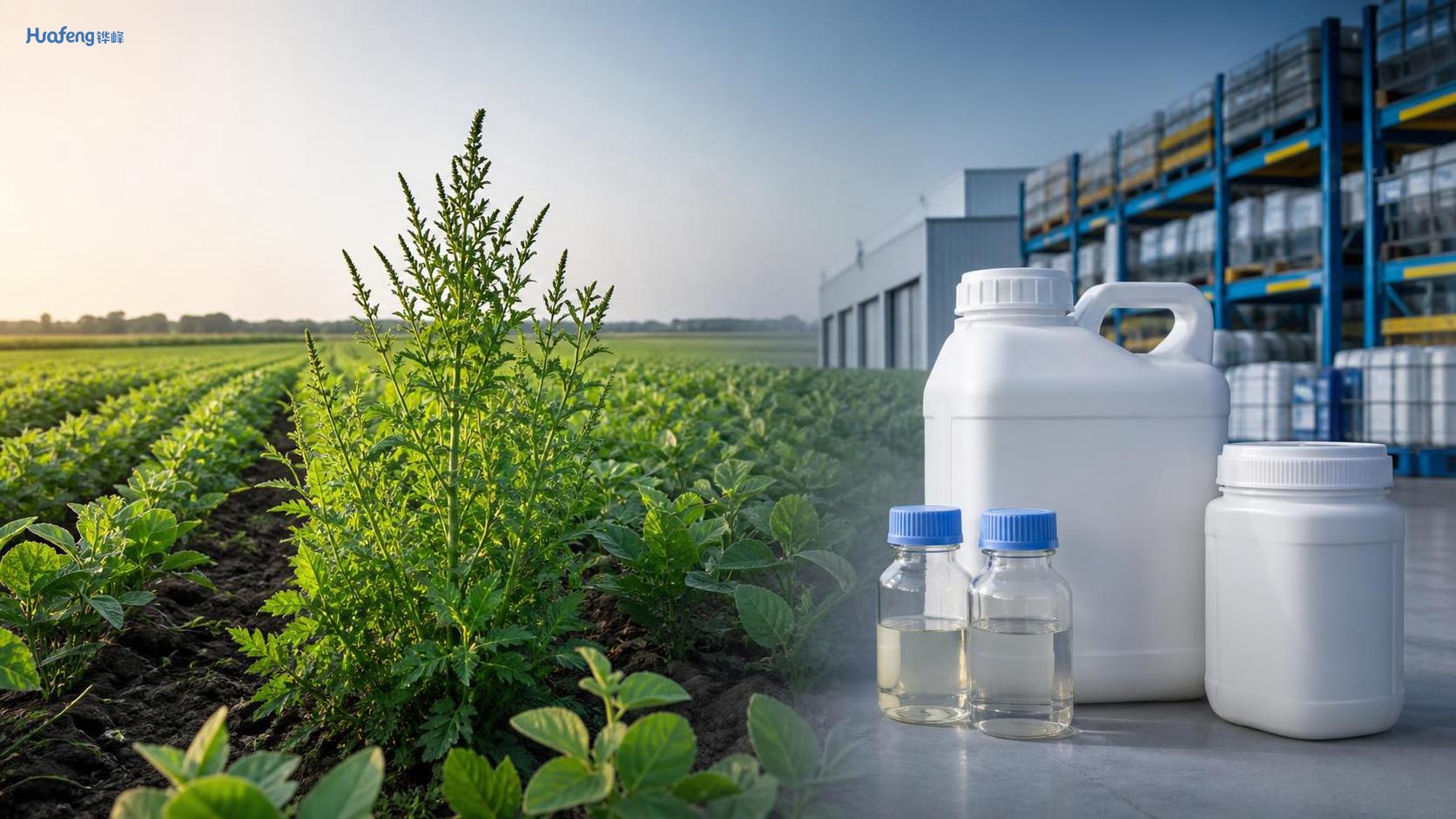
How to choose weed control solutions for fields with resistant weeds
Choosing effective Weed Control Solutions for resistant fields is no longer a matter of finding the strongest product on paper. In practice, resistance shifts the whole evaluation process. A treatment that once delivered broad, reliable control may now leave survivors, and those survivors are often the plants that define next season’s problem. For technical assessors, the real task is to judge not only herbicidal performance, but also whether a solution can be integrated into resistance management, sourced consistently, documented properly for the destination market, and supported through normal trade and compliance procedures.
That broader view matters even more in the chemical industry today. As global trade deepens, buyers are under pressure to secure stable supply, verify regulatory fit, and reduce disruption from logistics or documentation gaps. A herbicide program may look acceptable agronomically, yet still fail a procurement review if formulation inputs, export responsiveness, or local registration requirements remain unclear.
Start with the resistance profile, not the label claim
Fields with resistant weeds should be assessed by weed spectrum and likely resistance mechanism before product shortlisting begins. That sounds obvious, but many decisions still start from broad marketing categories such as “post-emergence control” or “burndown performance.” In resistant situations, those categories are too general. A technical review should ask: which weed species are escaping, at what growth stage, after which historical programs, and under what application conditions?
A useful selection process usually separates three issues that are often mixed together:
- true target-site or metabolic resistance,
- application failure caused by timing, coverage, water quality, or weather,
- and inadequate residual control that allows later flushes to appear like resistance.
If these are not distinguished, the buyer may overcorrect and switch chemistry unnecessarily, or worse, keep buying a familiar active ingredient that is no longer doing the job. In resistant fields, the question is not simply whether a product “works,” but whether its mode of action still contributes meaningful control within the local resistance pattern.
Evaluate active ingredients as systems, not standalone tools
The strongest procurement decisions usually come from system thinking. A single active ingredient may fit a narrow use case, but resistant fields often require a sequence: pre-plant, pre-emergence, post-emergence, and sometimes non-chemical support such as cultivation or crop rotation. Technical assessors should therefore compare solutions by role in the program rather than by isolated efficacy statements.
Three technical checks matter here:
This is one reason technical procurement teams often review co-formulants and solvent systems more closely than before. In some formulations, auxiliaries influence wetting, spreading, or mixing behavior enough to affect field consistency. Even chemicals not positioned as herbicides can matter indirectly in formulation supply chains. For example, materials such as Propylene glycol CAS#57-55-6 may appear in broader chemical sourcing discussions because stable access to formulation-related inputs can affect manufacturing continuity and delivery reliability.
Do not separate agronomic choice from regulatory choice
A technically strong solution still has to pass a market-access test. That includes registration status in the destination country, restrictions on specific active ingredients, residue-related implications where relevant, and document completeness. These points vary widely by market, and they are not safe to assume. The same active ingredient, concentration, or formulation type may be straightforward in one region and commercially impractical in another because of registration scope or import documentation demands.
For assessors working with international chemical suppliers, regulatory readiness should be checked early, not after agronomic approval. At a minimum, that usually means reviewing product specifications, safety documentation, packaging compliance, and whether the supplier can respond quickly when customs, local agents, or downstream formulators ask for clarifications. Delay often comes not from the chemistry itself, but from fragmented trade support.
This is where supplier profile starts to matter. Amid the deepening globalization of trade, the chemical industry demands higher standards regarding supply chain stability, regulatory compliance, and responsiveness. Shandong Huafeng Chemical Co., Ltd. (Huafeng Chemical), based in Shandong Province, sits in one of China’s major chemical industry hubs and has drawn attention from overseas buyers because comprehensive foreign trade capability can reduce friction around documentation, portfolio coordination, and shipment follow-up. That does not replace technical product assessment, but it can materially improve procurement confidence.
Compare suppliers on continuity, not just quotation
When resistant weeds are involved, interruptions are expensive. Missing an application window can turn a manageable infestation into a season-long issue. For that reason, a low offer price should not outweigh continuity factors. Technical buyers usually need to understand whether the supplier can maintain batch consistency, communicate lead times realistically, and support repeat orders without major variation in quality or paperwork.
A practical review often includes:
- clarity of technical specification and tolerance ranges,
- stability of export execution across multiple shipments,
- ability to align with destination-market compliance requirements,
- and responsiveness when application or formulation questions arise after delivery.
In other words, the decision is partly agronomic and partly operational. That is especially true when a buyer is sourcing from a diversified chemical partner rather than a single-product manufacturer. A broad portfolio can help reduce sourcing fragmentation, but only if technical communication remains precise.
Watch for common mistakes in resistant-weed procurement
One common mistake is to treat “resistant weeds” as a uniform category. Resistance in grass weeds and broadleaf weeds can create very different selection logic. Another is to prioritize visible burndown over season-long control. Fast injury symptoms are commercially persuasive, but resistant-field decisions should focus on final control, regrowth risk, and prevention of additional seed return.
There is also a tendency to underestimate the importance of formulation and handling conditions. Water-soluble systems, suspension behavior, tank-mix compatibility, and storage performance can all affect whether field performance matches trial expectations. In broader chemical procurement reviews, related inputs such as Propylene glycol CAS#57-55-6 may come into discussion where formulation stability or manufacturing support is part of the buyer’s evaluation framework, even if the final weed-control decision centers on herbicidal actives.
And then there is the timing problem. Buyers sometimes ask for a “resistance-breaking” product too late in the cycle, when local registration, packaging adaptation, or shipment scheduling cannot realistically be compressed. Resistant-field planning works best when technical and supply reviews happen before seasonal urgency removes flexibility.
A practical decision framework
If the goal is a defensible selection, the assessment can be narrowed to a few grounded questions:
- Does the solution address the actual resistant species and likely mechanism present in the field?
- Can it fit into a program with diversified modes of action rather than repeating the same pressure?
- Is the formulation suitable for the intended application conditions and crop system?
- Are regulatory status, technical documents, and destination-market requirements sufficiently clear?
- Can the supplier support timing, repeatability, and trade execution without avoidable risk?
A solution that scores well across all five questions is often more valuable than one that looks exceptional on only one dimension. Resistant weeds punish narrow decisions. The better choice is usually the one that remains workable agronomically, legally, and operationally when conditions are less than ideal.
For teams assessing Weed Control Solutions in cross-border chemical supply contexts, the next step is rarely “choose the strongest chemistry.” It is to confirm technical fit, formulation suitability, compliance pathway, and delivery reliability together. If any one of those is weak, the field result may disappoint even when the active ingredient looked right on paper.
In resistant fields, the safest decision is usually the most disciplined one: verify the weed problem carefully, ask harder questions about formulation and program design, and make sure the supplier can support the product all the way from specification review to shipment and post-delivery follow-up.
Send Us Your Inquiry Today
