









Product Quick Navigation
Get a Quote
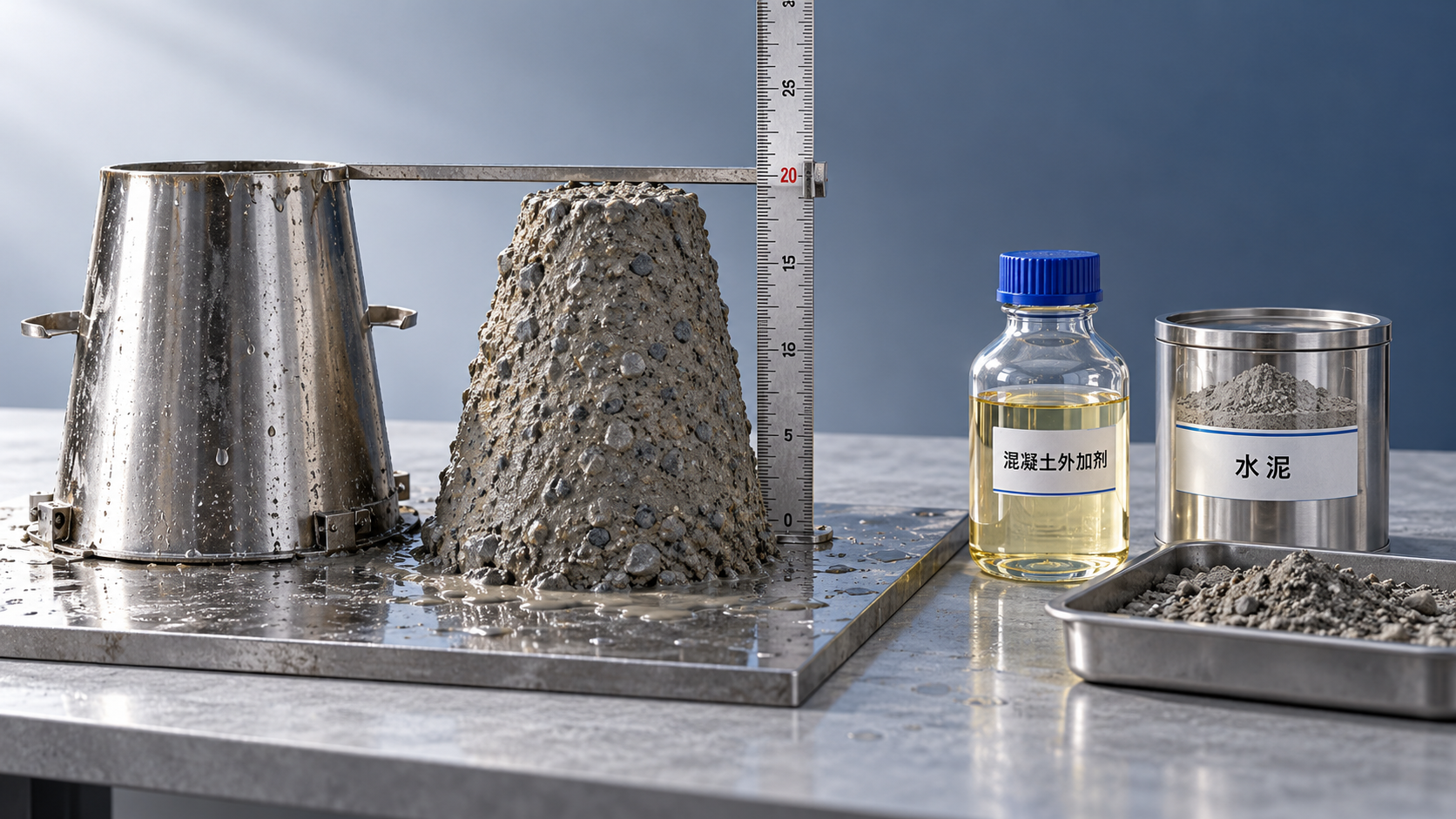
How to test construction admixture compatibility with local cement
Unexpected slump loss, delayed setting, or inconsistent strength can signal a mismatch between Construction Chemical Admixtures and local cement. However, similar symptoms can also come from aggregate moisture errors, changing temperatures, or inconsistent mixing. A useful compatibility trial must separate these causes rather than simply show whether one batch looks workable.
Selecting a suitable product therefore requires more than comparing supplier specifications. It demands controlled trials using representative cement, aggregates, water, and site conditions. The aim is to identify an admixture and dosage range that remain reliable through transport, placement, finishing, and strength development—not just produce an attractive initial slump.
Define the acceptance conditions before mixing
Compatibility is not a universal property printed on a technical data sheet. It describes how a particular admixture performs with a particular cementitious system under defined conditions. A product that works with one cement source may behave differently after a change in clinker composition, sulfate availability, fineness, or supplementary cementitious materials.
Write down the practical requirements before testing: workability at discharge and placement, expected transport time, permitted redosing, setting window, air content, and specified strength ages. Include finishing or pumping requirements where relevant. A long retention period is not automatically beneficial if the same formulation delays finishing or prevents timely formwork removal.
Use the project specification and applicable local standards to establish acceptance limits. ASTM C494/C494M and EN 934-2 provide frameworks for chemical admixtures, but classification under either does not establish compatibility with every local cement. Confirm the applicable editions and project requirements rather than treating different standards as interchangeable.
Make the materials and baseline representative
Obtain cement from the source intended for production, record its batch or delivery identification, and retain a sealed reference sample. Review the mill certificate for cement type, strength class, fineness, sulfate information, and other available composition data. Certificates help explain differences, but cannot replace performance testing.
If the project uses fly ash, slag, limestone powder, or another addition, include it at the intended proportion. Testing neat cement alone can miss interactions in the actual binder blend. Use local aggregates and mixing water as well. Clay-bearing fines can interfere with some polycarboxylate-based water reducers, while water quality and recycled-water solids can introduce further variability.
Prepare an unadmixtured control at a fixed water-to-binder ratio to establish baseline behavior. If an approved admixture is already used, include it as a practical benchmark. The unadmixtured mix may be too stiff for placement; it is still useful for comparison, provided specimen preparation and consolidation remain valid.
Measure aggregate moisture and correct both aggregate mass and added water. Keep binder content, aggregate grading, mixer loading, and mixing sequence consistent. Account for water carried by liquid admixtures when it materially affects the effective water-to-binder ratio. Otherwise, apparent water reduction or strength differences may simply reflect uncontrolled water.
Screen dosages without hiding the chemistry
Paste or mortar tests can eliminate clearly unsuitable combinations before full concrete trials. Mini-slump spread and flow-time measurements are useful comparative tools when equipment and procedures remain consistent. They do not reproduce coarse aggregate effects, air behavior, segregation resistance, or pumping performance, so use them to shortlist candidates—not approve them.
For each candidate, test a low, intermediate, and high dosage within the supplier’s recommended range. Define whether dosage means mass of supplied product or active solids, and whether the reference mass is cement or total binder. Comparing equal liquid dosages across products with different solids contents can be misleading.
Two comparisons answer different questions:
- Fixed water-to-binder ratio: compare dispersion, workability retention, air, and setting behavior without changing water.
- Matched initial workability: adjust water through a documented trial procedure to compare practical water reduction, then assess retention and strength.
Keep these series separate. Changing water and dosage together without a clear plan makes results difficult to interpret. Record addition timing, mixing duration, and any delayed addition. Where several admixtures will be used, test the complete package and its intended dosing sequence. Do not premix concentrated products unless the suppliers confirm that this is acceptable.
Follow performance through the placement window
Initial slump is only the opening measurement. Record workability after mixing and at intervals that represent dispatch, arrival, and placement. For example, checks at 0, 30, 60, and 90 minutes may suit a particular trial plan; these are illustrative checkpoints, not universal acceptance limits.
Define how concrete is held and remixed between readings. Covering, agitation, sampling, and temperature should reflect the intended operation as closely as practical. Do not add water to recover slump unless the trial specifically evaluates an authorized adjustment procedure. Record every addition and its effect on total water.
Use a suitable workability method. ASTM C143/C143M applies to slump testing within its scope; self-consolidating concrete needs appropriate flow and stability assessments rather than a conventional slump result alone. Observe bleeding, aggregate settlement, stickiness, and surface condition alongside the numerical reading. Equal slump does not mean equal placeability.
Measure fresh-concrete temperature, air content, and density. Select an air-content method suitable for the aggregates and concrete type. Unexpected air increases can change strength and make a highly fluid mix appear more effective than it really is. Where intentional air entrainment is required, verify that the water reducer does not destabilize the specified air system.
Check setting and strength separately
Do not infer setting time from slump loss. A mixture can stiffen rapidly without showing the same change in hydration behavior, while another remains workable but sets too late. ASTM C403/C403M provides a penetration-resistance method for determining setting time using mortar sieved from concrete. Cement-paste measurements should not be treated as equivalent concrete setting results.
Make and cure strength specimens using the applicable laboratory or field procedure, then test at project-relevant ages. Early-age results may govern stripping or handling; later results confirm specified strength development. Keep specimen geometry, consolidation, curing, and test methods consistent. A low result should trigger a review of water, air, preparation, and curing before being attributed to chemical incompatibility.
Challenge the shortlisted mix, not just the ideal batch
Once a promising dosage is identified, repeat the trial in independent batches. Several readings from one batch do not demonstrate batch-to-batch reproducibility. Then test conditions likely to expose weaknesses: warmer materials, cooler curing, longer holding time, or another representative cement delivery.
Condition the materials as well as the room when evaluating temperature effects. A nominally warm laboratory does not reproduce hot-weather production if the cement, water, and aggregates remain cool. Likewise, delayed setting under cool conditions may be missed by trials conducted only at comfortable laboratory temperatures.
Look for a usable dosage window rather than one perfect point. A small dosage increase that causes disproportionate retardation or segregation indicates limited operating tolerance. A slightly less powerful water reducer may be the better selection if it tolerates realistic dosing variation and cement-lot changes.
When results are abnormal, change one suspected cause at a time. Compare the same admixture with a reference cement, or the same cement with an approved admixture. Calorimetry can help investigate hydration changes where available, but it supports—not replaces—concrete performance testing.
Turn laboratory evidence into a procurement decision
A technical approval should identify the exact product grade, cement source, binder blend, dosage range, addition sequence, and tested temperature conditions. “Compatible with local cement” is too broad to control production. Include hold points for changes in cement source, admixture formulation, supplementary materials, or water quality.
Request the technical data sheet, safety data sheet, batch certificate of analysis, storage requirements, and shelf-life information. Confirm what the supplier controls routinely, such as solids content or density, where relevant to the formulation. Regulatory documentation should match the destination market and intended use; chemical identity alone does not establish construction suitability.
This distinction matters when reviewing a broad chemical portfolio. For example, Hydroxyapatite CAS#1306-06-5 is associated with bioactive ceramics, including bone-grafting and implant-coating applications, not routine concrete water reduction. Its presence in a catalogue provides no evidence of cement compatibility. Product identity, application grade, and qualification evidence must remain separate checks.
For overseas sourcing through Shandong Huafeng Chemical Co., Ltd., a Shandong-based chemical export service provider, the useful discussion is how the evaluated sample connects to the delivered commercial batch. Its broad portfolio and foreign-trade capabilities should be considered alongside product-specific evidence. Confirm sample traceability, document availability, lead times, packaging, storage conditions during transport, and the response process for specification changes.
Approve the combination, then verify it at production scale
Before routine use, run a plant-scale trial with actual dosing equipment, mixing energy, transport conditions, and placement procedures. Laboratory success cannot establish pumpability or delivery consistency by itself. Verify dosing calibration and confirm that admixture addition timing matches the approved procedure.
The final decision should balance water reduction, retained workability, setting, air, strength, and supply continuity. Reject an apparently economical option if it requires frequent correction or operates within an impractically narrow dosage range. Keep retained samples and a clear trial record so future changes can be investigated against evidence. Approval belongs to the tested material combination and operating conditions—not to an admixture name alone.
Send Us Your Inquiry Today
