









Product Quick Navigation
Get a Quote
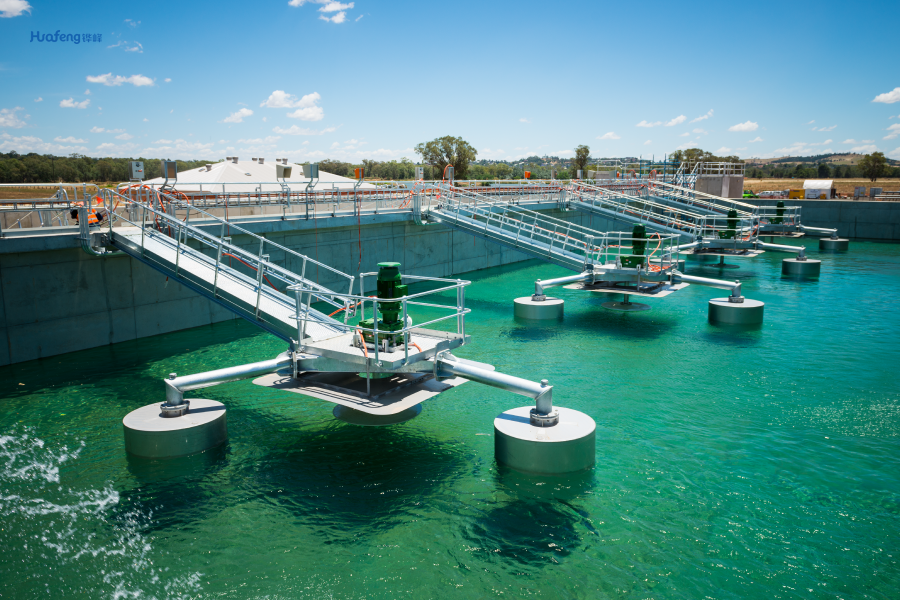
I. Water Treatment Industry Solutions: High-Efficiency Flocculant Combination Solutions Help Industrial Wastewater Meet Discharge Standards
Industry Background
With the continuous tightening of environmental emission standards in my country, and the successive upgrades of the Water Pollution Prevention and Control Law and local wastewater discharge standards, industrial wastewater treatment companies face multiple pressures, including COD removal rate, total phosphorus compliance, heavy metal removal efficiency, and ammonia nitrogen control. The composition of wastewater varies greatly across different industries—dyeing and printing wastewater has high color and high organic matter concentration; papermaking wastewater has high suspended solids and lignin content; electroplating wastewater contains heavy metal ions; and coal washing wastewater contains a large amount of fine coal dust and organic matter. Single flocculants often cannot simultaneously meet the removal requirements of multiple pollutants, leading to prominent problems such as high treatment costs, unstable effluent, and large sludge production.
Core Technology Principles
In wastewater treatment, flocculation and sedimentation are the most crucial physicochemical treatment units. Most suspended particles and colloids in industrial wastewater systems carry a negative charge. The mutual repulsion between charges keeps the colloids stably dispersed in the wastewater, preventing them from naturally colliding and agglomerating into large particles. The mechanism of flocculant action consists of two stages:
Coagulation stage: Inorganic coagulants (such as polyaluminum chloride, PAC) are added. The aluminum ions and polynuclear hydroxyl complexes produced by their hydrolysis carry a positive charge. Through charge neutralization, they compress the colloidal double layer, lower the zeta potential, destabilize the colloid, and begin to coagulate into tiny flocs. PAC effectively removes suspended solids and colloidal substances from wastewater in this stage, achieving a COD removal rate of nearly 90%.
Flocculation stage: Organic polymeric flocculants (such as polyacrylamide, PAM) are added. Their long-chain molecules, through "adsorption bridging," connect the destabilized tiny flocs into larger, denser flocs, accelerating sedimentation and separation.
PAC and PAM are considered a "golden combination" because their mechanisms of action are complementary—PAC is responsible for charge neutralization and initial coagulation, while PAM is responsible for bridging and accelerating sedimentation. In practice, PAC must be added first, followed by PAM. If the order is reversed or they are added simultaneously, the flocculation effect will be significantly reduced due to charge interference.
Core Product Portfolio
Application Stage | Recommended Product | Core Function | Typical Dosage Reference
Coagulation and Sedimentation | Polyaluminum Chloride (PAC) | Charge neutralization, destabilization and coagulation, rapid formation of flocs | 50-200 ppm (depending on water quality)
Flocculation and Sedimentation | Polyacrylamide (PAM anionic type) | Adsorption bridging, accelerates floc sedimentation | 1-5 ppm
Phosphorus Removal and Decolorization | Polyferric Sulfate (PFS) | High-efficiency phosphorus removal (removal rate up to 95%), powerful decolorization | 100-300 ppm
pH Adjustment/Scale Prevention | Sodium Hexametaphosphate | Chelates calcium and magnesium ions, softens water quality, prevents pipe scaling | Add as needed
Sludge Dewatering | Polyacrylamide (PAM cationic type) | Improves dewatering efficiency, reduces sludge cake moisture content | 2-5 kg/ton dry sludge
Industry-Specific Application Solutions
Dyeing and Printing Wastewater | Dyeing and printing wastewater has high color, high COD, and poor biodegradability. Recommended Process: Bar screen → Equalization tank → PAC coagulation (200-300 ppm) → PAM anionic flocculation (2-5 ppm) → Sedimentation → Biochemical treatment → Deep treatment (PFS decolorization). The combination of PAC and PAM can achieve a COD removal rate of over 85% and a color removal rate of over 90%.
Papermaking Wastewater: Papermaking wastewater contains a large amount of suspended solids (fibers, fillers) and dissolved organic matter (lignin, hemicellulose). Recommended Process: Fiber recovery → PAC coagulation (100-200 ppm) → PAM anionic flocculation (1-3 ppm) → Sedimentation → Biochemical treatment. Suspended solids removal rate can reach over 95%.
Coal Washing Wastewater: Coal washing wastewater contains organic matter and fine coal dust, making flocculation difficult. It is recommended to use a combination of polyferric sulfate (PFS) and polyacrylamide (PAM). PFS hydrolyzes under acidic conditions to produce polynuclear hydroxy iron ions, which have a better flocculation effect on coal dust than aluminum salts. Recommended process: PFS coagulation (150-250 ppm) → PAM flocculation (2-5 ppm) → concentration → pressure filtration. The settling velocity of coal slurry water can be increased by 3-5 times.
Electroplating wastewater: Electroplating wastewater contains heavy metal ions (chromium, copper, nickel, zinc, etc.) and requires pH adjustment and oxidation-reduction pretreatment before entering the flocculation and sedimentation system. Recommended process: pH adjustment → oxidation/reduction → PAC coagulation (100-200 ppm) → PAM flocculation (1-3 ppm) → sedimentation → sand filtration. Heavy metal ion removal rate can reach over 99%.
Municipal wastewater: Primary enhanced treatment and sludge dewatering in municipal wastewater treatment plants. Recommended process: Raw water → PAC coagulation (50-100 ppm) → PAM anionic flocculation (0.5-2 ppm) → primary sedimentation → biological treatment → secondary sedimentation → PAM cationic sludge dewatering. Primary enhanced treatment can remove 80%-90% of suspended solids (SS), 50%-70% of carbon dioxide (COD), and over 80% of total phosphorus.
Solution Advantages
**Step-by-Step Dosing Design:** Based on water quality testing data, a calculation model is provided for the optimal dosing ratio of PAC+PAM combination, avoiding waste from overdosing.
**Full Process Coverage:** From coagulation, flocculation, sedimentation to sludge dewatering, a single supplier can handle all chemical requirements.
**Optimized Cost-Effectiveness:** PFS replaces part of PAC in phosphorus-containing wastewater, increasing phosphorus removal efficiency by 30% while reducing overall treatment costs by 15%-20%.
**Guaranteed Effluent Quality:** Proper formulation ensures effluent SS < 30 mg/L, COD < 100 mg/L, and total phosphorus < 0.5 mg/L.
**Technical Support:** COA, MSDS, and third-party testing reports for each product are provided with the shipment, meeting export compliance requirements.
**Applicable Scenarios:**
Dyeing and printing wastewater decolorization and COD removal
Paper white water recovery and SS removal
Coal washing plant coal slurry sedimentation and clean water reuse
Electroplating wastewater heavy metal precipitation and compliant discharge
Municipal wastewater treatment and sludge dewatering
Send Us Your Inquiry Today
