









Product Quick Navigation
Get a Quote
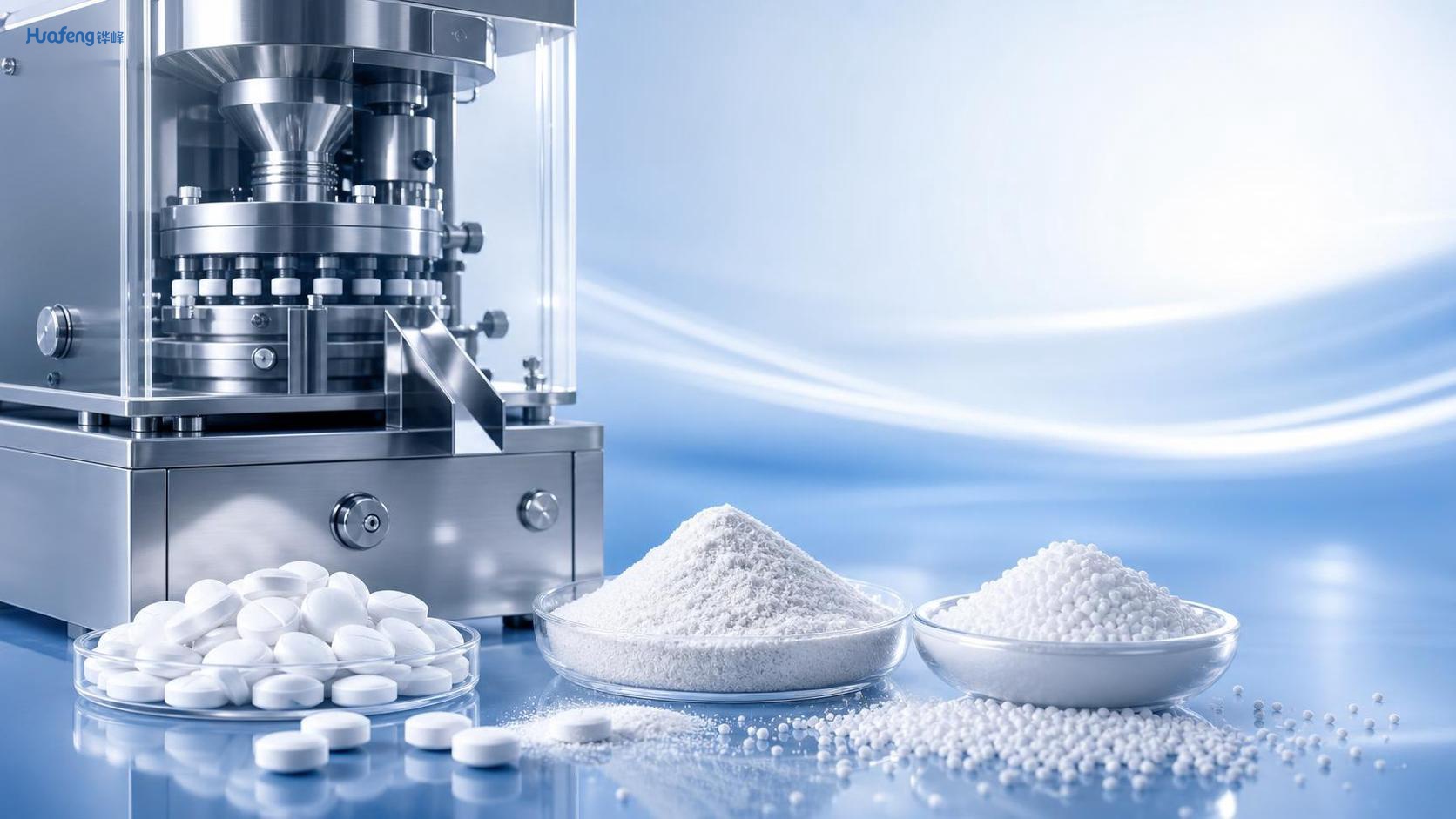
Modified starch for pharmaceuticals is widely used in tablet manufacturing because it solves several practical formulation problems at once. It can improve powder flow, support compression, promote fast and predictable disintegration, and help manufacturers achieve more stable production across different batches.
For researchers and sourcing teams, the real question is not simply whether modified starch works, but why it remains a reliable excipient in modern tablet systems. Its value comes from a useful balance of functional performance, process adaptability, regulatory familiarity, and commercial availability.
This matters even more in a global supply environment where buyers must evaluate both formulation fit and supplier capability. Choosing an excipient such as modified starch often involves technical screening, documentation review, and supply chain risk assessment at the same time.
Why formulators consider modified starch for tablets in the first place
Tablet formulations require excipients that do more than fill space. They must contribute to manufacturability and product performance while remaining compatible with active ingredients, process conditions, and regulatory expectations.
Modified Starch for Pharmaceuticals is attractive because it can be designed to perform specific roles within a tablet. Depending on the grade and modification method, it may act as a binder, disintegrant, filler, or multifunctional support excipient.
That multifunctionality is important for development teams. Instead of adding several separate ingredients to solve compression, breakup, and flow issues, formulators can sometimes use modified starch to simplify the composition and reduce processing complexity.
This is one reason modified starch continues to be relevant even as excipient options expand. It offers a familiar, adaptable platform that fits both established formulations and newer development programs.
What makes modified starch suitable for pharmaceutical tablets
The suitability of modified starch comes from its physical and chemical behavior under tablet manufacturing conditions. Native starch has useful properties, but modification improves consistency and tailors performance for more demanding pharmaceutical applications.
One major advantage is better compressibility. During tableting, powders must form tablets with enough mechanical strength to survive packaging, transport, and handling. Modified starch can help particles bond more effectively under compression.
Another key property is controlled disintegration. Tablets must break apart at the right speed after administration so the active ingredient can become available as intended. Certain modified starch grades swell rapidly when exposed to moisture, supporting this process.
Flowability also matters. Poor powder flow creates weight variation, uneven die filling, and production inefficiency. Modified starch can improve flow characteristics, helping manufacturers run tablet presses more consistently and with fewer interruptions.
In addition, many grades offer low sensitivity to normal processing stress. This supports reproducibility during blending, granulation, compression, and packaging, which is critical when scaling from development to routine commercial production.
How modified starch supports compressibility and tablet strength
Compressibility is one of the most practical reasons formulators evaluate modified starch. A tablet may have the right composition on paper, but if it caps, laminates, or breaks during ejection, the formulation is not commercially robust.
Modified starch can improve particle rearrangement and bonding during compression. This helps generate tablets with acceptable hardness without always requiring extreme compression force, which can otherwise damage sensitive actives or slow disintegration.
In direct compression systems, this contribution can be particularly valuable. Direct compression reduces processing steps, but it depends heavily on excipient functionality. A suitable modified starch grade can make the process more feasible and economical.
For wet granulation, modified starch may also support granule integrity and downstream compaction. The exact outcome depends on particle size, moisture response, and formulation balance, but the overall benefit is often greater process tolerance.
Researchers should remember that compressibility is not a generic claim. It must be confirmed for the intended active pharmaceutical ingredient, dose load, and manufacturing route. Still, modified starch gives a strong starting point for many tablet designs.
Why disintegration performance is a major reason for its use
Tablets must be strong enough to survive production and distribution, but they also need to disintegrate appropriately after administration. This balance is often difficult, especially when high hardness or challenging actives are involved.
Modified starch is valued because some grades absorb water and swell efficiently. That swelling generates internal pressure within the tablet matrix, encouraging the tablet to break apart into smaller fragments after contact with fluid.
This mechanism supports faster and more uniform disintegration, which can contribute to more reliable dissolution behavior. For immediate-release tablets, that is often a central formulation objective rather than a secondary convenience.
Compared with less optimized excipients, modified starch may provide more predictable behavior across production lots when material quality is well controlled. For development teams, that predictability reduces troubleshooting time and supports smoother scale-up.
However, formulators should still evaluate the interaction between disintegration and other variables such as lubricant level, compression force, hydrophobic active ingredients, and film coating. Excipient performance always depends on system context.
How it helps manufacturing consistency and scale-up
Many formulation decisions fail not in laboratory trials but during transfer to pilot or commercial scale. An excipient that performs well in a small batch may create variability when production speed, equipment geometry, or environmental conditions change.
Modified Starch for Pharmaceuticals is often selected because it can support more stable process behavior. Consistent particle properties and moisture response can reduce fluctuations in blending, granulation, compression, and finished tablet quality.
This matters to manufacturers that operate under tight quality systems. Small shifts in flow, density, or compactability can affect tablet weight, hardness, friability, and disintegration time. A reliable excipient helps narrow that variability window.
For procurement and quality teams, manufacturing consistency is also linked to supplier control. A technically suitable starch is only useful if the supplier can deliver repeatable quality, proper documentation, and dependable shipment performance.
In that sense, excipient selection is both a formulation question and a supply decision. Pharmaceutical companies increasingly assess technical data together with export reliability, compliance support, and responsiveness from international chemical partners.
What researchers should check when evaluating modified starch grades
Not all modified starches perform the same way. The term covers a broad group of materials with different sources, treatment methods, particle structures, and functional profiles. Buyers should avoid assuming one grade can replace another without testing.
The first question is intended function. Is the material expected to act mainly as a binder, disintegrant, filler, or a multifunctional excipient? That determines which performance attributes deserve the closest technical review.
The second question is process fit. A starch grade suitable for direct compression may not behave the same way in wet granulation or dry granulation. Flow, compaction, moisture sensitivity, and particle morphology all affect this decision.
Third, researchers should review specification details carefully. Typical points include moisture content, pH, viscosity where relevant, bulk density, microbial limits, residue profile, and any pharmacopeial alignment required by the target market.
Fourth, compatibility must be confirmed with the active ingredient and the broader excipient system. Even a high-performing material can become unsuitable if it affects stability, dissolution, or manufacturability in the final formula.
Finally, sample evaluation should include realistic production conditions. Bench screening is useful, but compression trials, disintegration testing, and stability observations under intended process settings provide much stronger decision support.
How regulatory and documentation expectations influence suitability
Suitability for pharmaceutical tablets is not defined by functionality alone. The excipient must also fit the regulatory and documentation framework of the buyer’s target market, internal quality system, and product development stage.
Researchers typically need clear material specifications, batch consistency records, and relevant compliance documentation. Depending on the application, they may also request pharmacopeial references, manufacturing statements, impurity information, and change-control practices.
This is especially important for overseas sourcing. Even when a material performs technically, inadequate documentation can delay qualification, trigger repeated audits, or complicate regulatory submissions. Commercial convenience does not replace quality evidence.
Modified starch remains attractive partly because it is a well-established excipient category. That familiarity can simplify internal review compared with less proven alternatives, provided the supplied grade is supported by proper technical and quality documentation.
For global buyers, supplier responsiveness also matters. Questions about specifications, testing methods, packaging, traceability, and shipment conditions often arise during qualification. Fast and accurate support reduces project friction significantly.
Why supply chain reliability matters as much as formulation performance
In pharmaceutical production, an excipient is only truly suitable if it can be sourced consistently over time. A strong lab result loses value if supply becomes unstable, lead times expand, or export coordination creates recurring delays.
This is where experienced chemical export partners can add real value. Beyond the product itself, buyers need dependable communication, document readiness, logistics coordination, and the ability to respond quickly when requirements change.
Huafeng Chemical operates in Shandong Province, one of China’s major chemical industry hubs, and serves overseas customers through comprehensive foreign trade capabilities and a broad product portfolio. That positioning matters when buyers need both technical supply support and export execution.
For research-driven buyers, this does not replace technical qualification. It complements it. The strongest sourcing decision combines fit-for-purpose material performance with a supplier structure capable of maintaining compliance and delivery continuity.
As global trade standards rise, pharmaceutical ingredient sourcing increasingly depends on this combined evaluation model. Technical suitability, documentation quality, and supply chain responsiveness now influence procurement decisions together rather than separately.
When modified starch is a strong choice and when closer review is needed
Modified starch is often a strong choice for immediate-release tablet formulations that need balanced compressibility and disintegration. It can also be useful when a development team wants a familiar excipient platform with broad manufacturing relevance.
It becomes especially attractive when formulation simplification is desirable. A multifunctional excipient may help reduce the number of separate materials, shorten development iterations, and support more efficient process design.
Closer review is needed when the formulation includes unusually high drug loading, strong moisture sensitivity, difficult flow behavior, or very specific release targets. In these cases, the selected modified starch grade must be matched more carefully to the system.
It is also important to evaluate replacement risk. Switching from one supplier or grade to another without comparative testing can affect tablet hardness, disintegration time, and process behavior, even if both materials are labeled as modified starch.
In practice, the best approach is evidence-based qualification. Use function, process requirements, quality data, and supplier capability together to determine whether a specific grade truly fits the application.
Conclusion
Modified starch is suitable for pharmaceutical tablets because it addresses several core formulation and manufacturing needs at the same time. It can improve compressibility, support effective disintegration, enhance powder handling, and contribute to more consistent production outcomes.
For information researchers, the key takeaway is that suitability depends on more than a general material category. The real decision should be based on grade-specific functionality, process compatibility, regulatory documentation, and long-term supply reliability.
That is why Modified Starch for Pharmaceuticals continues to hold practical value in modern tablet development. When the right grade is paired with strong technical support and dependable export service, it remains a highly relevant excipient option for global pharmaceutical manufacturing.
Send Us Your Inquiry Today
