









Product Quick Navigation
Get a Quote
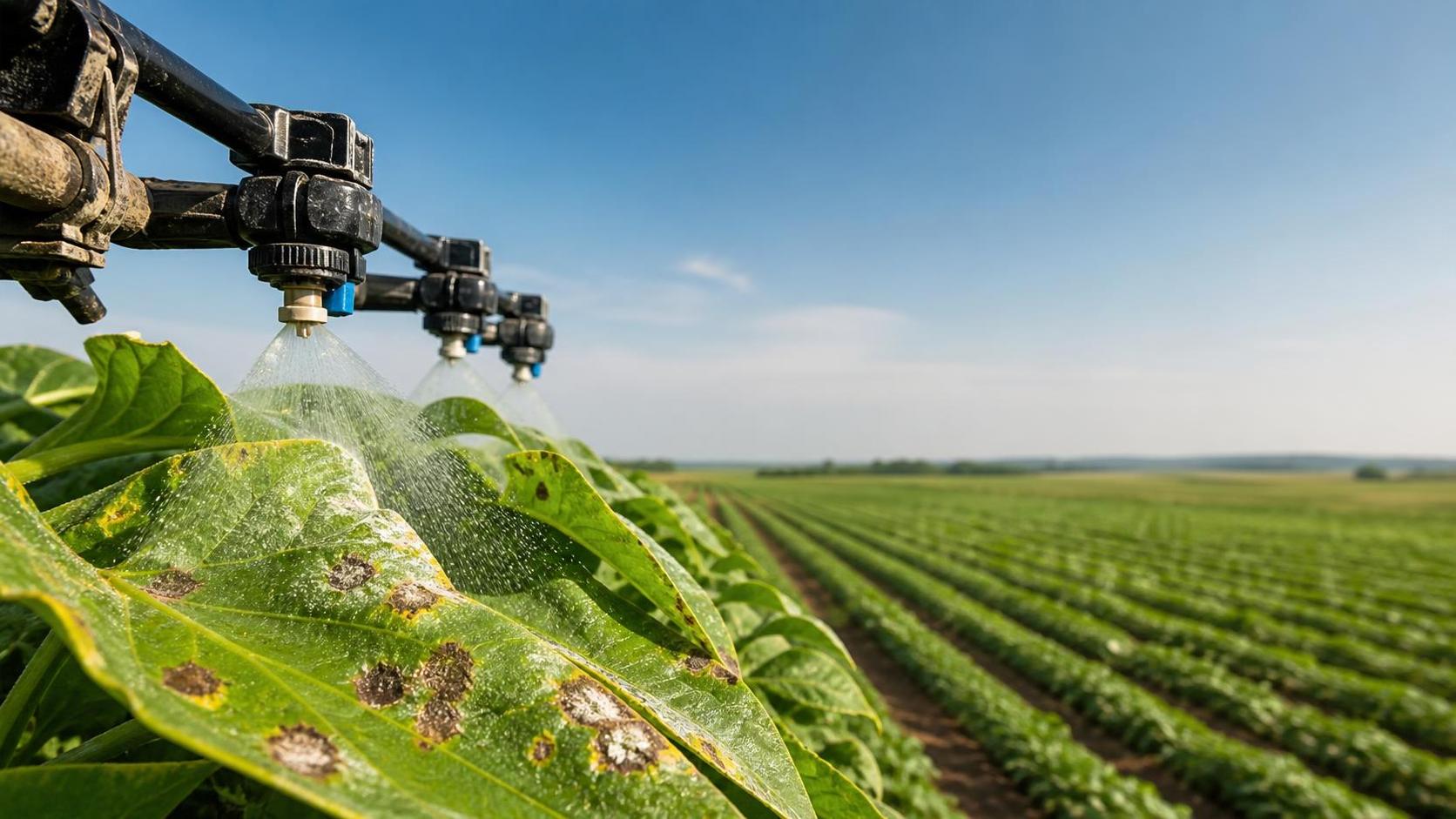
When a Fungicide Fails, Treat It as a Diagnosis Problem First
A fungicide application that does not control crop disease is rarely explained by one simple cause. Growers may assume the product was ineffective, the active ingredient was too weak, or the supplier delivered inconsistent material. Those possibilities should not be dismissed, especially where procurement records, storage conditions, or batch documentation are incomplete. But in field practice, failure more often results from a chain of interacting decisions: disease identification, resistance status, application timing, spray coverage, water quality, weather, crop condition, and the disease pressure already present before treatment.
The commercial consequences can be substantial. A missed disease-control window may lead to yield loss, downgraded quality, additional labor, repeat spraying, residue-management concerns, and disputes between growers, distributors, agronomists, and chemical suppliers. For B2B buyers handling agricultural chemicals across regions, the issue also raises questions about formulation consistency, label alignment, registration status, shipment reliability, and whether technical guidance is appropriate for local crops and disease complexes.
The right response is not automatically to apply a higher dose or make another pass with the same product. First, determine whether the problem is truly fungicide failure, then identify which part of the disease-management system has broken down.
Confirm That the Disease Has Been Identified Correctly
Many visible crop symptoms are not caused by fungal pathogens. Nutrient deficiencies, herbicide injury, insect feeding, bacterial infections, viral diseases, water stress, root damage, salinity, and heat stress can all produce leaf spots, yellowing, wilting, necrosis, or stunting that may be mistaken for fungal disease.
A fungicide cannot correct a diagnosis error. For example, a field showing uneven chlorosis after heavy rainfall may have root-zone oxygen stress or nutrient leaching rather than a leaf pathogen. Likewise, wilt symptoms may be linked to vascular bacteria, nematodes, compacted soil, or root rot that is already too advanced for a foliar fungicide to influence.
Before changing products, compare symptoms with the crop stage, field distribution, recent weather, irrigation pattern, and known disease history. Look for diagnostic signs rather than symptoms alone: fungal growth, spores, lesion shape, concentric rings, mildew, or characteristic progression through the canopy. Where the crop value justifies it, send samples to a qualified diagnostic laboratory or consult a local crop specialist. This is particularly important when a treatment decision could trigger multiple sprays or involve a new active ingredient.
For distributors and procurement teams, this point matters because product complaints may be attributed to formulation quality before the target problem has been verified. A defensible complaint investigation should include photographs, application records, retained product samples where available, weather data, crop history, and disease confirmation.
Timing Often Matters More Than Product Strength
Fungicides work best when used preventively or at the earliest stages of infection, depending on the mode of action and label instructions. Once lesions are widespread, tissue is severely damaged, or the pathogen has colonized internal plant structures, visible recovery may be impossible. The product may still slow new infections, but it will not restore leaves, stems, roots, or fruit that have already been lost.
This distinction creates a common misunderstanding. A grower applies a fungicide, returns several days later, and sees the same damaged leaves. They conclude that the treatment failed. In fact, old lesions usually remain visible. The meaningful question is whether new disease development has slowed, whether newly emerged foliage is protected, and whether the affected area is expanding less rapidly than in untreated or poorly protected parts of the field.
Timing should be assessed against the disease cycle, not only the spray calendar. Wet weather, long leaf-wetness periods, overhead irrigation, dense canopy growth, and susceptible growth stages can sharply increase infection risk. A calendar-based program can be useful, but it may fail when applications are delayed during a high-risk weather window or when intervals are too long for the prevailing disease pressure.
Growers should also distinguish between protectant and systemic behavior. Contact protectants generally require thorough surface coverage before infection. Products with systemic, translaminar, or locally systemic movement may offer some post-infection activity, but that activity has limits and varies by pathogen, crop, formulation, and application timing. Label claims and local registration guidance should define expectations; broad assumptions about “curative” performance are often risky.
Check Coverage, Water Volume, and Spray Quality
A sound active ingredient cannot perform if it does not reach the target plant surface. Poor coverage is especially common in dense canopies, tall crops, crops with waxy foliage, and fields where disease begins in lower leaves or protected inner canopy zones.
Application quality should be reviewed as carefully as product selection. Key questions include:
- Was the nozzle type suitable for the crop canopy and target surface?
- Was spray volume sufficient to cover the lower and inner foliage?
- Was travel speed too high for the equipment and canopy density?
- Were nozzles worn, blocked, mismatched, or operating outside the recommended pressure range?
- Did the spray mix include an approved adjuvant where the label and crop situation called for one?
- Did rain, irrigation, dew, or wind interfere with deposition or retention?
Coverage problems can create misleading field patterns. Disease may remain uncontrolled in the lower canopy while upper leaves appear protected. Border rows may receive a different dose from interior rows. One part of a field may show better performance because the sprayer speed, nozzle output, water volume, or wind direction changed during application.
Water quality also deserves attention. High alkalinity, hard water, sediment, or incompatible tank-mix components can affect stability, dispersion, and spray performance for some formulations. Chemical compatibility should be checked using label guidance and supplier technical documents rather than assumed from prior tank mixes. A small jar test can identify physical incompatibility, but it does not prove biological safety or efficacy in the field.
Resistance Is a Real Risk, but It Should Not Be Used as a Convenient Explanation
Fungicide resistance develops when pathogen populations repeatedly encounter the same mode of action and resistant individuals survive and reproduce. The risk is highest where single-site fungicides are used frequently, disease pressure is high, spray intervals are shortened without rotation, or the same chemistry is used across multiple crop cycles.
However, resistance should be investigated, not declared casually. A single poor application may be caused by late treatment, inadequate coverage, rain shortly after spraying, an incorrect diagnosis, or unusually severe disease pressure. Resistance becomes more plausible when a product that previously performed well loses effectiveness across properly treated fields, especially where application timing and equipment performance have been checked.
A resistance-management program should rotate fungicide groups with different modes of action, use mixtures only where they are registered and agronomically justified, follow labeled rate and interval requirements, and integrate non-chemical measures. Repeatedly reducing rates to save cost can increase selection pressure and leave disease insufficiently controlled. Repeating the same failed chemistry at a higher frequency may create cost without solving the underlying problem.
Do Not Ignore Crop Nutrition and Root-Zone Conditions
Fungicides are part of disease management, not a substitute for crop resilience. Plants under nutrient imbalance, drought stress, waterlogging, compaction, salinity, or root damage can be more vulnerable to disease and less able to sustain growth after infection. In those cases, disease control may look disappointing because the crop is under several forms of stress at once.
This is why growers increasingly connect disease discussions with a broader question: How long does it take to see results from soil nutrient management programs? The answer depends on what is being corrected. A soluble nutrient deficiency may produce observable improvement in new growth relatively quickly when the root system is functioning and the deficiency is accurately identified. By contrast, rebuilding soil organic matter, correcting pH constraints, improving nutrient cycling, reducing compaction, or restoring a damaged root zone may require one or more growing seasons.
Soil nutrient management should therefore not be sold or evaluated as an immediate cure for an active disease outbreak. Its role is preventive and cumulative. Balanced nutrition can support canopy development, root vigor, tissue strength, and recovery capacity, but it cannot reverse severe pathogen damage overnight. Excess nitrogen can also encourage dense, susceptible growth in some crops, while deficiencies in key nutrients may weaken crop performance. The objective is balance based on soil analysis, plant tissue results where relevant, crop removal, irrigation water quality, and realistic yield targets.
For agricultural-input buyers, this creates a more useful commercial conversation. Rather than treating fungicides, fertilizers, adjuvants, and soil amendments as unrelated product categories, technical teams should consider whether the program is coherent for the farm’s actual constraints. A high-quality fungicide supplied through a compliant channel remains essential, but product quality alone cannot compensate for poor drainage, persistent nutrient imbalance, or unmanaged crop residues that carry disease inoculum.
Review Product Integrity and Supply-Chain Controls
When field conditions and application practice do not explain the failure, product integrity deserves a structured review. Agricultural chemicals are sensitive to sourcing discipline. Buyers should be able to trace the product through batch numbers, manufacturing records, certificates of analysis where applicable, storage history, transport documentation, packaging specifications, and destination-market compliance documents.
Questions worth asking include whether the formulation was stored within the recommended temperature range, whether the container seal was intact, whether the product had exceeded its shelf-life guidance, and whether it was sourced through an authorized and accountable channel. Long storage in excessive heat, freezing conditions, direct sunlight, or unsuitable warehouses can affect some formulations. Unauthorized repackaging and unclear labeling create additional risks for both performance and compliance.
International buyers face a further layer of complexity. A product may be technically familiar in one market but not registered, labeled, or permitted for the same crop and use pattern in another. Registration requirements, maximum residue limits, packaging rules, safety data requirements, and import controls must be checked for the destination country. Regulatory details are jurisdiction-specific and should be verified before procurement and use.
Export-oriented suppliers with broad chemical portfolios can add value when they provide stable documentation, transparent batch traceability, responsive technical communication, and realistic delivery planning. That does not replace local agronomic advice, but it reduces avoidable uncertainty in the supply chain. Buyers should evaluate these capabilities alongside price, rather than treating them as secondary administrative issues.
What to Do After a Failed Application
The immediate objective is to protect the remaining healthy crop, not to chase a perfect visual recovery. Start by mapping the affected area and estimating whether disease is active, stable, or expanding. Compare treated zones with untreated areas only if such comparison is safe and representative. Record the product name, active ingredient, formulation type, batch number, rate, water volume, nozzle configuration, application time, weather conditions, tank-mix partners, and the interval between spray and rain or irrigation.
Then make the next treatment decision based on diagnosis and disease pressure. A switch to a different mode of action may be appropriate where resistance is plausible and local registration permits it. Improved coverage, shorter intervals during a documented high-risk period, or a different application method may be more relevant where the issue is deposition rather than chemistry. If the disease is already beyond an economically meaningful control point, additional spraying may not be justified; attention may need to shift to limiting spread, protecting later plantings, managing residues, and adjusting the next season’s program.
The most reliable disease-control programs are built before symptoms become severe. They combine verified crop protection products, resistance-aware selection, calibrated equipment, field scouting, weather awareness, crop sanitation, workable nutrient management, and supply partners that can meet quality and compliance expectations. When an application fails, the failure should be investigated as evidence. Done properly, that investigation can prevent the same loss from being repeated in the next field, shipment, or growing season.
Send Us Your Inquiry Today
