









Product Quick Navigation
Get a Quote
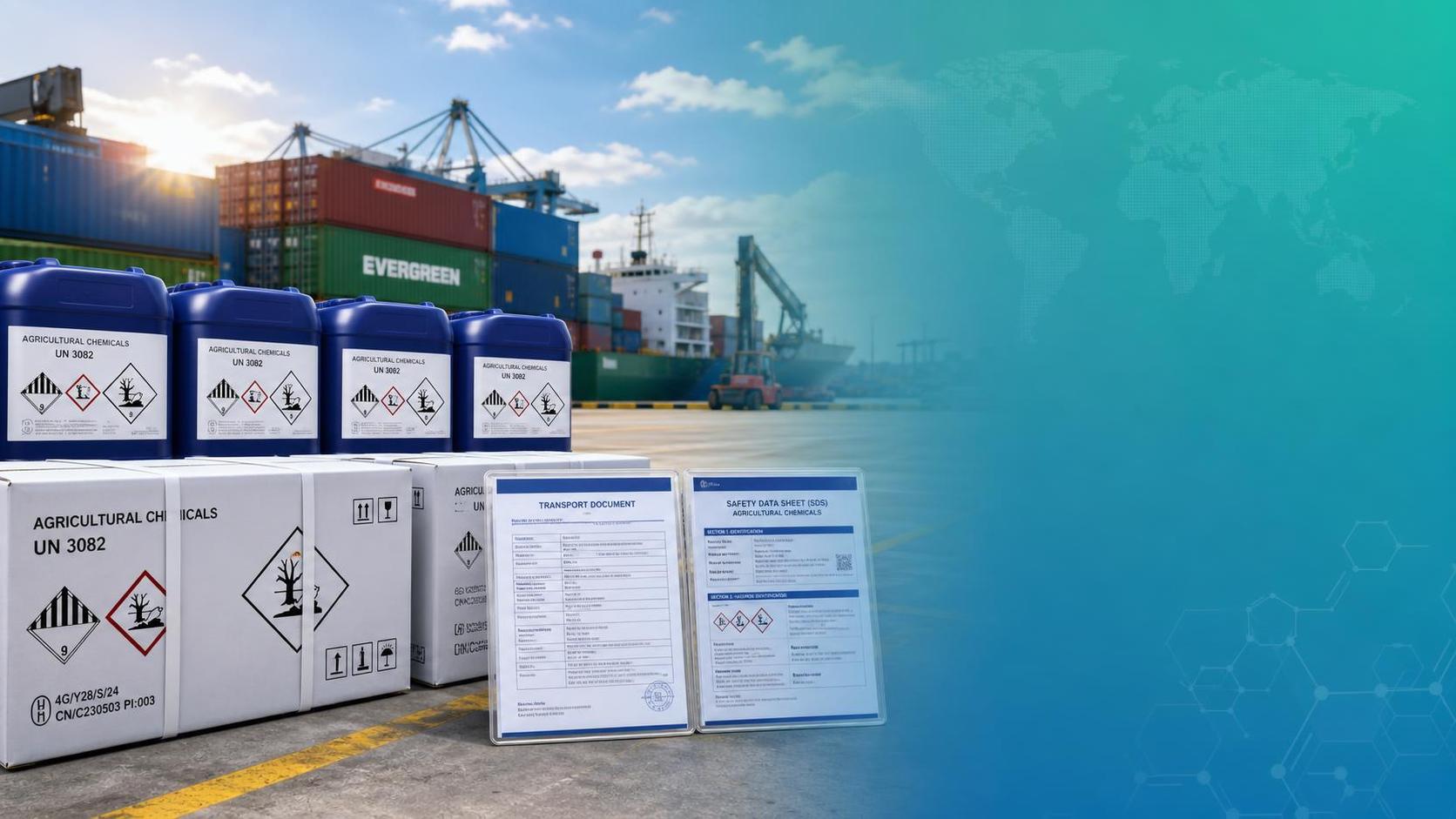
Can integrated pest control for crops reduce chemical usage by half? In many crop systems, it can, but only when pest monitoring, thresholds, crop practices, biological controls, and carefully timed treatments are managed as one program. That question matters to buyers because agricultural chemicals sold across borders face a much more demanding path than products sold domestically. The active ingredient may be identical, yet the registration file, label language, packaging, transport classification, import permits, and customs documents can all change.
The practical difference is simple: a domestic sale is governed mainly by the rules of the manufacturing country and local distribution channels. An export sale must satisfy the exporter’s requirements, the destination country’s rules, carrier requirements, and customs controls at both ends. Missing one document or using the wrong label can delay a shipment long after the goods have left the factory.
Domestic approval does not automatically allow export
A common misunderstanding is that a pesticide, herbicide, fungicide, adjuvant, or fertilizer that is legally sold in the country of manufacture can be shipped anywhere. It cannot. Domestic product registration proves that the product may be placed on that particular local market under specified conditions. It does not grant permission to sell or use the product in another jurisdiction.
Importing countries often maintain their own active-substance approvals, product registration systems, maximum residue limits, restricted-use categories, and packaging requirements. Some accept a product only through a local registrant or importer of record. Others require the overseas manufacturer to provide technical data, certificates, sample labels, safety information, and evidence of manufacturing quality before registration can be considered.
That distinction is especially important for crop-protection products. A formulation that is accepted domestically may contain an active ingredient that is restricted, not registered, or approved only for different crops in the destination market. A buyer should never treat a domestic certificate as a substitute for destination-market registration confirmation.
For agricultural chemicals, the question is not merely “Can this product be exported?” It is “Can this exact formulation, concentration, pack size, label claim, and intended use legally enter and be sold in the target market?”
Can integrated pest control for crops reduce chemical usage by half?
Yes, a reduction of about half is possible in some farms and seasons, but it is not a universal promise and should not be used as one. Integrated pest control, often called integrated pest management or IPM, reduces unnecessary treatments by making decisions from field conditions rather than calendar spraying. Its strongest results usually appear where growers were previously applying routine preventive sprays without pest counts, disease forecasting, or treatment thresholds.
For example, a grower who sprays every seven days may discover through scouting that pest pressure remains below the economic threshold for several weeks. Skipping those unnecessary applications can sharply reduce total chemical use. In another field, an early biological control program, resistant crop variety, sanitation measure, or pheromone trap may prevent a pest population from reaching damaging levels.
But IPM does not mean refusing chemical treatment. When pest pressure passes the economic threshold, a properly selected and correctly applied agricultural chemical may be the most responsible option. The purpose is to use the right intervention at the right time, not to chase an arbitrary reduction target. Severe outbreaks, high-value crops, invasive pests, and weather-driven disease pressure may leave little room to reduce applications in a particular season.
This has an export implication. Overseas buyers increasingly look beyond price per drum or bag. They may ask whether a supplier can provide products that fit residue-management plans, resistance-rotation programs, and local crop protocols. A supplier that understands these questions can help the buyer source more effectively, but the local agronomist and local registration holder must still make the final use recommendation.
Labels are a regulatory document, not just packaging
Domestic labels are often designed for domestic language, approved crops, local application methods, and national hazard communication rules. Export labels must match the destination market. Translation alone is not enough.
A compliant export label may need local language text, locally required hazard pictograms, emergency contact details, net-content format, batch identification, registration number, storage instructions, disposal statements, and destination-approved directions for use. The approved crop list and application rate are particularly sensitive. A label must not suggest uses that the destination registration does not cover.
Buyers sometimes request a generic English label because it seems easier to distribute across several countries. That approach can create problems. English may be acceptable in one market but insufficient in another. Even two countries using the same language can require different warning statements, layout elements, or local distributor information.
Packaging also needs review before shipment. Compatibility between the formulation and container matters, especially for corrosive, solvent-based, oxidizing, or temperature-sensitive products. A packaging format accepted in domestic trucking may not meet dangerous-goods transport requirements for ocean freight. Inner packaging, closure type, outer cartons, marks, and palletization can all affect whether a carrier accepts the consignment.
Transport compliance adds a layer domestic buyers may never see
Many agricultural chemicals are classified as dangerous goods for transport, although classification depends on the formulation and its tested properties rather than on the product category alone. Products moving by sea, air, road, or rail can be subject to different packaging, marking, declaration, segregation, and documentation requirements.
A domestic customer may receive a shipment through an established local transport route with familiar paperwork. For export, the exporter may need a safety data sheet, dangerous-goods declaration, transport classification information, packing certificate, commercial invoice, packing list, bill of lading instructions, and certificates requested by the importing country. Some destinations also require a certificate of origin, certificate of analysis, free-sale certificate, phytosanitary-related documentation for certain products, or pre-shipment inspection documentation. Requirements depend on the product and destination, so they must be checked against current official rules.
One costly error is treating the safety data sheet as a universal customs document. It is essential for hazard communication and transport assessment, but it does not replace import registration, a valid customs code, or destination-specific permits. Another mistake is declaring a product under a broad chemical description that does not match the actual goods. Customs authorities and carriers expect consistent information across the invoice, SDS, label, packing list, and shipping declaration.
The export process starts before production
Experienced buyers usually raise compliance questions before confirming a purchase order. That is the right time to do it. Once a formulation has been packed with the wrong label or a vessel booking has been made under incorrect dangerous-goods details, changes become slower and more expensive.
A disciplined pre-shipment review should cover the following points:
- Confirm that the product is registered, permitted, or otherwise eligible for import and sale in the destination market.
- Check the exact formulation, active ingredient concentration, intended crop use, and pack size against local approval conditions.
- Approve destination-compliant artwork before printing labels and cartons.
- Verify transport classification and carrier acceptance for the chosen shipping mode.
- Agree in writing on required documents, document language, consignee details, and certificate format.
- Check import licensing, local storage rules, and customs clearance responsibilities before dispatch.
This process may feel detailed for a first order, but it reduces repeat-order friction. It also prevents a buyer from receiving a product that is physically sound but commercially unusable because its paperwork or label does not fit the market.
Registration, customs, and product quality are separate checks
These areas are related, but they are not interchangeable. Product quality addresses whether the goods meet the agreed specification, such as assay, appearance, moisture, pH, density, or other relevant parameters. Registration addresses whether the product may be marketed or used in a territory. Customs compliance addresses whether the shipment may lawfully cross the border under the declared classification and supporting documents.
A certificate of analysis can support a quality discussion, but it does not prove registration. A registration certificate may support market access, but it does not remove the need for accurate customs documentation. Buyers who keep these checks separate make fewer assumptions and find problems earlier.
This is also where stable supply matters. Agricultural demand is seasonal, and a registration window can be missed if a supplier cannot coordinate production, packaging, documentation, and shipment timing. Supply reliability is not only a factory-capacity question. It includes response speed when a carrier asks for revised dangerous-goods information or when customs requests clarification.
How Huafeng Chemical fits into an export purchase
Shandong Huafeng Chemical Co., Ltd. operates from Shandong Province, an important chemical manufacturing region in China. For overseas clients sourcing chemical products, its role is not limited to supplying goods. Comprehensive foreign-trade capability is useful when an order requires coordination among production, export documentation, packaging details, logistics providers, and the buyer’s local compliance team.
That said, a supplier should not be expected to replace the importer’s legal responsibility. The local importer, registration holder, distributor, or appointed regulatory consultant is usually best placed to confirm destination-market authorization and current local rules. A capable export supplier can provide accurate technical information, product documents, responsive communication, and stable supply support. The buyer should use those materials to complete the local approval and import process correctly.
Huafeng Chemical’s broad product portfolio can be useful for buyers seeking to consolidate sourcing, especially when they need different chemical products under coordinated export arrangements. The right fit is a buyer that values documentation discipline and realistic lead-time planning, rather than one looking for an instant workaround to a registration or import restriction.
Questions buyers often ask
Can we export a product before its local registration is complete?
Usually, it should not be shipped for commercial sale until the destination’s relevant registration and import requirements have been confirmed. Limited samples, research materials, or trial products may follow separate rules, but those rules should be verified with the competent local authority.
Does changing the brand name create a new regulatory problem?
It can. A brand-name change may require label approval, registration amendment, or notification, depending on the market. The active ingredient being unchanged does not automatically make the new presentation acceptable.
Are agricultural chemicals always dangerous goods for shipping?
No. Classification depends on the product’s physical and hazardous properties and applicable transport rules. Never assume from the product name alone; confirm the current classification using the product’s safety and transport information.
Can a supplier guarantee customs clearance?
A supplier can prepare correct export documents and coordinate shipping information, but customs clearance also depends on the importer’s permits, declaration, local registration status, and customs review. Guarantees should be treated carefully.
What should be checked first for a new market?
Start with market access: whether the exact product is permitted, who can register or import it, and what label and document set is required. Price comparisons are useful only after that basic route is clear.
For buyers evaluating export suppliers, the best decision is rarely based on the lowest quoted product price alone. Ask for consistency: consistent specifications, consistent documentation, consistent labeling control, and consistent responses when conditions change. And keep the agronomic goal in view. Can integrated pest control for crops reduce chemical usage by half? It may, in the right conditions, but responsible chemical sourcing and responsible crop protection both depend on accurate local information rather than assumptions.
Send Us Your Inquiry Today
