









Product Quick Navigation
Get a Quote
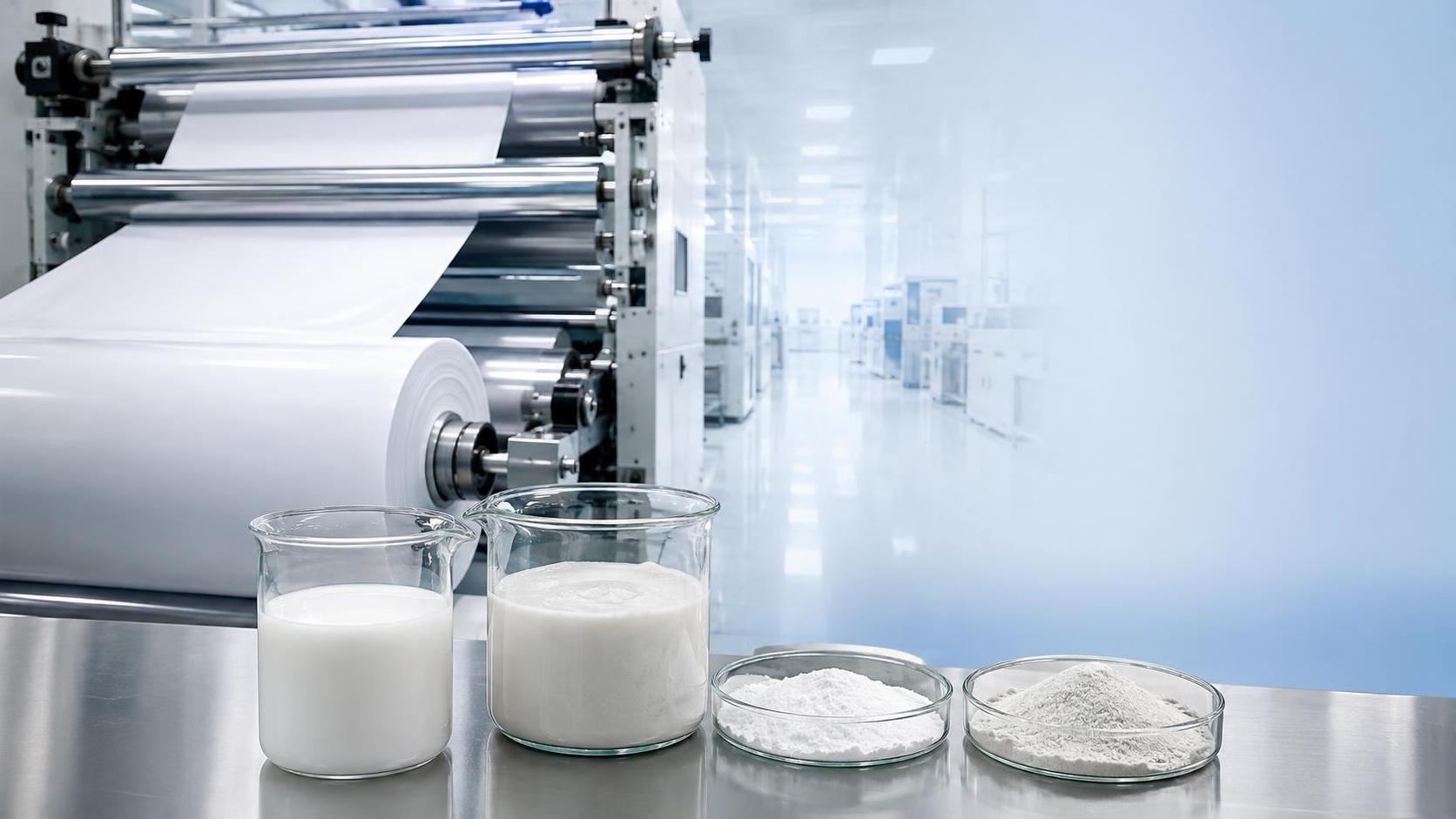
Oxidized starch is often the best starting point for paper coating when the goal is a smooth, printable surface with manageable coating viscosity. It performs especially well in pigment coatings based on calcium carbonate or clay, where the starch must bind pigments without making the coating too thick for stable application. However, oxidized starch is not automatically the best choice for every grade. Hydroxyethylated, cationic, and dextrinized starches can be better suited to particular coating systems, application methods, and surface-strength targets.
The practical answer is to select the modified starch by its behavior in the finished coating color rather than by its name alone. Solids content, viscosity profile, water retention, binder demand, pigment type, drying conditions, and the intended printing process all influence the result. A starch that runs cleanly on one coating line may cause poor holdout, excessive water removal, or streaking on another.
Why oxidized starch is widely used in coating colors
Oxidized starch is produced by controlled oxidation of native starch, which lowers molecular weight and introduces functional groups that change its rheology and film-forming behavior. In paper coating, its main advantage is the ability to provide useful binding strength at a relatively low cooked viscosity. This allows coating formulations to reach higher solids without becoming too difficult to pump, filter, or apply.
For many coated woodfree, packaging, and board applications, oxidized starch offers a balanced set of properties:
- It contributes to pigment binding and helps reduce dusting or picking at the coated surface.
- Its lower viscosity supports smoother blade or rod coating at practical solids levels.
- It forms a reasonably continuous film after drying, improving surface consolidation.
- It can partially replace more expensive synthetic binders where the required dry-pick strength is moderate.
- Its cooked solution is usually easier to meter and blend than a high-viscosity native starch slurry.
Oxidized starch is particularly useful in a pre-coat or base-coat layer, where pigment binding and coverage matter more than maximum gloss. It also works well when a formulation needs a relatively mobile coating color but cannot tolerate excessive loss of binder strength.
Its limitation is that lower molecular weight does not always produce the strongest dried coating film. A highly oxidized grade may give excellent runnability yet contribute less to water resistance, wet rub resistance, or demanding high-speed printing performance than a formulation containing a stronger synthetic co-binder. Selecting oxidized starch solely because its viscosity is low can lead to an underbound coating.
When hydroxyethylated starch gives a better result
Hydroxyethylated starch is modified by introducing hydroxyethyl groups onto the starch molecule. This modification improves water affinity, dispersion stability, and resistance to rapid viscosity changes. It is often selected where coating behavior must remain stable over a longer circulation period or where the coating contains ingredients that make simple oxidized starch less predictable.
A hydroxyethylated starch can be useful in coating systems that require controlled water retention. If water drains too quickly into the base paper, the coating may lose mobility at the blade or metering element. The result can be poor coverage, uneven surface appearance, blade streaks, or local variations in coat weight. Better water management helps the coating remain workable until it is leveled and applied.
This starch type can also support smoothness and reduced brittleness in the dried coating layer. That can matter where the coated sheet is folded, creased, or converted after printing. The benefit should be verified against the full formulation, because latex type, mineral geometry, and drying intensity can have a larger effect on cracking than starch selection alone.
Hydroxyethylated starch is not necessarily the first choice for every coating color. Its cost and performance profile must be compared with the required application window. If a standard oxidized starch already delivers stable viscosity, acceptable surface strength, and good print results, switching solely for a more sophisticated modification may add complexity without solving a real problem.
Cationic starch: useful, but usually not the primary coating binder
Cationic starch carries positively charged groups. In papermaking, it is more commonly associated with wet-end retention, drainage, and internal strength development because it interacts strongly with negatively charged fibers, fines, and fillers. In a conventional pigment coating color, that same charge interaction requires care.
Most common coating pigments, dispersants, and synthetic binders are anionic or behave as anionic materials in water. Introducing a strongly cationic starch directly into such a system can destabilize the dispersion. Viscosity may rise unexpectedly, particles may agglomerate, and the coating can become difficult to filter or apply. These effects are sometimes mistaken for insufficient dispersant, although the root cause may be charge incompatibility.
For that reason, cationic starch is generally not the default answer to which modified starch type works best for paper coating. It may have a role in specially designed systems, in precoating of certain substrates, or where interactions with the base sheet are deliberately managed. Any use should begin with a small compatibility trial that includes the actual pigment slurry, dispersant, latex, thickener, and optical additives.
Dextrinized starch for fast preparation and specialized surface needs
Dextrins are starch products with reduced molecular size, commonly prepared through thermal or acid-assisted conversion. They can dissolve or disperse readily and often provide low-viscosity adhesive solutions. In coating applications, dextrins are useful where rapid preparation, fast penetration control, or a specific balance of adhesion and flow is required.
They are more frequently considered for surface treatment, label papers, specialty papers, and adhesive-related applications than for demanding high-quality pigment coating. Still, a dextrinized starch can be appropriate when the coating is relatively simple and the required dry strength is modest. Its low viscosity can make high-solids handling easier, but that should not be confused with superior coating performance.
Because dextrin molecules are relatively short, the dried film may have lower cohesive strength than that of a suitable oxidized or hydroxyethylated starch grade. Excessive penetration into a porous base sheet is another possible concern. When too much binder migrates away from the surface before drying, the coating can appear adequately applied while remaining weak at the print interface.
The coating layer changes the answer
A single-layer coating calls for a more balanced starch because the same layer must provide coverage, binding, smoothness, and a receptive printing surface. Oxidized starch is often effective here when combined with a compatible synthetic binder. The formulation needs enough film-forming material near the surface to resist picking, linting, and ink tack.
Multilayer coating allows the starch choice to be more targeted. A base coat can use a starch that supports pigment binding and economical solids handling, while a top coat may use a lower-starch or more latex-rich formulation to protect gloss, print gloss, and ink holdout. A starch that performs well below the top coat may be unsuitable in the final layer if it increases porosity or reduces the uniformity of the surface film.
Board grades often tolerate a different balance from fine printing papers. In a folding carton coating, dry surface strength, crease behavior, and coverage over a rough substrate may take priority over very high gloss. For a lightweight publication grade, coating uniformity and blade runnability may carry more weight. The best modified starch follows the failure mode that needs to be controlled.
Read viscosity together with solids and shear
Viscosity is one of the most frequently misread selection parameters. A low-viscosity starch solution is not automatically better because the final coating contains pigments, latex, thickeners, lubricants, optical brighteners, and other additives. The relevant measurement is the behavior of the complete coating color at its working solids and under the shear conditions created by pumps, screens, pipes, and the application station.
Two coating colors may show a similar low-shear viscosity in a laboratory cup yet behave very differently at the blade. One may lose water rapidly and build pressure near the blade tip; the other may remain too fluid and produce insufficient coat weight. A modified starch affects this behavior through its molecular size, hydration rate, interaction with water, and compatibility with the rest of the binder package.
Changes in viscosity after cooking also deserve attention. Incomplete cooking leaves ungelatinized particles that can plug filters, create scratches, or show up as coating defects. Overheating or holding the starch too long at elevated temperature can reduce viscosity beyond the intended range. A stable preparation procedure matters as much as the nominal starch grade.
A practical selection route
- Start with the target property that is currently limiting production: surface strength, coating solids, blade runnability, smoothness, print mottle, or binder cost.
- Define whether the starch belongs in the base coat, top coat, or a single coating layer. This avoids evaluating a material against the wrong performance target.
- Prepare coating colors at the intended pigment ratio and solids level. Test starch in the real binder system rather than in water alone.
- Monitor cooked-starch viscosity, final coating viscosity, pH response, filtration behavior, and stability during the expected holding time.
- Apply trial coatings under representative metering and drying conditions. Sheet samples prepared with a laboratory drawdown are useful for screening, but they do not fully reproduce blade pressure, dewatering, or drying stress.
- Evaluate the dried sheet for dry pick, surface strength, smoothness, porosity, gloss where relevant, and print behavior. A smooth unprinted surface can still perform poorly under high-tack ink.
Common selection errors
Replacing synthetic latex with starch on a simple dry-binder-equivalent basis is a common source of disappointing results. Starch and latex do not create identical films. Latex particles coalesce during drying, while starch forms a hydrophilic polymer film after water removal. Their contribution to water resistance, ink interaction, flexibility, and surface energy is different. Partial replacement should be assessed through coating and printing tests, not only through binder solids calculations.
Another error is blaming starch for poor coating holdout when the base paper is the main cause. A highly porous or uneven sheet can pull water and binder into localized areas before the coating has leveled. Increasing starch dosage may raise viscosity and create new application problems without correcting the substrate. Surface sizing, base-sheet porosity, and precoat coverage may need attention first.
Excessive starch addition can also lower gloss or create a more porous coating surface, especially when the top coat is expected to deliver high visual quality. More binder does not always mean stronger surface performance. Once pigment particles are sufficiently held together, additional starch may interfere with packing, alter water movement, or shift the balance between coating consolidation and optical properties.
Compatibility deserves early screening
The selected modified starch should be compatible with the pigment dispersion, latex, rheology modifier, lubricant, and any insolubilizer used in the coating. A material can appear acceptable immediately after mixing but become unstable after several hours. Delayed thickening, sedimentation, foaming, and filter residues are warning signs that should be investigated before line trials.
Mixing order also affects the result. Cooked starch is usually cooled to the specified handling range before it is combined with shear-sensitive or pH-sensitive ingredients. Adding latex into a poorly controlled hot starch system, or introducing starch into an already unstable pigment slurry, can make a compatible formulation appear incompatible. The process sequence needs to be held constant when comparing grades.
For most pigment-coated paper, use oxidized starch as the reference material because it provides a strong balance of viscosity control, pigment binding, and coating runnability. Move toward hydroxyethylated starch when water retention, formulation stability, or film flexibility becomes the limiting issue. Treat cationic starch as a specialized choice requiring charge-compatibility control, and use dextrinized starch where its low viscosity and rapid preparation fit the coating objective. The best grade is the one that delivers the required coating behavior on the intended paper machine, not the one with the most modified chemistry.
Send Us Your Inquiry Today
