









Product Quick Navigation
Get a Quote
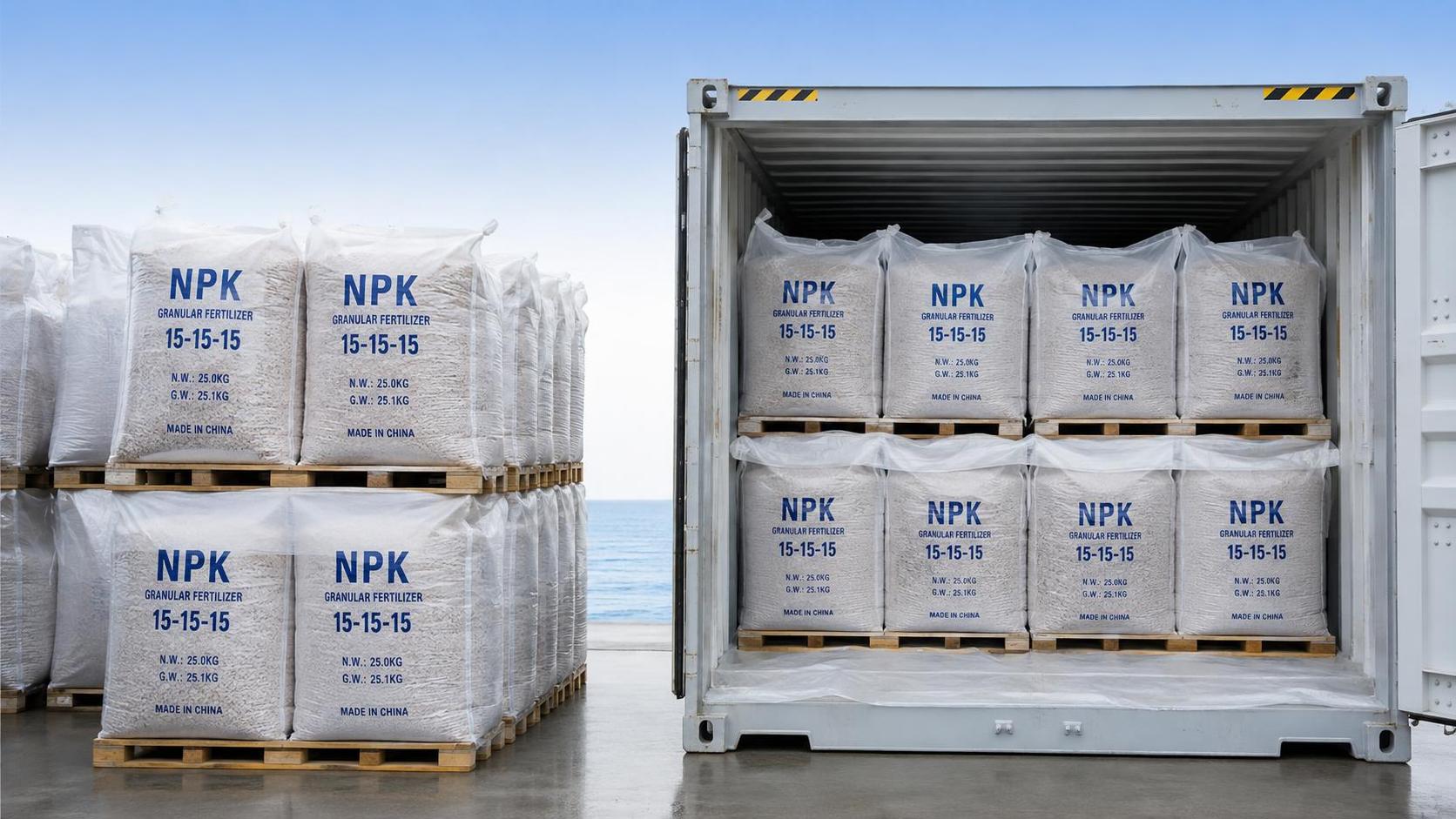
Does NPK Fertilizer Need Special Packaging for Sea Shipment?
Does NPK fertilizer need special packaging for sea shipment? In most export situations, the practical answer is yes—although “special” does not always mean unusually complex. It means packaging designed around the fertilizer’s formulation, particle characteristics, moisture sensitivity, voyage duration, loading method, destination climate, and applicable transport rules.
NPK fertilizer may look stable when it leaves the factory, but ocean transport is a different environment. Bags can be stacked under compression for weeks, containers can experience sharp temperature changes, and humid air can condense inside the cargo space. If the packing system is not matched to those conditions, the result may be caking, granule breakdown, leakage, label loss, contamination, or rejected cargo at destination.
For chemical exporters, packaging is therefore not merely a purchasing detail. It is part of product protection, logistics planning, regulatory compliance, and customer confidence. The right arrangement should preserve the agreed nutrient product in a usable condition from filling line to final warehouse.
Why Ocean Transit Creates Packaging Risks for NPK Fertilizer
Many NPK grades contain hygroscopic raw materials or components that can attract moisture from the surrounding air. Even when a formulation is not highly moisture-sensitive, prolonged exposure to humidity may affect free-flowing behavior. Granules can soften at contact points, bridge together, or form hard lumps. This is particularly inconvenient for distributors and growers who need material that can be spread evenly or blended further.
The major risk is often not direct seawater exposure. It is moisture migration inside a container. A container loaded in a warm and humid port may later enter a cooler climate. As the air temperature falls, condensation can form on the container roof and walls. This phenomenon, often described in logistics as container rain or container sweat, can drip onto the upper bags. A package that performs adequately in domestic trucking may not provide sufficient protection on a multi-week sea voyage.
Mechanical stress also matters. Fertilizer bags are handled repeatedly: moved by forklift, loaded into containers, restrained during transit, discharged at port, and sometimes stored before delivery. Sharp pallet edges, rough container floors, poor stacking patterns, and excessive stack height can all damage bags. Once a bag opens, fertilizer dust and loose granules create both a quality issue and a cargo-handling problem.
The formulation itself should guide the decision. Granular compound fertilizer, blended fertilizer, water-soluble NPK, and products containing particular nitrogen sources may have very different transport and regulatory considerations. It is unwise to assume that one familiar bag type suits every grade.
The Packaging System Is More Than the Outer Bag
A sea-shipment package should be considered as a system rather than a single material. The outer bag, inner liner, closure method, pallet or container loading method, and moisture-control measures all work together. A strong woven bag alone may resist tearing yet still allow moisture vapor to reach the product if there is no suitable internal barrier.
For bagged NPK, polypropylene woven bags are widely used because they offer good strength, practical handling, and reasonable cost. For export shipments, an inner polyethylene liner is commonly considered where added moisture protection is needed. The liner should fit the bag correctly, remain intact during filling and stacking, and be closed in a way that limits moisture ingress. A liner that is thin, poorly sealed, or punctured by handling will not provide the protection buyers expect.
Laminated woven bags can offer another level of protection, depending on their construction. They may be appropriate when the product, route, and commercial presentation call for a more robust barrier. However, the choice should not be based on appearance alone. Film quality, seam design, bag weight, drop resistance, and closure integrity matter more than whether the package simply looks premium.
For larger industrial deliveries, flexible intermediate bulk containers, commonly called FIBCs or big bags, may be suitable. They can simplify loading and reduce the number of individual packages. Yet they require careful evaluation. The fabric construction, liner specification, lifting-loop design, safe working load, filling and discharge configuration, and destination handling equipment all need to be compatible. A bulk bag may reduce packing operations, but it is not automatically the lower-risk option for every buyer or port.
Moisture Protection Starts Before the Container Is Sealed
Even a well-designed bag can fail if the fertilizer is packed when it is too warm, exposed to humid air during loading, or placed in a wet container. The packing environment deserves attention. Product should be cooled and conditioned according to the manufacturer’s normal process requirements before bagging. Packaging materials should be dry and stored away from rain, floor moisture, and direct exposure to weather.
Before loading, the container should be inspected for holes, damaged door seals, stains, odor, residual cargo, loose nails, and visible moisture. A clean container is not necessarily a dry container. The floor, walls, and roof should be checked carefully. If there is uncertainty about its condition, using it for moisture-sensitive fertilizer is a false economy.
Container liners, kraft paper, corrugated sheets, or other protective materials may be used in some projects, but their value depends on the actual cargo plan. They should not be added automatically without considering ventilation, condensation behavior, loading method, and disposal requirements at destination. Desiccants may also be considered for certain routes, but they must be selected and positioned so they do not rupture, contact the product, or create handling concerns. There is no universal desiccant quantity that fits every container and every climate.
For particularly humid routes, the buyer’s storage conditions are also relevant. Cargo can arrive intact and still cake later if it is left in an open, damp warehouse. Export packaging should be discussed together with downstream storage expectations, not treated as an isolated factory decision.
Bag Closures, Marking, and Palletization Are Often Overlooked
The top closure is one of the most vulnerable parts of a fertilizer bag. Stitching is common, but the stitching pattern, thread quality, fold arrangement, and interaction with an inner liner should be checked. If the liner remains open beneath a stitched outer bag, the package may not provide the moisture barrier assumed by the customer. Heat sealing, sewing, or a combined closure method may be appropriate depending on the bag structure and filling process.
Marks should remain readable after handling. At a minimum, commercial packages commonly need information agreed in the sales documentation, such as product name, net weight, batch or production reference where required, handling marks, and destination details. The exact label content depends on the market and the product’s legal status. Transport labels, hazard communication, language requirements, and fertilizer registration information should be confirmed from the applicable documents rather than copied from a previous shipment.
Palletized cargo can improve handling discipline, but it is not always the preferred method for containerized fertilizer. Pallets consume container space and can create concentrated pressure points if poorly designed. Floor-loaded bags may offer better container utilization, provided they are arranged in stable interlocking layers and protected from rough surfaces. The decision should consider destination warehouse equipment, unloading practices, bag size, and freight economics.
Whether palletized or floor-loaded, bags should not be forced against protrusions or container doors. Void spaces should be managed so cargo does not shift during sea motion. Stretch wrap can stabilize pallets, but it is not a substitute for sound stacking or a moisture barrier. Excessively tight wrapping may also complicate inspection and unloading.
Transport Classification Must Be Checked Grade by Grade
A common mistake is assuming that all NPK fertilizer is handled the same way in international transport. Many fertilizer products may be shipped as non-dangerous goods, while formulations containing certain substances or meeting particular criteria may trigger additional requirements. The actual composition, safety data sheet, physical properties, and applicable transport regulations must be reviewed for the specific product being exported.
Where a product is regulated for sea transport, the packaging, marks, documentation, stowage, segregation, and carrier acceptance process may differ materially from those for ordinary cargo. The International Maritime Dangerous Goods Code is relevant to ocean carriage of dangerous goods, but a supplier should not self-classify based on a product name such as “NPK.” Classification should be supported by current technical and regulatory information.
Importing markets may also impose fertilizer-specific requirements unrelated to maritime classification. These can involve nutrient declarations, labeling language, product registration, contaminant limits, packaging waste obligations, or local documentation. Packaging design should leave enough space for required information and should be finalized only after destination-market requirements have been clarified.
A Practical Pre-Shipment Review
Before confirming packaging for an export order, the supplier and buyer should align on a few operational questions:
- What is the exact NPK formulation, physical form, particle size range, and tendency to absorb moisture or cake?
- How long is the expected transport route, including transshipment and possible port delays?
- Will the cargo move in standard bags, palletized units, or FIBCs?
- What are the temperature and humidity conditions at origin, during transit, and at destination?
- Does the product require a liner, a laminated bag, container protection, or a specific closure method?
- What shipping classification and destination-market labeling requirements apply to the exact grade?
- How will the consignee unload and store the fertilizer after arrival?
This conversation may seem basic, but it prevents the common mismatch between a product designed for one domestic distribution channel and a package expected to survive international ocean logistics. Packaging decisions made only on unit cost frequently reappear later as claims, repacking work, delayed clearance, or damaged commercial relationships.
Packaging as Part of Reliable Chemical Export Delivery
As global trade becomes more interconnected, chemical supply chains face higher expectations for stability, regulatory awareness, and response speed. Fertilizer packaging sits at the meeting point of production, port operations, ocean freight, and local distribution. It should be reviewed with the same care given to product specifications and shipping documents.
Shandong Huafeng Chemical Co., Ltd., based in Shandong Province, operates in one of China’s major chemical industry regions and serves overseas markets through a broad chemical product portfolio and integrated foreign-trade capabilities. In this type of export work, the useful question is not simply whether a bag is available. It is whether the packaging, product data, loading plan, and destination requirements fit together before cargo reaches the port.
So, does NPK fertilizer need special packaging for sea shipment? It needs packaging appropriate to the risk. For some grades, a properly closed woven bag may be sufficient. For moisture-sensitive products, long voyages, demanding climates, or bulk industrial deliveries, a liner, stronger bag construction, enhanced container protection, or a different loading method may be justified. The sound approach is to confirm the formulation, route, classification, and consignee’s handling conditions before the packaging specification is locked in.
Send Us Your Inquiry Today
