









Product Quick Navigation
Get a Quote
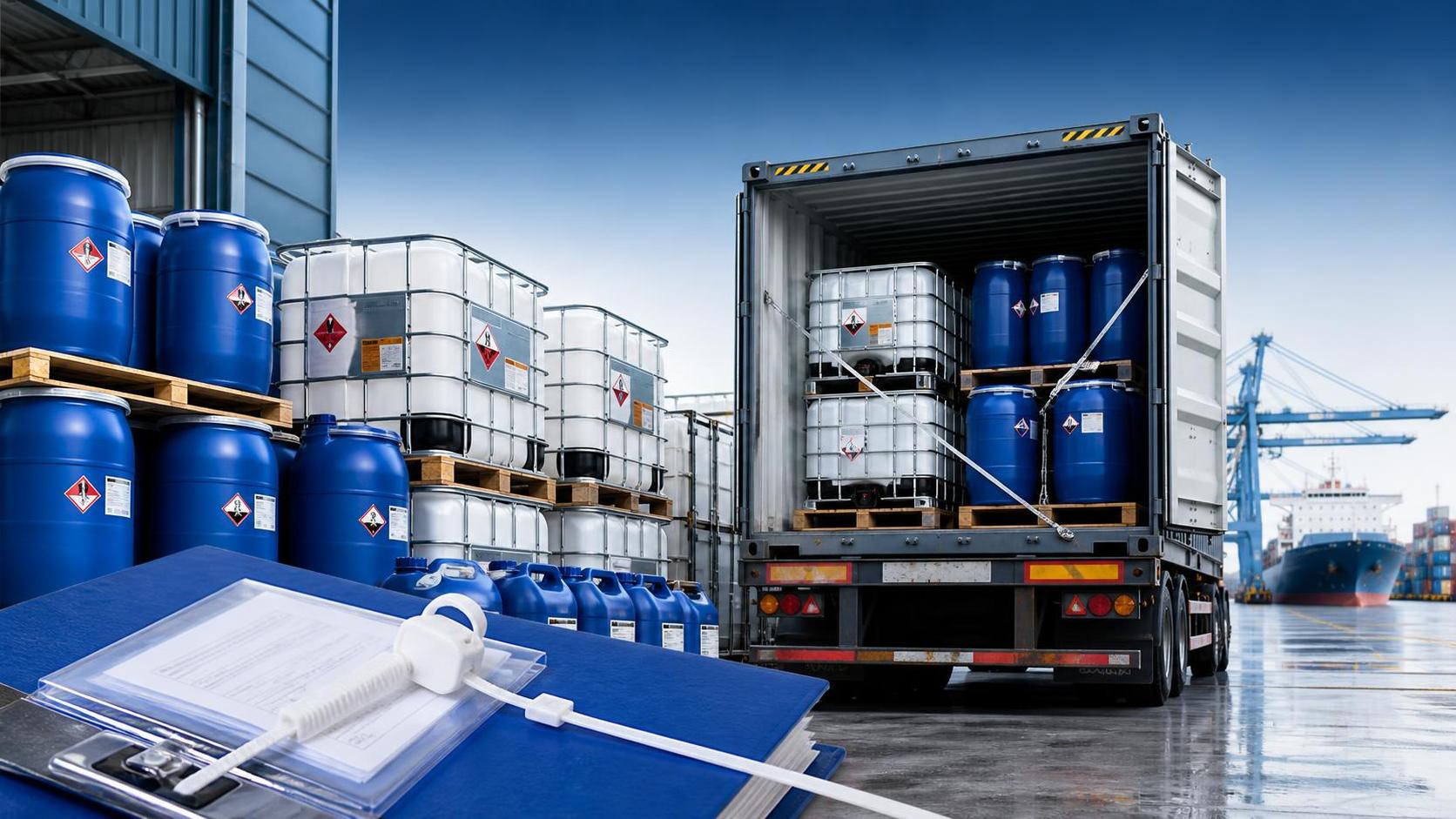
Are Shandong Huafeng Chemical Distribution Services Cost Competitive?
Are chemical distribution services in Shandong Huafeng Chemical cost competitive? The practical answer is yes in many export situations, but not simply because a quoted product price may look lower than an alternative source. In chemical procurement, the lowest ex-works number is often not the lowest landed cost. Packaging suitability, documentation quality, shipment consolidation, export responsiveness, transit risk, and the cost of resolving a non-conforming delivery can all outweigh a small difference in unit price.
Shandong Huafeng Chemical Co., Ltd. operates from Shandong, one of China’s established chemical manufacturing regions. That location matters because buyers are not evaluating a distributor in isolation. They are evaluating its access to producers, ports, packaging resources, freight coordination, and export documentation. Huafeng Chemical’s broad product portfolio and integrated foreign-trade capability can be commercially attractive where a buyer needs more than one chemical category, requires export support, or wants a supplier able to coordinate details that would otherwise be handled across several vendors.
Still, cost competitiveness should be tested against the purchasing model, destination market, and material involved. A buyer sourcing one full container of a standard commodity may reach a different conclusion from a buyer placing mixed orders of several products with strict labeling, documentation, or delivery-window requirements.
Why Unit Price Is an Incomplete Comparison
Chemical buyers frequently begin with a familiar comparison: supplier A’s price per metric ton versus supplier B’s. That is necessary, but it is not enough. A chemical shipment is a chain of decisions, and each decision can create cost. For example, a lower-priced material supplied in inconvenient packaging may raise unloading, warehousing, or repacking expenses. A shipment that is ready before its hazardous-goods paperwork is complete can lose time at the forwarder or port. A product that arrives without the technical information requested by local authorities may create delays far beyond the value of the initial price saving.
A more useful question is: what is the total procurement cost of getting an acceptable product, with usable documentation, to the required location on the required date? That includes the commercial quote, but also inland transport, export handling, ocean or air freight where applicable, insurance, packaging, customs treatment, bank charges, inspection requirements, and the internal time spent managing exceptions.
This is where a distribution-oriented exporter can offer an advantage. Instead of asking the buyer to coordinate a producer, a trading firm, a packaging party, and a freight contact separately, an experienced chemical export service provider can act as the commercial coordination point. The value is not that every element will always be cheaper. The value is that fewer handoffs can mean fewer mismatched specifications and less administrative friction.
Where Huafeng Chemical May Have a Cost Advantage
Shandong’s industrial base gives chemical exporters access to a dense supplier ecosystem. For overseas customers, this can be helpful when sourcing common industrial chemicals, intermediates, solvents, additives, inorganic materials, or other products available from multiple regional sources. Availability across a broader network may allow the distributor to compare production schedules, packaging options, and shipment readiness rather than depend on a single factory’s calendar.
Huafeng Chemical’s product breadth is especially relevant to customers purchasing a basket of materials. If several compatible products can be organized under one export transaction, the buyer may reduce supplier onboarding work, payment handling, communication loops, and some logistics complexity. This does not mean every mixed shipment is automatically economical. Chemical compatibility, dangerous-goods classifications, packaging forms, container loading restrictions, and destination rules must be checked carefully. But when consolidation is feasible, it can improve the economics of smaller or more varied purchasing programs.
The company’s comprehensive foreign-trade capability is another factor. Export execution is often underestimated until a shipment becomes urgent. Buyers may need a commercial invoice that matches the purchase order exactly, a packing list that reflects the actual loading configuration, certificates or technical documents requested under contract, and timely answers when a freight forwarder or customs broker asks a question. A supplier that is familiar with these workflows can lower the risk of costly rework. In chemical trade, administrative accuracy is part of the product service.
The Costs That Often Surprise Overseas Buyers
The most expensive failures are rarely visible on the initial quotation. One common issue is unclear specification alignment. A product name may sound identical across suppliers while assay, moisture content, color, particle size, inhibitor level, impurity limits, or intended application differ. If the buyer’s process needs a narrow specification, “standard grade” is not a sufficient purchasing instruction. The technical data sheet, agreed specification, test method, and certificate-of-analysis expectation should be settled before price negotiations become final.
Packaging is another overlooked cost center. Drums, bags, IBCs, and bulk formats each change freight efficiency, handling risk, storage requirements, and waste disposal obligations. The right choice depends on the customer’s receiving equipment and consumption rate. A larger package may look cheaper per kilogram, but it is not economical if the product must be transferred into smaller containers, if it cannot be safely handled on site, or if partial use creates shelf-life concerns.
Then there is regulatory fit. Chemical compliance is not a single universal checklist. Classification, labeling, safety data sheet format, transport status, import registration, and local language requirements may differ by destination and application. The exporter can support the information flow, but the importer or end user may still carry responsibilities under local law. Buyers should avoid treating supplier-provided documents as a substitute for their own compliance review. That distinction is important, particularly for controlled, hazardous, food-contact, pharmaceutical, agricultural, or consumer-facing applications.
For this reason, a cost-competitive distributor is not merely one that offers a favorable quote. It is one that can identify early when a request contains an expensive hidden assumption: an unrealistic delivery date, an unclear product standard, incompatible cargo in a proposed mixed load, or a document request that must be confirmed before shipment.
Direct Factory Sourcing Versus Distribution Service
Direct factory sourcing can be the better option when the buyer has high, predictable volume; requires a dedicated grade; has its own technical and logistics teams; and is willing to manage supplier qualification in depth. In that situation, removing a distribution layer may produce a lower commercial price, especially where the buyer can commit to regular container-scale purchases.
However, factory-direct purchasing has a management cost. The buyer may need to assess production capability, negotiate each operational detail, handle communication across time zones, arrange export logistics, and maintain alternatives if the primary source has a maintenance shutdown or allocation issue. Some factories are excellent at manufacturing but less equipped for smaller mixed orders, customized export documents, or frequent order-status communication.
A company such as Huafeng Chemical can be a more balanced choice when the transaction needs flexibility. This may include buyers who are establishing a new supply lane, distributors serving multiple downstream customers, manufacturers that need several inputs rather than one bulk commodity, or purchasing teams that value a single point of contact. The relevant comparison is not “factory versus trader” as a principle. It is the cost and risk of the full operating model.
How to Evaluate a Quote Properly
A serious comparison should place suppliers on the same commercial basis. If one offer is ex-works, another is FOB, and a third includes delivery to a named destination, the prices cannot be compared meaningfully without rebuilding the cost stack. Incoterms should be clearly stated, along with the named place or port, because a vague “CIF price” or “delivered price” leaves too much room for different assumptions.
Before selecting Huafeng Chemical or any other chemical distribution partner, buyers should request a written confirmation of the points that affect real cost:
- Exact product specification, intended grade, and applicable test method;
- Available packaging, net weight, palletization, and loading assumptions;
- Production or stock lead time, plus the point at which the cargo is actually shipment-ready;
- Whether the material is regulated for transport and what documentation can be provided;
- Quoted trade term, named location, validity period, and payment conditions;
- Batch traceability and the process for handling a quality claim or document discrepancy;
- Whether a combined order is practical, rather than merely possible on paper.
The last item deserves emphasis. Consolidation can save money, but only if the products can move together safely and legally, are ready at similar times, and do not create detention or storage exposure while waiting for one delayed item. In some cases, two clean shipments are cheaper than one complicated shipment. Experienced buyers know that logistics efficiency is not the same as putting everything in one container.
A Sensible View of Cost Competitiveness
Huafeng Chemical appears well positioned for overseas buyers that want access to Shandong’s chemical supply base alongside coordinated export service and a broader product offering. Its potential cost advantage is strongest where procurement complexity is meaningful: multi-product sourcing, export documentation, packaging decisions, changing delivery requirements, or the need for responsive commercial coordination.
That said, no distributor should be judged by general reputation or an attractive opening quotation alone. For a large-volume, tightly specified material purchased on a stable schedule, direct manufacturer negotiations may remain the benchmark. For a more varied chemical purchasing program, the total cost of ownership may favor a distributor that reduces interfaces and helps prevent avoidable shipment problems.
The best next step is a like-for-like request for quotation built around the actual specification, packaging, destination, trade term, and documentation needs. If Huafeng Chemical can provide clear answers on those operational details—not just a competitive number—then its distribution service has a credible basis for being cost competitive in the way chemical buyers actually experience cost.
Send Us Your Inquiry Today
