









Product Quick Navigation
Get a Quote
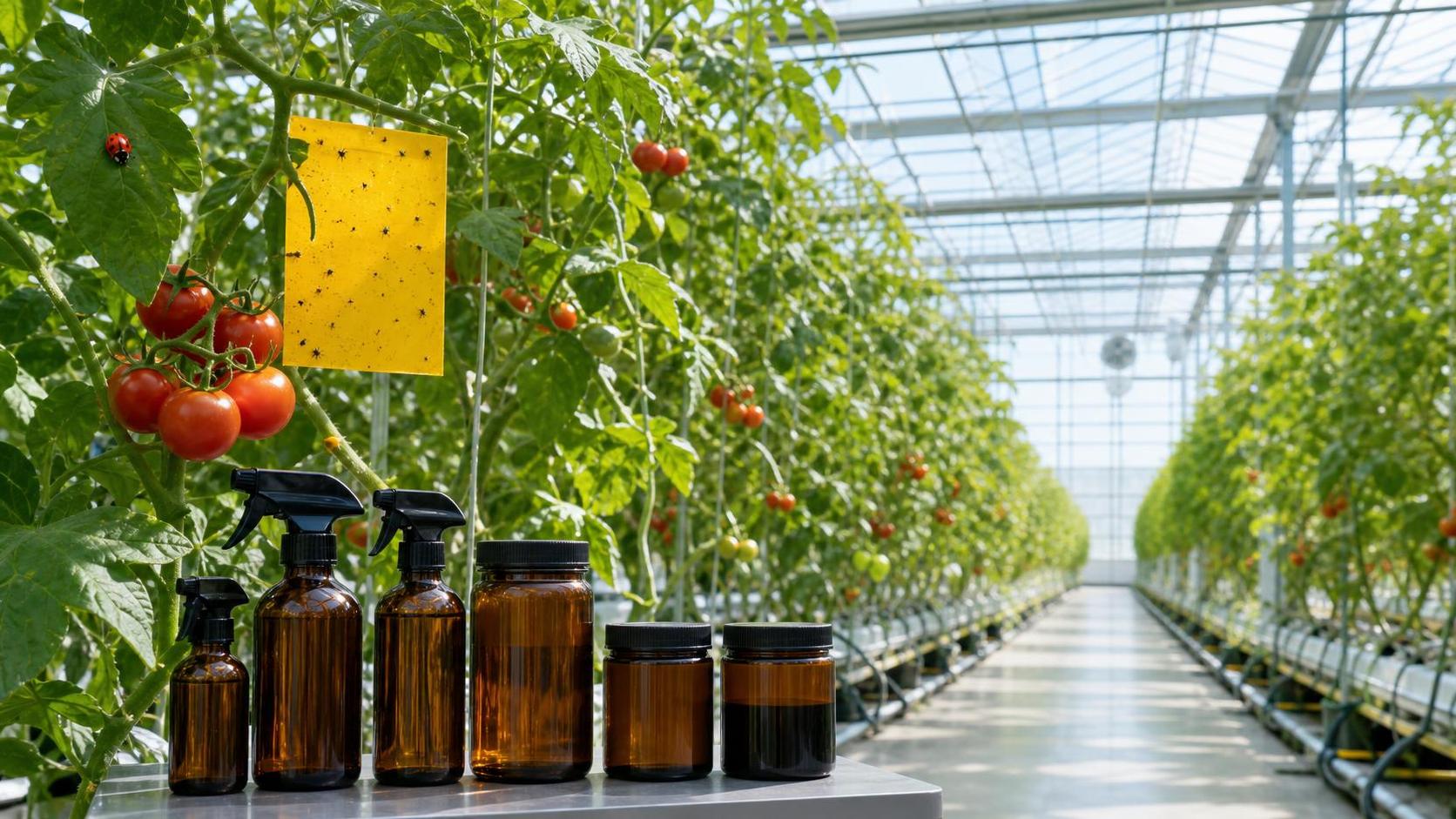
Is crop yield improvement possible with only organic pest control methods? For growers balancing productivity, residue requirements, and long-term soil health, the answer depends on pest pressure, crop type, and the quality of the overall management strategy. Organic pest control can protect yield effectively in some production systems, but it is not a universal substitute for every conventional crop-protection tool. The practical question is not whether one approach is inherently better; it is whether a given program can keep pest damage below the economic threshold under real field conditions.
This distinction matters more as agricultural markets place simultaneous demands on residue compliance, food safety, export documentation, cost control, and reliable volumes. A pest-control decision that looks sound at farm level can become commercially weak if it causes inconsistent quality, missed harvest windows, excessive labor requirements, or shipment rejection because input records do not meet destination-market rules.
Yield is determined by more than the pest-control label
Crop yield is the result of genetics, soil condition, water availability, nutrition, weather, pest pressure, disease pressure, weed competition, and management timing. Pest control affects yield by preventing loss, not by creating yield potential on its own. This is an important correction to a common market claim: a natural or organic treatment does not automatically “boost” production. It may improve marketable yield when it prevents insect feeding, plant stress, fruit scarring, disease-vector transmission, or post-harvest damage.
Organic pest control generally refers to methods permitted under a relevant organic production standard. These may include biological control agents, microbial pesticides, pheromones, traps, physical barriers, mineral-based materials, botanical extracts, sanitation, crop rotation, and habitat management. Whether a particular product is permitted depends on the crop, country, certification scheme, formulation components, and intended use. “Natural” and “organic-compliant” are not interchangeable terms.
Conventional crop protection, by comparison, usually relies more heavily on registered synthetic insecticides, fungicides, herbicides, acaricides, and other chemical products. These products may offer broader-spectrum activity, more predictable knockdown, longer residual control, or easier large-scale application. They also carry their own requirements: correct registration, maximum residue limit compliance, worker safety procedures, pre-harvest intervals, resistance-management planning, and traceable sourcing.
The yield question therefore cannot be answered by comparing organic and conventional inputs in isolation. It must be assessed against the biology of the pest, the crop’s value, the local climate, the acceptable risk of crop loss, and the buyer’s specifications.
When organic pest control can support equal or better marketable yields
Organic approaches can perform strongly when pest populations are moderate, monitoring is frequent, and intervention begins early. Their greatest advantage is often not a single dramatic treatment effect, but the cumulative benefit of a well-managed production system.
In protected cultivation, for example, biological control can be highly effective. Greenhouses and tunnels allow tighter control of pest entry, temperature, humidity, and release timing for beneficial organisms. Predatory mites, parasitoid wasps, and microbial products can suppress whiteflies, thrips, aphids, spider mites, and other pests when introduced before infestations become severe. In these settings, prevention and regular scouting are often more important than emergency spraying.
High-value vegetables, herbs, berries, and specialty fruit may also justify the labor and monitoring required by organic programs. Where buyers reward certified production or impose stringent residue expectations, preserving access to those markets can offset higher production costs. A lower total yield may still produce a better business outcome if the marketable portion is higher, the selling price is stronger, or rejected lots decline.
Organic methods can also improve the long-term resilience of a farm where they are integrated with crop rotation, soil organic matter management, balanced fertilization, resistant varieties, and sanitation. Better soil structure and plant vigor do not eliminate pest risk, but they can reduce the severity of stress and help crops recover from moderate damage. Diverse field margins and carefully managed flowering resources may support beneficial insects, although they must be designed with local pest and disease dynamics in mind.
Another useful application is resistance management. Repeated use of pesticides with the same mode of action accelerates resistance selection. Biological and physical methods can reduce dependence on a narrow chemical toolbox. This can preserve the effectiveness of registered chemical products for periods of genuinely high pest pressure, rather than using them as routine first responses.
Where organic-only programs encounter real limits
The main limitation is speed and reliability under acute pressure. Many biological and botanical products require precise timing, sufficient coverage, favorable temperature or humidity, and repeated applications. They may work well against early larval stages but poorly against mature insects. Their residual activity can be short, particularly after strong sunlight, rainfall, irrigation, or rapid crop growth.
Invasive pests and highly mobile insect vectors are especially difficult. A sudden outbreak of fall armyworm, tomato leaf miner, fruit fly, whitefly, or thrips can exceed the capacity of a purely organic program if detection is late. The risk is not limited to direct feeding damage. Several pests transmit viruses, and a short delay in suppressing vector populations can have consequences beyond the visibly affected plants.
Open-field crops also present a different operational reality from greenhouses. Beneficial insects may disperse, weather can disrupt release schedules or applications, and pest immigration from neighboring land can be constant. Large-acreage cereal, oilseed, or fiber crops often have narrow windows for treatment and lower margins per hectare. A program requiring intensive manual scouting and multiple low-persistence applications may be technically possible but commercially difficult to sustain.
Organic inputs are not risk-free simply because they are derived from biological or mineral sources. Some materials can affect non-target organisms, cause phytotoxicity when misapplied, leave unacceptable residues under certain buyer specifications, or create compatibility problems in spray tanks. Sulfur, copper-based materials, soaps, oils, and certain botanicals all require disciplined use. Copper-based disease-control programs, in particular, require careful long-term management because copper can accumulate in soil.
A further limitation is variability between formulations. The performance of microbial pesticides depends on strain identity, viable concentration, storage conditions, water quality, ultraviolet exposure, and application technique. Poor cold-chain handling or extended storage can materially reduce efficacy. This makes supplier qualification as important as field selection: a technically appropriate biological product that arrives late, has incomplete documentation, or has been stored improperly is not a dependable crop-protection solution.
Organic, conventional, and integrated programs solve different problems
For most non-certified farms, integrated pest management (IPM) is the more realistic comparison point. IPM does not mean using fewer products without a plan. It means combining prevention, monitoring, economic thresholds, biological tools, cultural practices, and carefully selected registered pesticides where justified. The objective is reliable control with the lowest avoidable environmental, residue, and resistance burden.
Under an IPM system, pheromone traps may be used to monitor pest flight; sanitation may reduce inoculum or breeding sites; beneficial organisms may be released early; and a targeted chemical intervention may be reserved for threshold breaches. This is often more robust than either routine calendar spraying or an inflexible organic-only policy.
The economic threshold matters more than a zero-pest target
Not every insect or leaf lesion warrants treatment. Eliminating every pest is rarely economically rational and can disrupt beneficial populations. The relevant question is whether expected damage will cost more than the intervention. This is the basis of an economic threshold: action should be taken before pest numbers reach the level at which losses exceed the cost of control.
Thresholds vary widely. A cosmetic defect may be unacceptable in export-grade table grapes or fresh peppers, while a similar level of damage may be tolerable in a processing crop. A vector pest can demand action at extremely low numbers because disease transmission risk is disproportionate. Conversely, a minor chewing pest late in the season may not affect harvestable yield enough to justify treatment.
Programs that rely only on organic methods need especially disciplined thresholds and scouting. Because some interventions have slower action, the trigger point may need to be lower than in a system with access to fast-acting rescue products. This increases the value of field records: pest counts, trap catches, weather conditions, treatment dates, application volumes, crop stage, and results after treatment. Without such records, a grower cannot distinguish a product failure from a timing failure, coverage problem, reinfestation event, or resistance issue.
Residue compliance is a supply-chain issue, not just an application issue
Export-oriented agriculture has made pesticide decisions more complex. Legal use in the producing country does not automatically ensure that a harvested crop meets the requirements of the destination market. Maximum residue limits may differ between jurisdictions, and an importing market may apply a default low limit where no specific tolerance exists. Retailers and processors can also impose private standards that are stricter than statutory requirements.
For this reason, the choice between organic and conventional inputs must be connected to a residue plan from the beginning of the season. The plan should identify destination markets, permitted active substances, relevant MRLs, pre-harvest intervals, application cut-off dates, sampling protocols, and record-retention responsibilities. Late-season pest outbreaks are where many programs fail: an otherwise compliant crop may be exposed to unnecessary market risk if an emergency treatment is selected without checking the destination-market position.
Input traceability is equally important. Purchase records should identify the manufacturer, batch or lot number, active ingredient or biological strain where applicable, formulation, registration status, and safety documentation. For internationally traded crop-protection products, reliable packaging, labeling, transport classification, storage conditions, and documentation are operational requirements rather than administrative details.
How to judge whether an organic-only strategy is viable
An organic-only approach is most credible when it is treated as a production-system decision, not a procurement preference. Before committing, assess the following practical conditions:
- Historical pest profile: Review at least several seasons of pest incidence, outbreak timing, neighboring crop pressure, and known resistance issues.
- Crop value and quality tolerance: High-value crops may absorb higher monitoring and labor costs; crops sold into strict visual-grade channels may have little tolerance for damage.
- Production environment: Protected cultivation, isolated fields, and stable irrigation systems generally offer more control than exposed, large-scale open-field production.
- Technical capacity: Organic programs require trained scouts, accurate identification, application discipline, and rapid response to monitoring results.
- Input reliability: Biological products, pheromones, traps, and approved materials must be available at the required time and stored under suitable conditions.
- Certification and market rules: Confirm the applicable organic standard and buyer requirements before using any product. Approval in one market or certification system does not automatically transfer to another.
- Contingency policy: Define in advance what happens when pest pressure exceeds the program’s control capacity. For certified production, this may involve commercial and certification consequences; for non-certified production, it may justify a documented IPM intervention.
The most common failure is to adopt organic products after a pest problem has already become severe. At that stage, the program is being judged as an emergency cure rather than a preventive system. The resulting disappointment is then attributed to organic control itself, when the underlying issue was late detection and unrealistic expectations.
A more useful conclusion for yield planning
Organic pest control alone can improve crop yields when it prevents economically meaningful damage within a system that has strong monitoring, preventive agronomy, suitable crop conditions, and dependable input quality. It can be particularly effective in protected cultivation, certified production, high-value horticulture, and farms with manageable pest pressure.
It is less reliable as the sole line of defense where outbreaks are sudden, pest pressure is consistently high, viral vectors are involved, or operational constraints prevent close monitoring and timely repeated application. In those situations, an evidence-based IPM program is usually the more resilient route to stable yield and marketable quality.
The commercial decision should not be framed as organic versus chemical in absolute terms. The more relevant comparison is between a program that is technically matched to pest risk, residue requirements, and supply-chain realities, and one that is not. Sustainable yield protection depends on informed product selection, regulatory discipline, resistance management, and the ability to obtain compliant crop-protection inputs reliably when the crop actually needs them.
Send Us Your Inquiry Today
