









Product Quick Navigation
Get a Quote
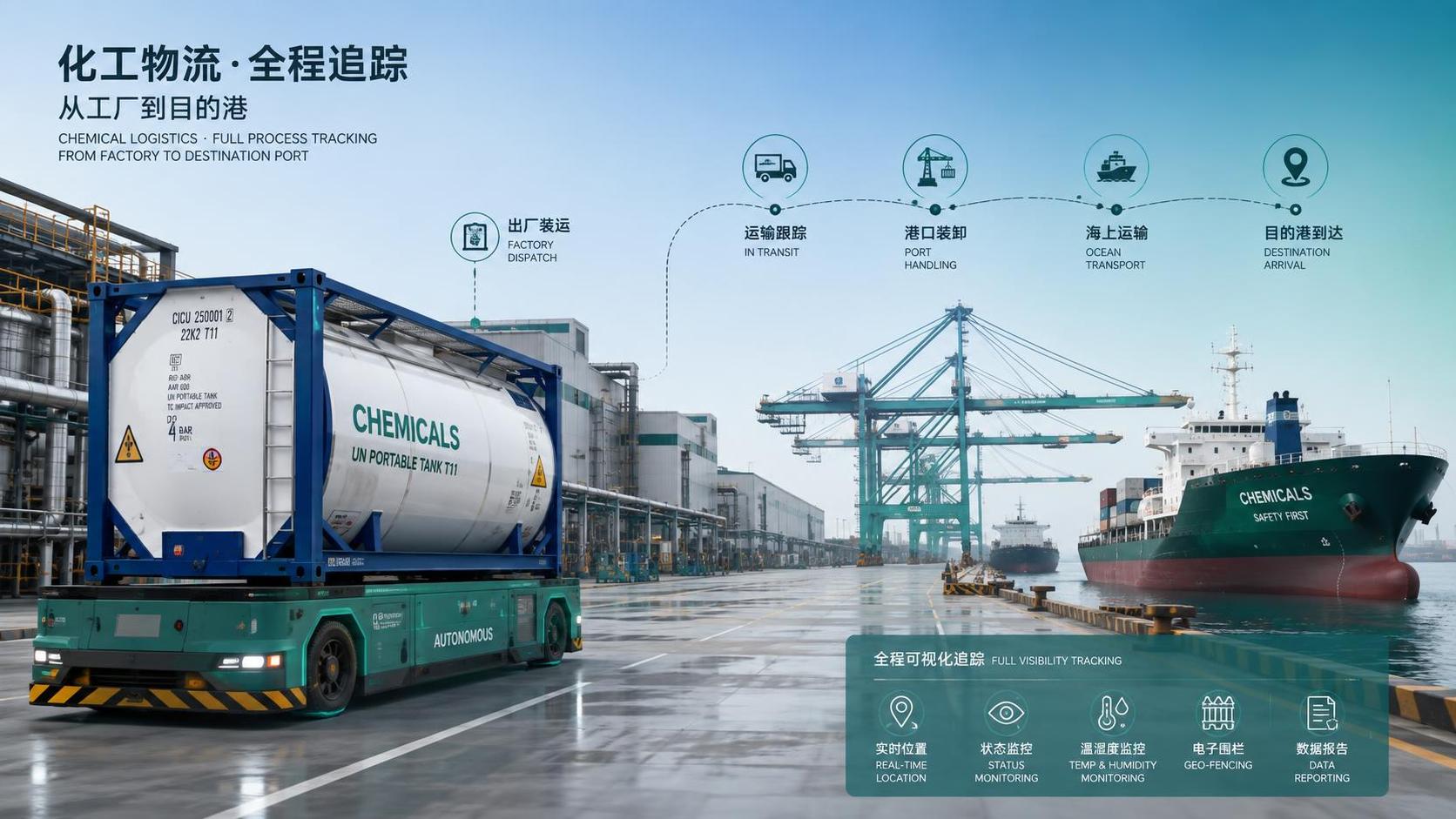
Track the shipment as a chain of custody, not a single vessel movement
To track a chemical shipment from factory to destination port, follow the handovers that change responsibility, location, or regulatory status. A container may appear “on board” in a carrier portal while the cargo is still waiting for a dangerous-goods approval, a customs release, or a transshipment connection. Vessel tracking is useful, but it only covers one part of the shipment.
A workable tracking process starts before the container leaves the factory. The importer should be able to see six milestones: production release, export-ready documentation, collection or delivery to the port area, terminal gate-in, vessel loading and departure, and arrival at the destination port. For hazardous or regulated chemicals, an additional check is needed at each stage: whether the cargo remains acceptable for transport under the documents and packaging presented.
The most reliable approach is to agree on the tracking records, contacts, and update triggers when the purchase order is placed. Trying to reconstruct the movement later from scattered emails, container screenshots, and freight invoices usually creates avoidable uncertainty.
Start with a shipment reference that connects commercial and logistics records
Before dispatch, ask the supplier or export coordinator for a shipment reference sheet. It does not need to be complicated, but it should link the sales order to the physical cargo. A container number by itself is not enough, particularly when an order is split across multiple containers, production lots, or vessel departures.
The reference sheet should identify the product, packaging type, net and gross weight, number of packages, factory release date, loading port, destination port, shipping line, booking reference, and container number once assigned. Where applicable, it should also identify the UN number, proper shipping name, hazard class, packing group, and any temperature, segregation, or stowage instruction used for transport.
Those details serve two purposes. First, they allow the buyer to match tracking events to the correct cargo. Second, they expose discrepancies early. A booking may have been made for the correct destination but under a different product description, weight, or dangerous-goods declaration than the commercial documents. A mismatch can delay terminal acceptance, customs processing, or destination release even when the vessel schedule remains unchanged.
For bulk chemicals, flexitanks, isotanks, drums, IBCs, or bagged cargo, the physical tracking model differs slightly. Containerized shipments are generally followed through container and bill of lading references. Tank cargo may also require visibility into tank allocation, cleanliness status, inspection, loading approval, and return obligations. The buyer should ask which identifiers will remain valid throughout the movement rather than assuming all products can be tracked through the same carrier portal.
Confirm that the cargo is truly ready to ship
“Production completed” and “ready for export” are not interchangeable. A chemical product can be manufactured and packed but still be waiting for quality release, labelling, dangerous-goods review, export documents, container availability, or a port delivery slot.
For most overseas buyers, the first meaningful milestone is factory release. This means the goods allocated to the order have passed the supplier’s release process and can be prepared for shipment. At this point, request the final product name, lot or batch identification where relevant, quantity, packaging format, and certificate of analysis if it is part of the contract.
The next checkpoint is document readiness. Depending on the product and trade terms, the shipment may require a commercial invoice, packing list, safety data sheet, certificate of analysis, transport declaration for dangerous goods, and destination-specific documents. The exact set depends on the cargo and import market, so the buyer should avoid treating a standard document checklist as universal.
What matters for tracking is consistency. The product identity, package count, weights, consignee information, and shipping instructions should align across the sales documents, transport documents, and booking. If the goods are classified for dangerous-goods transport, the transport description needs to be handled with particular care. A later amendment to classification, weight, packing group, flash point, or emergency contact information can affect acceptance and sailing plans.
When a supplier reports that a shipment is “ready,” useful follow-up questions are:
- Has the order been released from the factory, including quality approval?
- Has the container or tank equipment been secured and inspected for the planned cargo?
- Has the carrier or freight forwarder accepted the shipment booking?
- Has dangerous-goods documentation been submitted and accepted where required?
- What is the planned container loading date and terminal cut-off date?
These questions distinguish a firm export plan from a tentative shipping intention.
Follow the inland movement to the port with evidence, not estimates
Once the container is loaded at the factory or the cargo is collected for consolidation, inland transport becomes the next visibility gap. Road transit from a chemical plant to a port can be short in distance but still vulnerable to equipment shortages, driver scheduling, weather disruption, port congestion, weight restrictions, and document corrections.
Ask for a loading confirmation that states the actual loading date, container number, seal number where used, package count, and gross weight. For drums, IBCs, bags, or other packaged chemicals, this confirmation should match the packing list. If the cargo is loaded into a tank container, the corresponding loading record should capture the tank number and the relevant fill information.
For a full-container shipment, the next hard milestone is terminal gate-in. This is more meaningful than an estimate that the truck “has gone to port.” Gate-in confirms that the container has been received in the terminal system or designated port facility. It does not prove the cargo has been loaded on the intended vessel, but it substantially reduces uncertainty around factory pickup and inland delivery.
Do not assume that gate-in guarantees a planned departure. A container can miss a vessel because it arrives after cut-off, documentation is incomplete, a dangerous-goods approval is pending, the vessel omits the port, or the carrier changes its loading plan. The tracking report should therefore show gate-in and loaded-on-board as separate events.
Use carrier data correctly once the shipment reaches the terminal
After the container enters the port system, the ocean carrier’s tracking portal becomes one of the main sources of shipment status. Search using the container number, booking number, or bill of lading number, depending on what the carrier accepts. The bill of lading number is often especially useful after shipment, while the container number is practical for following individual units in a multi-container order.
Carrier portals commonly display events such as received at terminal, loaded, departed, transshipment, discharged, and available for pickup. The terminology varies, so the buyer should focus on what operational event the label represents rather than relying on familiar wording.
Scheduled departure and estimated time of arrival should be read as planning information, not final delivery commitments. Chemical cargo can be affected by routing changes, port restrictions, inspections, weather, berth delays, missed connections, and handling constraints. The most important status is often the latest confirmed operational event, followed by the next event that must occur for the cargo to keep moving.
For higher-value, time-sensitive, or regulated cargo, compare carrier tracking with updates from the freight forwarder. The carrier sees vessel and container events. The forwarder may see booking notes, document holds, special handling requests, and local operational exceptions that do not appear in public tracking data.
Separate the ocean journey from import readiness
A shipment arriving at the destination port is not necessarily ready for the buyer. This distinction matters especially for chemical imports because the physical cargo, transport documents, customs process, and local regulatory requirements may move on separate timelines.
Before arrival, the consignee should confirm that the bill of lading release method is understood, original documents are available where required, and the customs broker has the documentation needed to prepare entry. The buyer should also ensure that product information supplied to the broker matches the commercial and shipping records. Late document amendments can become expensive when storage, demurrage, detention, or special handling charges begin to accumulate.
For regulated chemicals, destination-side obligations may include product registration, import licensing, local labelling, inventory reporting, or other market-specific controls. These requirements vary significantly by country and by chemical. They should be checked before shipment, not after the cargo is discharged. A logistics status showing “arrived” cannot resolve a compliance issue that prevents release from the port.
Destination tracking should therefore include more than vessel arrival:
- Actual vessel arrival and container discharge;
- Arrival notice and any carrier release conditions;
- Customs entry status and requests for additional information;
- Terminal availability and free-time deadlines;
- Appointment, pickup, or onward delivery status;
- Empty-container return requirements for containerized cargo.
If the shipment is sold under terms where the supplier controls more of the transport, the buyer may receive fewer direct carrier notices. In that case, specify the update frequency and event triggers in the sales contract or logistics instructions. Weekly updates may be sufficient during a stable ocean transit, but a same-day notice is more appropriate for a missed vessel, documentation rejection, damage report, route change, or material change in estimated arrival.
Build an exception process before an exception occurs
Most shipment delays become harder to manage because the first update is too vague. “Delay due to logistics” does not tell the buyer whether production, trucking, terminal handling, documentation, vessel schedule, or destination clearance is affected. A useful exception notice should identify the last confirmed event, the cause of the disruption, the affected shipment reference, the revised plan, and the action required from each party.
For example, if a container misses its intended sailing, the buyer needs to know whether it remains gate-in at the origin terminal, whether dangerous-goods approval remains valid for the next departure, whether the bill of lading instructions need amendment, and whether the estimated arrival change affects downstream inventory. If a vessel is delayed at sea, the buyer may only need a revised arrival forecast. If cargo is held because of a document discrepancy, the buyer may need to act immediately.
Clear escalation contacts are equally important. The supplier’s sales contact can confirm commercial details, but shipment execution is often managed by an export documentation team, freight forwarder, or carrier representative. The consignee should know who can answer each of the following questions: product and batch status, document status, origin-port status, carrier routing, and destination release.
A practical tracking routine for importers
For regular chemical imports, a simple milestone register is usually more useful than chasing updates across multiple email threads. Keep one record per shipment, update it from primary sources, and preserve the document versions associated with each change.
Before departure, check factory release, booking acceptance, document consistency, loading confirmation, and terminal gate-in. After departure, review carrier tracking against the freight forwarder’s routing update, paying close attention to transshipment ports and changes in estimated arrival. Before destination arrival, make sure the consignee, broker, and receiving site are prepared for the cargo and its documentation.
The purpose is not to monitor every movement minute by minute. It is to identify the point where a shipment can no longer meet its planned delivery, compliance, or cost assumptions. Importers who track only the vessel often discover a problem too late. Importers who track the full chain can ask a precise question while there is still time to change a booking, correct a document, arrange clearance, or adjust receiving plans.
For chemical exporters serving overseas markets, transparent communication at these handovers is part of shipment quality. The buyer needs a credible record of where the cargo is, what has been completed, what remains pending, and whether any condition could prevent release at the next stage. That is the practical standard for tracking a chemical shipment from factory to destination port.
Send Us Your Inquiry Today
