









Product Quick Navigation
Get a Quote
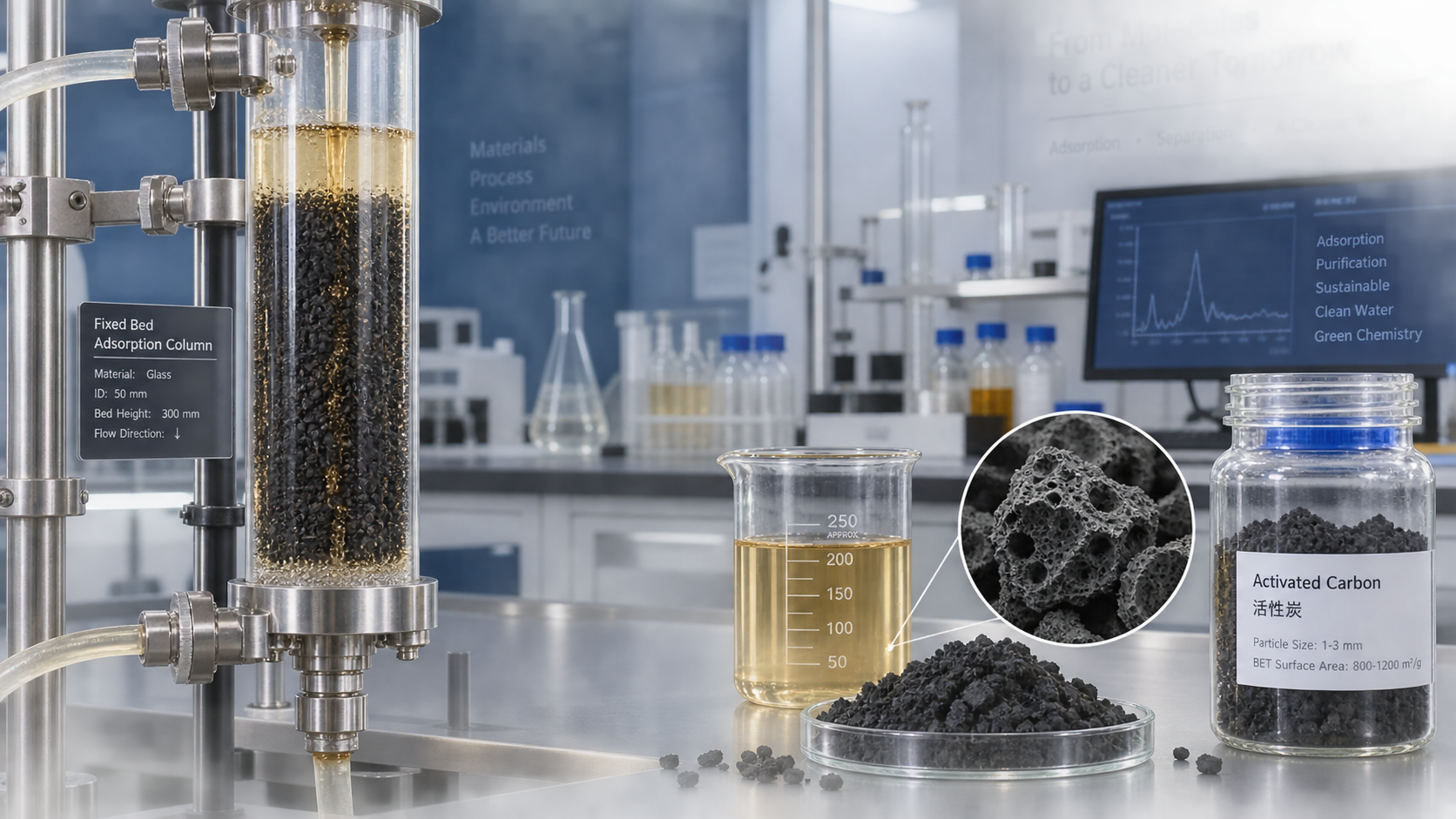
How Iodine Number and Pore Structure Affect Activated Carbon Adsorption
For technical evaluators, Activated Carbon selection should begin with contaminant size, concentration, and process conditions, not with iodine number alone.
Iodine number is a useful screening indicator, but it cannot reliably predict adsorption performance when target molecules are large, polar, competitive, or poorly diffusing.
The decisive question is whether the carbon contains accessible pores within the size range needed to transport and retain the specific contaminant.
A technically sound evaluation therefore combines iodine number, pore-size distribution, adsorption isotherms, kinetics, ash content, hardness, and application-specific pilot testing.
What Iodine Number Actually Indicates
Iodine number measures the milligrams of iodine adsorbed by one gram of carbon under specified test conditions, commonly reported as mg/g.
Because iodine molecules are relatively small, the result primarily reflects adsorption capacity associated with micropores rather than total useful capacity for every application.
Micropores are generally smaller than two nanometers and provide much of the internal surface area responsible for high adsorption potential.
A higher iodine number usually indicates greater microporous surface area, particularly for removing small dissolved organics, low-molecular-weight compounds, and certain volatile substances.
However, the relationship is comparative rather than absolute because feedstock, activation method, mineral content, pore accessibility, and surface chemistry also influence measured performance.
Two Activated Carbon grades can show similar iodine numbers while producing substantially different breakthrough curves in a real water, solvent, gas, or process stream.
Technical evaluators should treat iodine number as an incoming-quality benchmark and a preliminary sourcing filter, rather than as a complete product specification.
When suppliers quote only iodine number, request complementary data including methylene blue adsorption, molasses number, BET surface area, pore-volume distribution, and particle-size information.
Why Pore Structure Determines Usable Adsorption Capacity
Adsorption occurs inside pores, but capacity becomes commercially useful only when contaminant molecules can reach those pores within the available contact time.
Pore structure includes pore diameter, pore volume, connectivity, tortuosity, and the distribution of micropores, mesopores, and macropores throughout each carbon particle.
Micropores provide the strongest adsorption fields because opposite pore walls are close together, increasing interactions between the carbon surface and adsorbate molecules.
Mesopores, ranging roughly from two to fifty nanometers, support adsorption of larger molecules and improve transport toward deeper microporous regions.
Macropores exceed fifty nanometers and contribute relatively little direct surface area, but they function as transport channels that reduce diffusion resistance.
An effective carbon is therefore not always the one with the highest micropore fraction, especially when feed contaminants are bulky or adsorption must occur rapidly.
Poorly connected pores may create inaccessible internal volume, causing laboratory surface-area values to appear attractive while practical operating capacity remains disappointing.
For this reason, pore architecture should be matched to molecular dimensions, viscosity, flow velocity, competing species, and the allowable pressure drop of the system.
When a High Iodine Number Helps Performance
High iodine number is most meaningful when the target contaminant is small enough to enter micropores and when adsorption equilibrium can develop sufficiently.
Typical favorable applications include removal of small chlorinated organics, residual solvents, taste-and-odor compounds, low-molecular-weight dissolved organics, and certain gas-phase contaminants.
In polishing applications with relatively clean feed streams, micropore-rich carbon can provide strong capacity because pore blockage and competitive adsorption are limited.
High iodine number can also support lower carbon consumption when contaminants are dilute, molecularly small, and present under stable operating conditions.
Nevertheless, a high result should be verified against the test method because iodine values may vary with moisture correction, particle size, sampling, and laboratory procedure.
Evaluators should confirm whether results are reported on an as-received basis, dry basis, or moisture-free basis before comparing supplier specifications.
Carbon with very high microporosity may also adsorb water vapor strongly in humid gas streams, reducing effective capacity for certain organic vapors.
The best use of iodine number is to identify promising microporous grades, then validate the grade against the actual contaminant mixture and operating window.
When Iodine Number Can Mislead a Buyer
A carbon may have an excellent iodine number but underperform against dyes, humic substances, oils, surfactants, pigments, polymers, or complex natural organic matter.
These substances often require mesopores or wider transport pathways because their molecular size prevents efficient entry into narrow micropores.
Large molecules can block pore entrances early, isolating internal adsorption sites and shortening bed life long before the nominal iodine capacity is used.
In wastewater treatment, suspended solids, emulsified oils, and biological growth can further restrict access to otherwise valuable microporous surface area.
For color removal, molasses number or methylene blue adsorption can sometimes provide more relevant comparative information than iodine number alone.
Methylene blue testing commonly reflects adsorption behavior associated with larger pores, although it still cannot replace testing against the actual process contaminant.
Adsorption of polar substances also depends on surface functional groups, pH, ionic strength, and solvent composition, none of which iodine number directly captures.
A procurement decision based solely on an iodine minimum can therefore reward a specification that looks strong on paper but creates higher replacement frequency.
Match Carbon Pores to the Target Molecule
Technical evaluation should begin by identifying the approximate molecular size, chemical functionality, polarity, concentration range, and expected variation of the target contaminant.
Small molecules generally benefit from micropore-rich Activated Carbon, provided mass transfer is adequate and competing molecules do not dominate available adsorption sites.
Medium-sized organic molecules commonly require a balanced micropore and mesopore structure, combining high equilibrium capacity with acceptable adsorption kinetics.
Large color bodies, natural organic matter, and high-molecular-weight process impurities generally require more mesoporous carbon with accessible transport channels.
Macropores become increasingly important when feed streams are viscous, contaminated with larger organics, or operated at short empty-bed contact times.
In liquid-phase systems, rapid external film transfer does not guarantee rapid internal diffusion, particularly for granular carbon with long path lengths.
Powdered carbon offers shorter diffusion distances and fast response, while granular grades are usually preferred for fixed beds, regeneration, and continuous service.
Particle size must therefore be assessed alongside pore structure because smaller particles improve kinetics but can increase pressure drop and attrition losses.
Evaluate Capacity, Kinetics, and Breakthrough Together
Equilibrium capacity indicates how much contaminant carbon can retain eventually, whereas adsorption kinetics indicate how quickly that capacity becomes available during operation.
A technically suitable grade must satisfy both requirements, particularly in continuous systems where contact time is limited and premature breakthrough drives operating cost.
Batch isotherm testing can compare potential capacity, but fixed-bed column tests provide stronger evidence of service life under realistic hydraulic conditions.
Breakthrough curves show when effluent concentration begins rising, allowing evaluators to estimate carbon usage rates, replacement intervals, and safety margins.
Testing should use representative feedwater or process fluid because clean model solutions rarely reproduce fouling, competition, pH effects, and variable contaminant loads.
Monitor contaminant concentration at multiple bed volumes rather than relying solely on a single before-and-after sample at one operating point.
Where relevant, measure total organic carbon, color, COD, specific target analytes, pressure drop, turbidity, and carbon fines through the test period.
This combined approach reveals whether a lower-iodine carbon with better mesoporosity delivers a longer practical service cycle than a nominally superior alternative.
Consider Surface Chemistry and Process Compatibility
Pore size is central, but adsorption also depends on chemical interactions between the carbon surface, solvent, dissolved ions, and target molecules.
Oxygen-containing surface groups can alter acidity, hydrophilicity, and affinity for polar compounds, while basic surfaces may favor different adsorption mechanisms.
Feed pH can change contaminant ionization and dramatically affect adsorption, especially for weak acids, weak bases, phenolic compounds, and amphoteric molecules.
For example, purification work involving cosmetic intermediates may require evaluation of color removal, trace impurities, yield preservation, and product compatibility simultaneously.
When sourcing materials used in formulations containing Kojic Acid CAS#501-30-4, carbon trials should confirm that purification benefits do not create unacceptable product loss.
Kojic acid is water soluble and used in cosmetics, whitening creams, and sunscreen products, making solvent composition and pH especially relevant during process development.
Assess whether carbon introduces ash, metals, fines, odor, or extractable impurities that could affect downstream quality specifications or regulatory documentation.
For regulated applications, require lot traceability, certificates of analysis, contaminant controls, and change-notification procedures in addition to adsorption performance data.
Build a Procurement Specification That Reduces Risk
A robust Activated Carbon specification should define the application objective first, such as decolorization, solvent recovery, odor control, purification, or wastewater polishing.
Set iodine number as one parameter where appropriate, but pair it with minimum or target ranges for ash, moisture, hardness, abrasion resistance, and particle size.
For large-molecule removal, include methylene blue value, molasses value, pore-volume information, or a validated application-specific performance benchmark.
Specify acceptable test methods and reporting bases to prevent nominal compliance based on inconsistent laboratory procedures or incomparable sample conditioning.
Ask suppliers for feedstock origin, activation route, acid-washing status, regeneration history where applicable, and typical lot-to-lot variation for critical metrics.
Material sourced from coconut shell, wood, coal, or other precursors can differ significantly in pore structure, density, hardness, and application suitability.
Include a qualification trial using representative process conditions before approving a grade for routine purchase, especially for high-value products or regulated manufacturing.
Commercial evaluation should compare cost per unit contaminant removed or cost per treated volume, rather than comparing price per kilogram alone.
Questions Technical Evaluators Should Ask Suppliers
First, ask which pore-size distribution the supplier recommends for the target contaminant and request the technical evidence supporting that recommendation.
Second, ask whether iodine number is internally controlled on every batch and whether reported values are supported by a recognized standard method.
Third, request data on adsorption kinetics, preferably from comparable column tests, rather than relying exclusively on equilibrium values or generic marketing claims.
Fourth, clarify expected dust generation, pressure drop, mechanical strength, rinsing requirements, and carbon loss during startup, backwashing, or regeneration cycles.
Fifth, determine whether quality consistency is supported by defined feedstock controls, batch sampling plans, traceability records, and documented corrective-action procedures.
For international supply, evaluate packaging integrity, lead-time reliability, export documentation, hazard classification, and communication speed when specifications require clarification.
Huafeng Chemical can support overseas buyers by coordinating chemical export requirements, product documentation, and supply communication across a broader chemical product portfolio.
The supplier relationship should ultimately provide reproducible technical information, responsive problem resolution, and evidence that material performance remains stable across shipments.
Conclusion: Use Iodine Number as a Starting Point, Not a Final Decision
Iodine number remains a valuable indicator of microporous adsorption potential, especially for small molecules and relatively clean applications requiring high internal surface area.
Its limitations become clear when molecules are large, feeds are complex, mass transfer is slow, or surface chemistry controls adsorption behavior.
Pore structure determines whether contaminants can access adsorption sites, while kinetics determines whether those sites become useful before breakthrough occurs.
Technical evaluators should therefore match molecular characteristics to pore architecture, validate performance through representative testing, and define specifications beyond a single iodine requirement.
The most reliable Activated Carbon selection is the grade that delivers predictable contaminant removal, stable pressure drop, acceptable product yield, and defensible lifecycle economics.
Send Us Your Inquiry Today
