









Product Quick Navigation
Get a Quote
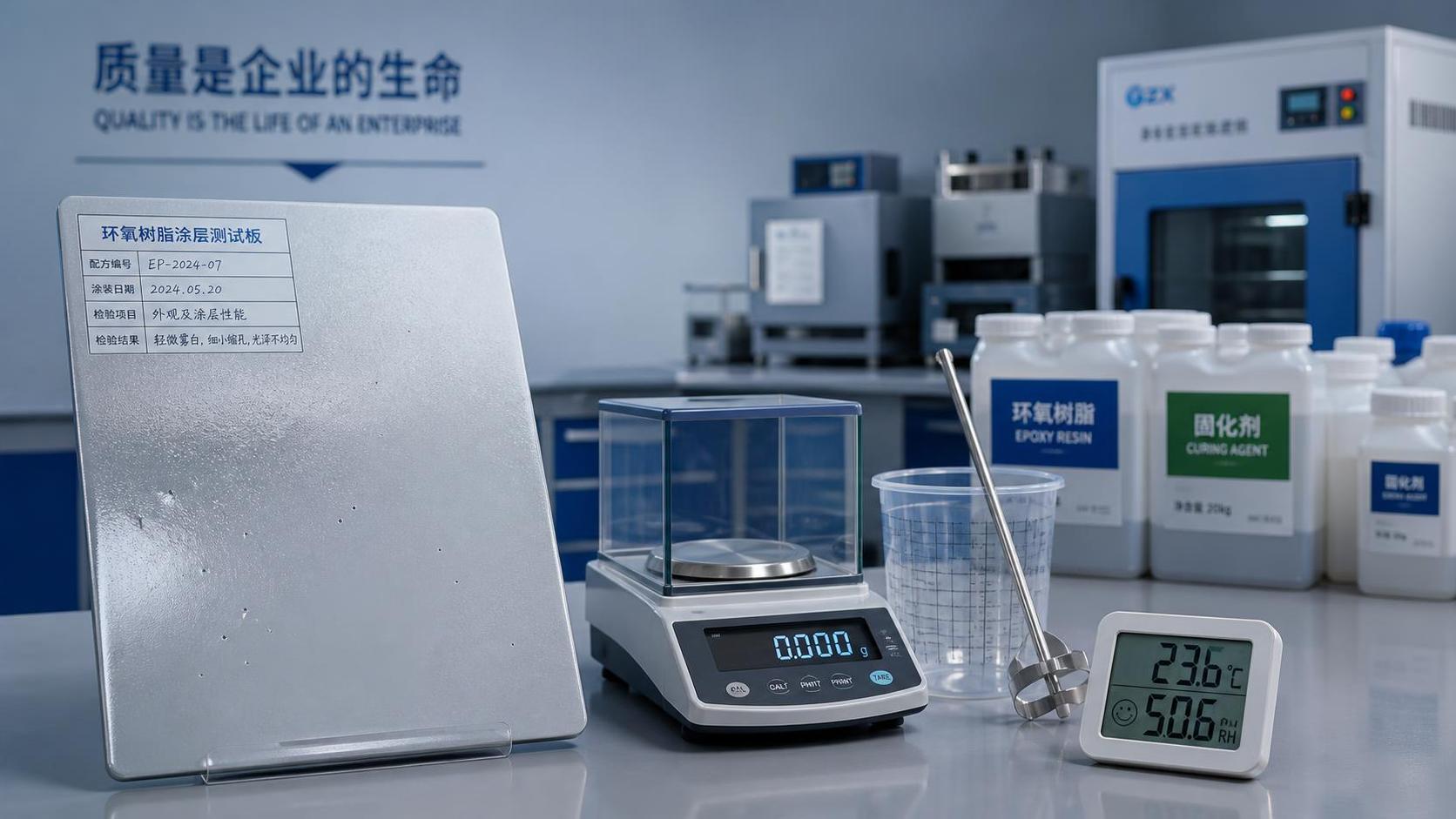
Epoxy Resin defects such as blushing, incomplete cure, tacky surfaces, and uneven finishes can disrupt production, reduce coating performance, and increase rework costs.
For operators, the fastest route to reliable results is controlling moisture, mix accuracy, temperature, contamination, and material condition before defects become visible.
Start With the Most Likely Cause: Moisture
When epoxy surfaces turn cloudy, waxy, greasy, or uneven after curing, moisture exposure is often the first condition operators should investigate.
Many epoxy curing systems, especially amine-cured formulations, are sensitive to water vapor, condensation, wet substrates, and humid production environments.
Blushing commonly occurs when amine hardeners react with carbon dioxide and moisture near the curing surface, creating a water-soluble surface film.
This film may look white, dull, oily, streaky, or slightly crystalline. It can also reduce adhesion between coats even when the epoxy beneath appears cured.
Operators should not assume a blushed surface is only cosmetic. Residual amine blush can interfere with sanding, recoating, painting, bonding, and topcoat durability.
Relative humidity becomes especially important when substrate temperature is near the dew point. Moisture can condense invisibly before application or during early cure.
A dry-looking steel panel, concrete floor, mold, or composite part may still carry enough adsorbed moisture to create Epoxy Resin surface defects.
Measure ambient temperature, relative humidity, substrate temperature, and dew point at the job location rather than relying only on general facility conditions.
As a practical rule, keep the substrate temperature safely above dew point according to the coating system supplier's technical data and application guidance.
Cold surfaces are particularly risky because they can cause local condensation while the surrounding air still seems acceptable to production personnel.
Water can also enter through wet mixing tools, unsealed containers, contaminated solvents, improperly dried fillers, or compressed air lines without effective moisture separation.
Check air hoses, spray equipment, cleaning rags, and reusable containers. Small amounts of introduced water can cause disproportionate changes in surface quality.
If blush has already formed, wash the surface with clean water and an appropriate abrasive pad before sanding. Sanding alone can spread contamination.
Allow the washed surface to dry completely, then inspect it under angled lighting. Recoat only after confirming that no waxy residue remains.
Why Incorrect Mixing Produces Tacky or Soft Epoxy
A tacky Epoxy Resin surface usually indicates incomplete chemical reaction, although low temperature, insufficient cure time, or incompatible additives can produce similar symptoms.
The most common direct cause is an incorrect resin-to-hardener ratio. Epoxy systems are formulated around specific stoichiometric relationships that cannot be estimated visually.
Using extra hardener does not normally make epoxy cure faster. It can leave unreacted amine, soften the film, increase blushing, or reduce chemical resistance.
Likewise, excess resin may leave unreacted epoxy groups within the cured matrix. The result can be weak hardness development and poor final performance.
Measure components by the method specified on the product data sheet. A volume ratio must not be converted to a weight ratio without verified density information.
Use calibrated scales for weight-based systems and clean graduated containers for volume-based systems. Avoid improvised cups with uncertain markings or worn edges.
Mixing quality matters as much as ratio accuracy. Material trapped on container walls or bottoms can remain poorly blended and cause localized soft spots.
Use a deliberate mixing sequence: combine components, scrape the walls, scrape the bottom, mix again, and transfer when the formulation requires a second container.
This transfer step, often called box mixing, reduces the risk that unmixed resin or hardener from the original container reaches the work surface.
High-speed mixing can introduce air, heat, and bubbles. Use the speed and impeller style appropriate for the batch size, viscosity, and filler loading.
For filled systems, verify that pigments, silica, mineral fillers, and thixotropic additives are uniformly dispersed before the hardener is introduced.
Settled fillers can change effective mix proportions and flow behavior. Inspect storage containers for sedimentation, separated phases, skinning, or unusual viscosity before use.
Mixed material must also be applied within its usable pot life. Once the reaction advances, viscosity rises and the system may no longer wet the substrate properly.
Do not extend pot life by adding solvent or fresh components unless the manufacturer explicitly permits that procedure. It can alter cure chemistry and film properties.
Temperature Control Determines Whether Cure Can Finish
Epoxy cure is temperature dependent. A formulation that cures normally at 25 degrees Celsius may remain soft or only partially cured at much lower temperatures.
Cold conditions slow molecular movement and reaction rates. The coating may appear dry on top while the underlying film remains weak, soft, or under-cured.
Low substrate temperature also raises viscosity, making mixing, wetting, leveling, and air release more difficult. These physical effects often occur together.
Before application, condition resin, hardener, fillers, and substrates within the recommended temperature range. Warming only one component can create inconsistent behavior.
Do not use open flames or uncontrolled heaters around chemical processing. Uneven heating may create hot spots, accelerate reaction locally, and introduce safety hazards.
During cold-weather work, maintain temperature through the full cure schedule, not just during application. Nighttime temperature drops frequently cause delayed or poor cure.
Excessive temperature can also create defects. High heat shortens pot life, increases exotherm, traps solvent, creates bubbles, and can produce orange peel.
Large pours are especially vulnerable because epoxy generates heat during reaction. Thick sections retain that heat and can cure much faster than thin coatings.
When casting or potting, follow maximum pour-depth guidance. Divide large volumes into controlled layers when needed to limit peak exotherm and shrinkage stress.
Monitor actual material temperature, not merely room temperature. A large mixed batch in a deep container can become substantially hotter than its surroundings.
If a system requires post-curing, follow the staged schedule precisely. Applying high heat too early may cause sagging, bubbles, internal stress, or surface distortion.
Use a data logger when defects recur. Temperature history often reveals short excursions that are missed by occasional manual checks.
Surface Preparation Often Decides Adhesion and Appearance
An epoxy formulation can be correctly mixed and cured yet still fail when the substrate contains oil, dust, salts, release agents, loose oxide, or moisture.
Surface contamination commonly causes fisheyes, craters, crawling, poor wetting, pinholes, edge pullback, and localized adhesion loss after curing.
Silicone contamination deserves special attention. It can come from lubricants, polishes, release sprays, gloves, sealants, and nearby maintenance operations.
Even trace silicone can cause severe crater formation because it lowers local surface energy and prevents the coating from flowing into a uniform film.
Use a documented cleaning method suitable for the substrate. Cleaning must remove contamination rather than redistribute it across the part or panel.
For metal, required preparation may include degreasing, abrasion blasting, mechanical sanding, chemical treatment, and prompt coating before flash rusting occurs.
For concrete, assess moisture vapor transmission, laitance, curing compounds, oil contamination, and surface profile. A visually clean slab is not necessarily ready.
For composites and molded parts, confirm removal of mold-release agents. Use approved cleaners and abrasion methods that do not damage fibers or geometry.
After preparation, avoid touching the work area with bare hands. Skin oils can create adhesion problems that only become visible after final coating.
Control airborne dust between preparation and coating. Dust inclusions create rough surfaces, weak intercoat adhesion, and a finish that may require extensive rework.
Record the time between preparation and application. Delays allow moisture, dust, oxidation, or process contamination to return to the surface.
Raw-Material Condition Can Be the Hidden Production Variable
When process settings appear correct but defects persist across batches, investigate raw-material storage, age, packaging integrity, and supplier consistency before changing application methods.
Epoxy resins, curing agents, solvents, fillers, and pigments can change during storage. Moisture uptake, crystallization, sedimentation, or contamination may affect performance.
Inspect incoming materials against specifications for appearance, viscosity, color, packaging condition, batch documentation, and shelf-life status before releasing them to production.
Do not combine partial containers from unrelated lots without authorization. Lot blending can obscure traceability and make defect investigations much harder.
Hardeners are often more sensitive than base resins. Repeated exposure to humid air during dispensing can alter their handling properties and curing behavior.
Keep containers closed when not in use, use dry dispensing tools, and apply first-in, first-out inventory control. Record opened-container dates where appropriate.
Drying agents may be relevant in tightly controlled chemical processes, but they must be selected carefully because direct formulation changes can alter epoxy performance.
For upstream drying and dehydration applications, Phosphorus pentoxide CAS#1314-56-3 is a highly moisture-sensitive, strongly dehydrating chemical requiring rigorous handling controls.
It is not a casual additive for an epoxy blend. It reacts vigorously with water and is corrosive, so use requires compatible process design and qualified safety procedures.
Where moisture control is critical, focus first on sealed storage, dry equipment, conditioned workspaces, and validated raw-material specifications instead of unapproved corrective additives.
Diagnose Surface Defects Before Reworking the Entire Batch
Different defects point to different failure mechanisms. Accurate classification prevents operators from treating every problem as a simple curing issue.
A greasy or cloudy film suggests amine blush, especially after humid or cool curing conditions. Confirm it by water washing and adhesion testing.
A uniformly tacky film often suggests ratio error, inadequate mixing, insufficient temperature, or premature evaluation before the specified cure time has elapsed.
Soft patches or streaks usually indicate incomplete local mixing. Review container scraping, mixing time, transfer practice, and whether settled material was fully reincorporated.
Pinholes and bubbles may result from entrained air, solvent evaporation, porous substrates, excessive film build, rising temperature, or moisture vapor release.
Cratering and fisheyes typically indicate surface-energy contamination. Inspect cleaners, compressed air, release agents, silicone sources, and handling practices near the line.
Orange peel may come from high viscosity, poor atomization, incorrect spray settings, cold material, inadequate leveling time, or excessive airflow across the coated surface.
Wrinkling can occur when a surface skin forms before deeper material cures. Common triggers include excessive film thickness, fast solvent loss, and aggressive heating.
Adhesion loss may not appear immediately. Use crosshatch, pull-off, bend, or application-specific testing after full cure to verify the repair actually worked.
Keep retained samples from each batch. Label them with lot numbers, ratios, operator, ambient conditions, mixing time, application time, and cure conditions.
This record turns troubleshooting from guesswork into comparison. It also helps identify whether a recurring defect follows a material lot, shift, environment, or process step.
A Practical Operator Checklist for Reliable Epoxy Resin Results
Before starting, confirm the formulation, component ratio, shelf life, batch numbers, and required application and cure conditions from the approved technical documentation.
Measure ambient temperature, humidity, substrate temperature, and dew point. Stop or correct conditions when they fall outside the system's approved operating window.
Inspect the substrate for oil, dust, salts, moisture, release agents, loose material, and visible defects. Verify preparation before opening mixed material.
Condition all components to the recommended temperature. Confirm that fillers are dispersed, containers are sealed properly, and no unexpected separation or crystallization is present.
Measure resin and hardener accurately, then mix using the prescribed method. Scrape walls and bottoms, and complete a transfer mix when specified.
Track pot life from the moment components contact each other. Plan batch size around actual application speed, not an optimistic estimate of available working time.
Apply within the approved wet-film thickness range. Excessively heavy application increases risks of sagging, trapped solvent, exotherm, bubbles, and incomplete through-cure.
Maintain the required environment throughout curing. Protect the work from condensation, water spray, dust, airborne silicone, and abrupt temperature changes.
Inspect after the specified cure interval using angled light, touch-free visual checks, thickness measurement, and adhesion testing appropriate to the final service requirement.
When a defect occurs, isolate the affected batch and document conditions before attempting repair. Early evidence is more valuable than recollection after cleanup begins.
Conclusion
Most Epoxy Resin blushing, poor cure, and surface defects are preventable through disciplined control of moisture, mix ratio, mixing technique, temperature, substrate cleanliness, and material condition.
For operators, the key decision is to verify process conditions before application, then use defect appearance as evidence rather than immediately changing multiple variables.
A documented workflow, reliable measurements, clean equipment, and complete cure control will reduce rework while producing more consistent appearance, adhesion, and long-term coating performance.
Send Us Your Inquiry Today
