









Product Quick Navigation
Get a Quote
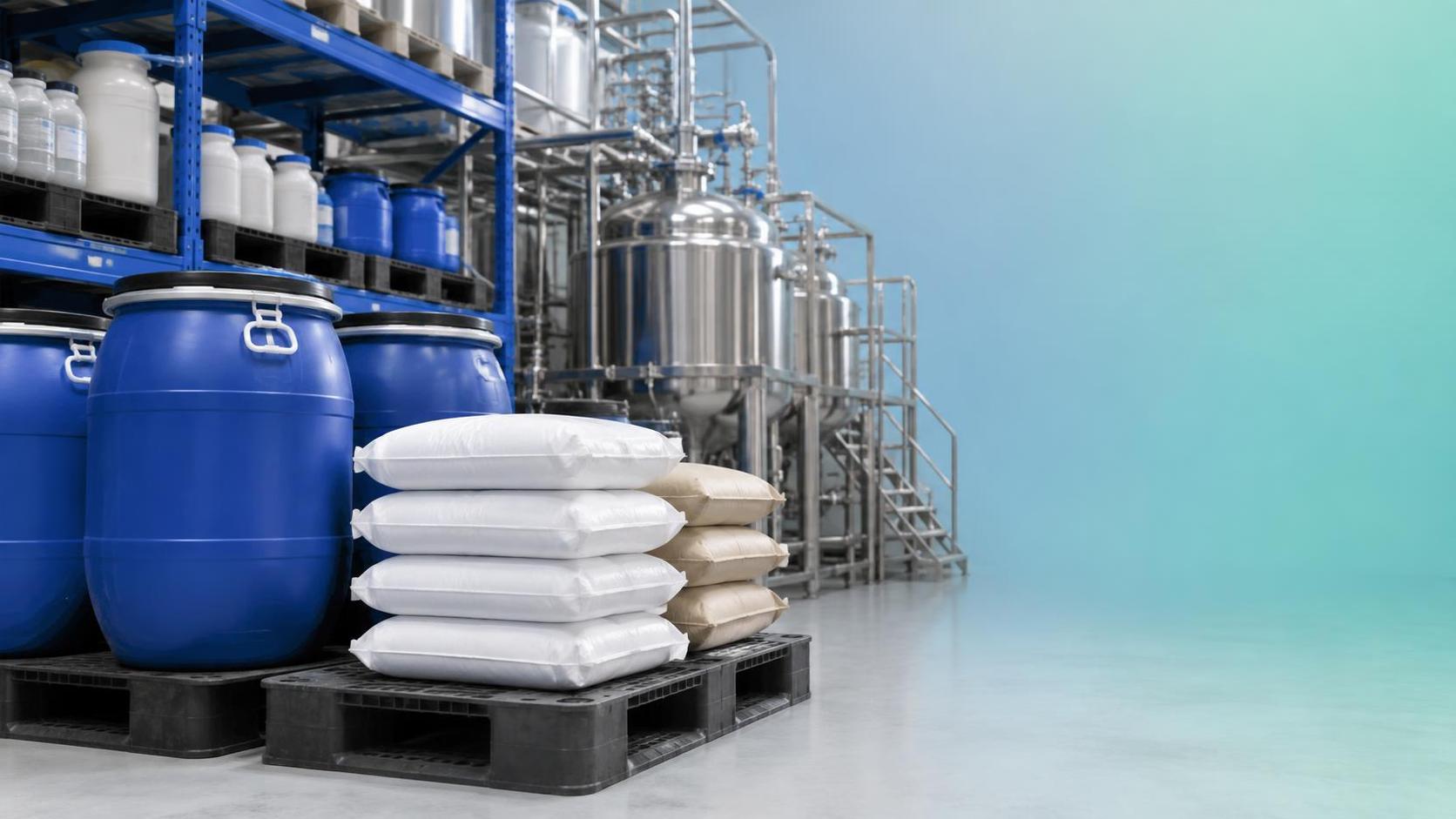
There is no single minimum order quantity for small-batch chemical procurement. The practical MOQ is the smallest quantity that can be produced, packed, documented, released, and shipped without creating disproportionate cost or compliance exposure. For a stocked chemical in a standard package, that amount may be limited by one drum, pail, bag, or intermediate bulk container. For a made-to-order specialty chemical, the MOQ is often tied to a production campaign, minimum reactor charge, purification loss, analytical testing, or hazardous-goods transport requirements.
An attractive low quantity is therefore not always a usable order size. A supplier may accept a small nominal volume while applying a high handling charge, requiring full packaging units, extending the lead time until the next production run, or declining to split a qualified batch. The useful question is not simply “What is your MOQ?” but “What quantity can be supplied under the required specification, package, delivery term, and documentation set?”
MOQ starts with the physical form of the chemical
Liquid chemicals are commonly constrained by container size, filling accuracy, and compatibility between the product and the package. A corrosive liquid, for example, may need a particular drum resin, closure type, liner, venting arrangement, or UN-rated package. Decanting a small amount from a bulk vessel can introduce contamination, moisture pickup, static-control issues, or traceability gaps. If the material is moisture-sensitive, oxygen-sensitive, or stabilized with an inhibitor, opening and repacking a bulk lot may alter the condition that was originally tested.
Powders and granules raise different limits. Small packs can be feasible, but dust control, cross-contamination prevention, sieve requirements, and net-weight tolerances matter. Hygroscopic materials may need moisture-barrier bags, desiccant, nitrogen flushing, or sealed secondary packaging. A request for a few kilograms may be possible from inventory, yet unavailable when the lot must be screened, blended, or packed in a controlled area.
High-purity materials often have the least flexible MOQ even when the volume is small. The difficulty is not necessarily the quantity of chemical. It is preserving the validated quality state through sampling, transfer, packaging, and release testing. A small container filled from a larger approved lot may need its own identity, sample retention, certificate linkage, and release decision.
Stock MOQ and production MOQ are different
A stock MOQ refers to what is already available in saleable, released packaging. If a warehouse holds twenty sealed drums from an identified lot, a single drum may be a realistic order quantity. The available quantity can still be restricted by shelf life, reserved inventory, storage segregation, or destination-specific shipping constraints.
A production MOQ is the smallest economically and technically reasonable manufacturing run. It is influenced by reactor working volume, heat-transfer behavior, mixing efficiency, solvent recovery, filtration hold-up, distillation losses, and cleaning requirements. Reducing a batch below its validated operating range can change impurity profiles or yield. A small request for a reaction product may therefore be supplied only by allocating part of a future campaign rather than by initiating a dedicated run.
These two situations should not be confused during quotation. “MOQ: one drum” may describe stock availability, not a standing promise that one drum can be produced at any time. Ask whether the stated quantity is available from current inventory, from a planned campaign, or only after a custom production review.
Packaging can set a higher floor than the chemical itself
Standard packs are usually the clearest basis for a small order. They reduce repacking work, simplify lot traceability, and keep freight calculations more predictable. When a requested quantity falls between standard sizes, the proposed package arrangement matters as much as the total net weight. Two smaller containers can create more labeling, palletization, and dangerous-goods handling work than one larger package.
Package terms should state whether the quantity is net chemical weight, gross packed weight, or a nominal fill volume. This distinction becomes important for dense liquids, materials supplied in solution, and products with an assay range. A drum described by volume does not automatically contain the same net mass from lot to lot if density varies within the allowed specification.
Order quantity is only one part of the landed cost
Small-batch orders carry fixed work that does not shrink in proportion to the product weight. Export documents, labels, dangerous-goods declarations, pallet preparation, sampling, laboratory review, and bank or payment administration can be nearly the same for a small shipment as for a larger one. Freight may also be shaped by minimum carrier charges, package dimensions, and routing restrictions rather than net kilograms.
This does not mean a low MOQ is inherently poor value. It is appropriate when material qualification, laboratory trials, formulation adjustment, maintenance use, or short-term production needs justify the smaller exposure. The comparison should separate unit price from total delivered cost. A lower product price paired with an expensive special package or a difficult shipping route may cost more than a slightly larger quantity in standard export packaging.
For chemicals with a limited retest period, buying extra volume only to reduce freight can create a different loss. Storage stability depends on the actual material and package: inhibitor depletion, settling, crystallization, viscosity rise, hydrolysis, discoloration, and container corrosion are all possible concerns. The economically sensible quantity is the amount likely to be consumed while it remains within the agreed quality condition.
How to request a meaningful small-batch quotation
A short request that only names a chemical often produces an ambiguous MOQ answer. The quotation becomes more reliable when the technical identity and commercial conditions are defined together. Chemical name alone can be insufficient where grade, concentration, isomer composition, solvent system, particle size, or impurity limit changes the handling route.
- State the exact product identifier, grade, concentration or assay requirement, and any critical impurity limits. If the intended use requires a particular test method, identify it rather than relying on a broad purity statement.
- Give the desired net quantity and indicate whether a standard package is acceptable. A request for “smallest available package” differs from a request for a fixed number of kilograms.
- Specify the delivery country, intended transport mode, and whether hazardous-goods classification or temperature control is relevant. A quantity that can move domestically may not be practical for an international route.
- Ask whether the offer is from existing stock, a scheduled batch, or new production. This single point often explains a large difference in MOQ and lead time.
- Request the lot-specific certificate of analysis format, safety documentation, packing list details, and origin or other documents needed for the transaction before treating the MOQ as final.
Where samples are needed before a small commercial order, distinguish a laboratory sample from a representative production sample. A sample prepared from a development batch may demonstrate chemistry but not confirm that the later commercial lot will have the same impurity pattern, color, particle distribution, or stabilization approach. The sample origin and test basis should be clear.
Quality terms matter more when the order is small
A small order does not reduce the need for a precise quality agreement. It can increase the effect of a single deviation because there may be no surplus inventory to replace the material quickly. The purchase order or contract should identify the product, accepted specification, test methods where material, package type, batch traceability, quantity tolerance, shelf-life or retest condition, and required documents.
The phrase “meets specification” is incomplete when the specification does not identify the sampling and test basis. For example, color, water content, particle size, viscosity, acidity, residual solvent, and trace metals can be sensitive to method conditions. If an internal method has a different extraction procedure, instrument setting, or reporting convention from the supplier’s method, a later dispute may concern measurement comparability rather than the chemical quality itself.
Retained samples are especially useful when the material is supplied in multiple small packs. The agreement should establish whether the reference sample is taken before filling, from the finished package, or from a composite of packages. A pre-fill bulk sample may not resolve a complaint involving packaging contamination or moisture ingress during repacking.
Do export suppliers offer quality breach compensation in contracts?
They may, but compensation is contractual rather than automatic. Export supply contracts commonly address nonconforming goods through a defined claim process, such as replacement, refund, credit, price adjustment, or another stated remedy. Whether compensation is offered, and how far it extends, depends on the negotiated terms, evidence requirements, inspection period, applicable delivery terms, and the nature of the alleged breach.
The most important distinction is between a quality breach established at delivery and a problem arising after handling, storage, blending, or processing. A claim is stronger when sealed packaging, labels, lot numbers, receipt condition, sampling records, and independent test results support a direct link to the supplied goods. It is harder to assign responsibility after containers have been opened, materials have been mixed, or storage conditions are unknown.
A workable clause should avoid vague language such as “supplier responsible for all losses.” It should state the agreed specification and documents, the time allowed to notify a discrepancy, the inspection or testing procedure, how a disputed sample is handled, the available remedy, and any limits on indirect losses. “Quality breach compensation” can otherwise mean very different things to each party. A replacement shipment and reimbursement for downstream production interruption are not equivalent remedies.
Small-batch transactions benefit from an explicit practical route: hold the affected packages, preserve labels and seals, document the condition at receipt, notify the counterparty within the agreed period, and avoid consuming the material until the issue is assessed. This protects evidence and reduces disagreement over whether the condition changed after delivery.
When a quoted MOQ should be questioned
An MOQ deserves further discussion when it is expressed only as a large round number without a technical or logistical basis, when the package size contradicts the quoted quantity, or when a “sample order” lacks defined specifications and documentation. It also warrants clarification when the quote combines product MOQ, minimum invoice value, minimum freight charge, and minimum production batch into one figure. Those are separate constraints and can sometimes be addressed differently.
A high production MOQ may be fixed by equipment and process validation, while the shipping minimum could be solved through consolidation or a different package configuration. Conversely, a low product MOQ does not guarantee an acceptable export shipment if the carrier will not accept the classification, package, or route. Separating these limits reveals whether the quantity is genuinely inflexible or merely presented without detail.
The minimum workable order is the quantity that preserves the agreed chemical quality through its full path from batch release to receipt. When the quoted MOQ is tied to a stated lot, package, document set, and remedy for nonconformity, it becomes a commercial condition that can be evaluated rather than a number accepted on assumption.
Send Us Your Inquiry Today
