









Product Quick Navigation
Get a Quote
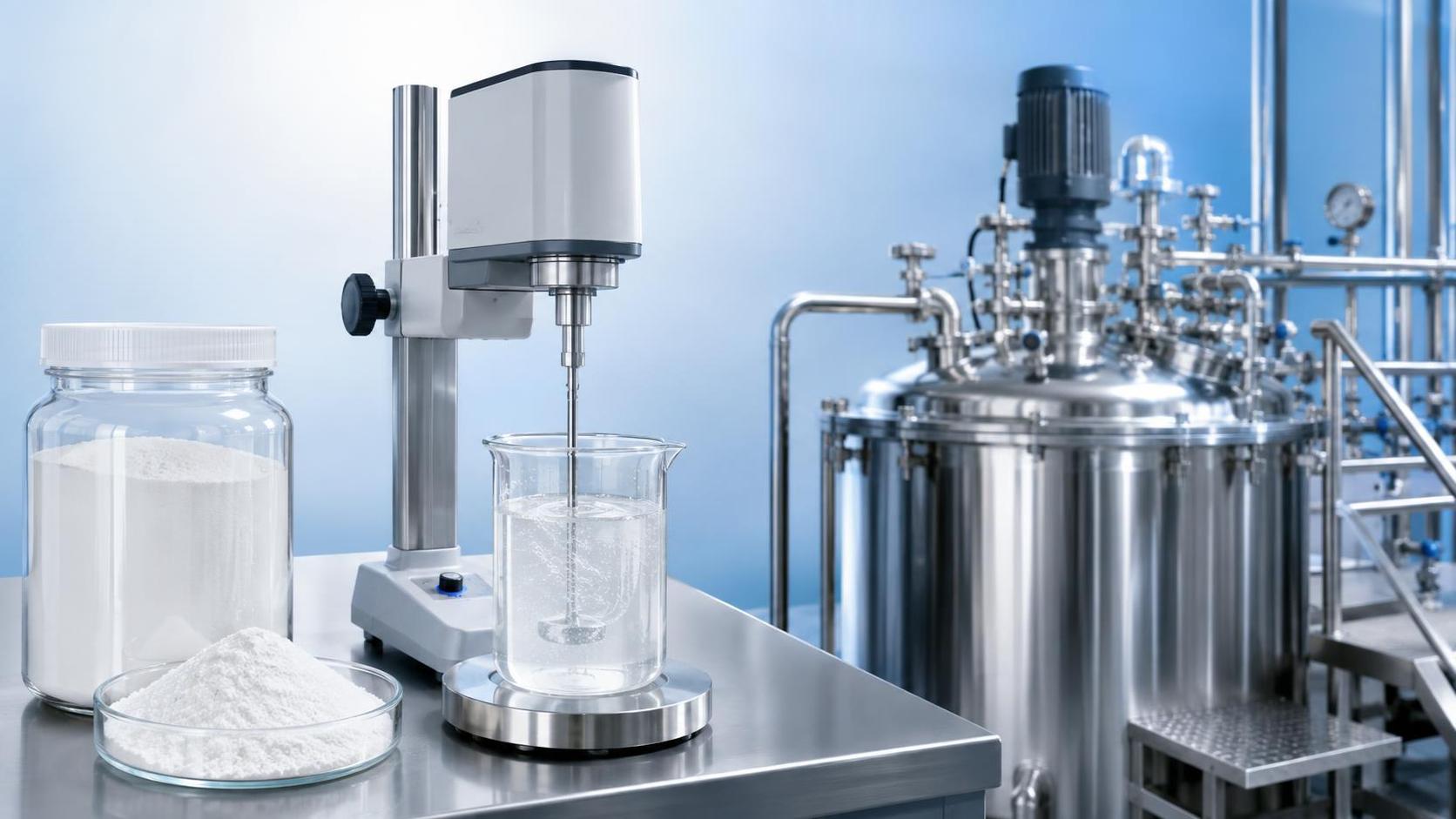
Can I Request Sample Testing Before Placing a Bulk Modified Starch Order?
Yes—and for most industrial buyers, requesting sample testing before a bulk modified starch order is not merely reasonable; it is a necessary part of technical and commercial due diligence. Modified starch is used across applications where small shifts in performance can affect processing stability, finished-product quality, production cost, and regulatory acceptance. A product that appears suitable on a specification sheet may still behave differently in a customer’s actual formulation, water system, equipment, or operating temperature range.
This is why the question “can I get sample testing before placing bulk modified starch order” should lead to a more practical discussion: what should be tested, how should the sample be evaluated, and what needs to be confirmed before the purchase order is issued? The goal is not simply to obtain a small bag of material. It is to reduce uncertainty before committing to a supply relationship that may involve international transport, production planning, documentation review, and repeat deliveries.
For an overseas buyer, sample testing also provides an early indication of a supplier’s responsiveness. The quality of technical communication, the completeness of documents, the clarity of batch information, and the willingness to discuss application conditions can be as revealing as the sample itself.
Why a Specification Sheet Is Not Enough
Modified starch is not one uniform material. Its behavior depends on the botanical source, modification method, physical form, degree of treatment, particle characteristics, and intended end use. Depending on the grade, it may be selected for thickening, binding, film formation, water retention, texture control, paper surface treatment, textile sizing, adhesive preparation, or other industrial functions.
A certificate of analysis can confirm agreed parameters for a particular batch, but it cannot fully predict how the product will work in every formulation. For example, two samples may fall within a stated viscosity range while showing different hydration behavior in a customer’s mixing system. One may disperse cleanly, while another may form lumps if added under the same operating sequence. In a coating, adhesive, or paper-making process, that difference can matter more than a single laboratory number.
The same applies to moisture. Moisture content affects storage behavior, powder flow, dosing consistency, and in some applications, the amount of dry active material introduced into a formulation. Purity-related indicators may be relevant where unwanted residues, odor, color, insoluble matter, or foreign particles can affect the final product. Buyers should treat the supplier’s specification as a starting point for evaluation, not a substitute for application testing.
What Should Be Tested Before a Bulk Order?
The right test plan should reflect the actual application rather than a generic checklist. Still, several areas commonly deserve attention when evaluating a modified starch sample.
- Appearance and physical condition: Check color, odor, powder uniformity, visible contamination, caking, and flowability. These basic observations can reveal problems caused by storage, packaging, or inconsistent handling.
- Moisture and dry basis: Confirm the test method and assess whether the result suits the buyer’s process and inventory conditions. A moisture value without a stated method may be difficult to compare across suppliers.
- Viscosity profile: Ask how viscosity is measured, including concentration, temperature, mixing time, and instrument or method. Viscosity numbers obtained under different conditions are not automatically comparable.
- Dispersion and hydration: Test the material under realistic addition conditions. Water temperature, agitation speed, order of addition, pH, salt level, and holding time may all influence performance.
- Application-specific functionality: Depending on use, this may include bonding strength, film properties, thickening efficiency, stability, surface performance, solids tolerance, or compatibility with other formulation components.
- Storage and processing behavior: A successful bench test should be followed, where appropriate, by a pilot or plant-scale trial. A starch that works in a beaker may not behave the same way in a large tank, continuous line, or high-shear system.
It is often useful to retain part of the approved sample as a reference. If the bulk shipment later shows a difference in handling or process performance, the retained material provides a practical comparison point. This does not replace formal quality procedures, but it can make troubleshooting faster and more objective.
Ask for the Test Conditions, Not Only the Results
One common procurement mistake is comparing isolated values from different suppliers as though they were generated under identical conditions. In modified starch evaluation, method details are often as important as the result itself. A reported viscosity, for instance, has limited meaning unless the buyer understands the sample concentration, preparation procedure, measurement temperature, spindle or instrument where applicable, and timing.
Buyers should request the available technical data sheet, safety documentation where relevant, product specification, and batch-related quality information for the sample. If the application is regulated or sensitive, the documentation review should begin early rather than after commercial terms are settled. Requirements can differ by market and end use, particularly when modified starch is used in food-contact materials, pharmaceuticals, personal care products, or other controlled applications.
No supplier should assume a grade is acceptable for a particular market without reviewing the intended use and the applicable local requirements. The buyer remains responsible for determining whether the material and supporting documents meet the requirements of its destination market and product category. A reliable supplier can support that review by responding clearly to requests for available technical and trade documentation.
A Better Sample Request Starts with a Better Brief
Suppliers can send more relevant samples when they understand the customer’s process. A brief request that only says “modified starch needed” leaves too much room for mismatch. Buyers do not need to disclose confidential formulas, but they should provide enough context to guide grade selection.
Useful information includes the end application, preferred starch source if there is one, target viscosity or solids level, processing temperature, pH range, mixing conditions, other major ingredients, packaging expectations, estimated purchasing volume, and destination country. It also helps to explain the current problem: perhaps an existing starch settles too quickly, gives insufficient bonding, loses viscosity under heat, creates uneven coating, or is difficult to disperse.
That last point matters. A supplier can recommend a nominally similar grade, but a meaningful technical discussion begins when the problem is defined. The desired outcome may not be “higher viscosity.” It may be consistent viscosity after a defined holding period, improved application at lower solids, or a more stable process under a specific shear condition.
Questions Worth Resolving Before You Approve a Sample
- Is the sample taken from a current production batch, representative stock, or a laboratory preparation?
- Which product specification applies to the proposed bulk material?
- Which parameters are controlled for each production batch, and which are typical rather than guaranteed?
- Can the supplier identify the sample batch and provide corresponding quality information?
- What packaging is proposed for commercial shipments, and how should the material be stored after arrival?
- What lead-time assumptions apply once the grade, packaging, and order quantity are confirmed?
These questions are not confrontational. They establish whether the sample approval can be translated into a repeatable bulk supply arrangement.
Sample Approval Does Not Automatically Guarantee Bulk Consistency
A favorable sample result is a strong step forward, but it should not be treated as the entire quality agreement. The bulk order should identify the grade, key acceptance criteria, packaging, labeling requirements, quantity tolerance if applicable, agreed documents, and the handling of quality claims. The more critical the application, the more important it is to distinguish between typical values and contractual specifications.
It is also wise to define what “approved” means internally. In some organizations, technical approval means the material can proceed to a pilot trial. In others, it means the product has passed both laboratory testing and regulatory review. Procurement, quality, production, and regulatory teams may all use the same word while meaning different things. Aligning those functions before an order is released avoids late-stage delays.
For a first commercial purchase, a staged approach can be more prudent than moving immediately to the largest possible volume. The appropriate scale depends on the application, commercial demand, inventory risk, and the buyer’s confidence in the process. A controlled initial order may provide valuable information about shipping condition, customs documentation, warehouse handling, batch traceability, and production performance.
International Sourcing Adds Another Layer to Testing
When modified starch is sourced internationally, product suitability is only one part of the decision. The supplier must also be able to communicate clearly across time zones, prepare export-related documents accurately, and respond when requirements change. A technically acceptable sample is less useful if later communication around shipping marks, packing lists, invoices, certificates, or destination requirements becomes unclear.
As global trade deepens, chemical buyers are placing greater weight on supply continuity, compliance awareness, and response speed. Shandong Huafeng Chemical Co., Ltd., known as Huafeng Chemical, is located in Shandong Province, an important center for China’s chemical industry. Its role as a chemical export service provider is supported by comprehensive foreign-trade capabilities and a broad chemical product portfolio. For buyers evaluating modified starch or related chemical materials, this kind of export coordination can be relevant alongside the product test itself.
The practical value is not a promise that every request has the same answer. It is the ability to clarify the product grade, sample availability, documentation needs, intended destination, and order conditions before a buyer takes on avoidable risk. In international purchasing, timely clarification is often more useful than broad assurances.
When a Sample “Fails,” Look Beyond the Product
A failed evaluation does not always mean the modified starch is unsuitable. It may indicate that the preparation method differs from the supplier’s recommended procedure, the test water has an unusual mineral content, the sample was added too quickly, or another formulation component is influencing the result. This is especially common when the buyer is replacing an established material and assumes that the new grade can be processed in exactly the same way.
Before rejecting a sample, compare the test conditions with the supplier’s guidance and repeat the test if a controllable variable may have affected the outcome. At the same time, buyers should not dismiss consistent performance problems simply because a standard laboratory value appears acceptable. The application result remains central. A grade must work in the buyer’s actual process, not only in a supplier’s reference method.
Turn Sample Testing into a Supply Decision
Requesting a sample before a bulk modified starch order is a sensible and widely used sourcing practice. The strongest evaluation combines material testing with document review, realistic processing trials, and a clear understanding of what the bulk order will require. Buyers should confirm the parameters that truly affect their process, ask how those parameters are measured, and ensure that the approved sample can be linked to the proposed commercial grade.
If the material is being sourced across borders, add export documentation, packaging, lead-time planning, and destination-market requirements to the review. A careful sample process may take more effort at the beginning, but it is far easier to adjust a trial than to resolve a performance issue after a large shipment has entered the supply chain.
Before proceeding, provide the intended application, test conditions, target specifications, expected volume, and destination requirements. That gives both buyer and supplier a firmer basis for deciding whether a modified starch sample is suitable for the next stage: a controlled commercial order and, potentially, a stable long-term supply arrangement.
Send Us Your Inquiry Today
