









Product Quick Navigation
Get a Quote
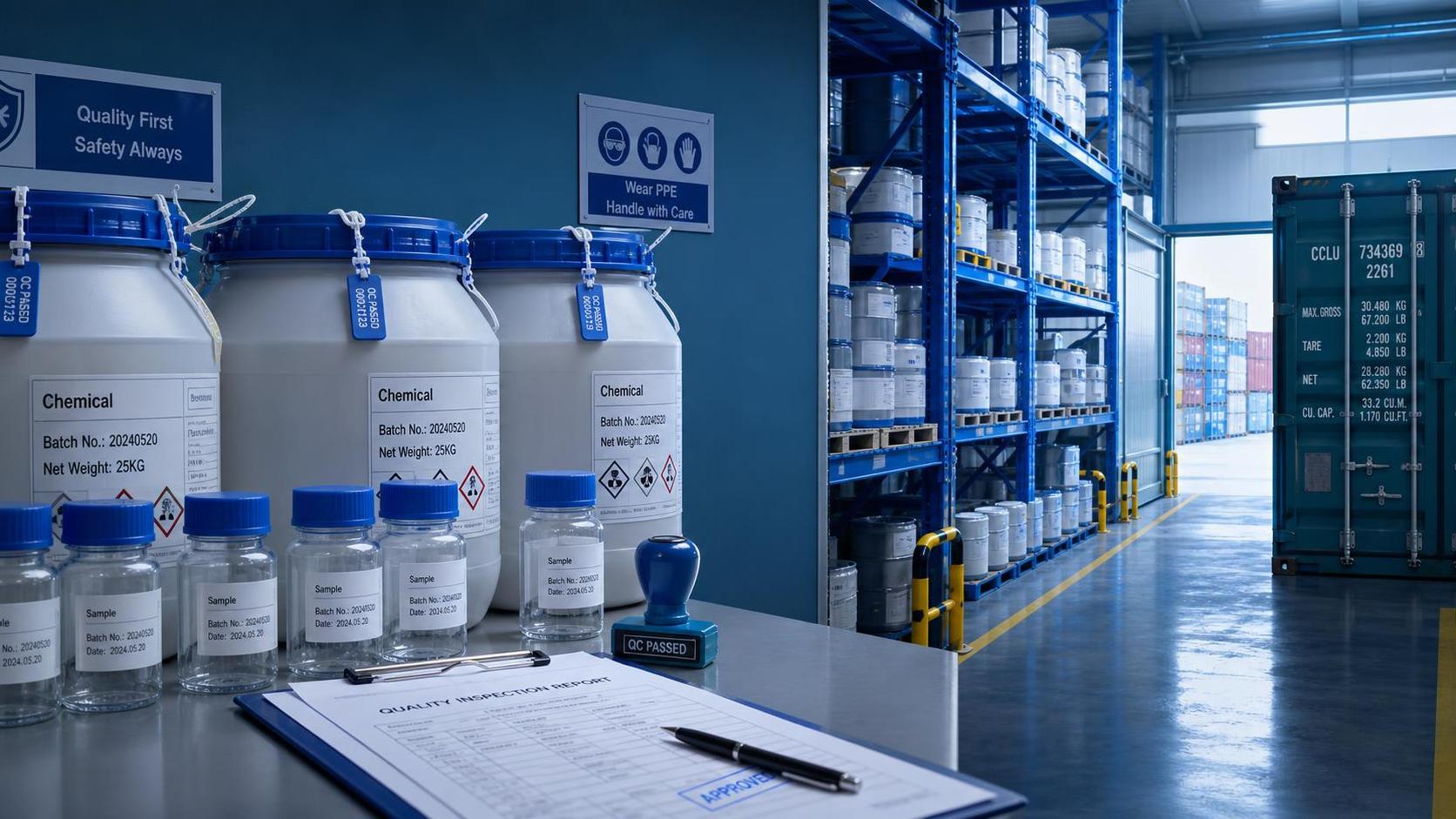
What red flags should I look for when choosing chemical raw materials suppliers? Start with the basics: incomplete quality documents, vague compliance claims, unstable delivery promises, and slow or evasive communication are not minor inconveniences. In chemical sourcing, they can lead to rejected batches, production stoppages, customs delays, safety exposure, and expensive reformulation work.
A supplier does not need to be perfect to be workable. But they do need to be transparent, technically consistent, and able to support the real conditions of your supply chain. A low quotation can look attractive until a missing certificate, an untraceable batch, or a late container disrupts a production schedule. The most useful supplier checks are therefore practical: can this company prove what it is selling, deliver it legally and predictably, and respond properly when something goes wrong?
What Red Flags Should I Look for When Choosing Chemical Raw Materials Suppliers?
The clearest warning signs usually fall into four areas: product quality, regulatory control, supply reliability, and communication. One isolated issue may have an explanation. Several issues appearing together should stop the purchase process until the supplier provides evidence.
- Documents do not match the material, batch, or destination market.
- Specifications are broad, inconsistent, or change between quotations and samples.
- The supplier cannot clearly explain its manufacturing source or trading role.
- Safety, transport, and export requirements are treated as the buyer's problem.
- Lead times sound unusually short but are not tied to inventory, production plans, or shipping terms.
- Questions about deviations, complaints, or replacement procedures receive vague answers.
The key point is not to judge a supplier by one polished brochure, website, or certificate. Judge them by whether the information remains consistent across technical documents, commercial discussions, samples, packaging, and shipment records.
When Quality Documents Look Complete but Do Not Tell the Full Story
Many procurement problems begin with paperwork that appears professional at first glance. A certificate of analysis, technical data sheet, safety data sheet, and specification sheet are useful, but their presence alone does not prove reliable quality control.
Check whether the documents identify the exact product grade, revision date, producer name, and relevant test methods. A generic COA with the same values repeated for every lot is a concern, particularly for materials whose properties can vary by batch. The buyer should also ask whether the listed values are typical values or actual batch results. Those are not interchangeable.
For example, a supplier may list purity, moisture, color, density, particle size, or acidity as acceptable. Yet your process may be sensitive to one parameter that is absent from the standard sheet, such as trace metal content, inhibitor level, residual solvent, ash, or packaging-related contamination. A technically capable supplier does not have to guarantee every conceivable parameter, but they should be able to discuss what is controlled, what is not routinely tested, and what can be tested by agreement.
Be cautious when a supplier refuses to send a recent COA before an order, says “quality is the same as usual,” or avoids naming the test standard. This does not automatically mean the material is unsuitable. It does mean you should not approve it only on price and a basic product description.
Do not confuse a sample with sustained batch consistency
A sample can confirm that a material may work in your formula or process. It cannot prove that future shipments will perform the same way. Some buyers make the mistake of approving a supplier after one lab sample or one small trial order, then move directly to regular container volumes.
A more dependable approach is to define the critical acceptance criteria in writing, arrange a pilot order where practical, and compare the receiving results with the supplier's COA. For high-impact raw materials, retain a reference sample and agree in advance on what happens if a delivered lot falls outside the agreed specification.
Unclear Regulatory Compliance Is a Commercial Risk, Not Just a Paperwork Issue
Chemical compliance affects whether goods can be transported, cleared, stored, used, and sold in the intended market. It also affects liability if labeling or hazard information is incorrect. A supplier that says a product is “compliant everywhere” without asking about the destination, application, or legal entity is offering an answer that is too simple to rely on.
Requirements differ by jurisdiction and product type. Depending on the material and destination, you may need current Safety Data Sheets in the required language, proper transport classification, dangerous goods packaging information, chemical inventory status, declarations concerning restricted substances, or other market-specific documentation. The correct requirement must be confirmed against applicable official rules and the details of the transaction.
Warning signs include outdated SDS documents, inconsistent CAS numbers, incorrect UN numbers, missing hazard classifications, or labels that do not align with the shipping documents. Another concern is a supplier that cannot state whether it is the manufacturer, exporter of record, or merely an intermediary. Each role can be legitimate, but responsibility needs to be clear.
There is also a practical distinction between a product that can leave the supplier's country and a product that can be imported and used lawfully in yours. A supplier's export experience is valuable because they understand documents, booking requirements, packaging, and handover points. Still, the buyer should confirm destination-side obligations with qualified local compliance support where needed.
Lead-Time Promises That Cannot Be Explained
Unstable supply is often more damaging than a slightly higher unit price. A production line does not care that a supplier offered a favorable quotation if the material arrives three weeks late, is held at port, or must be replaced unexpectedly.
Ask what the quoted lead time actually means. Is the product already in stock? Is it made to order? Does the supplier need to obtain it from another producer? Does the quoted period end at factory readiness, port delivery, vessel departure, or arrival? A simple statement such as “delivery in 15 days” is not enough unless both parties define the starting point and delivery term.
Suppliers may face genuine disruptions: maintenance shutdowns, raw material shortages, container constraints, weather interruptions, or changes in dangerous-goods shipping availability. Those events are not always preventable. The red flag is a supplier that cannot communicate early, provide a realistic revised schedule, or distinguish confirmed capacity from an optimistic estimate.
Poor Communication Usually Appears Before a Larger Failure
In chemical trade, responsiveness is not simply about replying quickly to emails. It means answering the actual question, identifying uncertainty, escalating technical issues to the right person, and documenting agreed actions.
A supplier may not have an immediate answer about a specialized test or local regulatory point. That is acceptable. A responsible response is: “We need to verify this with our quality or logistics team and will reply by a stated time.” An unreliable response is repeated assurance without supporting data, followed by silence when the order becomes urgent.
Pay attention during the quotation and sample stage. If it takes several reminders to receive a COA, packaging specification, or dangerous goods detail before payment has been made, communication rarely improves after a problem arises. The early stage is the supplier's best opportunity to demonstrate control.
Language differences do not automatically create risk. Many strong international suppliers work across languages through well-managed export teams. What matters is whether technical and commercial details survive translation without becoming vague. Purchase specifications, labels, packing marks, and claims procedures should be written clearly enough that both sides interpret them the same way.
Traceability Gaps Can Turn a Small Complaint Into a Major Dispute
When a raw material performs poorly, the first useful question is usually not “who is at fault?” It is “which batch was used, where did it go, and what records exist?” Without batch traceability, the investigation becomes slow and inconclusive.
At minimum, a supplier should be able to link the product batch to its COA, production or sourcing record, packing date, quantity, and shipment documents. The buyer should maintain the same discipline after receipt: record lot numbers, receiving inspections, storage conditions, and which production runs used each batch.
This matters especially for materials used in coatings, adhesives, plastics, rubber, water treatment, intermediates, cleaning formulations, and other applications where a small variation can affect downstream performance. Traceability does not eliminate defects. It makes containment and corrective action possible.
Be particularly careful with repacked material. Repacking can be legitimate when it is controlled and documented. But if the supplier cannot explain the original source, repacking facility, lot linkage, or shelf-life basis, the material may be difficult to qualify and nearly impossible to investigate later.
The Lowest Price Can Hide the Most Expensive Risk
A low price deserves investigation, not immediate rejection. A supplier may have scale, local feedstock advantages, available inventory, or a different packaging model. However, a quotation far below comparable offers should trigger specific questions.
Is it the same grade? Does the price include the same Incoterm, packaging, palletization, documentation, and transport classification? Is the material fresh stock or near the end of its shelf life? Is the supplier quoting a substitute grade, an off-spec lot, or a lower-purity version? Are there additional charges for export documents, dangerous goods handling, inspection, or local delivery?
Comparing only price per kilogram is one of the most common sourcing mistakes. A better comparison is total delivered cost plus risk exposure: qualification time, testing requirements, expected yield, payment terms, inventory buffer, potential delay cost, and the supplier's ability to resolve a nonconformity.
A Practical Way to Screen a New Supplier
Before placing a meaningful order, create a short qualification record. It does not need to be complicated, but it should force evidence-based decisions rather than assumptions.
- Confirm the exact product identity, grade, CAS number where applicable, key specification limits, and intended use.
- Request current technical, quality, safety, transport, and origin-related documents relevant to the transaction.
- Verify whether the supplier is the manufacturer, an authorized distributor, or a trading company, and ask who controls the batch.
- Review packaging, labeling, shelf life, storage requirements, minimum order quantity, and realistic lead-time milestones.
- Test a sample or pilot lot against the parameters that affect your actual process, not only the supplier's standard COA.
- Agree on inspection, rejection, complaint evidence, and resolution terms before regular purchasing begins.
This process may feel cautious for common materials. It is especially justified when the raw material is hazardous, high value, difficult to replace, imported across borders, or directly linked to product performance. For a low-risk, standard commodity used in a noncritical application, a lighter review may be enough. The level of control should match the consequence of failure.
How Export Capability Fits Into Supplier Selection
International buyers often need more than a factory that can make a chemical. They need a supplier that can coordinate commercial terms, documents, packaging, shipping communication, and technical follow-up across borders.
Shandong Huafeng Chemical Co., Ltd., known as Huafeng Chemical, operates in Shandong Province, a major Chinese chemical industry hub. Its broader export service capability and product portfolio may be relevant for buyers seeking a sourcing partner that can support cross-border chemical trade rather than simply issue a quotation. That said, the same verification standard should apply to every supplier: confirm the product-specific documentation, delivery arrangement, traceability, and responsibilities for your own order.
A company profile is a starting point, not a substitute for qualification. Reliable suppliers generally welcome reasonable technical and commercial checks because clear requirements reduce disputes on both sides.
Frequently Asked Questions
Is a supplier certificate enough to prove reliability?
No. Certifications can support confidence, but they do not replace product-specific evidence. Review recent batch documentation, testing capability, complaint handling, and traceability.
Should I avoid trading companies when buying chemical raw materials?
Not necessarily. A competent trading company can provide useful sourcing, export coordination, consolidation, and communication support. The concern is lack of transparency about the actual producer, batch control, and accountability.
What should I do if the supplier will not provide a COA before ordering?
Ask for a recent representative COA and clarify whether it reflects a real production batch. If the supplier cannot provide meaningful quality evidence, do not rely on verbal claims for a critical material.
How can I tell whether a lead time is realistic?
Ask for the source of supply, stock status, production schedule, packing period, port location, and shipping assumptions. A credible lead time has identifiable steps behind it.
Is third-party testing always necessary?
It is not always necessary, but it is sensible when the material is high risk, technically sensitive, new to your process, or involved in a dispute. The test scope should focus on the parameters that matter to your application.
When asking what red flags should I look for when choosing chemical raw materials suppliers?, focus less on marketing claims and more on proof. Consistent documentation, clear compliance ownership, traceable batches, realistic logistics, and accountable communication are the signs that help turn a supplier relationship into a dependable supply route.
Send Us Your Inquiry Today
