









Product Quick Navigation
Get a Quote
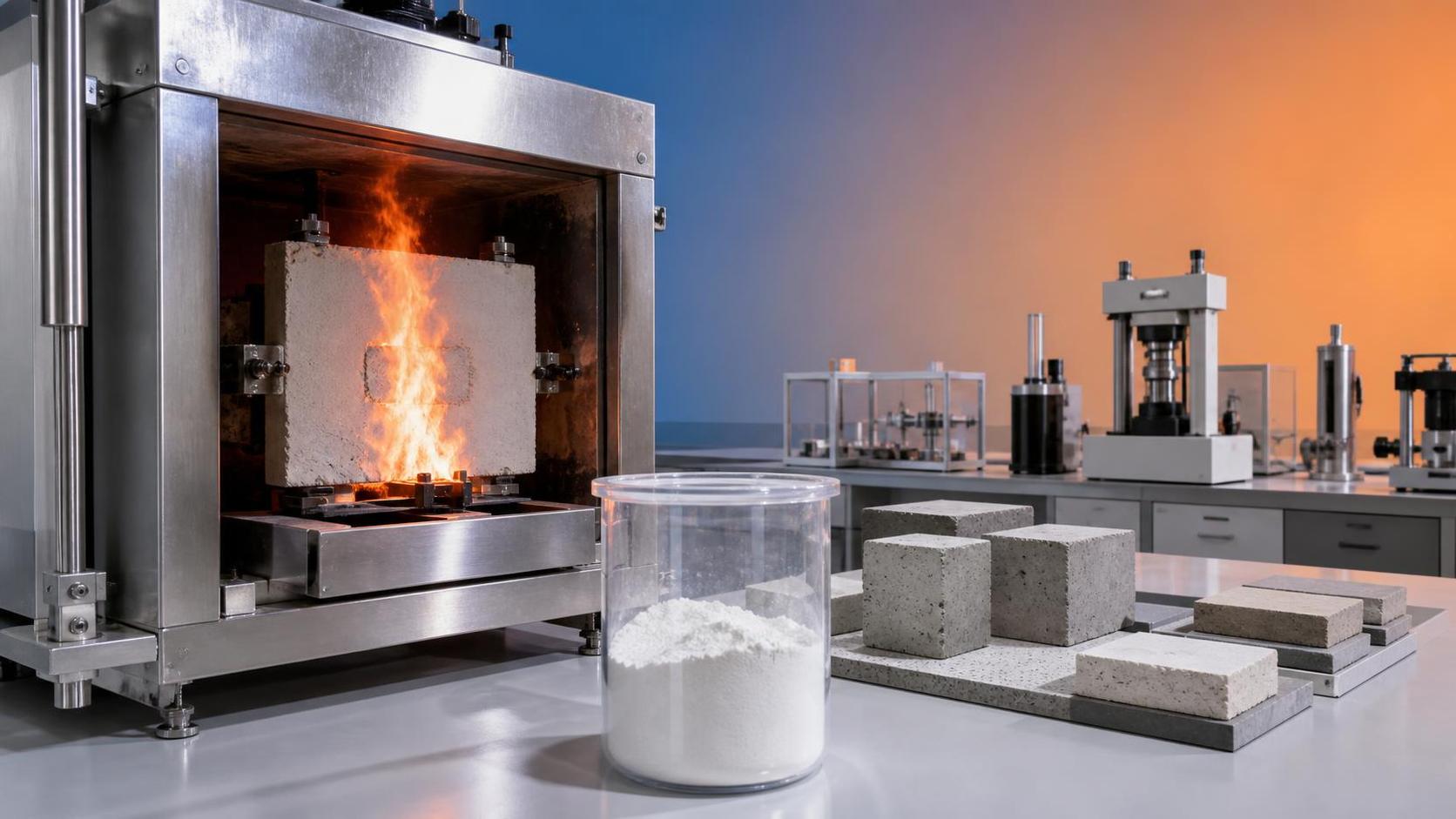
Does Modified Starch for Building Materials Meet Fire Safety Standards?
Does modified starch for building materials meet fire safety standards? The answer depends on formulation, application, finished-product design, and verified performance under relevant fire-testing requirements.
Modified starch is increasingly used in construction formulations because it can improve workability, adhesion, water retention, rheology, and processing efficiency across several building-material applications.
However, modified starch is an organic material. It should never be assumed that a starch-containing product is automatically non-combustible, flame-retardant, or compliant with project fire requirements.
For manufacturers, contractors, and international chemical buyers, the practical question is not whether starch itself passes a fire standard.
The real question is whether the complete construction product or installed assembly achieves the required fire classification for its intended building application.
What Is the Core Fire-Safety Question for Modified Starch?
Buyers searching for modified starch fire safety information usually need to assess regulatory risk before selecting an additive for mortar, gypsum, coatings, insulation systems, or adhesives.
They often want to know whether using modified starch could weaken a product's fire rating, complicate certification, or create issues during project approval.
In most cases, modified starch is used at relatively low dosage levels rather than as the main structural component of a building material.
Its impact on fire behavior therefore depends on the surrounding binder system, mineral content, polymer content, coating thickness, density, and additive package.
A gypsum-based formulation containing a small amount of modified starch may behave very differently from a polymer-rich render, flooring adhesive, or insulation coating.
Fire safety must be evaluated at the finished-product level because testing laboratories assess the material system that will actually be supplied or installed.
This distinction matters commercially. An ingredient supplier can provide technical information, but the manufacturer usually remains responsible for validating the final formulation and certification route.
For procurement teams, the safest approach is to request product-specific fire-performance evidence rather than relying on general statements about modified starch chemistry.
Why Modified Starch Can Affect Fire Performance
Modified starch is derived from starch and chemically or physically adjusted to provide specific functional properties for industrial applications.
Common modifications can improve solubility, viscosity stability, binding strength, water retention, film formation, or compatibility with mineral and polymer-based construction formulations.
Because starch is organic, it can contribute combustible content when exposed to sufficient heat, oxygen, and an ignition source.
Its contribution may be limited in highly mineral formulations, especially where cement, gypsum, calcium carbonate, silica, clay, or other inorganic materials dominate the composition.
Yet low dosage does not automatically mean zero impact. Some fire classifications are sensitive to ignition behavior, smoke development, flaming droplets, or heat-release characteristics.
Modified starch can also interact with other organic ingredients, including redispersible polymer powders, cellulose ethers, dispersants, defoamers, and plasticizers.
These interactions may alter the total organic content of a formulation, which can become important when a product targets demanding facade or interior fire classifications.
Therefore, formulators should consider modified starch as one factor within the complete combustible load of the finished construction material.
Which Fire Standards May Apply to Building Materials?
Applicable fire standards vary by country, building type, product category, installation location, and project specification. There is no single global fire standard for modified starch.
In European markets, many building products are classified under EN 13501, which evaluates reaction-to-fire performance using relevant supporting test methods.
Classifications such as A1, A2, B, C, D, E, and F indicate different levels of fire performance, while smoke and droplet ratings may also apply.
For some applications, manufacturers may need testing such as EN ISO 11925-2 for ignitability or EN 13823, commonly known as the SBI test.
In the United States, ASTM E84 is widely used to assess surface-burning characteristics, including Flame Spread Index and Smoke Developed Index.
Other projects may require NFPA-based requirements, UL testing, ASTM E119 fire-resistance testing, or assembly-level evaluation for walls, ceilings, and structural systems.
Fire-resistance testing is especially important to distinguish from reaction-to-fire testing. A wall assembly can meet a rated fire-resistance period even when individual ingredients are combustible.
Global buyers should confirm the exact standard named in tender documents, local building codes, customer specifications, and certification requirements before approving a formulation.
Can Modified Starch Be Used in Fire-Rated Construction Products?
Yes, modified starch can be used in some fire-rated or fire-tested construction products, provided the completed product achieves the required tested classification.
Its presence does not automatically prevent compliance. Many construction formulations combine small amounts of organic functional additives with predominantly inorganic materials.
For example, dry-mix mortars may use starch derivatives to improve handling while relying on cementitious or gypsum-based systems for overall mineral performance.
Nevertheless, a supplier should not claim that modified starch itself makes a product compliant with EN 13501, ASTM E84, or any similar project requirement.
Compliance claims require evidence from the final formulation, including its dosage, manufacturing process, density, thickness, substrate, and intended installation method.
Even a previously tested product may require reassessment after reformulation. Changing the grade, dosage, particle characteristics, or companion additives can affect performance.
This is particularly relevant when replacing imported materials, changing suppliers, or adapting formulations for different regional raw-material availability.
For quality managers, formulation control and documented change-management procedures are essential when fire-tested materials include modified starch or other organic additives.
How Should Manufacturers Evaluate Modified Starch Before Use?
Begin by defining the exact application. Modified starch used in tile adhesive, skim coat, gypsum plaster, wall putty, or insulation render may face different risks.
Next, identify the required product classification and the market where the material will be sold. Regulatory expectations should guide development before commercial production begins.
Review the complete formulation, not only the starch dosage. Calculate organic content and identify polymers, fibers, coatings, and packaging-related factors that may influence testing.
Request a technical data sheet, safety data sheet, certificate of analysis, and information about the modified starch grade's composition and recommended application range.
Ask suppliers whether the material contains any additional carriers, preservatives, processing aids, or additives that could affect product behavior or regulatory declarations.
Conduct laboratory screening where appropriate. Preliminary thermal analysis, ignition screening, and comparative formulation testing can help identify risks before formal certification testing.
After selecting a final recipe, submit representative production samples to an accredited laboratory using the exact test method required by the target market.
Maintain records linking the tested formulation to approved raw-material specifications. This creates traceability when customers, auditors, or certification bodies request supporting evidence.
What Factors Most Commonly Cause Compliance Problems?
One common problem is treating a technical data sheet as proof of fire classification. Ingredient documentation supports evaluation but does not replace finished-product test reports.
Another risk is assuming that a low starch dosage is always insignificant. Certain high-performance classifications can have narrow formulation tolerances.
Product density can also matter. A lightweight coating, render, or insulation-related compound may behave differently from a denser mineral mortar using similar ingredients.
Thickness and substrate are equally important. Fire-test results for a thin coating over cement board may not apply to the same coating on combustible insulation.
Manufacturing variation can create further risk. Moisture content, dispersion quality, polymer distribution, curing conditions, and coating weight may all influence test outcomes.
Imported products can face documentation gaps when material names, test reports, standards, and declarations do not align with the destination market's regulatory language.
Buyers should also verify whether a test report covers the current product version, rather than an older formulation developed under different raw-material specifications.
A disciplined approval process reduces the chance of costly retesting, shipment delays, rejected tenders, insurance concerns, or installation disputes.
What Should Global Buyers Ask a Modified Starch Supplier?
Global buyers should first ask whether the supplier understands the intended construction application and can recommend an appropriate modified starch grade for that system.
They should then request consistent specification documents covering viscosity, moisture, pH, particle size, storage conditions, shelf life, and batch-quality controls.
For fire-sensitive applications, buyers should ask for transparency about composition, organic content, carrier materials, and possible variation between production batches.
Reliable suppliers should also explain that finished-product fire compliance must be confirmed by the manufacturer through appropriate formulation testing and certification.
This is an important sign of professional regulatory practice. Unsupported fire-safety promises can expose both suppliers and buyers to serious commercial risk.
Shandong Huafeng Chemical Co., Ltd. supports overseas chemical buyers with product sourcing, export coordination, documentation support, and responsive supply-chain communication.
For construction-material customers, supply reliability matters alongside technical suitability because unplanned raw-material changes can affect validated formulations and compliance documentation.
A capable export partner should help buyers obtain consistent material information while allowing the product manufacturer to retain control over final testing and regulatory claims.
How Can Formulators Balance Performance, Cost, and Fire Requirements?
The best formulation is rarely based on one property alone. Manufacturers must balance workability, adhesion, water retention, strength development, cost, and fire-performance targets.
Modified starch can offer useful processing and application benefits, especially when a formulation needs stable rheology or improved handling during mixing and installation.
However, fire requirements should be considered early rather than after formulation decisions are fixed. Late-stage changes can require repeated testing and reformulation work.
Use the lowest effective dosage that achieves the intended functional result, but validate this choice through technical development rather than relying on generic dosage assumptions.
Where a higher fire classification is required, formulators may need to adjust the broader binder and filler system, reduce other combustible ingredients, or select alternative additives.
Cost evaluations should include certification risk. A lower-priced additive can become expensive if it causes product failures, retesting delays, or loss of a regulated project opportunity.
For export-oriented manufacturers, regional compliance planning can also improve efficiency by identifying whether one validated formulation can serve multiple target markets.
The practical goal is not to eliminate every organic additive, but to develop a controlled, tested, commercially viable product that meets its specified fire-performance requirement.
Conclusion: Fire Compliance Depends on the Finished Material System
Does modified starch for building materials meet fire safety standards? Modified starch alone should not be described as universally fire compliant or non-combustible.
It can be successfully used in building-material formulations, including some tested products, when its role and dosage are compatible with the required finished-product fire classification.
The decisive evidence is the relevant test report or classification for the actual product, installed thickness, substrate, formulation, and market-specific regulatory context.
Manufacturers should evaluate complete formulations, manage raw-material changes carefully, and test representative commercial samples through qualified laboratories.
Contractors and buyers should request current technical documentation and avoid accepting broad fire-safety claims that are unsupported by product-specific certification evidence.
With disciplined formulation design, reliable raw-material sourcing, and proper verification, modified starch can remain a valuable functional additive within compliant construction-material systems.
Send Us Your Inquiry Today
