









Product Quick Navigation
Get a Quote
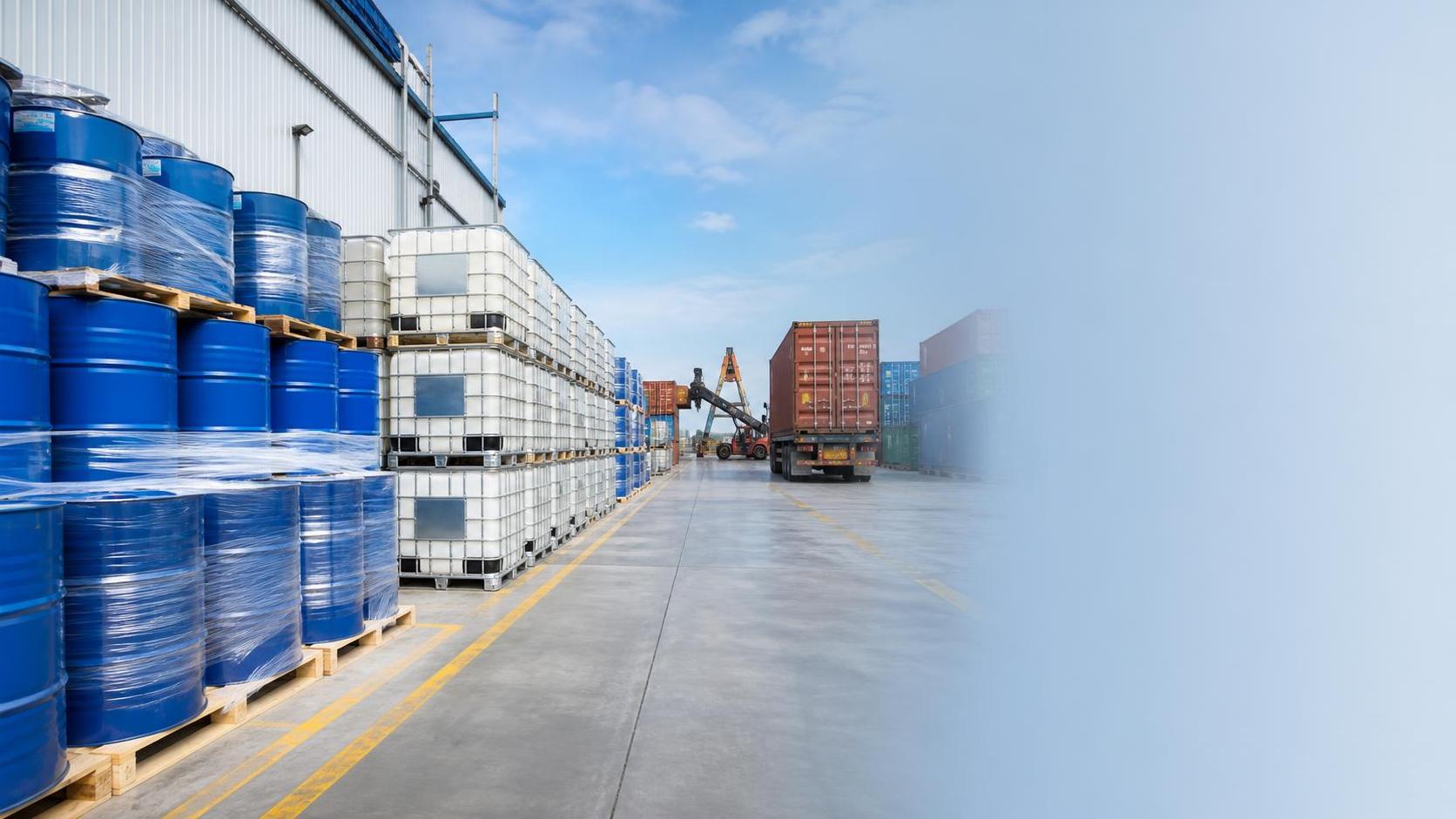
For chemical importers, the question of whether a distributor is cost-competitive cannot be answered by comparing a quoted unit price or a freight line on a proforma invoice. The relevant question is whether the supplier can deliver the required material, in the required condition and documentation status, at the required time, without creating extra cost elsewhere in the transaction.
That distinction matters when assessing Shandong Huafeng Chemical’s distribution services. A supplier based in Shandong, one of China’s major chemical manufacturing regions, may have practical advantages in supplier access, consolidation, export coordination, and product sourcing. Yet those advantages translate into a competitive delivered cost only when they are supported by disciplined quality control, accurate regulatory documentation, realistic logistics planning, and responsive handling of exceptions.
For buyers considering Huafeng Chemical, the sensible conclusion is not that its services are automatically the lowest-cost option in every market. Rather, its integrated export and distribution model may be cost-competitive where procurement complexity, multi-product sourcing, shipment reliability, or documentation risk matter as much as the ex-works price.
What “cost-competitive” means in chemical distribution
Chemical procurement has a habit of making an apparently cheap offer expensive. The purchase price is only one component of landed cost. The full cost of supply commonly includes product price, inland transport, export packing, dangerous-goods handling where applicable, ocean or air freight, insurance, customs clearance, duties, local delivery, financing cost, and the internal cost of managing supplier failures.
For a commodity chemical in a stable lane, the price difference between suppliers may be decisive. For specialty chemicals, additives, intermediates, agricultural inputs, or orders involving several products, operational factors can outweigh a small gap in unit pricing.
A distributor’s cost position should therefore be tested against five questions:
- Can it source consistently at a commercially reasonable price?
- Can it consolidate products or coordinate shipments efficiently?
- Can it provide documents that match the importing country’s requirements?
- Can it prevent avoidable delays, claims, relabeling, or rejection at destination?
- Can it respond quickly if production, vessel schedules, packaging, or regulatory requirements change?
A supplier that performs well across these points can be cheaper in total even if another seller submits a marginally lower product quotation.
Where a Shandong-based distribution model can create an advantage
Shandong has a dense industrial base covering a wide range of chemical segments. For an export service provider, proximity to manufacturing clusters can reduce sourcing friction. It may shorten the time needed to identify alternative producers, arrange plant-level inspections, coordinate samples, or combine compatible products for export.
Huafeng Chemical’s stated emphasis on comprehensive foreign-trade capability and a broad product portfolio is relevant here. A broad portfolio does not automatically mean every product is competitively priced. It can, however, reduce the number of counterparties a buyer must manage. This becomes valuable when an importer needs a basket of industrial chemicals, additives, solvents, intermediates, or agricultural-related materials rather than a single bulk product.
The financial value of consolidation is often underestimated. Multiple small purchase orders can generate repeated bank charges, inspection arrangements, export documentation fees, freight bookings, destination handling fees, and internal approval work. Consolidating supply through one capable exporter may lower those transaction costs. It can also reduce the risk that one late component holds up an entire production plan.
There is a practical limitation. Consolidation only saves money when products can legally and safely travel together, packaging is appropriate, and the distributor has sufficient control over collection schedules and warehouse handling. Buyers should not assume that combining orders is always cheaper; incompatible dangerous goods, temperature-sensitive materials, or products subject to different documentary rules may need separate treatment.
Does broad product availability reduce procurement risk?
It can, but only under the right conditions. Product breadth is useful when it is supported by traceable supply channels and clear specifications. A distributor that merely lists a large range of chemicals without confirming actual sourcing capability, lead time, manufacturer identity, or technical documentation does not reduce risk. It simply transfers uncertainty to the buyer.
The meaningful test is whether the exporter can provide, before an order is placed:
- a clear specification and acceptable quality range;
- certificate of analysis practices for each batch or shipment;
- safety data sheets appropriate to the product and destination market;
- information on packaging, shelf life, storage conditions, and transport classification;
- realistic production and dispatch lead times;
- an explanation of whether the material is supplied from one manufacturer, approved alternatives, or the open market.
These points matter especially for buyers using chemicals in formulations. A technically similar material from a different producer may have a different impurity profile, particle size distribution, color, moisture content, stabilizer package, or assay tolerance. A lower buying price may be quickly erased by reformulation work, additional incoming inspection, or inconsistent production performance.
For this reason, cost competitiveness should be assessed product by product. Huafeng Chemical may be well positioned for orders requiring coordinated export service and mixed sourcing, while a direct manufacturer could remain more economical for a high-volume, standardized material with predictable annual demand.
Freight is visible; compliance costs are often not
Freight quotations are easy to compare, but freight alone is not a reliable measure of distribution efficiency. In chemical trade, an incomplete or inconsistent document package can cause delays that cost far more than a freight saving. The exact requirements vary by country and product, but common areas include classification, labeling, safety data sheets, transport declarations, customs descriptions, certificates of origin, and product-specific registrations or import controls.
Exporters handling international chemical shipments need to align commercial documents with physical goods. The product name, CAS number where relevant, net and gross weights, packing details, dangerous-goods declaration, and invoice description should not contradict each other. Small discrepancies can lead to cargo holds, re-documentation, demurrage exposure, or refusal by carriers and local authorities.
This is one area where an export-oriented distributor can add real value. If Huafeng Chemical has established internal processes for overseas trade documentation and logistics coordination, that capability can reduce transaction risk for customers that do not maintain a large China-based sourcing team. The benefit is particularly material in first-time purchases, new destination markets, or multi-SKU orders.
However, buyers should distinguish between general export experience and destination-specific compliance expertise. A seller may be capable of exporting a product from China while the buyer still bears responsibility for registration, local labeling, use restrictions, or downstream compliance in the destination market. No distributor should be assumed to solve those obligations without written confirmation.
How should buyers compare Huafeng Chemical with direct manufacturers?
The direct-manufacturer route and the distributor route solve different problems. Direct buying can be attractive when volumes are large, specifications are stable, the manufacturer is qualified, and the buyer can manage export and quality issues directly. It may produce the lowest factory-gate price.
A distribution provider becomes more attractive when the buyer needs flexibility. Typical cases include a new market launch, mixed-container purchasing, limited order quantities, supplier diversification, technical sampling from several sources, or urgent replacement of interrupted supply. In these situations, the cost of dealing with several factories can exceed the markup paid to an intermediary.
A useful comparison should place both options on the same commercial basis. Buyers should request quotations using the same Incoterm, packaging configuration, quality standard, shipment size, destination port, and payment assumptions. Comparing one supplier’s FOB quote with another supplier’s CIF quote, or comparing a 20-foot-container price with a partial-load price, produces misleading conclusions.
The comparison should also include quality-related exposure. Ask whether price includes pre-shipment inspection arrangements, export-grade packaging, document preparation, and technical support for resolving discrepancies. If the buyer must separately pay for these tasks under a direct model, the apparent saving may not be real.
Can distribution services help with agricultural chemical sourcing?
They can help with the supply-chain side of agricultural inputs, but they should not be confused with agronomic advice or regulatory approval. The search question, “Is crop yield improvement possible with only organic pest control methods?”, reflects a broader market reality: agricultural buyers increasingly need products and technical claims to be evaluated in a specific production, regulatory, and crop-management context.
Crop yield improvement may be possible under organic pest control programs in some systems, especially where pest pressure is manageable and prevention, crop rotation, biological controls, soil health, monitoring, and application timing are well integrated. It is not a universal outcome. Organic pest-control methods can have narrower application windows, variable efficacy, and more demanding management requirements than conventional approaches. Yield performance depends on the pest complex, climate, crop variety, existing field conditions, permitted inputs, and execution quality.
For chemical distribution, the practical implication is that an exporter should not make broad performance claims simply because a product is marketed as natural, biological, or organic-compatible. Buyers need to verify active ingredients, formulation details, permitted-use status, local registration requirements, residue expectations, and compatibility with their production system. “Organic” is not a substitute for a technical specification or a regulatory review.
Where Huafeng Chemical is asked to source agricultural or pest-control-related materials, cost competitiveness should include the ability to provide consistent documentation and batch traceability, not merely an attractive price. A shipment that cannot be lawfully imported or used in the target market is not a cost-effective shipment.
What risks can make a low quote expensive?
Several recurring problems deserve attention in chemical distribution assessments.
Specification ambiguity. Terms such as “industrial grade,” “standard quality,” or “equivalent material” may conceal meaningful variation. The purchase contract should define critical parameters, test methods, sampling rules, acceptable tolerances, and the remedy for non-conformance.
Unclear manufacturer control. If supply may come from different plants, the buyer should know whether each source has been technically approved. For sensitive formulations, even a nominally identical product can require requalification.
Inadequate packaging. Packaging is not an administrative detail. It affects leakage risk, container utilization, product stability, unloading efficiency, and claims management. A lower-priced drum, bag, or intermediate bulk container can create substantial loss if it is unsuitable for long-distance transport or destination conditions.
Unrealistic lead times. A quoted lead time may refer only to product availability, not testing, packaging, dangerous-goods booking, port cutoff, or vessel departure. Buyers should ask for a milestone-based shipment plan rather than relying on a single estimated date.
Weak claims procedures. Disputes are easier to manage when the contract addresses inspection timing, evidence requirements, retention samples, notification periods, and liability boundaries. A supplier’s responsiveness during a problem is part of its real cost profile.
A practical way to test cost competitiveness before committing
For an initial order, the best approach is usually a controlled comparison rather than a broad assumption. Select one or two representative products and request an itemized quote from Huafeng Chemical alongside alternative sources. The request should specify annual volume expectations, order frequency, packaging, destination, required documentation, and quality parameters.
Then evaluate the offer in three layers. The first is the commercial layer: unit price, Incoterm, payment terms, price validity, and volume conditions. The second is the operational layer: lead time, stock or production basis, shipment flexibility, packaging, consolidation capacity, and communication speed. The third is the risk layer: technical documents, supplier traceability, compliance support, quality assurance, and claims handling.
A trial order should be judged after arrival, not only after booking. Record actual transit time, document accuracy, receiving condition, quality consistency, customs experience, and the effort required from internal staff. That post-shipment review provides more useful evidence than an initial sales presentation or a spreadsheet comparison.
Where annual demand is meaningful, buyers can also ask for pricing structures tied to forecast volume, raw-material movements, or shipment frequency. The objective is not necessarily to lock in the lowest price. It is to avoid repeated spot-market purchasing, which can expose the business to volatility, fragmented supply, and rushed logistics decisions.
The balanced answer
Shandong Huafeng Chemical’s distribution services can be cost-competitive when a buyer values integrated sourcing, international trade coordination, access to a broad chemical supply base, and reduced administrative complexity. These strengths are most likely to matter for multi-product orders, developing supply programs, markets with demanding import procedures, and transactions where reliability has a measurable financial value.
They may be less compelling when the requirement is a single, high-volume commodity sourced from a fully qualified manufacturer and the buyer already has strong logistics, technical, and compliance resources. In that case, direct procurement may offer a lower product cost.
The right decision is therefore not whether a distributor is cheaper in principle. It is whether its service reduces the total landed cost and supply risk of a specific chemical program. Buyers that assess price, compliance, quality consistency, logistics execution, and exception handling together will reach a more reliable answer than those comparing quotations alone.
Send Us Your Inquiry Today
