









Product Quick Navigation
Get a Quote
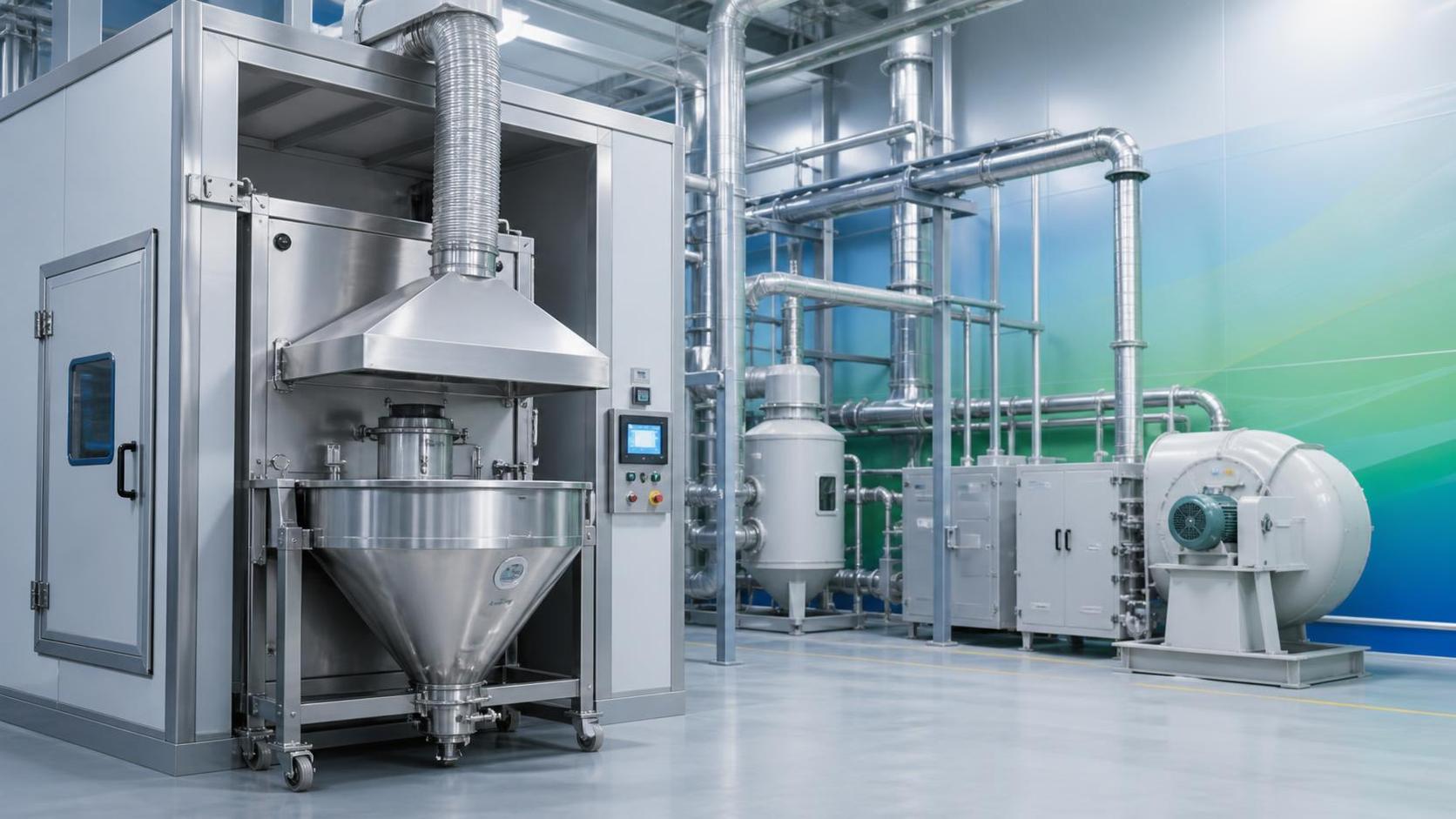
When handling chemical raw materials in production areas, operators must maintain ventilation to control vapors, dust, heat, and potentially harmful airborne contaminants. Effective airflow is not only essential for worker safety, but also supports regulatory compliance, product quality, and stable production efficiency. Understanding why ventilation matters helps teams identify risks early and apply safer handling practices across daily chemical operations.
Ventilation is sometimes treated as a background facility condition: fans are running, doors are open, and work can continue. That assumption is risky. In chemical production, an area can appear clear while airborne contaminants remain within the breathing zone, settle onto equipment, migrate to adjacent rooms, or accumulate in poorly swept corners. Whether the material is a volatile liquid, a reactive solid, a fine powder, or a material that releases gas during processing, the purpose of ventilation is to control exposure at the point where it is created—not merely to make the workspace feel less stuffy.
Ventilation controls the hazard that cannot always be seen
Chemical handling creates airborne exposure through more routes than evaporation alone. Solvents and volatile intermediates may produce vapors during transfer, blending, sampling, heating, or cleaning. Powders can become suspended while opening bags, charging mixers, weighing ingredients, sieving, or clearing blocked lines. Even relatively low-volatility materials may generate respirable dust when handled in dry form.
The key issue is particle size and location. Large particles may settle quickly near a hopper or bag-opening station, but fine particles can remain suspended and travel with room air. An operator standing over a charging port may receive a much higher exposure than a person several meters away, even when the overall room seems adequately ventilated. This is why general air movement alone is not a reliable measure of control.
A proper system normally combines two functions:
- Local exhaust ventilation (LEV): captures dust, vapor, mist, or fumes close to the release point.
- General or dilution ventilation: supplies and removes room air to reduce residual contaminants, manage heat, and prevent stagnant zones.
These functions are not interchangeable. A roof exhaust fan may improve the room environment, but it cannot necessarily capture a dust cloud created at chest height. Likewise, a strong extraction hood may work well at a filling point while poor room airflow allows heat or vapor to build up elsewhere. The handling task, material properties, and plant layout determine what combination is needed.
Why “air moving” is not the same as effective ventilation
A frequent operational error is judging ventilation by noise, fan speed, or the sensation of airflow. Air can move vigorously in the wrong direction. A cross-draft from an open door, supply grille, or portable fan may pull dust away from a hood and across the worker’s face. It may also interfere with a balance enclosure, sampling booth, or open-process capture device.
Effective ventilation means contaminated air is drawn away from the breathing zone and into a suitable capture and treatment route. For dust-generating tasks, the hood or enclosure should pull contaminants inward. For vapors, airflow should prevent the vapor plume from moving toward people, ignition sources, control panels, or other work areas. The system must also discharge or treat extracted air in a manner consistent with the substance and local environmental requirements.
Simple observations can reveal major failures. If powder is visible outside an enclosure during bag opening, if dust deposits repeatedly form on nearby pipework, if chemical odors become stronger during transfer, or if smoke testing shows air moving out of rather than into the hood, the control method needs attention. These signs do not establish an exposure level, but they should trigger inspection rather than be accepted as normal conditions.
Powder handling requires particular discipline
Powders are often underestimated because they do not behave like strong-smelling solvents. Yet a powder can create a significant inhalation and contamination issue, especially when it is fine, easily dispersed, toxic at low concentrations, or handled frequently. The greatest releases commonly occur during activities that are considered routine: cutting a liner, pouring from one container to another, brushing down a work surface, or using compressed air for cleaning.
Cobalt compounds illustrate why material-specific assessment matters. Cobalt Carbonate CAS#513-79-1 is supplied as a powder and may be used as a cobalt source in applications including pigment manufacture, catalyst production, ceramics, hydrometallurgical processing, and the preparation of other cobalt salts. Although cobalt carbonate has no vapor pressure at 20°C in the supplied product data, that does not remove the ventilation requirement. The relevant airborne hazard during dry handling is dust, not vapor.
The supplied data also cites an ACGIH threshold limit value of 0.02 mg/m3 as an 8-hour time-weighted average. Such low occupational guidance values underline why an open bench and general room exhaust may be inadequate for weighing or charging cobalt-containing powders. The appropriate control is usually enclosed handling, a properly designed LEV point, or a contained transfer method, supported by task-specific exposure assessment. Exposure limits and legal obligations vary by jurisdiction, so site procedures must follow the applicable local requirements and the current safety data sheet.
For materials such as cobalt carbonate, dust control also protects the process itself. Fine residues can contaminate adjacent products, enter drains during poor housekeeping, and spread to handles, keyboards, forklift controls, and packaging surfaces. A clean-looking production floor is not proof that contamination is absent; settled dust is often redistributed during traffic, vibration, or cleaning.
Ventilation also protects product quality and process reliability
The safety case for ventilation is clear, but the production case is equally important. Airborne dust can cause cross-contamination, alter batch composition, interfere with instruments, and settle on seals or moving parts. In pigment, ceramic, catalyst, and specialty chemical operations, a small amount of carryover from a previous material may affect color, catalytic performance, impurity profiles, or downstream acceptance.
Humidity, heat, and air balance can also affect handling behavior. Some powders bridge in hoppers, cake in packaging, or lose flow consistency when environmental conditions are poorly controlled. Air-sensitive substances require additional care: ventilation must remove contaminants without unintentionally exposing the product to moisture or uncontrolled ambient air. This is one reason that “more ventilation” is not automatically the answer. The system has to be compatible with the material and process.
For example, product information for cobalt carbonate identifies air sensitivity and incompatibility with strong oxidizing agents, as well as storage under inert gas at 2–8°C. Those conditions do not mean every downstream handling step must occur under inert gas, but they do mean the work instruction should distinguish between storage protection, transfer conditions, dust capture, and incompatible-material segregation. A ventilation design that is effective for dust capture must not create an uncontrolled pathway for incompatible substances or compromise a protected process.
Where ventilation failures usually begin
Most problems are not caused by the complete absence of equipment. They arise from changes in work practices that the original system was not designed to handle. A hood may have been sized for small containers, but production later shifts to larger bags. A charging operation may move closer to the hood edge. A flexible extraction arm may be left parked above the work instead of positioned near the release point. Filters may load with dust, dampers may be adjusted, or a fan may operate below design performance without anyone noticing.
Common warning signs include:
- Visible dust escaping during charging, sampling, or packaging;
- Persistent chemical odor in a task area or adjoining corridor;
- Dust accumulation on horizontal surfaces, lighting, cable trays, or extraction ducts;
- Operators relying on disposable masks because the engineering control is weak;
- Frequent eye, throat, or skin irritation reports during a particular task;
- Pressure alarms, airflow indicators, or filter alarms being ignored or bypassed;
- Portable fans used to “clear” a release without checking where contaminants are sent.
Portable fans deserve special caution. They may provide thermal comfort, but they can also disperse a localized release into a larger area. They should not be treated as a substitute for capture ventilation. When a release occurs, the correct response depends on the substance and site emergency procedure; indiscriminate air movement can increase exposure and complicate cleanup.
Maintain ventilation through the whole task, not only during charging
Airborne exposure does not begin and end at the moment material enters a vessel. It may occur when containers are opened, when liners are removed, when residues are scraped from tools, when samples are collected, and when equipment is cleaned. Extraction should therefore be running before the container is opened and remain in service long enough to clear residual airborne material after the transfer is complete.
This operational detail is often missed when teams are under pressure to reduce cycle time. Turning off extraction immediately after charging can allow suspended dust to move out of the work zone as the enclosure is opened. Similarly, cleaning an area while the system is off can reintroduce settled particles into the air. Use HEPA-filtered vacuum equipment where appropriate for hazardous dust, and avoid dry sweeping or compressed-air cleaning unless a validated procedure specifically permits it.
For vapor-producing operations, running ventilation before heating or solvent transfer is equally important. Vapor generation can rise rapidly with temperature, agitation, surface area, and splashing. Waiting until odor is noticed is too late; odor perception differs substantially between individuals and does not indicate a safe concentration.
Checks that make ventilation a working control rather than a paper control
Ventilation needs routine verification. Formal testing by qualified personnel remains important, particularly after installation, modification, or a suspected performance failure. Daily operation also benefits from simple, visible checks that can be completed before work starts.
Check that extraction is switched on, relevant indicators show normal status, and any enclosure sash, door, or access panel is in the intended position. Confirm that containers, bags, or tools will not block airflow paths. Position the material as far inside the capture zone as practical while preserving safe ergonomics. If the task uses a flexible hood, place it close to the anticipated release point without obstructing the work.
Do not defeat interlocks, silence alarms without investigation, or assume that a recently serviced fan guarantees effective capture. A system may be mechanically running while the hood face velocity, duct integrity, filter condition, or airflow balance is unacceptable. Where installed, airflow indicators should be understood by the people performing the task: an alarm is useful only when there is a clear response instruction.
Maintenance teams should treat dust collection systems as process-critical equipment. Filter replacement intervals, waste handling, duct inspection, fan performance, and differential-pressure trends all affect control. Collected dust may retain the hazardous properties of the original material and must be managed accordingly. Releasing it during filter changes can expose maintenance personnel and spread contamination unless containment and protective measures are planned.
Ventilation does not replace other controls
Engineering controls are generally more dependable than relying on individual behavior, but they work best within a broader handling system. Closed transfers, pre-weighed packaging, automated dosing, sealed sampling devices, and substitution with less hazardous forms can reduce the amount of material that ventilation must capture. Clear labeling, compatible storage, spill response procedures, and effective housekeeping reduce the consequences when a release occurs.
Personal protective equipment remains necessary for many chemical tasks, particularly during non-routine work, maintenance, spill response, or situations where residual exposure cannot be eliminated. However, respirators should not be used to justify poor capture performance. They require correct selection, fit, inspection, training, and a respiratory protection program consistent with applicable requirements. Gloves and protective clothing also need to be selected for the actual chemical and task, rather than treated as universal protection.
The practical objective is straightforward: keep hazardous material contained, capture what escapes at the source, prevent contaminants from crossing into occupied or clean areas, and verify that the system still performs as intended. When teams consistently maintain ventilation, they are not simply meeting a facility rule. They are protecting health, avoiding product loss, reducing cleanup and downtime, and keeping routine chemical handling from becoming an uncontrolled exposure event.
Send Us Your Inquiry Today
