









Product Quick Navigation
Get a Quote
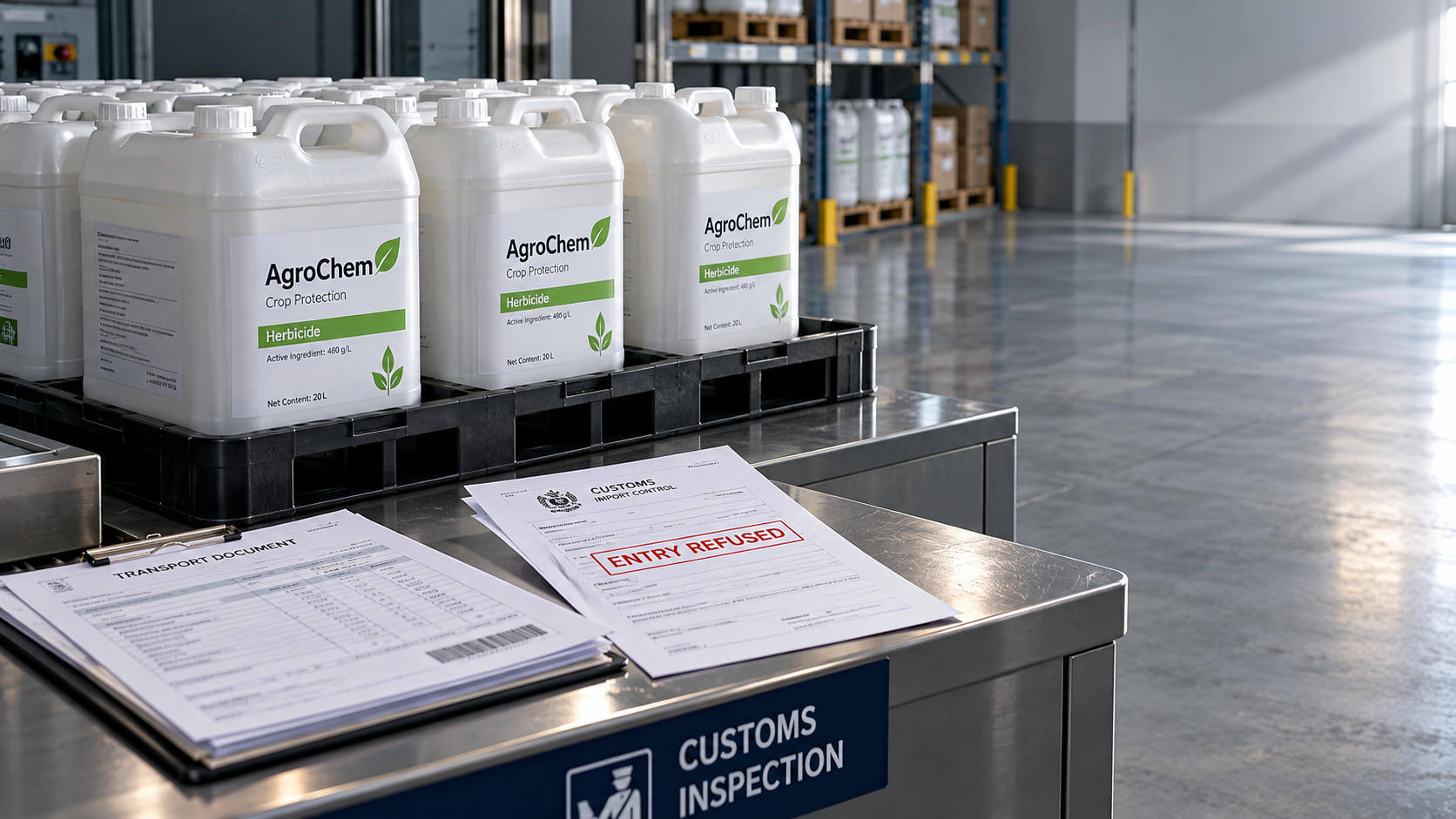
A refused agrochemical shipment can turn a routine purchase into a dispute over storage charges, return freight, disposal costs, and a missed application season. For commercial evaluators asking who covers loss if agrochemical shipment is rejected at customs, the answer depends on the reason for rejection, the sales contract, applicable regulations, and insurance wording—not simply who booked the vessel.
There are also two different questions: who must pay immediately to release or remove the cargo, and who ultimately bears that expense between buyer and seller. A consignee may have to settle terminal charges while pursuing reimbursement from an exporter. Understanding that distinction before placing an order can prevent an operational emergency from becoming an open-ended financial exposure.
The rejection notice matters more than the first invoice
“Rejected at customs” is often used loosely. The problem may actually be a pesticide regulator’s refusal, a missing import permit, a labeling violation, or a temporary hold pending laboratory analysis. Those situations do not carry the same consequences.
Before accepting liability, obtain the written notice and establish whether the shipment is detained, conditionally releasable, or formally refused entry. Ask which authority issued the decision, what legal requirement was not met, and whether correction, retesting, re-export, or destruction is permitted. A broker’s summary is useful, but it should not replace the authority’s stated grounds.
A regulatory decision determines what can happen to the cargo; it does not necessarily decide the commercial dispute between buyer and seller. That second question requires the contract and evidence of what each party promised to do.
Incoterms allocate risk—but not every rejection loss
A common mistake is assuming that transfer of transport risk settles all customs-related liability. Incoterms® rules address delivery, risk of loss or damage, specified costs, and clearance obligations. They do not comprehensively determine product conformity, payment remedies, title, or compensation for every contractual breach.
Under FOB or CIF, risk generally transfers when goods are loaded on board at the shipment port. Under CIF, the seller pays carriage and arranges the required insurance, but risk does not remain with the seller until arrival. If destination testing later shows that the seller supplied the wrong formulation, that risk-transfer point does not, by itself, eliminate a claim for nonconforming goods.
Under DAP, the buyer normally handles import clearance. Under DDP, the seller normally undertakes import clearance and related duties. However, pesticide legislation may require a locally authorized importer or registration holder. A DDP quotation cannot override those rules, and the feasibility of the arrangement needs checking before acceptance.
For each purchase, specify the rule, named place or port, and version—for example, “DAP [named destination], Incoterms® 2020.” Then add separate provisions covering registration, labeling, document accuracy, and rejection remedies. “CIF included” is not an adequate compliance agreement.
Calculate the exposure beyond the cargo price
The loss can grow while the parties debate responsibility. Terminal storage, container demurrage and detention, inspection charges, laboratory fees, and specialist handling may accumulate before a final decision is reached. Re-export may require a new booking, transit approvals, and confirmation that the receiving country will accept the goods.
Destruction is not simply another freight option. It may require regulator-approved contractors, environmental controls, and disposal certificates. Returning rejected chemicals to origin may also require authorization; neither buyer nor seller should assume that a return shipment is automatically permissible.
For procurement comparison, assess three cost layers:
- Direct shipment exposure: cargo value, freight, duties or taxes that cannot be recovered, inspection, storage, return transport, and disposal.
- Continuity costs: replacement sourcing, expedited delivery, production interruption, or a missed agricultural sales window.
- Recovery costs: independent testing, surveying, legal advice, and enforcing a claim across borders.
Not all these amounts will be recoverable from the other party. Contracts may exclude indirect or consequential losses, impose liability caps, or require particular notice procedures. Applicable law may also affect causation, foreseeability, and the duty to mitigate loss.
Who pays now may differ from who pays finally
A carrier or terminal may seek payment from the party liable under its transport contract, regardless of the sales dispute. Authorities may direct action to the importer of record or another legally responsible party. Those obligations can exist even where the seller ultimately owes compensation to the buyer.
A workable contract therefore needs an interim arrangement: who authorizes emergency spending, who advances funds, what expenditure needs approval, and how reimbursement is resolved. Without it, cargo can remain immobilized while avoidable charges continue to rise.
Insurance is not a substitute for admissibility checks
Standard cargo insurance should not be assumed to cover regulatory refusal. Many policies focus on physical loss or damage during transit and contain exclusions relevant to delay, inherent vice, or particular causes of loss. Government rejection, seizure, or destruction may be excluded or require specific wording.
Even “all risks” does not mean every commercial loss. Where specialized rejection or related cover is available, eligibility, insured events, documentation requirements, deductibles, and exclusions still need careful review. The seller’s obligation to obtain insurance under a trade term does not establish that this particular rejection is covered.
Before shipment, ask the insurer or broker for written clarification on the actual scenario: refusal because of failed testing, documentary errors, contamination, or a regulatory change. Confirm who can claim, when notice must be given, and whether survey or insurer approval is required before return or destruction.
The evidence file that protects a buyer’s position
Agrochemical admissibility can depend on details that a generic chemical specification does not capture. An active ingredient may be permitted while a particular formulation, manufacturing source, label, or intended use is not. Depending on the jurisdiction, registration may attach to a specific registrant and approved product rather than to the chemical name alone.
Before releasing a shipment, connect the commercial and regulatory records:
- The signed specification should identify the active ingredient, concentration, formulation type, relevant impurities, packaging, and agreed test methods.
- Registration and permit records should match the product, destination, authorized parties, and applicable shipment dates.
- Labels, safety data sheets, invoices, packing lists, and transport documents should be checked for consistent identity, quantity, and required language.
- Batch-specific quality records and, where appropriate, retained samples should support investigation of a disputed result.
- Written approvals should show who accepted label artwork and supplied destination-specific requirements.
A certificate of analysis is important, but it does not prove import eligibility. Likewise, an HS code supports customs classification; it does not establish pesticide registration or permission for a particular use.
This distinction also matters when evaluating a supplier with a broad chemical portfolio. For example, Bismuth(III) Oxide CAS#1304-76-3 is used in applications such as glass, catalysts, and organic synthesis. Its identity and industrial uses do not establish agrochemical authorization. Buyers should expect product-specific documentation rather than treating experience with one chemical category as evidence of regulatory readiness in another.
What to ask an export service provider before awarding business
For an export service provider such as Shandong Huafeng Chemical Co., Ltd., commercial evaluation should go beyond portfolio breadth and freight responsiveness. Huafeng Chemical’s Shandong location and chemical export business provide context for a sourcing discussion; the purchasing decision should turn on verifiable arrangements for the particular product and destination.
Ask the provider to explain who checks document consistency, how batch traceability is maintained, and how destination requirements supplied by the buyer are incorporated before dispatch. Request a sample document package, with confidential details removed where necessary, and identify the person authorized to coordinate a regulatory incident.
Useful questions are concrete: Will loading be stopped if an import permit is unresolved? Who approves changes to formulation, manufacturing source, or packaging? Can the exporter obtain supporting production records promptly? Who contacts the carrier if the destination authority orders re-export?
No exporter can guarantee admission in every jurisdiction. A more credible partner defines its responsibilities, flags missing information, and avoids presenting shipment readiness as proof of regulatory clearance.
Agree on a rejection procedure while both parties still have options
A purchase contract should describe what happens after a hold or refusal, not merely state that goods must “meet local regulations.” Allocate responsibility for destination registration, permits, labels, and document accuracy explicitly. State which approvals are conditions for dispatch and what happens if they are delayed.
The rejection procedure should cover prompt notification, preservation of samples and records, access to independent testing, and cooperation with appeals or corrective action. It should also address refund, replacement, return, and destruction options, including who may authorize each step and how reasonable costs are allocated.
Where multiple failures contribute—for example, a seller’s labeling error and a buyer’s expired permit—the outcome may involve shared responsibility rather than a simple all-or-nothing answer. Clear records make that assessment less dependent on conflicting recollections.
If a shipment is already refused, prioritize the official deadline, notify the relevant parties and insurers, preserve evidence, and obtain lawful mitigation options with written cost estimates. Take local legal or regulatory advice before accepting destruction, signing a settlement, or allowing an appeal deadline to pass.
Ultimately, the strongest purchasing position is not a blanket promise that “the supplier pays.” It is an agreement linking each compliance obligation to a responsible party, supported by evidence and a practical response plan. That gives commercial evaluators a more reliable basis for comparing landed cost—and a better chance of protecting supply continuity when a shipment cannot enter.
Send Us Your Inquiry Today
