









Product Quick Navigation
Get a Quote
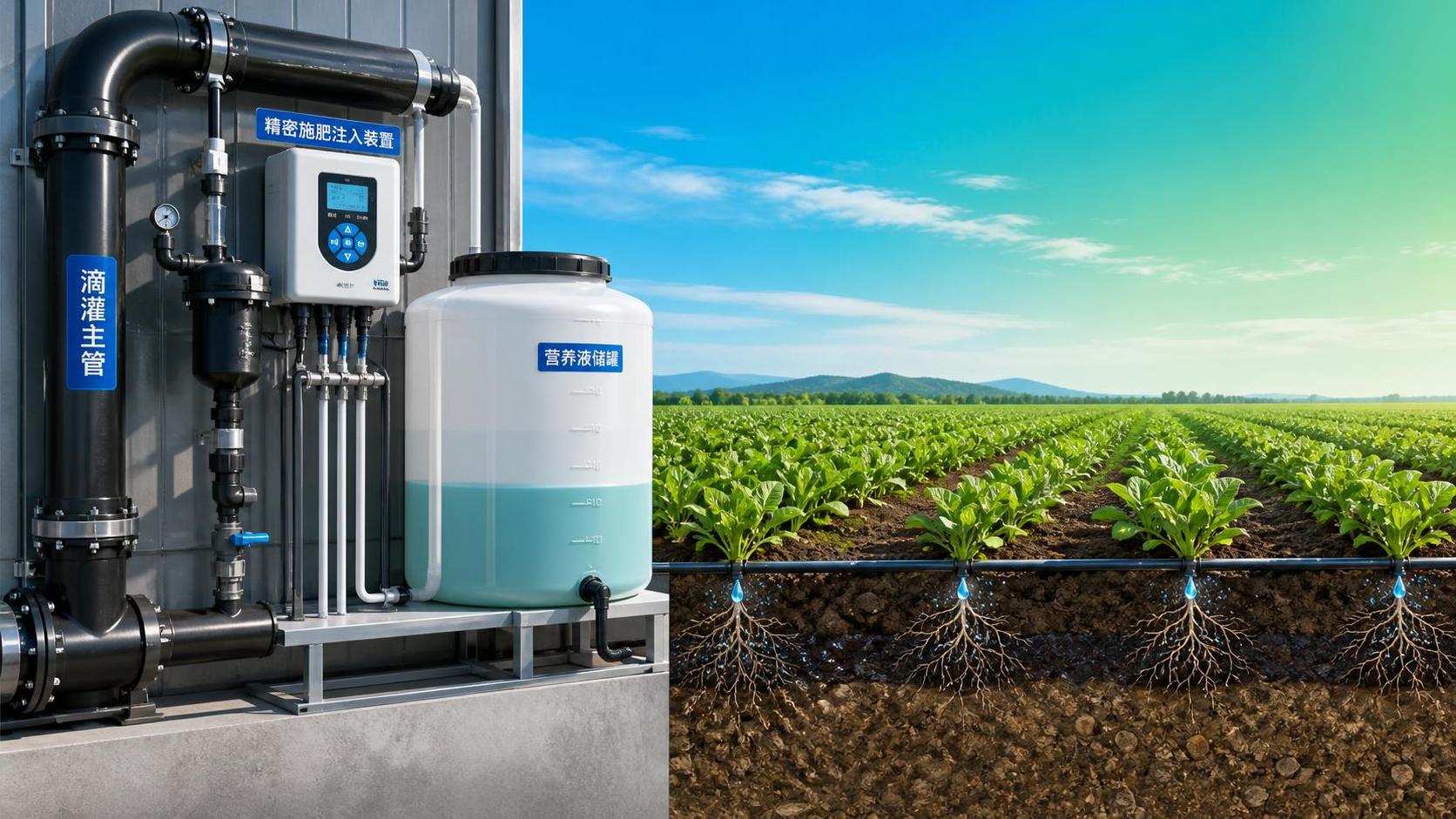
Crop yield improvement programs often fail for reasons that are easy to miss in planning meetings. The farm may have selected a reputable fertilizer, invested in better seed, installed irrigation equipment, and trained operators on basic application practices. Yet the harvest still does not reflect the expected gain. In many cases, the problem is not effort or even total nutrient spend. It is a mismatch between nutrient form, application timing, field conditions, and the operational system used to deliver inputs.
For operators, this matters because yield is not improved by adding more material to a field. It improves when the crop can access the right nutrient, in the right form, at the stage when demand is high enough to affect growth, while water, soil conditions, and logistics allow that input to remain effective. A program built around product labels alone can look technically complete and still underperform in real field conditions.
The first gap: treating nutrient rate as the whole decision
A common assumption is that yield potential can be protected simply by meeting a recommended nitrogen, phosphorus, potassium, or micronutrient rate. This is incomplete. The useful question is not only “How many kilograms were applied?” but “How much of that nutrient remained available to the crop when the crop needed it?”
Nutrients can be lost, fixed, immobilized, diluted, or placed outside the active root zone. Nitrogen may volatilize, leach below rooting depth, or be lost through denitrification in saturated soil. Phosphorus can become less available in soils with unfavorable pH or high levels of reactive calcium, iron, or aluminum. Potassium can be restricted by soil texture, moisture stress, or competition with other cations. Micronutrients may be present in a soil analysis but unavailable under the prevailing pH, temperature, or moisture conditions.
This is why a high total nutrient application can coexist with poor crop response. Operators should distinguish between nutrient quantity and nutrient availability. The gap is especially important in fields with variable soil zones, uneven drainage, residue cover, compacted layers, or a history of repeated blanket applications.
Before changing fertilizer rates, review four practical conditions:
- Whether the soil test reflects the specific management zone, rather than an average across a highly variable field.
- Whether the selected nutrient source is suitable for the soil pH, irrigation method, and likely weather during application.
- Whether placement puts nutrients within reach of the developing root system.
- Whether the program accounts for nutrient removal from previous crops, manure applications, irrigation water, and residual soil fertility.
More fertilizer can sometimes correct a genuine deficiency. It can also increase salinity risk, nutrient runoff exposure, input cost, and crop imbalance without solving the actual constraint. For that reason, rate changes should follow diagnosis, not frustration.
Timing failures are often disguised as product failures
When a crop response is weak, the first reaction is often to question product quality. Quality should certainly be verified, but timing is frequently the more decisive issue. Plants do not take up nutrients at a constant rate through the season. Demand changes rapidly around establishment, vegetative expansion, flowering, grain or fruit set, and filling stages. An application that is technically correct but arrives after the critical demand window may protect plant appearance without materially improving yield.
For example, early nutrient stress can reduce root development, canopy formation, or reproductive site potential. A later corrective application may restore leaf color while being unable to recover the lost number of grains, fruiting sites, or productive tillers. Conversely, applying a mobile nutrient far in advance of peak uptake can leave too little in the root zone when demand accelerates.
The operational lesson is to plan applications around crop growth stages and risk windows, not only around calendar dates. A fixed “day 30” or “pre-rainy-season” schedule may be useful for labor planning, but it should be adjusted when planting is delayed, emergence is uneven, temperatures change development speed, or irrigation capacity is constrained.
Split application is useful only when the second pass can happen
Split nutrient programs are often presented as a simple answer to nitrogen efficiency. In principle, splitting can reduce exposure to early-season loss and align supply more closely with demand. In practice, it introduces a logistical requirement: the operator must be able to enter the field, prepare equipment, secure product, and apply accurately during a narrow window.
If wet weather, labor shortages, machinery downtime, or delayed delivery regularly prevent the second application, a theoretically efficient program may become less reliable than a more robust alternative. The right program is therefore not the one with the most refined agronomic schedule on paper. It is the one that can be executed consistently under local field and supply-chain conditions.
This does not mean abandoning split applications. It means stress-testing them. Ask what happens if the follow-up pass is delayed by seven to ten days, if irrigation is unavailable, or if one field becomes inaccessible. A viable plan should include a response rule for these disruptions before the season begins.
Water management can overturn a nutrient plan
Nutrient decisions and water decisions are inseparable. Water carries soluble nutrients toward roots, but excessive or poorly timed water can also move them away, create anaerobic conditions, or limit root function. Many apparent fertilizer failures are actually irrigation, drainage, or rainfall-management failures.
In irrigated systems, uneven distribution is particularly damaging because it creates several nutrient environments in one field. Areas receiving too little water may show poor nutrient uptake even where fertilizer rates are adequate. Overwatered areas may lose nitrate, suffer root stress, or develop disease pressure that masks the intended nutrient response. A uniform fertilizer recommendation cannot compensate for non-uniform water delivery.
Operators should track irrigation performance alongside crop observations. Flow rate, pressure, emitter condition, run time, and drainage behavior are operational data, not merely maintenance details. Where fertigation is used, the injection sequence, water volume before and after injection, and compatibility of materials can materially affect whether nutrients reach the intended root zone.
Rain-fed systems require a different discipline. Nutrient placement and timing should reflect the probability of activating rainfall as well as the risk of intense storms. Surface-applied materials may be exposed to loss if a heavy rain arrives before incorporation or crop uptake. But delaying every application until ideal weather can also cause missed growth-stage windows. The better approach is to identify the field-specific risk that has caused losses in prior seasons and design around it.
Do not confuse visible symptoms with the root cause
Yellowing, stunting, weak stems, uneven maturity, and poor canopy density can all point to nutrient stress. They can also result from compaction, root disease, herbicide injury, salinity, poor seedling establishment, oxygen limitation, insect pressure, or water stress. Applying nutrients to every visible symptom is one of the fastest ways to turn a crop yield improvement effort into a costly trial-and-error program.
A practical diagnosis sequence begins with pattern recognition. Is the issue uniform across the field, concentrated in low areas, aligned with irrigation runs, limited to a soil type, or associated with headlands and traffic zones? Does it affect young leaves or old leaves first? Did it appear after a weather event, spray operation, or irrigation change? These observations do not replace laboratory analysis, but they help determine what to test and where to sample.
Use paired checks where possible. Compare affected and unaffected plants from the same field, inspect roots rather than leaves alone, and match tissue results with soil data and recent application records. Tissue testing can indicate what the plant is taking up at the moment; it does not automatically identify why uptake is low. A low nutrient concentration may reflect limited soil supply, poor root access, dilution from rapid growth, antagonism with another nutrient, or environmental stress.
Supply consistency is part of agronomic performance
For an operator, supply-chain reliability can seem separate from crop management until an input arrives late, changes in physical condition, or lacks usable technical documentation. Then the connection becomes immediate. A nutrient strategy based on precise timing cannot perform as planned when shipments are delayed during the application window, packaging fails in humid storage, or the formulation supplied differs from the one used in the field protocol.
This is particularly relevant for chemical inputs and process aids used around irrigation, water preparation, wastewater handling, or on-farm and processing-site operations. Product selection should include more than price and nominal specification. Buyers should assess lot traceability, certificate availability, transport classification, storage requirements, shelf-life controls, compatibility information, and the supplier’s ability to communicate promptly when field conditions force a schedule change.
There is also a safety boundary that should remain clear. Some chemical products are relevant to the wider agricultural water or processing infrastructure but are not crop nutrients and must never be treated as field-applied yield enhancers. For instance, Acrylamide CAS#79-06-1 is a highly regulated monomer used as a precursor in polymer production, including polymers used for applications such as water treatment and solid-liquid separation. Its hazardous classification, handling requirements, and storage controls mean it belongs within properly controlled industrial processes, not in improvised agronomic use.
This distinction matters because operators increasingly encounter chemicals through water management, sludge treatment, processing, and environmental compliance systems. The presence of a material in an agricultural supply chain does not establish suitability for direct crop or soil use. Always rely on the approved use, local regulatory requirements, safety documentation, and qualified technical advice for the actual application.
Compatibility problems can quietly reduce program effectiveness
Tank mixing and fertigation can improve labor efficiency, but they also create opportunities for incompatibility. Water hardness, pH, bicarbonate content, suspended solids, and temperature can alter solubility or lead to precipitation. Mixing order can affect dispersion. Some combinations may remain visually stable in a small container but behave differently at full tank scale or after standing in a line.
Operators should treat water quality as an input specification. A source that works acceptably for irrigation may still require conditioning or compatibility checks before it is used to deliver fertilizers or crop-support products. This is especially important where water sources change seasonally, where reclaimed water is used, or where multiple products are injected through the same equipment.
A simple pre-application process helps avoid preventable losses:
- Review current water analysis rather than relying on an old report.
- Confirm product labels and supplier guidance for mixing, pH range, and application equipment.
- Conduct a small-scale compatibility test using the actual water source and planned concentration.
- Keep records of mixing order, batch identifiers, weather, application rate, and field location.
- Flush injection and spray systems according to the approved operating procedure after use.
Records may feel burdensome during a busy season, but they become the difference between learning from a disappointing result and repeating it. They also support discussions with agronomists, suppliers, and procurement teams when a problem has several possible causes.
Build programs around constraints, not ideal conditions
The most dependable crop yield improvement programs start with the field’s limiting constraint. In one operation, the priority may be reducing nitrogen loss in sandy ground. In another, it may be correcting phosphorus placement in cool early-season soils. Elsewhere, improving drainage, irrigation uniformity, or root-zone access may produce a larger response than changing fertilizer grade.
This requires disciplined prioritization. Operators should identify the one or two constraints most likely to limit yield, establish a measurable action for each, and compare results against a realistic field baseline. Small strip trials, managed comparison zones, or documented changes across similar blocks can be more informative than a whole-farm switch based on a single season’s visual impression.
The point is not to make every nutrient program more complicated. It is to remove the false confidence created by generic rates, fixed schedules, and product-first decisions. When nutrient selection, timing, water management, application capacity, and chemical handling are aligned, the crop has a better chance to convert inputs into measurable output. When they are not, even a well-funded program can fail quietly long before harvest makes the gap visible.
Send Us Your Inquiry Today
