









Product Quick Navigation
Get a Quote
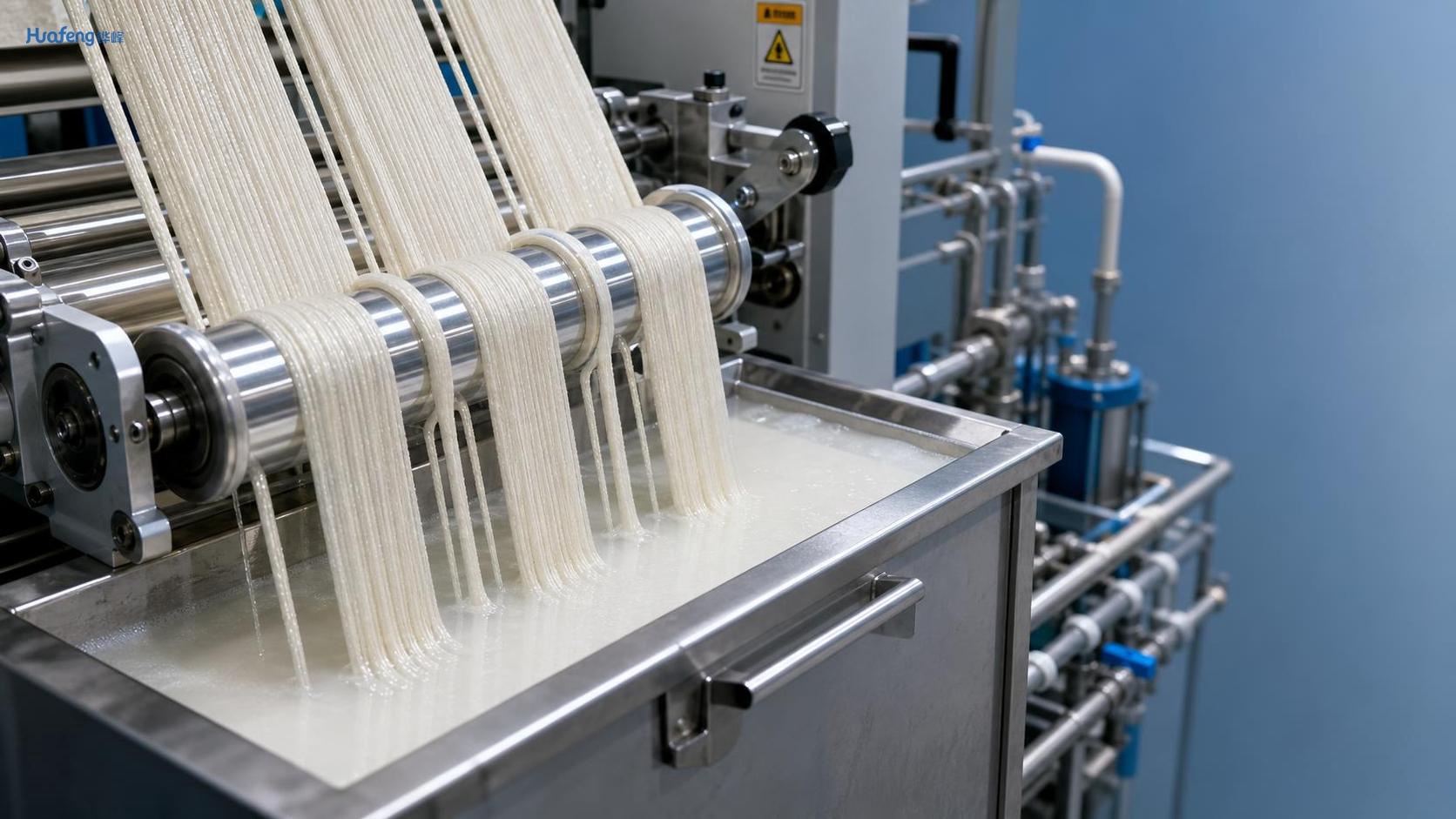
It usually starts the same way on the weaving floor: a loom that ran acceptably during the previous shift begins stopping for no obvious mechanical reason. The machine is reset, warp breaks are pieced, tension is adjusted, and production resumes for a short time. Then the same interruption returns. When this repeats across similar styles or lots, it is easy to suspect heddles, drop wires, humidity, beam build, or operator handling first. Those are reasonable checks. But in many mills, the hidden trigger sits earlier in the process, inside the size film itself.
When Textile Sizing Starch performs inconsistently, loom stoppage is rarely caused by one dramatic failure. More often it comes from a chain of smaller effects: uneven adhesion, brittle film, excessive shedding, tackiness, poor penetration, or unstable viscosity. Each of these can show up at the loom as frequent end breaks, sticking in the shed, rough abrasion behavior, and unstable running tension. If you are trying to restore production quickly, the useful question is not simply whether the starch is “good” or “bad.” The useful question is: at what point did sizing behavior move out of the acceptable range, and how can that be corrected without creating a second problem somewhere else?
When sizing starch is the real cause of loom stoppage
A loom stoppage linked to sizing does not always look like a sizing problem at first glance. Maintenance teams often see the final symptom only: repeated warp stop motions, localized break patterns, lint accumulation, or unstable running after style changeover. The link becomes more likely when the stoppage pattern follows a particular yarn count, beam group, or batch prepared under similar sizing conditions.
One common scene is this: the loom starts well at lower speed, but break frequency rises after normal operating speed is restored. That can point to a size film that appears acceptable at rest but fails under repeated flexing and abrasion. Another common situation is when warp ends feel harsh and powdery, and the machine area shows more loose dust than expected. That often suggests a brittle film, poor starch modification, or over-drying. In contrast, if the warp feels sticky, separates poorly, or forms cling points in the shed, the issue may be excessive add-on, incomplete drying, or a sizing mix that gels or thickens unevenly.
The important thing is to connect the symptom on the loom with the likely behavior of the sized yarn. Looms stop because yarns break, snag, mis-separate, or lose tension control. Sizing starch contributes to all four when its film formation is inconsistent.
Signs that point away from pure mechanical trouble
Mechanical faults still need to be ruled out, but some clues make sizing-related causes more likely. If multiple looms processing beams from the same sizing run show similar warp behavior, that is a strong signal. If replacing worn guides or adjusting warp path improves performance only briefly, that also suggests the root cause is upstream. Another clue is inconsistency across the width of the beam: if some sections run cleanly while others shed or break more often, the issue may come from uneven size pick-up, non-uniform drying, or poor mixing in the size box rather than loom settings alone.
Watch for these patterns in real operation:
- Breaks increase after temperature or humidity changes, even though machine settings remain stable.
- Warp abrasion seems excessive on contact points that normally do not cause trouble.
- Operators report that ends feel either too harsh or too gummy when handling repairs.
- Stop marks and restart issues become more frequent on a style that previously ran without unusual loom attention.
- Residue appears on machine contact surfaces sooner than expected.
None of these alone proves the starch is responsible. Together, they justify a focused review of the sizing system before making repeated loom-side adjustments that only mask the issue.
Where Textile Sizing Starch commonly goes wrong
The starch itself may not be the only problem. A suitable product can still fail in use if the preparation, storage, or application conditions are unstable. In practice, trouble usually appears in one of several areas.
Viscosity drift during preparation or use
If viscosity changes too much from batch to batch or during the run, yarn pick-up becomes uneven. Low viscosity can reduce coating and protection. High or unstable viscosity may cause surface-heavy deposits, poor penetration, and difficult yarn separation. This often happens when cooking conditions vary, water quality changes, mixing is incomplete, or holding temperature is not controlled well.
Film too brittle after drying
A size film that becomes hard and fragile can protect yarn briefly but then crack under loom stress. The result is more shedding and loss of abrasion resistance right where protection is needed most. Over-drying, poor formulation balance, or starch with inconsistent behavior under plant conditions can all contribute.
Film too tacky
Tackiness creates a different kind of stoppage. Warp ends may cling to each other, open poorly in the shed, or pull unevenly, especially when ambient moisture is high. Sometimes teams react by reducing size add-on too aggressively, which only trades sticking for weak protection.
Uneven penetration and surface loading
When the starch sits mainly on the yarn surface instead of distributing properly, the yarn can feel stiff while the interior remains less protected. This mismatch shows up as abrasion failure despite seemingly adequate add-on.
Raw material inconsistency
Even with good process control, unstable raw material quality can produce unpredictable results. If one lot cooks differently, forms a different film, or responds differently to plant humidity, troubleshooting becomes difficult because the same settings no longer produce the same yarn behavior.
Start the investigation at the sized yarn, not at the storage bag
When stoppages begin, it is tempting to jump straight to the incoming material. A better approach is to examine the sized yarn condition first. The loom only “sees” the finished result of formulation, cooking, mixing, pick-up, drying, and environmental exposure. By starting there, you avoid blaming the wrong stage.
Handle several ends from trouble beams and compare them with material from a beam that runs acceptably. Bend them gently, rub them between fingers, and observe whether the coating powders, flakes, feels rubbery, or grips neighboring ends. This is not a laboratory test, but it gives quick direction. Powdering points toward brittleness or weak film integrity. Gumminess suggests tack, excess moisture, or excessive surface concentration. If the yarn feels alternately over-coated and under-protected across the width, suspect uneven application or circulation in the size box.
At the same time, review whether the loom stoppage is concentrated at startup, after sustained running, during weather shifts, or after beam changes. Timing matters. Startup issues often connect to separation and tack. Problems that rise with speed often reveal inadequate film flexibility or abrasion resistance.
Practical correction steps that usually help
Once the evidence points toward sizing, the fix should be controlled and sequential. Changing several variables at once makes it hard to know which action actually helped.
Stabilize size preparation conditions
Check whether cooking temperature, holding time, dilution order, and agitation are being kept consistent. Starch systems can behave very differently when preparation drifts, even if operators believe they are following the same routine. If there is no clear batching discipline, establish one before changing formulation. Many recurring loom issues disappear once the prepared size becomes more uniform from one run to the next.
Recheck actual viscosity at the point of use
Do not assume the prepared mix stays the same until application. Viscosity can shift during holding and circulation. If the number at preparation looks acceptable but loom performance still worsens later, measure closer to the actual sizing point. The difference between “good in the tank” and “good in the box” is often where the answer lies.
Review moisture and drying balance
Teams often focus on starch selection but overlook drying balance. A correct starch system can still create stoppages if the yarn is over-dried and brittle, or under-dried and tacky. If the yarn surface is harsh and dusty, consider whether drying is too aggressive. If yarns cling in the shed, check whether retained moisture is too high or uneven across the beam width.
Look at add-on with caution
Increasing add-on is not a universal cure for breaks. Too much surface load can make separation worse. Too little leaves the yarn exposed. When adjusting add-on, make small changes and compare yarn feel and loom behavior rather than assuming more size equals more protection.
Check compatibility within the size formulation
Problems are not always caused by the starch alone. Softeners, binders, lubricants, and antistatic components can shift the film behavior. If tackiness or brittleness appears suddenly after a formulation adjustment, review the whole mix. A starch that works well in one recipe may behave differently in another.
When the issue is really a supply consistency problem
Sometimes the preparation and application process is under reasonable control, yet performance still changes between lots. That is the moment to look more closely at source consistency. For mills serving export-oriented production, this matters because a sizing interruption does not only affect loom efficiency; it can also disrupt delivery planning and create unnecessary uncertainty across departments.
In this part of the process, the most helpful supplier is not the one making broad promises, but the one that can support stable documentation, clearer lot identification, and responsive communication when a material behaves differently in production. For companies handling chemical export and cross-border supply, consistency in shipping coordination and product traceability becomes part of the technical solution, not just a commercial detail. That is why many buyers place value on suppliers with stronger foreign trade execution and broader chemical handling experience. The point is not to treat sourcing as a sales topic; it is to reduce the chance that troubleshooting is delayed because no one can quickly confirm whether the incoming material changed.
If you suspect variation between starch lots, compare preparation behavior, apparent viscosity trend, yarn feel after drying, and loom symptoms across those lots. Keep the records simple but usable. Even basic observations help separate process drift from raw material drift.
Common mistakes that make stoppages last longer
One frequent mistake is adjusting loom settings repeatedly without feeding information back to sizing preparation. This keeps the machines running for the moment but leaves the root cause untouched. Another is blaming ambient weather for everything. Humidity does affect starch film behavior, but weather usually amplifies an existing weakness rather than creating it from nothing.
A different mistake is evaluating the starch only by how easily it cooks. Easy preparation does not automatically mean stable loom performance. Some teams also change too many variables at once: starch source, add-on, drying, machine speed, and repair practice. When the result improves or worsens, nobody knows why.
There is also a habit of waiting for severe failures before reviewing sizing. In reality, early signs such as rising dust, harsher yarn feel, or small separation issues provide a better opportunity to correct the problem before stoppages become frequent.
Keeping the same problem from returning
Once loom performance is restored, the follow-up matters. Keep a short record linking yarn style, sizing preparation conditions, noticeable yarn feel, and loom symptoms. It does not need to be elaborate. The goal is to recognize patterns the next time a similar issue appears. If a certain starch behaves well only within a narrow process window, that should be known before the next production run starts.
It also helps to define what “acceptable” means in practical terms: not just a lab value, but the combination of stable preparation, manageable yarn separation, low abnormal shedding, and predictable loom behavior. When that shared standard exists, maintenance, sizing, and procurement teams can speak about the same problem in the same language.
Loom stoppages tied to Textile Sizing Starch are frustrating because the fault often hides behind other symptoms. But once you read those symptoms as film behavior rather than isolated machine events, the path becomes clearer. Start with the yarn condition, confirm whether preparation and application stayed stable, then decide whether the correction belongs in process control, formulation balance, drying practice, or material sourcing. That sequence usually leads to a faster fix than chasing every stop as a separate loom problem.
Send Us Your Inquiry Today
