









Product Quick Navigation
Get a Quote
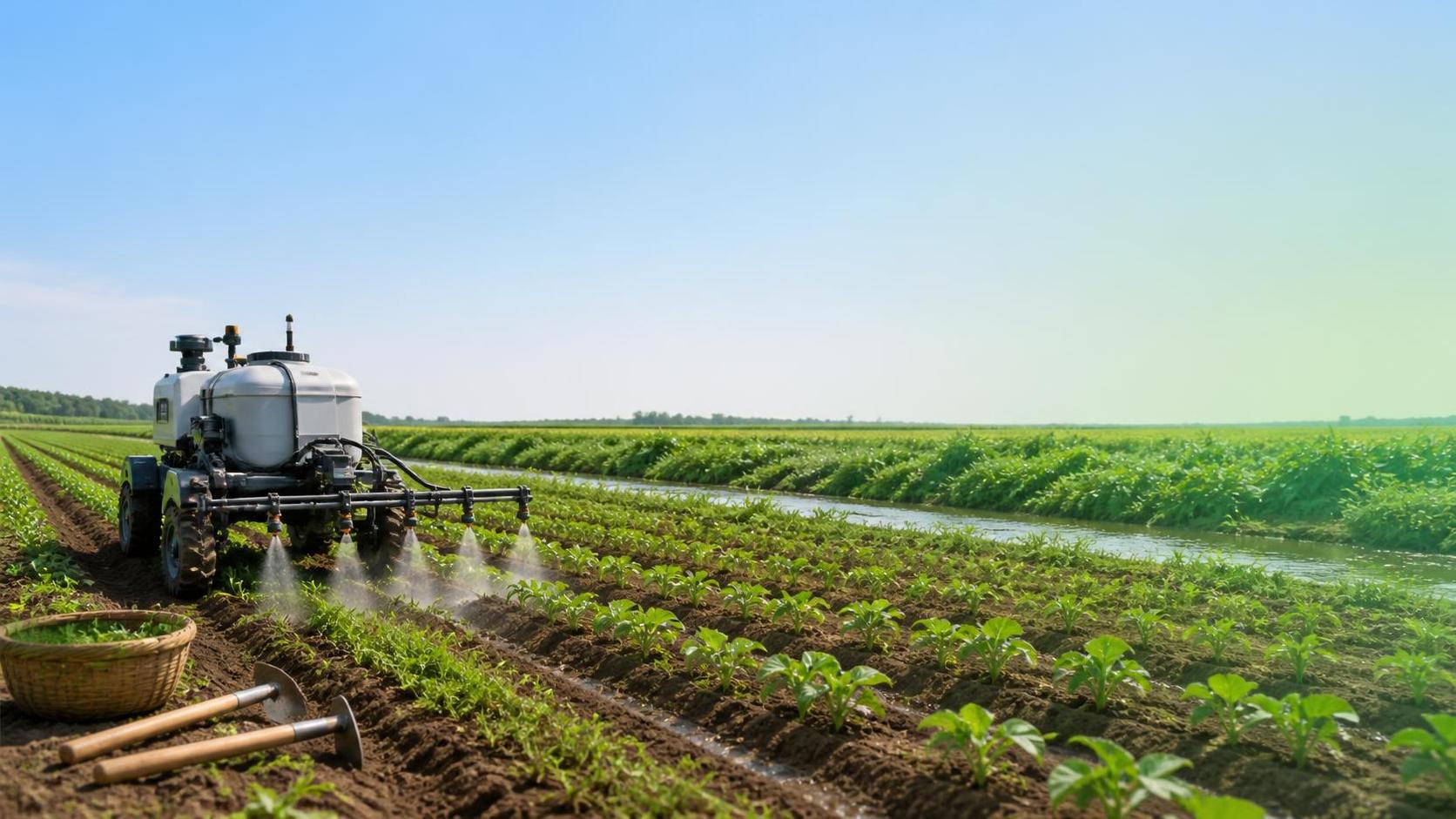
A field can look clean after a rapid herbicide application, yet the decision behind that clean appearance is rarely simple. In another common situation, a grounds crew spends days hand-pulling weeds along drainage channels, orchard rows, or facility boundaries, only to see new growth emerge after the next rain. Both situations create pressure: one raises concerns about chemical movement beyond the target area, while the other can strain labor availability, budgets, and seasonal schedules.
The practical question is not whether weeds should be managed. Uncontrolled weeds can compete with crops, obstruct access routes, harbor pests, increase fire risk in some landscapes, and interfere with harvesting or maintenance. The harder question is: What is the environmental impact of chemical weed control solutions vs manual weeding? A useful answer requires looking beyond the immediate removal of visible weeds. It involves the weed species, location, soil condition, weather, water pathways, equipment, frequency of treatment, and the effects of repeated disturbance over time.
The comparison often starts with the wrong assumption
Manual weeding is often treated as automatically harmless, while chemical weed control is assumed to be automatically damaging. Neither shortcut is reliable. Hand removal can be a low-impact choice in a small planting bed, around sensitive plants, or near a water feature when it is done carefully. But repeated digging, hoeing, or pulling with machinery can expose soil, disrupt roots, contribute to erosion, and create conditions in which dormant weed seeds germinate.
Likewise, chemical control does not have one fixed environmental profile. Different active ingredients behave differently in soil and water. Some work only when they contact green plant tissue; others may remain active in the soil for a longer period. Their environmental effect also depends heavily on dose, application timing, spray quality, buffer practices, and whether the product is used in a location identified on its label.
The better comparison is not “chemical versus manual” in the abstract. It is “which method, applied in this place, against this weed problem, creates the lowest overall burden while still achieving reliable control?”
Start with the site, not the tool
When weed pressure becomes frustrating, people often choose the method they already have available: a spray tank, a hoe, a contractor, or a team of seasonal workers. A more dependable approach starts with a short site assessment. The goal is to understand what could be affected if weeds are removed poorly or if treatment fails.
First, identify where the weeds are growing. A narrow strip beside a stream, drainage ditch, wellhead, irrigation intake, or stormwater channel needs a different approach from a gravel yard or a broad field margin. Sloped land, compacted soil, bare ground, and areas exposed to heavy rainfall deserve additional caution because material can move with runoff or sediment.
Then consider the weed itself. Annual weeds that are small and shallow-rooted may be removed manually with limited disturbance. Mature perennials with extensive roots may regrow after pulling, especially when root fragments remain in the soil. In those cases, repeated hand removal can become more disruptive than a carefully selected, targeted treatment. Identification matters because treating the wrong species, or treating at the wrong growth stage, tends to increase repeat work and unnecessary inputs.
Finally, ask what is growing or living nearby. Desirable crops, young trees, pollinator habitat, aquatic vegetation, soil organisms, pets, livestock, and people using the area all influence the acceptable level of risk. The environmental decision is therefore closely tied to site management rather than product choice alone.
Where chemical weed control can create environmental pressure
Chemical weed control may reduce the need for repeated soil disturbance and can be especially useful where weeds are widespread, labor is limited, or mechanical removal could damage crop roots or infrastructure. Those operational advantages do not remove the need for careful environmental controls.
The main concern is off-target movement. Spray drift can occur when fine droplets move beyond the intended area, particularly in windy or unstable weather. Drift can injure nearby vegetation, including non-target crops and habitat plants. Drift risk is not determined by wind speed alone. Nozzle selection, spray pressure, boom height, droplet size, operator speed, and equipment condition all influence where spray lands.
Runoff and leaching are separate concerns. Rainfall soon after application, saturated ground, steep slopes, exposed soil, and poor drainage can increase the chance that a product moves away from the treatment zone. The degree of movement depends on the active ingredient’s properties and the soil’s texture, organic matter, moisture, and structure. A product that is suitable for one site may be unsuitable near surface water or in highly permeable soil.
There is also the issue of persistence and repeated use. Some herbicide programs can contribute to weed populations becoming less sensitive over time when the same mode of action is used repeatedly. Resistance is not only an agronomic problem. It can lead to more frequent applications, higher treatment complexity, and fewer remaining management options. A program that controls weeds for one season but steadily narrows future choices is not necessarily the lower-impact option.
Safe chemical use depends on following the approved label exactly, including crop or site restrictions, protective measures, mixing instructions, rate limits, storage requirements, and application intervals. Labels are not general suggestions; they define how a product may legally and safely be used. Where regulations differ across markets, the local rules and registered uses must guide the decision.
Conditions that usually call for extra restraint
Chemical treatment should be reconsidered or postponed when weather, drainage, or site conditions make placement unreliable. Gusty conditions, imminent heavy rain, visibly saturated soil, and areas with unprotected water access are common examples. The same applies when nearby desirable plants are highly sensitive and cannot be shielded or avoided.
A useful operational habit is to treat only the area that actually needs treatment. Blanket spraying a large zone because of scattered weeds often creates more exposure than spot treatment. Calibrated equipment, clean water sources, secure mixing areas, and rinsate management also matter. Many avoidable environmental issues occur before the operator reaches the field: a leaking container, an uncalibrated sprayer, or a mixing location connected to a drain can defeat otherwise careful planning.
Manual removal has its own footprint
Manual weeding avoids direct herbicide exposure at the treatment point. That advantage is meaningful in gardens, protected zones, small plots, and locations where chemical use is restricted or not desired. It can also allow workers to remove individual weeds close to valuable plants with a level of selectivity that broad applications may not achieve.
However, “manual” does not always mean “no environmental impact.” Pulling large weeds can disturb soil aggregates and leave bare patches. Hoeing can cut weeds effectively at an early stage, but repeated hoeing may dry the soil surface, disrupt fine roots, and encourage erosion if the ground is left exposed. In loose soil, removing mature plants may bring buried seed to the surface, creating the next flush of weeds.
Labor and transport should be considered as well. A large crew making repeated passes over distant sites may involve vehicle use, fuel consumption, and soil compaction from foot traffic or support equipment. These factors do not make hand weeding environmentally unsound; they simply show why the impact must be assessed over the whole management cycle, not just at the moment the weed is removed.
Manual removal is most effective when the soil is moist enough for roots to release without excessive digging and when weeds are addressed before flowering or seed set. Removed plants should not be left where viable seeds can mature or where vegetative fragments can reroot. Some species require disposal methods that prevent spread rather than ordinary composting.
A practical way to choose between the two
For a small infestation beside sensitive vegetation, hand pulling or carefully limited mechanical removal is often the first option to consider. The work is slower, but it may prevent a wider intervention. If the weeds are young, scattered, and easy to identify, this method can be especially sensible.
For dense infestations across a large area, repeated manual work may become impractical and may cause extensive disturbance. In that setting, a targeted chemical treatment may have a lower overall impact than multiple rounds of digging or cultivation—provided that the selected product is registered for the site, the label permits the intended use, and application conditions allow accurate placement.
For perennial weeds with deep roots or spreading underground structures, neither one-time spraying nor one-time pulling is usually enough. The most responsible approach may combine selective treatment, follow-up removal of survivors, mulching or ground cover, and monitoring before the plants set seed. The aim is to reduce the weed population over time rather than repeat the same emergency response each season.
Use an integrated approach instead of treating every weed outbreak the same way
The lowest-impact weed strategy is often a sequence of small decisions rather than a single method. Preventive measures can reduce the need for both herbicides and intensive hand labor. These may include maintaining crop or ground-cover density, cleaning equipment before moving between sites, managing irrigation to avoid feeding weeds unnecessarily, using mulch where appropriate, and preventing weeds from producing seed.
Monitoring is the part that is easiest to postpone and most valuable to keep. Walk the site after treatment. Look for missed strips, regrowth, bare soil, signs of erosion, and weeds appearing along water flow paths. If chemical control was used, observe whether non-target vegetation shows unexpected injury. If manual removal was used, check whether root fragments are resprouting or whether exposed soil is quickly being recolonized.
These observations help correct the next decision. A poor result does not automatically mean a stronger chemical treatment is needed. It may mean the weed was misidentified, the plant was treated at the wrong growth stage, spray coverage was uneven, rain affected performance, or the root system was not fully removed. Finding the reason first prevents a cycle of escalating interventions.
Keeping the decision defensible
For farms, landscape operations, and managed industrial sites, keeping simple records can make weed control more consistent. Note the location, weed type, growth stage, method used, weather conditions, and follow-up observations. These records are useful for planning labor, avoiding repeated treatments in the same area, and demonstrating that environmental risks were considered rather than ignored.
When a site includes sensitive water resources, protected vegetation, unfamiliar weeds, or recurring treatment failures, seek advice from a qualified local agronomist, licensed applicator, or relevant environmental authority. Local requirements can be specific, and product availability or approved uses may differ substantially between regions.
Manual weeding and chemical weed control are not opposing environmental identities. They are tools with different risks, strengths, and limits. Manual removal can be highly selective but may become soil-disturbing and labor-intensive at scale. Chemical control can reduce disturbance and improve operational efficiency, but it demands strict attention to product selection, application accuracy, weather, water protection, and resistance management. The soundest choice is the one that solves the actual weed problem with the least avoidable impact today and fewer repeat interventions tomorrow.
Send Us Your Inquiry Today
