









Product Quick Navigation
Get a Quote
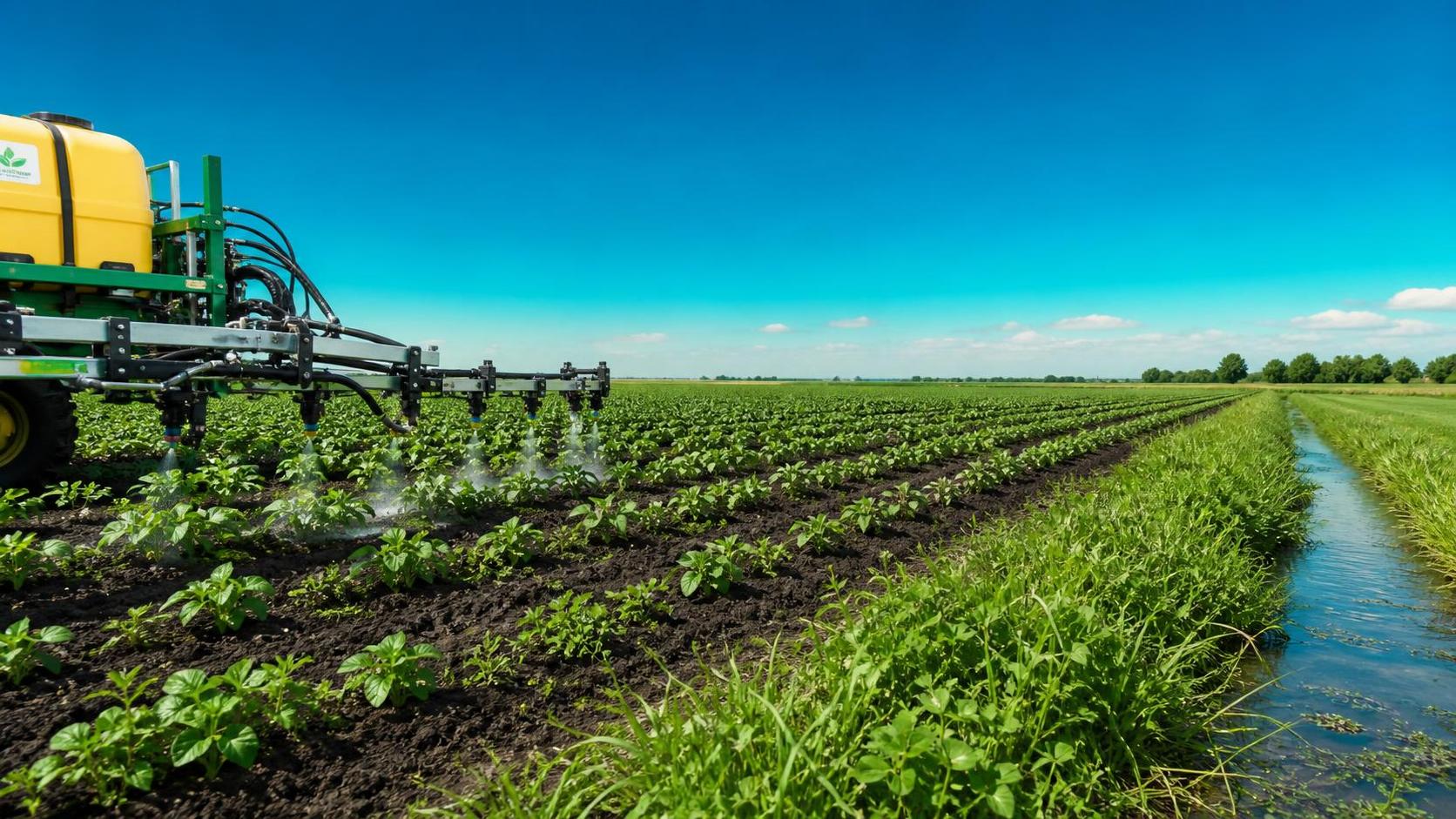
Chemical weed control and manual weeding are often treated as opposites: one is assumed to be efficient but environmentally damaging, while the other is assumed to be harmless but expensive. In practice, neither conclusion is reliable. The environmental result depends on the weed species, the active ingredient or physical method used, application timing, soil type, slope, weather, crop system, labor conditions, and the standard of field management.
For agricultural, landscaping, infrastructure, and industrial-site operations, the more useful question is not whether herbicides or hand labor are “better” in the abstract. It is: which weed-management method produces the lowest total environmental burden while still achieving the required level of control? That question includes direct effects on soil and water, but also fuel use, repeated field passes, worker safety, soil disturbance, crop competition, and the risk of weeds setting seed.
Are chemical weed control solutions more harmful to the environment than manual weeding?
They can be, particularly when products are selected poorly or applied outside label conditions. Herbicides may create environmental risks through off-target movement, spray drift, runoff, leaching, persistence in soil, and effects on non-target plants or organisms. The significance of these risks differs sharply between active ingredients and locations.
Manual weeding avoids herbicide residues and spray drift, but it is not automatically impact-free. Repeated hand hoeing or mechanical removal can disturb soil structure, expose soil to erosion, damage shallow crop roots, and accelerate the loss of soil moisture. On large areas, manual or mechanically assisted weeding may also require more trips through a field, more fuel, more equipment wear, and—in some production regions—labor conditions that are difficult to sustain.
The comparison therefore should not be framed as “chemical versus natural.” It is a comparison of two management systems. A carefully targeted, low-rate herbicide application may have a lower overall footprint than repeated cultivation on erosion-prone land. Conversely, in a small high-value plot next to a water body, manual removal or mulch may be the more environmentally defensible option.
Where chemical weed control creates its main environmental risks
The environmental profile of a chemical weed control program is shaped less by the word “herbicide” than by the relationship between the active ingredient, formulation, dose, application method, and site conditions.
Water contamination through runoff and leaching
Herbicides can reach surface water when rainfall or irrigation carries them from treated soil into ditches, streams, ponds, or drainage systems. The risk rises on compacted soils, steep terrain, frozen ground, poorly vegetated field edges, and sites treated immediately before heavy rain. Leaching into groundwater is more relevant where an active ingredient is mobile in soil, degradation is slow, organic matter is low, or groundwater is shallow.
Not all herbicides behave the same way. Solubility, soil adsorption, degradation pathway, and formulation affect how likely a substance is to move. Buyers and users should avoid assuming that a product used safely in one region will have the same environmental performance elsewhere. A sandy irrigated area and a heavy clay rain-fed area can present very different exposure pathways.
Spray drift and injury to non-target vegetation
Drift is among the most visible operational failures in weed control. Fine droplets may move beyond the target area during windy conditions, while vapor movement may occur with certain volatile products under unfavorable temperature conditions. The result can be injury to neighboring crops, hedgerows, gardens, aquatic vegetation, or habitat plants supporting pollinators and other beneficial species.
Drift is not only a product issue. Nozzle selection, boom height, spray pressure, droplet size, travel speed, wind direction, temperature, humidity, and operator training all influence the outcome. In many cases, a technically suitable herbicide is judged environmentally harmful because the application process was poorly controlled.
Effects on soil biology and biodiversity
Some herbicide programs can reduce plant diversity in field margins and non-crop areas, indirectly affecting insects, birds, and other wildlife that depend on those plants. Soil microbial communities may also respond to repeated use, although the effect is complex and depends on the compound, soil conditions, crop rotation, and frequency of application.
A key distinction is between managed crop rows and wider farm ecology. Eliminating weeds within a crop’s critical competition period can protect yield and reduce the pressure to expand cultivated land. Eliminating all vegetation across every field edge, drainage line, and non-productive area can remove useful habitat without necessarily improving crop performance. The environmental goal should be controlled vegetation where it competes with production or creates safety risks—not blanket vegetation elimination.
Herbicide resistance and increased treatment intensity
Resistance is often described as an agronomic problem, but it also has environmental consequences. When the same herbicide mode of action is relied upon year after year, resistant weed populations can become dominant. Growers may then increase rates, add tank mixes, use more frequent applications, or return to more intensive soil cultivation. Each response can raise environmental pressure.
The more durable approach is to rotate herbicide modes of action and combine chemical control with crop rotation, cover crops, competitive planting, mowing, cultivation where appropriate, sanitation, and timely intervention before weeds produce seed. Integrated weed management is not simply a sustainability label; it is a way to protect the long-term usefulness of available active ingredients.
What environmental burdens can manual weeding create?
Manual weeding is especially valuable in small plots, nurseries, organic production systems, sensitive zones, and situations where weeds must be removed selectively around desirable plants. It can reduce chemical exposure and allows workers to assess weed pressure directly. However, its limitations matter at commercial scale.
Hand pulling usually causes limited soil disturbance when roots are removed carefully. Hand hoeing, by contrast, disturbs the upper soil layer. If used repeatedly in dry regions, it can increase moisture loss. If used on sloping or fragile soils, it can leave the ground exposed to wind and water erosion. Mechanical cultivation has similar concerns and may be more disruptive than hand work, particularly if repeated after rainfall has weakened soil structure.
There is also an energy question. A farm may avoid herbicide use but require multiple tractor passes for inter-row cultivation, mowing, or mechanical hoeing. The associated diesel consumption, compaction, and equipment emissions should be included in a serious comparison. This does not mean chemical control is automatically preferable; it means the assessment must account for the whole operation rather than one input alone.
Labor is another practical constraint. Manual weed removal is time-sensitive. Missing the early growth stage can allow weeds to outcompete crops, produce seeds, and require much more aggressive control later. In areas with seasonal labor shortages, an operation built entirely around hand weeding may fail to deliver the environmental benefit expected on paper because it cannot be performed at the necessary time or frequency.
Chemical control versus manual weeding: the practical comparison
This comparison shows why a single method rarely performs best in every condition. Chemical control typically offers speed, consistency, and lower soil disturbance across large areas. Manual weeding offers selectivity and avoids direct pesticide exposure, but it can become impractical or environmentally costly when it depends on frequent cultivation or delayed labor-intensive intervention.
When is manual weeding the lower-impact choice?
Manual removal is often the stronger environmental option when the treatment area is small, weeds are scattered rather than dense, and the site is close to sensitive receptors such as streams, wetlands, schools, public gardens, or conservation zones. It is also useful in nurseries and horticultural systems where individual plant selection matters more than broad-area efficiency.
It is particularly appropriate where the target weed can be removed before it develops a deep or regenerative root system. Small annual weeds are much easier to manage manually than perennial species capable of regrowing from roots, rhizomes, stolons, or fragments. In the latter case, repeated pulling may disturb the soil without achieving durable suppression.
Manual methods work best when combined with preventive measures: mulching, ground cover, clean planting material, timely mowing, irrigation management, and prompt removal of weeds before seed set. Without prevention, manual labor may become a recurring corrective action rather than an effective strategy.
When can carefully managed chemical control have a lower overall impact?
In broad-acre agriculture, industrial yards, transport corridors, orchards, and large non-crop sites, targeted chemical treatment may reduce the need for repeated tillage or extensive mechanical intervention. This can protect soil cover, lower fuel use, and enable timely weed control during critical crop stages.
Conservation-oriented cropping systems provide a useful example. Where reduced tillage is used to limit erosion and preserve soil organic matter, herbicides may be part of the weed-management program. Removing all chemical options without a viable alternative can lead to increased cultivation. The environmental trade-off must be evaluated locally: reduced soil disturbance may be a substantial benefit, but only if chemical use is tightly managed to avoid water, drift, and resistance problems.
Spot treatment, shielded spraying, wick application, band spraying, and precision-guided systems can substantially reduce the treated area compared with blanket spraying. These methods are not suitable for every field or weed stage, but they illustrate an important principle: the environmental impact of chemical weed control is often reduced most effectively by treating less area, not merely by switching to a different product.
How should buyers and operators assess herbicide-related environmental risk?
For cross-border procurement and supply-chain planning, product selection should not stop at efficacy, price, or container format. A responsible assessment begins with the intended market and use pattern.
- Confirm that the active ingredient and formulation are registered or permitted for the intended use in the destination country or region.
- Review the product label, safety data sheet, approved crops or sites, application rate, buffer-zone requirements, re-entry conditions, and restrictions near water.
- Assess the local site: soil texture, organic matter, drainage, slope, rainfall pattern, irrigation method, and proximity to non-target crops or habitats.
- Check whether the weed species and growth stage match the intended use. An ineffective treatment often leads to unnecessary repeat applications.
- Evaluate the available application equipment and operator competence. Product performance and environmental safety cannot be separated from application quality.
- Plan resistance management before purchase, including mode-of-action rotation and non-chemical measures.
- Verify that packaging, transport classification, storage, spill response, and disposal arrangements meet local chemical-management requirements.
One frequent procurement error is to treat a technical specification as sufficient evidence of field suitability. A compliant product can still be the wrong choice if the customer lacks calibrated equipment, has no secure storage, operates beside sensitive water bodies, or cannot manage the required application window. Supply reliability should include documentation quality, batch traceability, clear labeling, and the ability to provide consistent technical and safety information—not only shipment timing.
The most credible environmental strategy is usually integrated weed management
The strongest environmental outcome rarely comes from an absolute ban on one method. It comes from reducing dependence on any single control tool. Integrated weed management combines prevention, monitoring, targeted intervention, and post-season review.
In practical terms, that may mean using cover crops or mulch to suppress early weeds, rotating crops to disrupt weed life cycles, preserving vegetated buffer strips near water, removing isolated invasive plants manually, applying herbicides only where thresholds justify treatment, and changing herbicide modes of action across seasons. Monitoring matters because weed maps and field records can identify recurring patches that are better handled by spot treatment or localized physical removal.
The environmental impact of chemical weed control solutions versus manual weeding is therefore not determined by a simple hierarchy. Manual weeding can be the best choice in sensitive, small-scale, highly selective applications. Properly designed chemical control can be a lower-impact option where it prevents repeated soil disturbance and enables precise, timely management across large areas. The decisive issue is whether the chosen method fits the site, weed biology, operational capacity, and regulatory requirements—and whether it is used as part of a system designed to reduce unnecessary intervention over time.
Send Us Your Inquiry Today
