









Product Quick Navigation
Get a Quote
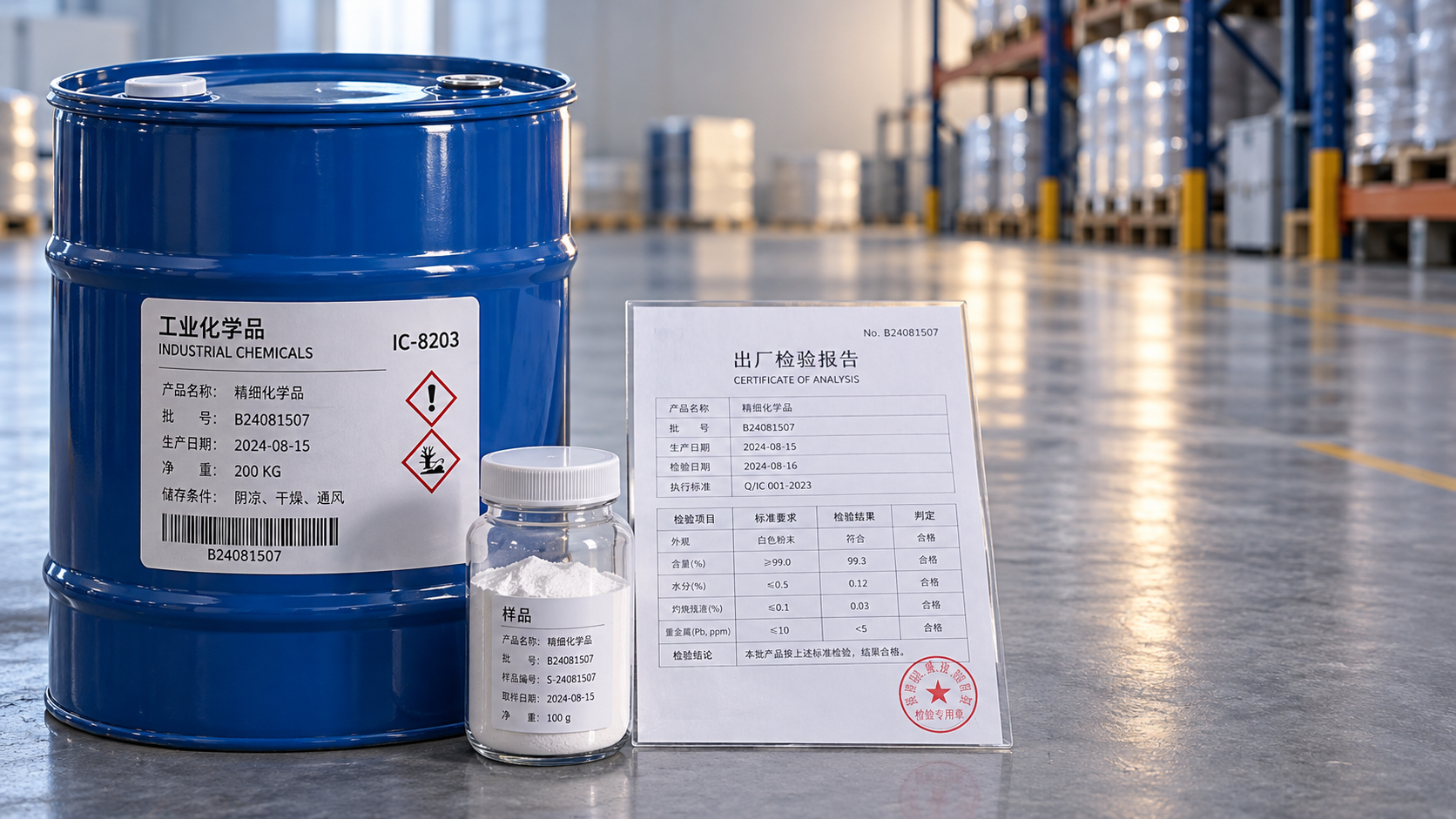
The lowest quoted price is rarely enough to establish which industrial chemical products distributor offers the lowest purchase cost. Freight, packaging, import charges, minimum order quantities, testing, and the consequences of an unsuitable batch all affect the final comparison. Begin with a common product specification and a defined delivery point; otherwise, two attractive quotations can describe substantially different purchases.
A credible assessment also tests whether the distributor can supply the same material repeatedly, produce documents that match the shipment, and respond when a batch or delivery does not meet the agreed terms. These capabilities are especially important when a production schedule leaves little room for substitution or when goods cross national borders.
Start with a quotation that can be compared
Request quotations against the same material identity, grade, quantity, packaging, delivery location, and required arrival date. Include the intended application when it affects impurities, particle size, moisture, or other acceptance criteria. A commercial-grade solvent and a tightly controlled process grade can share a chemical name while carrying different specifications and costs.
Compare prices on a delivered-cost basis. The quotation should identify the Incoterms rule and named place, currency, payment terms, quote validity, lead time, and any charges excluded from the price. The named place matters: a price to a port does not include the same transport and handling as a price to a receiving warehouse. Confirm which party arranges insurance and customs clearance, and account separately for duties and taxes applicable to the transaction.
Packaging is a frequent source of misleading comparisons. A low price per kilogram in bulk may require unloading equipment, dedicated storage, or a transfer operation. Smaller containers can cost more per unit but reduce handling or disposal costs. Ask whether containers are returnable, whether pallets and liners are included, and whether the quoted quantity is net product weight.
Also distinguish the stated lead time from the date the material will be available for use. Production, export preparation, transit, import clearance, and incoming inspection each occupy time. A short dispatch lead time has limited value if a missing document holds the shipment at the destination.
Establish exactly what will be supplied
Use the chemical name and CAS number as starting identifiers, then define the properties that determine whether the material works in the process. Relevant limits might include assay, individual impurities, water content, particle-size distribution, pH, or residual solvents. A specification that lists only a minimum purity leaves room for variation in the remaining composition.
The test method and reporting basis matter alongside each limit. A result on a dry basis is not directly interchangeable with one reported as received. Similarly, an average particle size alone does not describe the full distribution; a small coarse fraction can matter in a coating or a filtration step. Specify which results must appear on the certificate of analysis and which require supporting test reports.
For example, Hydroxyapatite CAS#1306-06-5 is described as a white, odorless powder associated with bioactive ceramic applications, including bone grafting, tissue filling, and implant coatings. Those applications do not establish the suitability of any particular batch for medical use. The supplied information also references tricalcium phosphate and tetracalcium phosphate, while attributing a purity of at least 99% to the latter. Before comparing offers, resolve the exact chemical identity, phase composition, applicable purity claim, and intended grade with the distributor; do not transfer a purity figure from one material to another.
For a sensitive application, request a representative certificate of analysis and compare it with the proposed purchase specification. A sample certificate shows what the supplier normally reports; it does not prove that the eventual shipment meets the limits. Reserve acceptance for the actual batch documents and any agreed incoming tests.
Look beyond a product catalogue
Ask whether the distributor sources directly from a producer, holds stock, or obtains material through another intermediary. Each arrangement has different implications. Stock can shorten replenishment time, but its remaining shelf life and storage history matter. Direct sourcing can give access to production information, yet the quoted delivery date may depend on the next manufacturing slot.
Identify the proposed manufacturing site where disclosure is possible and agree on how changes will be communicated. A distributor offering the same product name from several sources should not substitute a different producer, site, or grade without the agreed approval process. Even when nominal specifications match, differences in impurities or physical form can affect processing.
Ask how availability is verified: is the offered quantity physically allocated, supported by a producer commitment, or based on an indicative schedule? A price without an allocation or a clear supply arrangement does not provide the same certainty as stock reserved for the order. Where a material is difficult to replace, discuss a replenishment schedule and the notice required for supply interruptions.
A distributor should also be able to explain traceability from the shipped container to the manufacturing batch. Repacking or consolidation is not automatically a problem, but it introduces additional handling and makes clear batch records more important. Confirm who performs the work, how cross-contamination is controlled, and whether original batch identifiers remain visible.
Test documentation before placing the order
Request a sample document package early enough to resolve gaps before dispatch. Depending on the material and route, this can include a safety data sheet, certificate of analysis, commercial invoice, packing list, and transport documentation. The information needs to correspond across the documents: product identity, batch numbers, quantities, and packaging should be consistent with the actual shipment.
A safety data sheet supports hazard communication and handling decisions; it does not replace a certificate of analysis or establish that a particular batch meets the purchase specification. Conversely, a certificate of analysis is not evidence that transport classification, labeling, or import requirements have been addressed. Confirm the applicable requirements for the destination and intended use with the responsible parties.
Check the age and scope of supporting documents. A document for a different grade, producer, or manufacturing site may not support the material being offered. If regulatory statements or declarations are needed, specify their subject and destination rather than accepting a broad statement of compliance. Where a requirement cannot be verified before shipment, record who will resolve it and when.
Examine delivery and storage as part of product quality
A suitable batch can deteriorate or become unusable if packaging and transport conditions do not protect it. Discuss moisture sensitivity, temperature limits, light exposure, container compatibility, and shelf life using the material's current documentation and agreed specification. The storage condition stated for a product should not automatically be treated as a validated transport range; clarify any temperature controls required during transit.
For hygroscopic powders, for example, an intact outer bag does not necessarily establish that the inner moisture barrier remained sealed. For liquids, container compatibility and closure integrity matter alongside the chemical specification. Agree on the packaging configuration, labeling, and evidence of any required temperature control before shipment.
Set expectations for remaining shelf life at receipt rather than relying on the original expiry date alone. A shipment that spends substantial time in transit or clearance can arrive with less usable life than expected. Specify how shelf life is calculated and what happens if the agreed minimum is not met.
Evaluate the response to a problem
Before approving a distributor, ask for the process used when a shipment is delayed, a container arrives damaged, or an incoming result differs from the certificate. Establish a named contact, the information needed to open an investigation, and the route for obtaining technical input from the producer. A prompt acknowledgment is useful, but it should be followed by a documented investigation and an agreed disposition of the affected goods.
Different problems require different evidence. A transit-damage claim may need delivery notes and photographs taken before unloading; an analytical dispute may require retained samples, test methods, sample preparation details, and batch records. Agree on sampling and retest arrangements in advance, including whether an independent laboratory will be used if results remain disputed.
Commercial terms should address replacement, credit, return, and disposal where appropriate, without assuming that every discrepancy has the same remedy. Also determine who bears freight and handling costs when nonconforming material must be moved. These details affect the real cost of a low-priced offer.
Use a trial order to resolve remaining uncertainty
When the material is new to the process or the supply relationship is unproven, a trial order can reveal issues that paperwork alone cannot settle. Define the batch size, acceptance tests, packaging, and evaluation period before ordering. The trial should use the proposed commercial grade and source; a specially prepared sample is a weak predictor of routine supply unless that preparation will continue for future orders.
Record the results against agreed limits and relevant process observations. A passing laboratory result does not necessarily explain poor flow, inconsistent dissolution, or excessive dust during handling. Conversely, a process issue may arise from storage or operating conditions rather than the chemical itself. Preserve enough traceability to investigate without assuming the cause.
After the trial, keep the approved specification, source, document requirements, and change-notification terms with the purchasing agreement. Reassess the arrangement when those conditions change, particularly before accepting a substitute grade or a revised manufacturing source.
Send Us Your Inquiry Today
