









Product Quick Navigation
Get a Quote
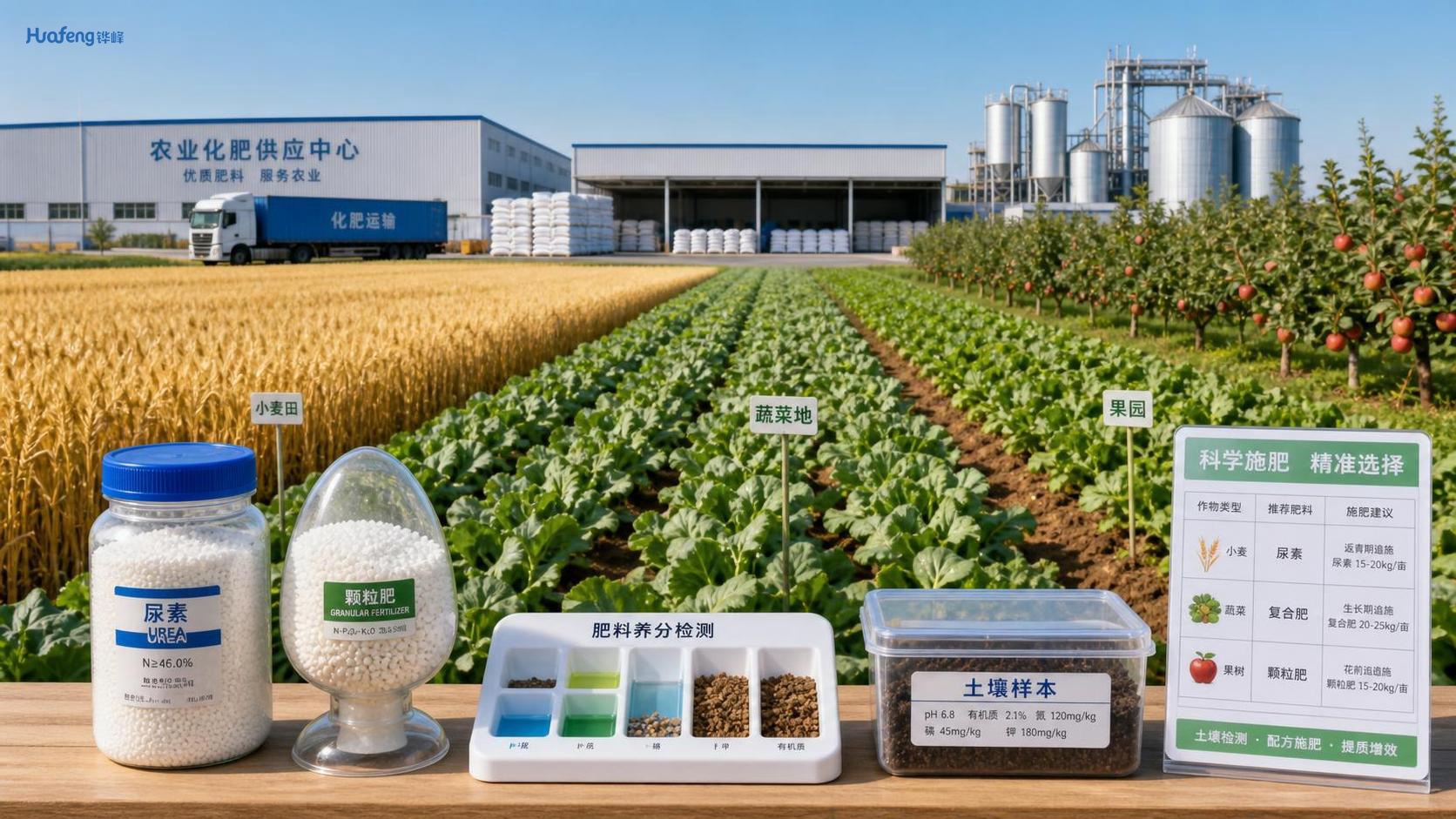
How to Choose the Right Urea Fertilizer for Different Crops
Choosing the right Urea Fertilizer for different crops is rarely a matter of picking the highest nitrogen number and moving on. Technical evaluators usually have to balance crop demand, soil behavior, application method, handling conditions, regulatory documents, and supplier consistency at the same time. That is where many purchasing decisions go wrong: the product may be chemically standard on paper, but not well matched to the field program, the blending process, or the import requirements of the destination market.
If your job is to assess products rather than just place orders, this checklist is the practical filter. It is built around the questions that matter before approving a Urea Fertilizer source for cereals, vegetables, cash crops, orchards, or industrial agriculture supply chains.
Start with the crop, not the fertilizer spec sheet
Urea is widely used because it is a concentrated nitrogen source, but different crops do not respond to it in the same way. A technical review should begin with the crop’s nitrogen uptake pattern and the timing sensitivity of the production cycle.
For field crops such as maize, wheat, and rice, urea often fits well when the program includes base application plus topdressing. The key question is whether the farm system can apply it at the right stage and incorporate it quickly enough to limit nitrogen loss. For vegetables, the evaluation is usually stricter. Short-cycle crops and higher-value crops often need tighter control over nutrient release, salt load, and application uniformity. In orchards and perennial systems, timing becomes even more important because poor nitrogen placement can push vegetative growth when the grower really needs fruiting balance.
A simple check helps here: is the buyer selecting urea because the crop program supports it, or because it is the most familiar nitrogen source in procurement? Those are not the same decision.
Check how the nitrogen will behave in the actual soil
The same Urea Fertilizer can perform very differently depending on pH, temperature, moisture, and soil texture. This is where technical evaluation needs to stay grounded. Urea converts in soil and can lose nitrogen through ammonia volatilization if surface-applied under the wrong conditions. That risk tends to draw more attention in alkaline soils, high-temperature environments, or situations where rainfall or irrigation incorporation is uncertain.
So ask for the agronomic context before signing off:
- Will the product be broadcast, banded, dissolved, or blended?
- Is there reliable rainfall or irrigation after application?
- Is the soil neutral, acidic, or alkaline?
- Is the target region humid enough to support quick incorporation, or is nitrogen loss a known issue?
If the project has a history of volatilization loss, straight urea may still be acceptable, but only if the application window and handling method are realistic. Otherwise the right answer may be to review stabilizer-treated products or a different nitrogen strategy altogether. That choice depends on local registration status and market acceptance, which should always be checked against destination-country rules.
Do not ignore physical quality
A surprising number of fertilizer sourcing problems are not about nutrient chemistry. They are about particle size, caking, dust, moisture pickup, and poor spreading behavior. If the product is meant for mechanized field use, particle uniformity matters. If it is going into blends, compatibility matters. If it will move through long export routes in humid conditions, anti-caking performance matters more than people admit in early-stage discussions.
Prilled urea and granular urea are often treated as interchangeable by non-technical buyers, but they are not always operationally equivalent. The right form depends on application equipment, storage duration, and blending requirements. Granular material is commonly preferred where wider spread patterns and stronger physical integrity are needed, while other systems may accept prilled product. The evaluator should match the form to the downstream use instead of approving “urea” as a generic line item.
At minimum, review the product’s certificate of analysis and ask whether additional data on biuret, moisture, particle size distribution, and anti-caking treatment are available. The exact acceptance range should come from the buyer’s agronomic and handling standard, not guesswork.
Biuret content deserves more attention in sensitive crops
Not every crop system treats biuret risk the same way. For many conventional field applications, standard agricultural-grade material may be suitable. But in foliar use, seedling-stage programs, or more sensitive horticultural applications, biuret can become a technical concern. The acceptable threshold depends on the use case and local product standard, so this is not the place for assumptions.
When the buyer says the fertilizer may be used in soluble formulations or crop stages with low tolerance for impurities, slow the review down. Request confirmed specification documents and make sure the source can repeatedly meet them, not just once in a sample batch.
Look at the full application system, not the standalone product
A technically acceptable Urea Fertilizer can still be the wrong selection if it does not fit the farm’s equipment or the importer’s distribution model. That is a common issue in international supply projects. The product may test fine, but if local dealers cannot store it well, or if growers rely on basic spreaders with uneven calibration, performance in the field becomes inconsistent.
This is where evaluators should ask operational questions that commercial teams sometimes skip:
- Will it be sold as a straight fertilizer or used for NPK blending?
- Does the destination market rely on bulk handling, 50 kg bags, jumbo bags, or customized packaging?
- Is the storage turnover fast, or will the material sit through hot and humid months?
- Will the end users apply by hand, by spreader, or through a controlled program?
These details change what “right product” means. In some markets, supply reliability and bag integrity are nearly as important as nutrient assay because port delays and warehouse conditions can damage product value before it reaches the field.
Treat compliance as part of product selection
For technical evaluators working across borders, compliance is not paperwork added after the deal. It is part of the approval decision. Fertilizer import rules, product registration requirements, labeling language, customs documentation, and inspection protocols vary by market. Even where urea itself is a standard commodity, the acceptable document package may differ significantly.
That means you should verify, before confirming a source, whether the supplier can support the documents your market actually asks for. Depending on destination, this may include a certificate of analysis, safety data sheet, origin documents, packing list, invoice, and inspection-related records. Some jurisdictions may also impose specific fertilizer registration or labeling requirements. Those points should be checked case by case because regulatory treatment changes and country-level practice is not always uniform.
If anything is unclear, mark it as 【待核实】 rather than letting the procurement cycle run on assumptions. That is especially important when entering a new market or changing product form.
Assess supplier capability beyond the sample
One clean lab sample proves very little about export performance. What matters is whether the supplier can deliver the same specification repeatedly, under commercial shipping conditions, with stable communication and traceable documentation.
For overseas buyers, this is where a capable export service partner starts to matter. Huafeng Chemical, based in Shandong Province, operates in a region with a strong chemical manufacturing and logistics base. For technical evaluators, the practical question is not simply whether a company lists Urea Fertilizer in its portfolio, but whether it can coordinate product sourcing, export documentation, shipment follow-up, and issue response without slowing down the customer’s own approval workflow.
Useful questions to put on your checklist:
- Can the supplier provide consistent batch documentation?
- Do they respond clearly on specification deviations, packing details, or loading issues?
- Can they support multiple destination requirements without repeated correction cycles?
- Is there an identifiable process for quality claims and shipment traceability?
In practice, that service layer often determines whether procurement stays on schedule.
Watch for the common mistakes that keep repeating
A few errors show up again and again in fertilizer evaluation:
A practical approval sequence
When the decision needs to move from discussion to approval, keep the sequence tight.
Define the crop use case. Confirm whether straight urea is agronomically suitable. Check soil and application-loss risk. Review physical form and handling behavior. Verify specification documents against buyer requirements. Then assess whether the supplier can support repeated export execution, not just a one-time sale.
That order matters because it keeps technical fit ahead of commercial convenience.
A good Urea Fertilizer decision usually looks plain from the outside. The crop program makes sense, the material handles properly, the documents line up, and the supplier does not create friction when conditions change. For technical evaluators, that is the real standard: not whether the product is broadly marketable, but whether it is the right fit for the crop, the region, and the supply chain you actually have.
Send Us Your Inquiry Today
