









Product Quick Navigation
Get a Quote
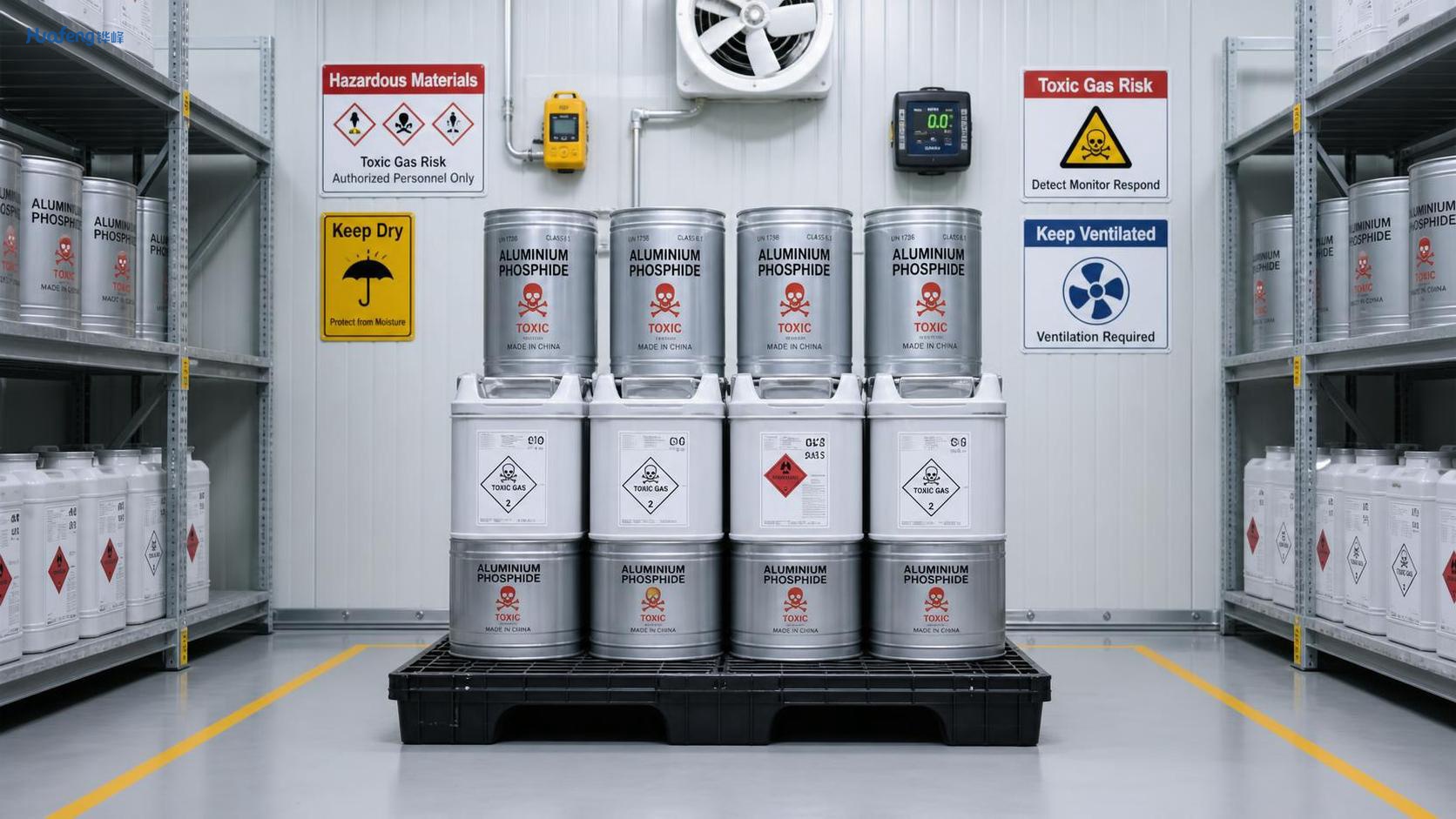
Aluminum Phosphide Safety Risks and Storage Rules Explained
Aluminum Phosphide is highly effective in pest control, but its extreme toxicity and moisture-reactive nature make strict safety management essential. For quality control and safety managers in the chemical industry, understanding its key hazards, storage requirements, and compliance points is critical to preventing accidents and ensuring operational reliability. This article explains the main safety risks and practical storage rules you need to know.
If you are reviewing Aluminum Phosphide for procurement, warehousing, export handling, or internal compliance, the main mistake is treating it like a routine packaged pesticide or fumigant. It is not routine. The material can release phosphine gas when exposed to moisture, and phosphine is acutely toxic and highly dangerous in enclosed or poorly ventilated areas. In practice, most problems start before an emergency: wrong storage location, damaged packaging, unclear segregation rules, or a team that knows the product name but not the gas-release behavior.
For QC and safety managers, a useful checklist is not just “is the drum sealed” or “is the label present.” You need to confirm whether the product can stay dry, whether staff can recognize early signs of packaging failure, whether transport and warehouse documents match the actual form of supply, and whether your operating site is prepared for a phosphine-related incident. That is where real control starts.
Start with the hazard profile, not the trade name
Aluminum Phosphide is usually supplied for fumigation applications, often in tablets, pellets, or other solid formulations depending on market requirements. The critical point is that the product reacts with moisture to generate phosphine gas. That means the risk is not limited to “use stage” exposure. A leaking container in storage, wet cargo conditions, or careless sampling can create a gas hazard without any intended application taking place.
- Treat any unexplained garlic-like or carbide-like odor as an alarm sign, not a diagnostic tool. Odor perception is unreliable and must never replace gas monitoring.
- Do not assume sealed primary packaging means zero risk. Small seal failures, corrosion, or moisture ingress can be enough to start decomposition.
- Review the Safety Data Sheet against the exact product grade and destination market. Different jurisdictions may require different language, hazard communication elements, or packaging marks.
One practical check many teams skip: verify whether the warehouse and EHS staff understand the difference between product toxicity and gas-release toxicity. With Aluminum Phosphide, that distinction matters because the secondary hazard, phosphine, drives many of the most severe incident scenarios.
Storage rules that matter in real operations
The storage principle is simple to say and easy to get wrong: keep the product dry, cool, tightly sealed, and isolated from incompatible conditions. The difficulty is execution. Warehouses often meet the written requirement on paper, while daily handling introduces moisture, heat, or packaging stress.
- Use a dry, well-ventilated, designated storage area.
A room that is technically indoors but exposed to condensation, roof leakage, humid coastal air, or washdown operations is a poor choice. Aluminum Phosphide should not be stored anywhere near water sources, steam lines, wet floors, or areas with frequent door opening during rainy weather. - Keep original packaging intact.
Repacking, partial transfer, and unofficial over-labeling create unnecessary failure points. If local operations require secondary containment, it should not compromise the moisture barrier or required hazard communication. - Separate it from acids, water-reactive confusion risks, food-related goods, and occupied work zones.
Even when regulations differ by market, this is a sound operational rule. Fumigants and highly toxic substances should not be placed where routine traffic, casual inspection, or mixed picking increases exposure risk. - Control stack height and handling stress.
If the packaging can be dented, punctured, or distorted by pallet pressure, the storage layout is already unsafe. Follow the manufacturer’s packaging limits and confirm whether export units are suitable for long transit, not just local warehousing.
A common field issue is using general chemical storage rules without checking humidity behavior across seasons. The room may be acceptable in winter and unsafe in summer. For sites in humid ports or monsoon climates, routine environmental checks are worth more than a one-time warehouse approval.
What QC should inspect before release or receipt
For Aluminum Phosphide, quality control is tied directly to safety control. A package that passes quantity check but shows seal damage is not a normal nonconformance; it may be a hazard escalation point.
If there is any sign of compromised packaging, stop routine handling and escalate through the site’s hazardous materials procedure. Do not open suspect units for “quick confirmation” unless the operation is specifically designed, risk-assessed, and equipped for that task. Improvised inspection is where people get exposed.
Compliance checks should match the destination market
This product sits at the intersection of chemical safety, dangerous goods control, and pesticide or fumigant regulation depending on where it is sold and how it is used. That means one approval document is never the whole story.
For export-oriented businesses such as Huafeng Chemical, the operational challenge is not only product supply but document accuracy and response speed when clients ask technical questions. Overseas buyers, especially QC teams and compliance officers, usually want to confirm the current SDS, packaging specification, labeling language, transport classification documents, and whether the shipment setup fits their local legal framework. Specific registration or use authorization requirements vary by country and should be verified case by case.
- Check whether the destination market requires local pesticide registration, importer licensing, or use restrictions for fumigation products.
- Confirm dangerous goods classification details with current transport documentation rather than relying on old templates.【待核实】 if any document version is outdated or copied from prior shipments.
- Make sure warehouse, transport, and commercial teams are using the same product description. Naming inconsistencies cause avoidable customs and safety problems.
In real trade, the weak point is often the handoff between technical and logistics teams. The supplier may understand the hazard, while the freight side only sees packaged cargo. For Aluminum Phosphide, that gap is unacceptable.
Emergency readiness is part of storage control
A site is not ready to store Aluminum Phosphide unless it is ready to respond to a release concern. That does not mean writing a generic emergency plan and filing it away. It means the night shift knows what to do if damaged product is found, and the response steps are realistic for the actual warehouse.
At minimum, review these points:
- Restricted access to the storage area, with clear hazard signage.
- Response personnel trained on toxic gas scenarios, not just fire response.
- Suitable respiratory protection and emergency equipment selected under site EHS procedures and applicable law. Specific equipment requirements should be validated locally.
- A defined escalation path for suspected phosphine release, including evacuation and external notification where required.
- No ad hoc cleanup method. Contaminated or damaged material must be handled under approved hazardous waste and incident procedures.
One more practical note: if your site has never run a drill involving a moisture-reactive toxic fumigant, assume the first real event will be slower and more confused than expected. That is reason enough to test the procedure.
Mistakes that keep showing up
These are the issues experienced teams tend to watch for because they are easy to miss during routine work:
- Storing Aluminum Phosphide in a general pesticide area without checking humidity control.
- Accepting outer packaging damage because the inner units “look fine.”
- Using old SDS or translated labels that no longer match the shipped formulation or destination requirement.
- Letting purchasing choose based only on price and availability, without reviewing packaging robustness and export documentation capability.
- Assuming warehouse ventilation alone solves the problem. Ventilation helps, but it does not make poor packaging or wet storage acceptable.
For companies buying from international suppliers, this is where service capability matters. A supplier with stable foreign trade support should be able to respond clearly on product specs, documentation, packaging arrangements, and compliance coordination, not just ship goods quickly. In the chemical export business, reliability is often visible in the paperwork and exception handling long before it appears in a sales presentation.
A working checklist before you approve storage or shipment
- The exact Aluminum Phosphide product form, packaging type, and batch identity are confirmed.
- The latest SDS and hazard communication documents are available and consistent.
- The storage area is dry, controlled, ventilated, and isolated from incompatible conditions.
- Packaging shows no damage, corrosion, deformation, or moisture exposure.
- Warehouse staff know that moisture can trigger phosphine release and know the escalation steps.
- Destination-market compliance points have been checked against current requirements, not assumptions.
- Emergency response arrangements are practical for a toxic gas release scenario.
That is the level of review Aluminum Phosphide deserves. If any one of those points is unclear, pause the movement of goods and resolve it before the product enters routine storage or shipment flow. With this material, small oversights do not stay small for long.
Send Us Your Inquiry Today
