









Product Quick Navigation
Get a Quote
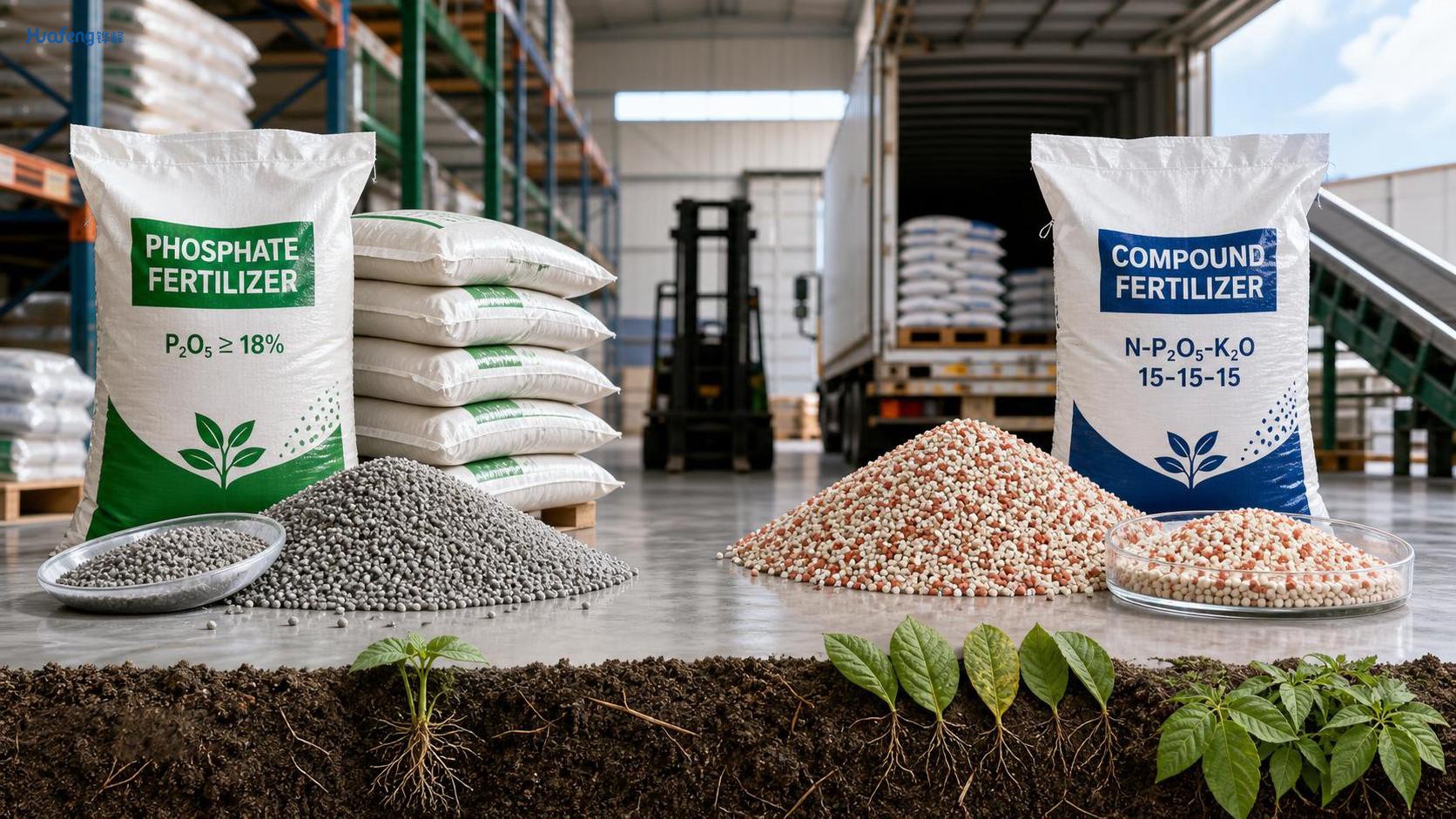
Phosphate Fertilizers vs Compound Fertilizers: Key Differences
Choosing between Phosphate Fertilizers and compound fertilizers affects crop performance, application efficiency, and cost control. For growers, operators, and agricultural input users, understanding the core differences is essential to making practical fertilization decisions. This article explains how nutrient composition, usage scenarios, and supply considerations set these products apart, while also highlighting why reliable chemical sourcing and export service matter in today’s global market.
If you are comparing these two product types in the field or at the purchasing desk, the fastest way to avoid mistakes is this: do not start with price per ton. Start with what nutrient the crop actually lacks, how the fertilizer will be applied, and whether the product can arrive on time with correct documentation. That sounds basic, but in practice this is where many users get off track.
The first check: are you buying a phosphorus source or a balanced nutrient package?
Phosphate fertilizers are mainly used to supply phosphorus. Depending on the product, they may also bring calcium, sulfur, nitrogen, or other accompanying elements, but phosphorus is the main job. Common market categories include products such as monoammonium phosphate and diammonium phosphate, though exact suitability depends on formulation, soil condition, and crop stage.
Compound fertilizers, by contrast, are built to deliver two or more primary nutrients in one product, usually combinations of nitrogen, phosphorus, and potassium. In everyday farm use, that means less separate handling and a simpler feeding plan, especially when labor is tight or application passes need to be reduced.
So the real question is not which one is “better.” It is whether you need targeted phosphorus correction or a broader nutrient program.
Check the crop stage before you check the bag
This matters more than many buyers expect. Phosphorus is closely tied to root development, early establishment, and energy transfer in plant growth. When crops are at an early stage, especially after transplanting or emergence, a phosphorus-led approach can make sense if soil supply is not enough. That is one reason Phosphate Fertilizers are often discussed around starter programs.
But once the crop enters a stage where nitrogen and potassium demand rises alongside phosphorus, a compound fertilizer may fit the operation better. Not because the chemistry is more advanced, but because the field routine is easier to manage. One product, one application plan, less room for operator error.
A practical rule: if your agronomic goal is narrow, use a narrow tool. If your goal is broad feeding efficiency, a compound product often wins.
Do not skip the soil condition check
Two fields can receive the same fertilizer and show very different results. Soil pH, fixation risk, organic matter, moisture, and previous nutrient loading all change how phosphorus behaves. In some soils, especially where phosphorus availability is limited, adding more product without checking the form and placement can become an expensive habit instead of a useful correction.
If soil test data is available, use it. If it is not, be careful with assumptions. Overgeneralized fertilizer choices create most of the complaints seen later: weak early response, uneven growth, and confusion over whether the issue came from the product, the rate, or the timing.
Where the operation relies on custom nutrient balancing, straight phosphate inputs can be easier to work into a precise plan. Where testing is limited and field programs must remain simple, compound fertilizers are often chosen for operational stability, though they are not a substitute for diagnosis.
Look at application method, not just nutrient label
This is where experienced operators usually focus. A fertilizer that looks right on paper may still be the wrong choice if it does not match the spreading system, blending process, storage condition, or irrigation practice.
- For base application before planting, both Phosphate Fertilizers and compound fertilizers may be used, but placement strategy matters.
- For custom blending, single-nutrient or phosphorus-focused products usually give more control.
- For routine broadcast operations across large acreage, compound fertilizers can reduce loading and handling steps.
- For fertigation or special delivery systems, compatibility and solubility need product-specific confirmation. Do not assume all phosphate-containing materials behave the same. Some details may require supplier data sheets or local agronomic verification.
A lot of field-side frustration is not really a nutrient problem. It is a logistics problem disguised as an agronomy problem.
Compare cost the right way
Price per bag is rarely the right comparison. A better check is cost per usable nutrient, plus transport, storage loss, blending labor, and application passes. A phosphorus-focused product can be cheaper in nutrient targeting but more expensive if it forces extra handling. A compound fertilizer can look expensive upfront yet save money by simplifying the whole program.
This is especially relevant for distributors and larger operators managing imported material. Freight volatility, port delays, packaging damage, and customs documentation all influence the true landed cost. In the current trade environment, supply reliability is no longer a background issue. It directly affects planting schedules and inventory exposure.
That is why sourcing discipline matters. Huafeng Chemical, based in Shandong Province, works in a part of China with strong chemical industry infrastructure. For overseas buyers, that matters less as a slogan and more as a practical signal: product range, export handling experience, and responsiveness usually matter when shipments must meet timelines, paperwork requirements, and destination market expectations.
Ask for the documents early
Whether you are buying Phosphate Fertilizers or compound fertilizers, document control should happen before payment terms are finalized, not after cargo is ready. This is one of the most common avoidable mistakes in cross-border chemical purchasing.
- Confirm product specification sheets.
- Verify packing details and labeling requirements for the destination market.
- Check whether any testing, inspection, or registration documents are required by the importing country. Requirements vary and should be confirmed case by case.
- Ask about moisture control, storage guidance, and batch consistency.
- Where regulatory language or customs classification is involved, mark uncertain items as 【待核实】 until confirmed through the relevant authority or broker.
Operators sometimes treat these as trading-office details. They are not. If the product cannot clear, cannot be stored properly, or cannot be applied as planned, the field result does not matter because the product never reached the field in usable condition.
Common selection mistakes worth catching early
A few patterns show up again and again.
- Using a compound fertilizer when the actual issue is isolated phosphorus deficiency. The crop gets nutrients, but the correction is not sharp enough.
- Buying a phosphate product for a convenience-driven operation that really needs one-pass application efficiency.
- Comparing products by name only, without checking nutrient ratio, physical form, and application fit.
- Ignoring supply chain capability. A technically suitable product is still a poor choice if repeat delivery and document compliance are unstable.
- Assuming that one market’s accepted specification will automatically suit another. Import rules, buyer preferences, and agronomic habits can differ significantly.
A practical buying checklist
If you need a simple working method, use this before placing an order:
- Define whether the goal is phosphorus correction or full nutrient feeding.
- Match the product to crop stage and field program.
- Review soil condition data if available; if not, avoid overconfident assumptions.
- Check compatibility with your spreading, blending, or irrigation setup.
- Compare total operational cost, not only purchase price.
- Confirm export documents, packaging, and destination compliance requirements in advance.
- Choose a supplier that can respond quickly when shipment or specification issues need clarification.
That last point matters more than people admit. In chemical trade, responsiveness is part of product quality. When a shipment is delayed, a label needs correction, or a specification question comes in from customs or the farm side, slow answers turn a manageable issue into a costly one.
The cleanest way to think about Phosphate Fertilizers versus compound fertilizers is this: one is usually the better tool for precision around phosphorus, the other is often the better tool for operational convenience and broader feeding. If you tie that decision to crop stage, soil condition, application method, and supply reliability, you will make fewer expensive guesses and a lot more workable fertilizer decisions.
Send Us Your Inquiry Today
