









Product Quick Navigation
Get a Quote
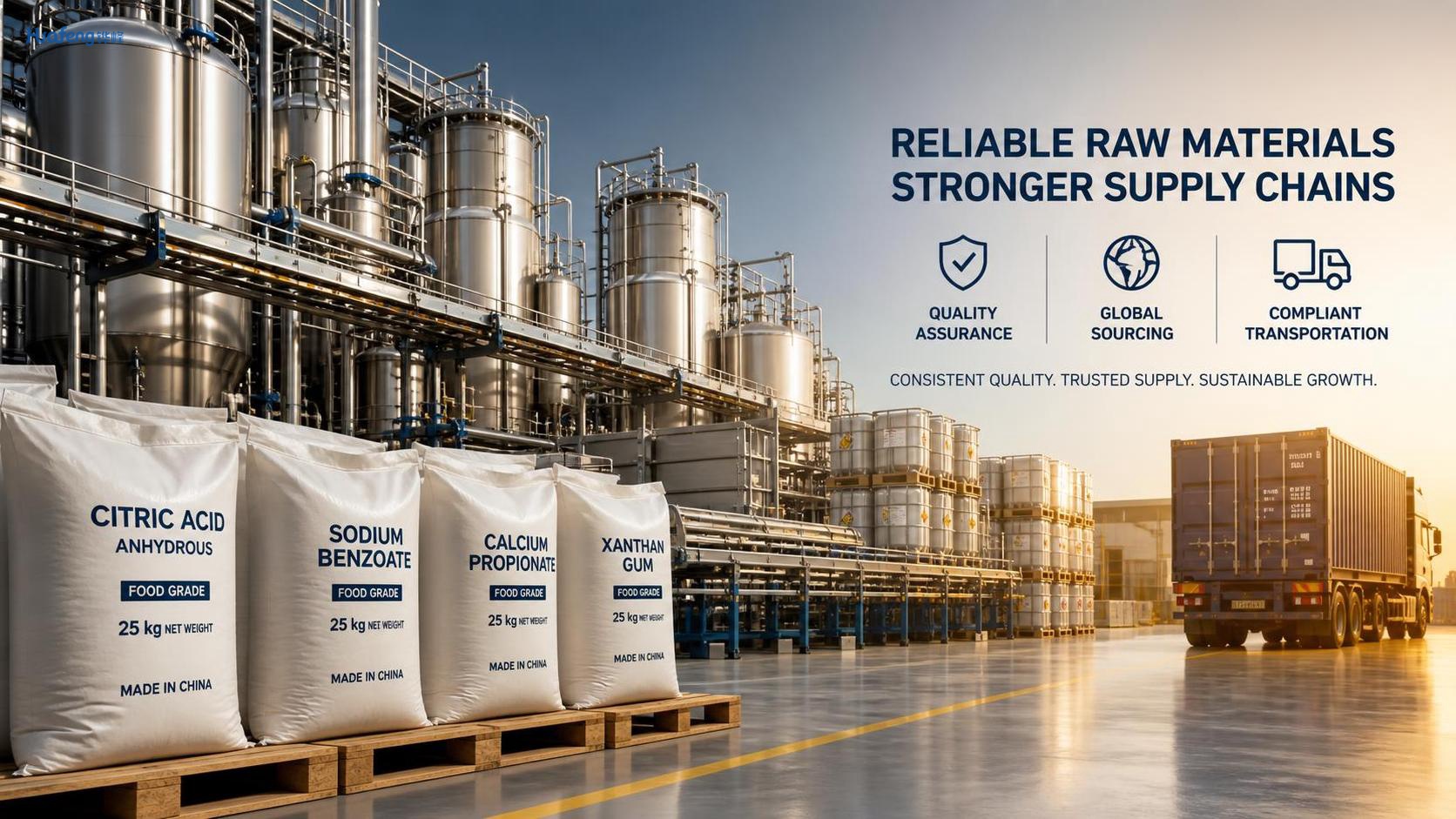
As 2026 approaches, buyers of Organic Raw Materials are not simply asking where prices will go. They are asking whether current sourcing models still work under tighter trade rules, uneven feedstock economics, and a supply chain that can change direction faster than contract cycles. In chemicals, price is only the surface signal. The real issue is whether a material can be purchased at a workable total cost, with acceptable compliance risk, stable quality, and delivery certainty.
That is especially true for decision-makers who sit between procurement, production, and finance. A low quote can be misleading if it comes with unpredictable freight, weaker documentation, or a supplier base that is exposed to one region, one feedstock, or one policy shift. The next phase of the market is likely to reward buyers who treat pricing as a system problem rather than a monthly negotiation.
What is really driving price direction
The first force to watch is feedstock movement. Many Organic Raw Materials sit downstream from petrochemical, agricultural, or fermentation-linked inputs, so their pricing is often driven less by finished-demand alone and more by upstream energy, crude, naphtha, crop, and utility costs. When those inputs move together, price pressure can pass through quickly. When they move in different directions, margins compress at different points in the chain and suppliers may delay adjustments, which creates a false sense of stability.
Energy remains a structural variable, not a temporary one. Even where production is local, electricity, steam, gas, and transport all shape the final landed cost. A buyer who only tracks the unit price at origin may miss the actual change in delivered economics. This is one reason procurement teams are increasingly comparing supplier quotes on a landed-cost basis instead of treating ex-works pricing as the full answer.
Supply discipline is another factor. In several chemical categories, capacity additions are not always matched by healthy demand growth. That can create intermittent oversupply, followed by fast corrections when plants cut rates or maintenance tightens availability. The result is a market that looks soft for a period, then turns abruptly. Buyers who wait for a clean bottom often discover the window was shorter than expected.
Why 2026 may behave differently from recent cycles
2026 is likely to be shaped by a more fragmented trade environment. Tariff changes, customs scrutiny, sanctions risk, export controls, and documentation requirements can alter the effective cost of supply without changing the quoted price itself. For Organic Raw Materials, this matters because many buyers source across borders to balance cost and availability. A route that worked in 2024 or 2025 may carry more friction in 2026, even if the chemistry has not changed.
At the same time, regulatory pressure is moving beyond product registration into traceability, emissions reporting, and customer-level disclosure. For multinational buyers, that means the cheapest source is not always the most usable source. A shipment that clears on price but fails internal compliance review can create hidden delay, rework, or customer exposure. In practice, price trends will be interpreted through a compliance lens more often than before.
Currency volatility should also stay on the watchlist. Many chemical contracts are denominated in USD, but suppliers and buyers operate in multiple currencies. A seller may hold price for a period while the buyer’s local-currency cost still rises. This disconnect is easy to miss in budget planning and is one reason finance teams need to be involved earlier in sourcing decisions.
What buyers should actually compare
For business decision-makers, the right comparison is not just between suppliers, but between supply models. A single-source strategy may look efficient until a shipment delay, a quality deviation, or a policy change interrupts production. Dual sourcing, regional diversification, and buffer inventory all carry costs, but those costs may be smaller than the disruption they prevent.
When evaluating Organic Raw Materials for 2026 contracts, buyers should look at at least four layers:
- Quoted price and validity window
- Freight, duties, insurance, and local handling
- Documentation quality, traceability, and compliance fit
- Supplier reliability on lead time, batch consistency, and dispute resolution
That last item is often underweighted. In chemical procurement, a small variation in purity, moisture, residue profile, or impurity control can affect downstream processing, yield, and end-product performance. The apparent saving from a cheaper source may disappear once production losses and testing costs are counted.
Where buyers should be cautious about common assumptions
One common assumption is that all price declines are buying opportunities. In reality, a falling market can reflect weaker demand, but it can also reflect inventory correction, aggressive destocking, or short-term export pressure. If the underlying supply base is fragile, the low-price period may be followed by a sharper rebound than expected. Buyers who lock into only spot purchasing may face more volatility than those who blend spot and term coverage.
Another assumption is that domestic sourcing automatically reduces risk. In some cases it does; in others it simply shifts the risk profile from freight and border issues to capacity concentration, utility exposure, or local policy change. The correct choice depends on the material’s strategic importance, substitution options, and how tightly it is linked to production continuity.
It is also risky to assume that supplier certifications alone guarantee suitability. Certificates matter, but they do not replace trial data, process compatibility, or ongoing batch verification. For critical inputs, a technical qualification process should sit alongside commercial negotiation, not after it.
How procurement teams can prepare now
The most effective teams are already building more scenario-based procurement plans. They are not trying to predict one perfect price path. They are defining what they will do if freight tightens, if a trade route changes, if a key supplier lifts minimum order quantities, or if compliance documentation becomes more demanding.
That means contracts should be reviewed for flexibility, not just cost. Index-linked formulas, notice periods, alternative incoterms, and substitution clauses can matter as much as the headline number. In a volatile market, rigid terms can become expensive even when the initial quote looked strong.
Some buyers are also asking suppliers for broader product portfolios so they can consolidate sourcing across adjacent materials. This is where export-oriented chemical partners with cross-category capability can be useful, particularly when buyers want to reduce the number of handoffs in international trade. In practice, a supplier such as Manganese Sulfate Monohydrate CAS#10034-96-5 may be relevant not because it is the central topic here, but because it illustrates how buyers increasingly think about supplier depth, documentation, and export execution as part of the sourcing decision rather than as afterthoughts.
The pricing signal that matters most
For 2026, the most important signal is not whether Organic Raw Materials are up or down in a single month. It is whether the market is becoming easier or harder to source reliably. If prices are stable but lead times worsen, if quotations are competitive but documentation is inconsistent, or if a supplier needs frequent exceptions to fulfill orders, the market is effectively tightening even before it shows up in the index.
That is the lens buyers should keep in place. Price trends matter, but only insofar as they affect availability, quality, and margin protection. The firms that will do best in 2026 are likely to be the ones that read the market as a procurement system, not a chart.
Send Us Your Inquiry Today
