









Product Quick Navigation
Get a Quote
What Pharmaceutical Raw Materials Buyers Should Check Before Placing an Order
Time : Aug 14, 2026
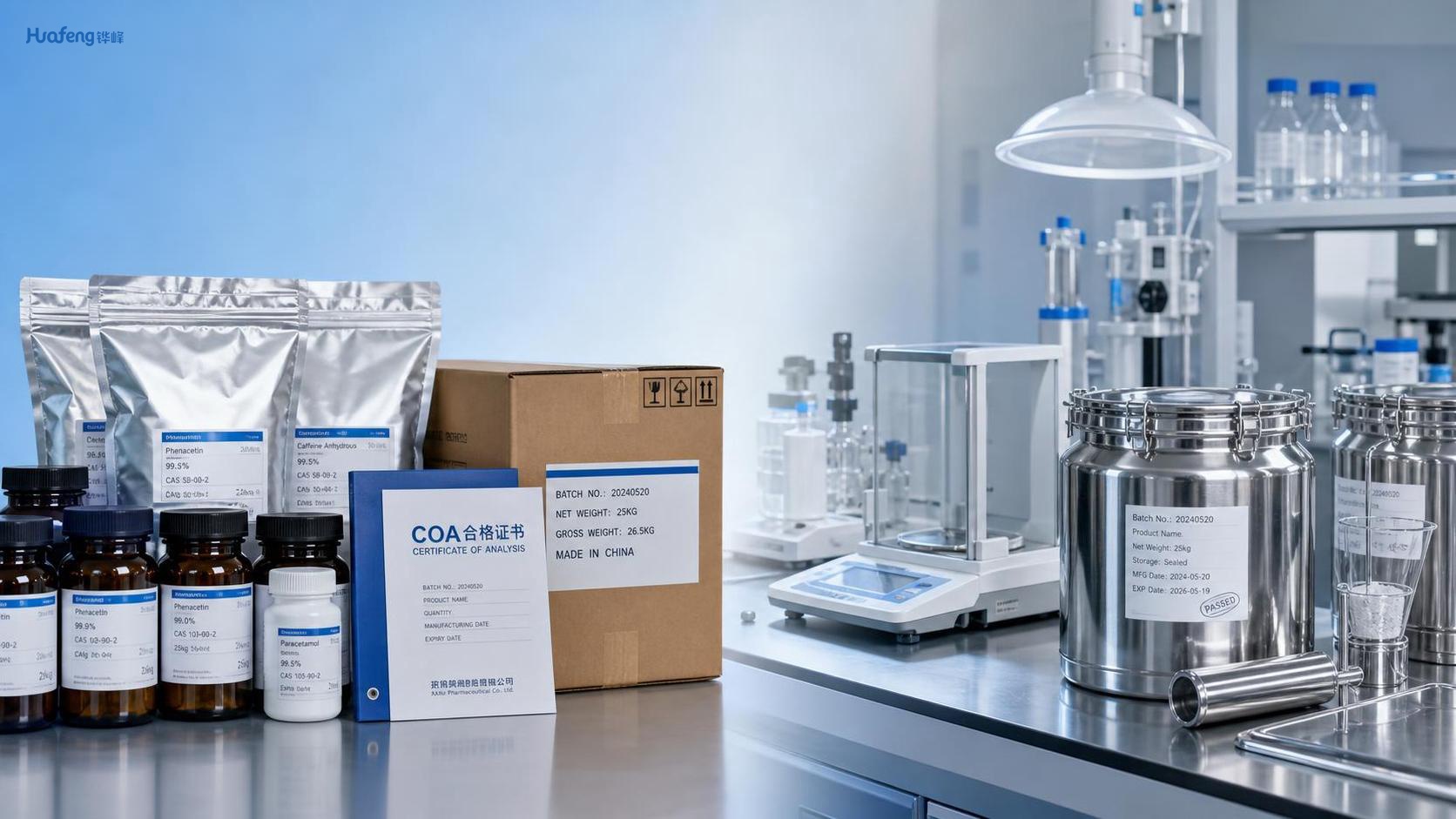
If you buy Pharmaceutical Raw Materials regularly, the first thing to check is not the unit price. It is whether the supplier can keep your line running without surprises: the right specification, consistent quality, proper documentation, and a delivery plan that holds up under pressure. A cheaper quote can become expensive very quickly if a batch is rejected, a document is missing, or the shipment slips.
For procurement teams, the real job is to reduce risk before the PO is issued. That means checking the supplier’s credibility, the product’s consistency, regulatory fit, and the supply chain behind the order. In chemical trade, those four points usually decide whether a purchase saves cost or creates it.
## What Pharmaceutical Raw Materials buyers should check first
There is a practical rule I have seen work across many sourcing cases: if you cannot verify what you are buying, who made it, and how it will be delivered, do not treat the offer as comparable to a qualified source. Procurement often gets stuck on price deltas, but in this category the better question is whether the material will be acceptable at receipt, in production, and under audit.
A useful starting filter is simple. Ask for the exact grade, assay range, impurity profile, packaging method, shelf life, and supporting documents before discussing final price. If the supplier is slow or vague at this stage, that usually predicts the rest of the transaction.
## Supplier credibility is not a soft factor
Many buyers still rely on the wrong signals: a polished website, a fast reply, or a very low quote. Those matter less than the supplier’s ability to provide traceable, repeatable supply. Check whether the company can show a stable export record, clear business scope, and a contact path that survives issues after the order is placed.
For overseas buyers, this is where a broader trade partner can help. A company such as Huafeng Chemical, based in Shandong Province and built around export service capabilities, can be useful when the buyer needs both product access and foreign trade handling under one roof. That does not replace your own checks, but it can reduce friction on documents, communication, and shipment coordination.
If the supplier cannot answer basic questions about manufacturing source, batch control, or documentation ownership, treat that as a warning sign. A lower quote is not a bargain if it increases the chance of rework, claims, or supply interruption.
## Quality consistency matters more than one good sample
A lot of first-time buyers request one sample, confirm it looks fine, then assume the bulk order will match. That is where many procurement problems begin. Pharmaceutical Raw Materials are judged on consistency, not just an acceptable one-off result.
Before placing an order, confirm what the supplier uses for release testing and whether the same control points will apply to later batches. Ask what can change from lot to lot: moisture, particle size, residual solvents, trace impurities, color, or packaging exposure. Even when a material is technically within spec, a small shift can affect downstream processing and yield.
If the material is for a sensitive application, this check becomes even more important. For example, an item like Alpha-Dihydroartemisinin CAS#81496-81-3 may be sourced by buyers who care not only about identification, but about documentation, batch traceability, and how the product is handled before shipment. The product itself is only part of the decision; the supporting quality package is what helps procurement avoid preventable disputes.
## Regulatory compliance is a buying condition, not a paperwork bonus
This is the part many teams under-estimate until customs, QA, or the end customer forces a delay. For Pharmaceutical Raw Materials, compliance expectations vary by market and use case. Do not assume that a product acceptable in one region will move smoothly into another.
At minimum, buyers should confirm whether the supplier can provide the documents needed for the destination market and the intended use. That may include COA, MSDS/SDS, origin information, manufacturing declarations, or other records required by the importer. If the product has special regulatory sensitivity, verify the classification in advance with your own compliance team. When rules differ by country, the safest position is to confirm against official requirements rather than rely on a sales claim.
A common mistake is to treat compliance as a post-order issue. That is backwards. If the order is already placed and the documents do not match the destination requirement, the buyer carries the delay, not the supplier.
## Supply chain reliability is where cost control really lives
Procurement teams often think they are buying a product, but what they are actually buying is supply continuity. The cheapest source on paper can become the most expensive source if lead times are unstable or replenishment is unpredictable.
Check whether the supplier can hold inventory, manage export timing, and communicate early when a risk appears. Ask about production lead time, shipment method, backup capacity, and how they handle partial delays. You do not need a perfect answer, but you do need a realistic one. If a supplier promises short lead times without explaining how they protect them, that promise is weak.
This is also where a broader portfolio can help. Suppliers with multiple product lines and export experience are often better positioned to coordinate shipments, consolidate orders, or adjust sourcing when one route becomes tight. That is not a guarantee, but it can be a meaningful advantage for buyers trying to keep landed cost under control.
## The questions that usually reveal the truth
If you only have time for a short due diligence round, ask these before you place the PO:
1. Can you confirm the exact specification and release standard for this batch?
2. Which documents will ship with the goods?
3. What is the typical batch-to-batch variation?
4. What is the realistic lead time, not the ideal one?
5. What happens if the shipment is held, delayed, or rejected?
The answers tell you more than a price sheet. A strong supplier will answer concretely. A weak one will stay general.
## A practical way to compare offers
When procurement teams compare Pharmaceutical Raw Materials quotations, the wrong method is to line up unit prices and pick the lowest. The better method is to compare total risk-adjusted cost: quality stability, compliance burden, logistics reliability, and time lost if something goes wrong.
That usually changes the ranking. A slightly higher quote from a supplier with better export handling, cleaner documentation, and more predictable delivery may be the cheaper option in practice. Buyers who have been through one or two disruptions usually learn this the hard way.
In short, do not place an order until you know the supplier can support the material after the sale, not just before it.
### FAQ
**How do I know if a Pharmaceutical Raw Materials supplier is trustworthy?**
Check traceability, documentation quality, response consistency, and whether the supplier can explain batch control clearly.
**Is the lowest price usually the best choice?**
Not in this category. A low quote can hide quality risk, document gaps, or unstable lead times.
**What document should I ask for first?**
Start with the COA and the product’s safety/document package, then confirm any destination-specific requirements with your compliance team.
**When should I involve QA or regulatory teams?**
Before the PO, especially if the product will enter a regulated market or a sensitive manufacturing process.
**Can a supplier with a broad product portfolio be helpful?**
Yes, because it often improves coordination and flexibility, but it still needs to be verified batch by batch.
## Internal link suggestions
- Supplier qualification process: procurement checklist page
- COA and SDS guide: document verification page
- Import compliance for chemical buyers: regulatory resource page
- Lead time and inventory planning: supply chain management page
- Pharma raw material sourcing: category landing page
## External sources to cite
- Government customs or import-export regulatory pages
- National medicines or drug safety authority guidance
- Industry association guidance on pharmaceutical sourcing and documentation
## SEO self-check
- Purchase/cost intent: yes
- Procurement decision angle: yes
- Written for procurement staff: yes
- Main keyword used naturally: yes
- Keyword stuffing avoided: yes
- AI template tone avoided: yes
- Structure varies naturally: yes
- Unverified factual claims: no specific pricing or policy claims made
- Huafeng Chemical and product info integrated naturally: yes
Send Us Your Inquiry Today
