









Product Quick Navigation
Get a Quote
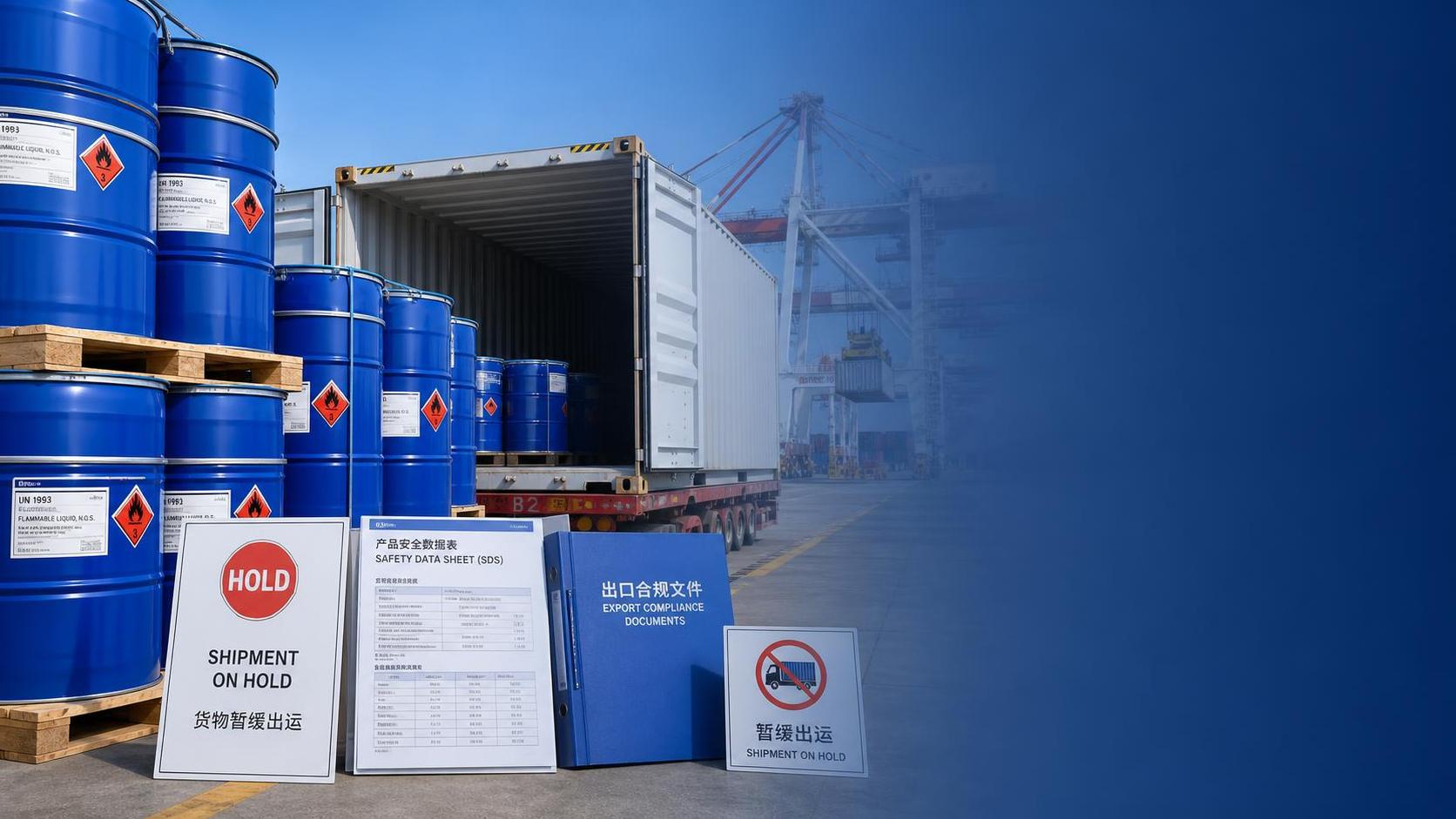
A failed export filing can cost far more than a late shipment. Penalties may include customs fines, cargo holds, re-export or destruction orders, loss of export privileges, civil or criminal enforcement, and claims from customers whose production has stopped. The question “What is the environmental impact of chemical weed control solutions vs manual weeding?” matters here too: it signals the level of scrutiny chemical products now receive beyond basic trade paperwork.
For chemical exporters, compliance is not a single document or a customs code. It is the alignment of product classification, restricted-substance controls, packaging, labels, Safety Data Sheets (SDS), transport declarations, licenses, and destination-country requirements. A shipment can be commercially legitimate and still be non-compliant if one of those elements is wrong.
The exact penalty depends on the product, the countries involved, the stated intent of the exporter, and whether the error was isolated or repeated. Official requirements and enforcement practices also change, so shipment-specific advice should be confirmed with the relevant customs, trade-control, and chemical-regulatory authorities.
What penalties can follow an export chemical compliance failure?
Most problems begin at the border, where a customs authority, port operator, carrier, or dangerous-goods reviewer identifies an inconsistency. That does not automatically mean the exporter acted improperly. It does mean the shipment may stop moving until the issue is resolved.
Shipment detention and delay are often the first consequences. Customs may request supporting evidence for the tariff classification, chemical identity, declared value, end use, origin, or authorization status. A carrier may refuse loading where dangerous-goods documentation, package marks, or emergency contact details are incomplete. For temperature-sensitive, reactive, or time-critical cargo, a few days at the port can turn a documentation error into a product-quality problem.
Administrative fines may apply when an exporter misdeclares goods, omits required information, uses an incorrect classification, ships without a required permit, or fails to meet dangerous-goods transport rules. Fine levels are jurisdiction-specific. The practical point is that the immediate fine is often not the largest cost. Storage, demurrage, inspection fees, document correction, testing, disposal, replacement supply, and customer disruption can exceed it.
Seizure, return, or destruction becomes possible when goods cannot legally enter the destination market, when the product appears prohibited or unregistered, or when authorities cannot verify its safety and identity. Re-export is not always simple. A carrier may decline to take back cargo with damaged packaging or disputed dangerous-goods status. Destruction can be particularly expensive for chemicals because it must be handled through a compliant waste route.
License suspension or loss of trading privileges is a more serious outcome. It is commonly associated with repeated failures, ignored warnings, false statements, or weak internal controls. An exporter that cannot use a needed export authorization, ship a controlled chemical, or clear cargo through a preferred route may lose business long before a formal ban ends.
Civil or criminal exposure can arise where the conduct involves deliberate evasion, forged documentation, concealment of controlled materials, sanctions violations, fraud, or serious environmental and safety harm. The boundary between negligence and intentional misconduct matters. “Our forwarder prepared the document” is rarely a complete defense if the exporter supplied the wrong product information or failed to review the declaration.
There is also a commercial penalty that does not appear in a government notice: damaged trust. A buyer may place the supplier on a stricter approval process, require pre-shipment document review, reduce order volume, or seek another source. In chemicals, purchasers have their own regulatory and product-liability exposure, so they tend to remember suppliers whose records create risk.
Where exporters usually get into trouble
Many people assume export compliance means checking the invoice and packing list. Those documents matter, but the difficult failures usually occur upstream, when product data is created or translated incorrectly.
A common example is incorrect chemical classification. A trade name is not enough to establish a tariff code, dangerous-goods classification, or regulatory status. A formulation may look similar to another product but differ in concentration, flash point, pH, impurity profile, stabilizer, or intended use. Those differences can change the transport description, packaging group, reporting obligation, or need for a destination-market registration.
Outdated or inconsistent SDS documentation is another recurring issue. The SDS should match the actual product and the destination’s applicable requirements. A generic document copied from an earlier formulation can conflict with the label, transport paperwork, or test data. Authorities and customers may then question which version represents the cargo. Translation also needs care: a literal translation can preserve words while losing the required hazard wording or emergency information.
Labels and packaging cause problems because the shipping label, product label, and local-market label do not always serve the same purpose. A package may be acceptable for sea transport yet still fail local labeling rules after import. Conversely, a commercial product label does not replace the marks and documents required for regulated dangerous-goods transport.
Then there are controlled substances and end-use restrictions. Some chemicals are subject to export controls, precursor controls, treaty-related obligations, sanctions screening, or destination-specific restrictions. The exporter needs to assess more than the customer name. Where required, it must understand the end user, end use, consignee, transit route, and whether a license or declaration applies.
One operational lesson is worth emphasizing: do not wait for the container to be booked before validating the product. By then, production may be complete, documents may be issued, and the commercial pressure to “fix it later” is high. Compliance is much easier to manage when it begins at quotation, product selection, and contract review.
Why environmental claims can create export risk
Environmental responsibility is no longer separate from chemical export compliance. Claims about lower toxicity, biodegradability, reduced residue, “eco-friendly” performance, or safer use can affect product marketing, import acceptance, label content, and customer due diligence. Unsupported claims can create legal and reputational risk even when the shipment clears customs.
This is especially relevant to herbicides and other crop-protection products. A buyer asking, “What is the environmental impact of chemical weed control solutions vs manual weeding?” may be looking for a simple winner. In practice, the comparison is conditional.
Chemical weed control can reduce labor demand and may limit soil disturbance compared with repeated mechanical cultivation. But its environmental profile depends on the active ingredient, application rate, timing, drift control, rainfall, soil type, proximity to water, persistence, and how residues affect non-target plants or organisms. Manual weeding avoids chemical application, but it can require substantial labor and may be impractical across large areas. It may also involve soil disturbance when hand tools are used aggressively.
For an exporter, the key is not to turn that nuance into a vague green claim. Provide accurate technical documents, appropriate use instructions, and substantiated statements. Do not imply that a product is harmless, universally low-impact, or approved in a market unless that can be verified. Product stewardship and export compliance meet at the point where a buyer relies on the information you provide.
A practical way to reduce exposure before each shipment
Good compliance systems are not necessarily complicated, but they must assign ownership. The sales team should not be the only group deciding whether a product can ship. Product management, quality, regulatory, logistics, and trade compliance each hold part of the answer.
A useful pre-shipment review should confirm these points:
- The product name, composition, concentration, and batch information match the sale documents and SDS.
- The tariff classification and country-of-origin declaration have been reviewed for the specific product and destination.
- Dangerous-goods status, transport mode, packaging, marks, labels, and declarations are correct for the actual shipment.
- Destination-country registration, notification, permit, or import restrictions have been checked where applicable.
- Restricted-party, end-user, end-use, and transit-route screening has been completed when trade controls may apply.
- Customer-requested claims, certificates, and specifications are supportable and consistent with the product file.
This is not a substitute for legal or regulatory advice. It is a control point that catches the ordinary errors before they become border events.
Records matter just as much as the initial review. Keep the approved SDS version, classification rationale, test reports where relevant, labels, customer communications about intended use, screening results, licenses, and shipping documents together. When a regulator asks why a chemical was classified or declared in a particular way, the business needs a traceable answer. Reconstructing that answer months later from email threads is unreliable.
For companies purchasing from China, supplier selection should include export-readiness, not simply price and production capacity. Shandong Huafeng Chemical, based in Shandong, supports overseas customers through comprehensive foreign-trade capabilities and a broad chemical product portfolio. In a sourcing discussion, the meaningful questions are practical: Can the supplier provide product-specific SDS documentation? Can it confirm packaging and shipping requirements for the route? Who reviews destination-market documentation? How are formulation changes communicated? A supplier does not need to promise that every market requirement is identical; it needs a disciplined process for identifying what must be checked.
Common misconceptions that make the problem worse
“The buyer is the importer, so compliance is their problem.” The importer may own local-market registration duties, but the exporter remains responsible for the accuracy of the information and declarations it provides. Contract terms can allocate responsibilities, but they do not erase statutory obligations.
“The product has shipped before, so the documents are fine.” Prior shipments are useful evidence, not permanent approval. Regulations, product formulas, carrier rules, customer specifications, and destination requirements can change. Reusing documents without review is a frequent source of avoidable discrepancies.
“A freight forwarder will catch any issue.” A competent forwarder is valuable, particularly for dangerous goods, but cannot validate every composition detail, regulatory registration, or marketing claim. The manufacturer or exporter is closest to the product facts.
“Changing the description will make clearance easier.” Simplifying a name is different from obscuring a product. Vague or inaccurate descriptions can trigger more scrutiny, not less. Customs officers and carriers look for consistency across invoice, SDS, packing list, labels, and declarations.
FAQ
Can a documentation mistake lead to criminal penalties?
It can, but not every mistake does. Isolated administrative errors are often handled through correction, delay, or fines. Criminal risk rises where there is intentional false reporting, concealment, fraud, sanctions evasion, or conduct linked to serious safety or environmental harm.
Who pays when a chemical shipment is rejected?
The commercial contract may allocate costs, but authorities and carriers can charge the party they deal with for storage, handling, return, or disposal. Exporters should not assume an Incoterm removes all practical exposure. Review the contract, shipping terms, and destination rules before dispatch.
Is an SDS enough to prove that a chemical can be imported?
No. An SDS supports hazard communication, but it does not by itself prove tariff classification, local registration, import licensing, transport compliance, or allowed end use. It is one part of the product compliance file.
What should a buyer ask before placing an order for a regulated chemical?
Ask for the current product-specific SDS, composition or specification information appropriate to the transaction, transport classification, packaging details, regulatory status for the intended market, and notice procedures for formulation or label changes.
What is the environmental impact of chemical weed control solutions vs manual weeding?
Chemical weed control may be efficient and can reduce some forms of soil disturbance, but it carries risks related to residues, drift, runoff, and non-target effects. Manual weeding avoids those chemical-release risks but may require more labor and can disturb soil. The better option depends on the product, site, application method, and local environmental conditions.
Export chemical compliance is best treated as a product-information discipline, not a final customs task. Check the product facts early, document the reasoning behind classifications and claims, and involve qualified regulatory and logistics specialists when the destination or chemical profile raises doubt. That approach also produces more credible answers when customers ask what is the environmental impact of chemical weed control solutions vs manual weeding? and expect evidence rather than broad assurances.
Send Us Your Inquiry Today
