









Product Quick Navigation
Get a Quote
What Happens If a Chemical Batch Fails Quality Inspection at Destination Port? Step-by-Step Contingency Protocol
Time : Sep 14, 2026
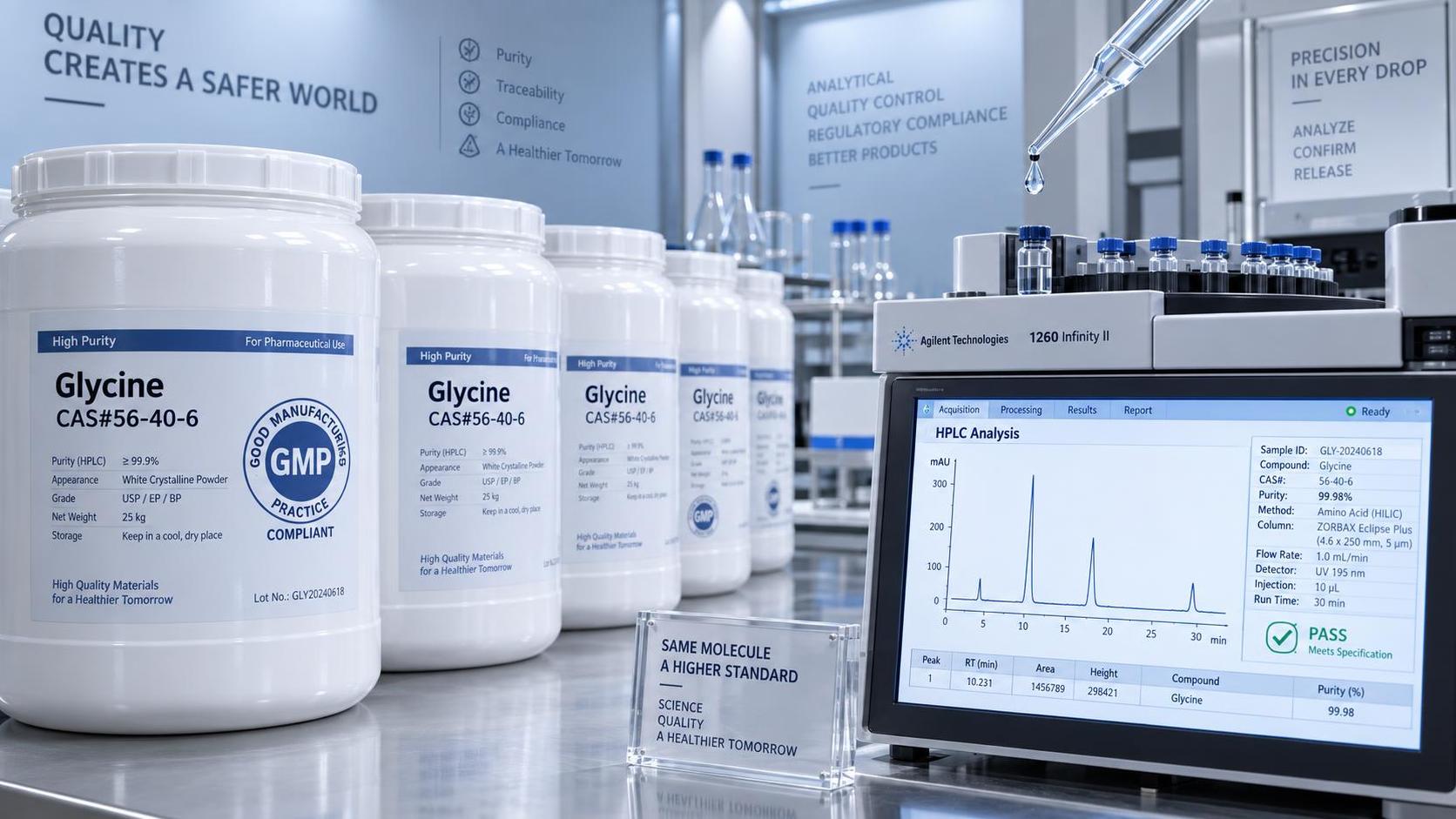
When a chemical batch fails quality inspection at the destination port, the immediate reaction—panic—is understandable. But for project managers steering complex international supply chains, what follows that first alert determines whether a single nonconformance becomes a minor correction or a full-blown project derailment. There’s no universal “reset button.” Instead, resilience lives in protocol: clear roles, pre-vetted response pathways, and deep familiarity with both regulatory expectations and real-world port dynamics.
At Shandong Huafeng Chemical Co., Ltd., we’ve guided over 120+ overseas engineering and pharmaceutical projects through exactly this scenario—not as theoretical risk, but as lived experience. Our contingency framework isn’t built from compliance checklists alone. It’s refined through dozens of actual port rejections: glycine batches held in Rotterdam, ammonium sulfate flagged in Houston, sodium hydroxide samples failing pH stability in Santos. Each case taught us that speed without accuracy compounds risk—and documentation without traceability invites dispute.
So what *really* happens when a chemical batch fails quality inspection at destination port? Let’s walk through it—not as bullet points, but as a coordinated sequence where every hour matters.
**First 4 hours: Containment & Verification**
The moment the lab report arrives—or customs notifies your local agent—the priority shifts from logistics to evidence integrity. Do not release, move, or re-label the cargo. Request an official hold notice from port authorities and secure independent verification: a second test, conducted by a mutually agreed third-party lab (e.g., SGS, Bureau Veritas) under chain-of-custody protocols. This isn’t about contesting results—it’s about ruling out sampling error, transit-induced degradation, or method mismatch. For temperature-sensitive materials like Glycine CAS#56-40-6, which requires strict 2–8°C storage and degrades above 40°C, ambient exposure during unloading or customs delay can skew assay outcomes. A failed HPLC purity reading may reflect thermal stress—not manufacturing flaw.
**Hours 4–48: Root-Cause Triage**
Now cross-reference three data streams:
- The destination lab’s full analytical report (including raw chromatograms, calibration logs, and method reference)
- Your internal QC records (batch-specific COA, stability data, packaging integrity logs)
- Transport telemetry (temperature/humidity logs, shock indicators, container seal numbers)
If discrepancies emerge—say, the port lab used a non-USP-compliant titration method while your certificate references USP<1058>—you’re not facing rejection; you’re facing methodological misalignment. That’s resolvable. But if moisture content exceeds specification *and* humidity logs show >85% RH exposure for 36+ hours, root cause points to packaging failure—not chemistry. This distinction dictates next steps: retesting vs. replacement vs. liability negotiation.
**Day 2–4: Regulatory Navigation & Documentation Remediation**
Not all ports treat nonconformances the same. In the EU, a failed identity test on a pharmaceutical-grade substance triggers mandatory notification to the national competent authority within 72 hours—even before resolution. In Singapore, Customs may allow conditional release pending corrective action if bonded warehousing is available. In Brazil, ANVISA requires submission of a detailed deviation report *before* any further testing is authorized. Here, having a local regulatory partner isn’t optional—it’s operational leverage. Huafeng’s network includes vetted agents in 17 key ports who speak the language, know the inspectors’ preferences, and carry pre-approved templates for deviation justifications aligned with ICH Q5, Q7, and local GMP annexes.
**Day 3–7: Supply Continuity Activation**
While documentation moves, production mustn’t stall. If root cause confirms a genuine quality deviation—and especially if the material supports critical path activities (e.g., active pharmaceutical ingredient synthesis or catalyst preparation)—we activate our dual-track continuity plan. One track secures expedited air freight of a fully retested, newly released batch from our Shandong facility (with full cold-chain validation for products like Glycine CAS#56-40-6). The other initiates technical consultation: Could a qualified substitute—same CAS, different grade, validated compatibility—bridge the gap? For instance, food-grade glycine may serve in non-GMP buffer prep, buying time for pharma-grade re-supply. We don’t assume substitution is acceptable. We co-validate it—with your QA team—before proposing.
**Beyond Resolution: Why Protocol Alone Isn’t Enough**
A robust contingency plan only works if it’s embedded—not bolted on. That means integrating quality checkpoints *upstream*:
- Pre-shipment stability studies simulating worst-case transit profiles (not just shelf life)
- Batch-specific packaging qualification—including vibration, drop, and thermal cycling tests
- Real-time sensor integration in containers, with alerts routed directly to your project dashboard
- Joint training sessions with your procurement and QA leads on interpreting analytical discrepancies
We’ve seen projects recover swiftly—not because the failure was small, but because the response wasn’t reactive. It was rehearsed. When a client’s glycine batch showed elevated APHA color values upon arrival in Mumbai, our joint team traced it to UV exposure during ocean transit—not process drift. Within 36 hours, we adjusted secondary packaging with UV-blocking liners and issued revised shipping SOPs. No delay. No cost transfer. Just quiet, confident course correction.
What happens if a chemical batch fails quality inspection at destination port? The answer isn’t found in a single document—it’s written in how quickly you shift from “What went wrong?” to “What do we control *now*?” It’s in whether your supplier treats the port lab’s report as final verdict—or as one data point in a broader forensic picture. And it’s revealed when your project manager receives not just a new COA, but a shared timeline showing exactly how each stakeholder moved, why, and with what evidence.
For teams managing infrastructure rollouts, clinical trial material flows, or specialty chemical procurement across borders, uncertainty isn’t the enemy. Unpreparedness is. And preparedness isn’t about avoiding failure—it’s about making failure *informative*, not catastrophic. That’s the difference between a setback and a signal. At Huafeng Chemical, we don’t promise perfection. We engineer predictability—into every contingency, every container, and every conversation that follows a red flag at the gate.
Send Us Your Inquiry Today
