









Product Quick Navigation
Get a Quote
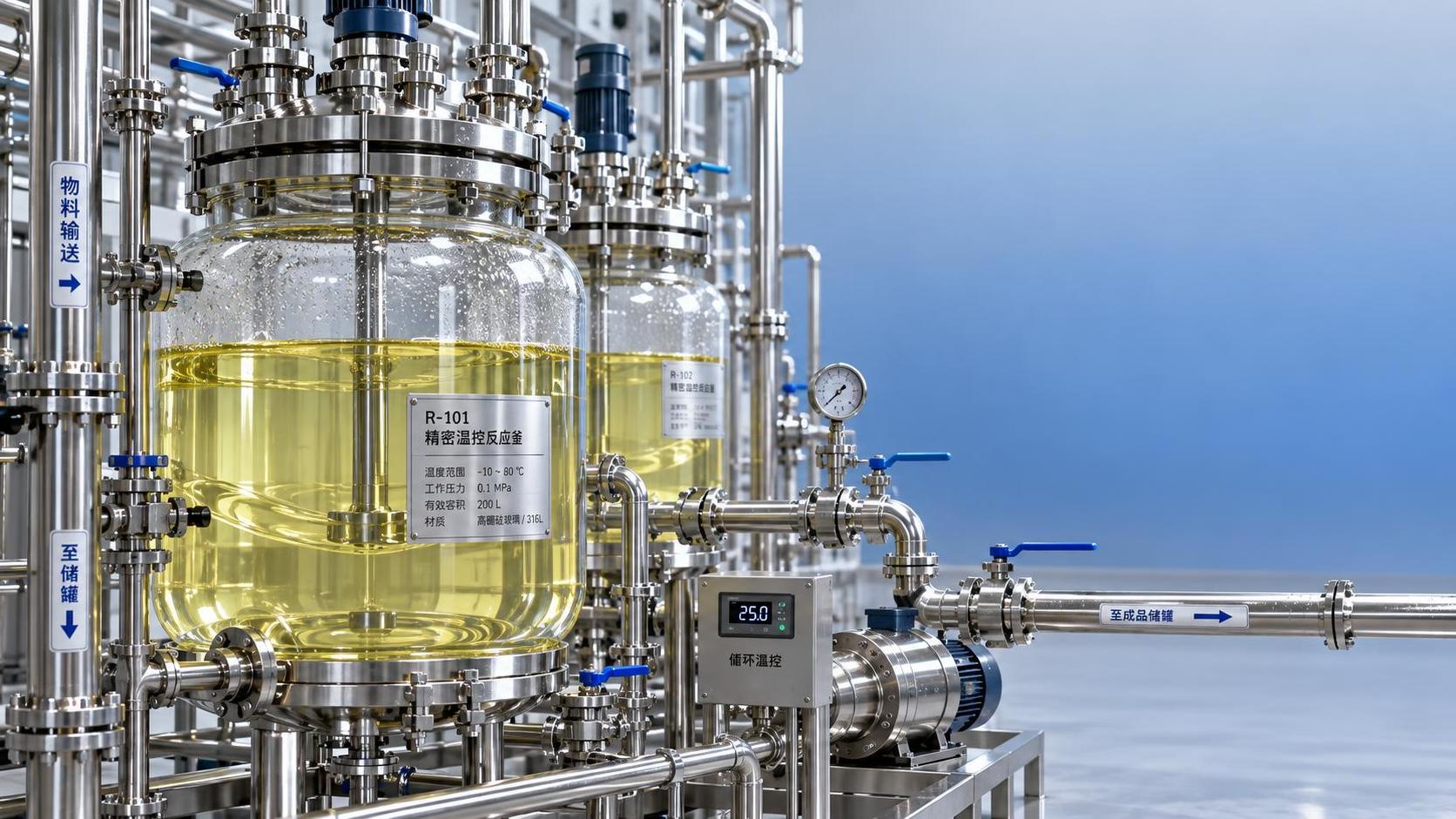
Temperature Isn’t Just a Number—It’s a Reaction Variable
For quality control and safety professionals managing liquid agrochemicals across global supply chains, temperature often slips into the background—not as a controlled parameter, but as ambient noise. Yet in practice, it’s rarely passive. A 5°C deviation during ocean transit, a 10-minute exposure to unconditioned warehouse air during loading, or even inconsistent refrigeration cycling in a regional distribution center can accelerate degradation pathways that aren’t visible until potency testing fails—or worse, after field performance drops below label claims.
This isn’t theoretical. Hydrolysis rates double with every 10°C rise for many ester- or amide-based active ingredients. Oxidation becomes non-linear above 30°C, especially in formulations containing surfactants or solvents with low flash points. And polymerization—often overlooked—can initiate at surprisingly mild conditions when trace metals catalyze condensation reactions in aged batches. These aren’t edge cases. They’re recurring root causes behind shelf-life shortfalls flagged in EU MRL reviews, EPA re-evaluations, and ASEAN registration renewals.
Where Thermal Stress Hits Real Workflows
Most stability protocols focus on ideal lab conditions: constant 25°C/60% RH, protected from light, sealed under nitrogen. But real-world logistics don’t follow SOPs—they follow port schedules, customs delays, container dwell times, and regional infrastructure limits. Consider this sequence: a batch shipped from Shandong Province enters a 40-foot reefer container set to 15°C (a common “safe” default), sits idle at a Southeast Asian port terminal for 72 hours under ambient monsoon heat (peak 38°C), then moves inland via truck without active cooling for another 18 hours. The cumulative thermal load may exceed what accelerated aging studies assumed—and no single point in that chain shows up as an outlier in standard loggers calibrated only for mean temperature.
That’s why leading exporters like Shandong Huafeng Chemical Co., Ltd. treat temperature not as a compliance checkbox, but as a cross-functional signal. Their export teams collaborate with formulation chemists to map thermal sensitivity thresholds per product family—not just “store at 2–8°C” or “avoid freezing”—but actual kinetic breakpoints where hydrolysis shifts from first-order to autocatalytic, or where emulsion phase separation becomes irreversible after repeated warm-cool cycles.
Why “Stable” Doesn’t Mean “Forgiving”
Stability data sheets often list “shelf life: 24 months at 25°C.” What they rarely clarify is whether that assumes uninterrupted storage, or includes allowances for transit-induced thermal spikes. Worse, some registrations accept data generated under static conditions—even when the product will spend weeks crossing equatorial zones. That gap between documented stability and operational reality is where efficacy erosion begins.
Take Paclitaxel CAS#33069-62-4, for example—a compound whose clinical utility hinges on precise structural integrity. Though classified as a pharmaceutical intermediate, its handling mirrors high-value agrochemicals: strict 2–8°C cold chain, sensitivity to light and oxidation, and zero tolerance for crystallization or solvent-mediated decomposition. Its melting point (213°C dec.) suggests thermal robustness—but that’s irrelevant if dissolved in ethanol/water blends prone to phase separation above 30°C, or if residual moisture triggers ester cleavage during prolonged storage at borderline humidity. Stability here isn’t about bulk resistance—it’s about molecular fidelity under dynamic conditions.
Practical Levers You Can Adjust Today
You don’t need to redesign your entire cold chain tomorrow. Start with three actionable filters:
- Map thermal exposure by leg—not just origin-to-destination. Break transit into segments (e.g., factory-to-port, port-to-distribution hub, last-mile delivery) and assign realistic max/min ranges based on historical telemetry or carrier reports—not spec sheets.
- Validate packaging beyond insulation. A foam-lined box may buffer short-term spikes, but does the inner liner resist condensation buildup? Does the seal maintain integrity after repeated thermal cycling? Ask for real-world thermal mapping reports—not just lab chamber tests.
- Anchor stability testing to your actual use case. If your product routinely faces 35°C+ ambient for >48 hours mid-transit, run forced degradation at 35°C/75% RH—not just 40°C dry heat. Monitor not just active ingredient loss, but also pH drift, viscosity change, and particulate formation.
None of this replaces regulatory documentation. But it does shift focus from “did we meet the letter?” to “did we preserve function through the full journey?” That distinction matters when a batch clears customs but fails QC at the importer’s lab—or worse, when field trials show inconsistent bioactivity tied to shipment timing rather than application rate.
No Single “Right” Temperature—Just Better Context
The most experienced teams we work with don’t ask “What’s the safe temperature?” They ask: “At what point does this specific formulation begin losing critical attributes—and how much margin do we have before that threshold becomes operationally unavoidable?” That question forces specificity: solvent system, container material, fill level, headspace gas, batch age, and even shipping season.
Huafeng Chemical’s growing role in global chemical exports reflects that shift—not just scaling capacity, but embedding thermal intelligence into documentation, labeling, and client-facing technical support. When overseas clients request stability data, they receive not just ICH-compliant reports, but annotated timelines showing where thermal risk clusters, how packaging mitigates it, and where real-time monitoring adds value beyond compliance.
Because in the end, temperature isn’t a setting. It’s part of the reaction mechanism—and treating it as such changes how you design, ship, test, and trust every liter that leaves your facility.
Send Us Your Inquiry Today
