









Product Quick Navigation
Get a Quote
Price is the first number most buyers compare when sourcing Insecticide Products, but it is rarely the number that decides whether a line is profitable. A low quotation can become expensive after a delayed registration, a rejected label, unstable active-content results, damaged packaging, or a shipment that cannot move under the agreed timetable. The practical task is to identify the product that can be legally sold, consistently supplied, and supported after it reaches your market.
That means assessing the full purchasing cost, not simply the factory price per kilogram or per litre. Before requesting offers, define the target pest, crop or application environment, preferred formulation, pack sizes, expected annual volume, destination country, and the registration route available in that market. Suppliers can then quote against the same technical and commercial basis. Without this discipline, quotations may look comparable while covering completely different products, documents, or delivery obligations.
Start With the Market Fit of Insecticide Products
“Insecticide” is a broad commercial label, not a sufficient buying specification. A product intended for public-health pest control may have a different permitted use, label format, packaging requirement, or channel restriction from one intended for agricultural use. Even within crop protection, the buyer must distinguish between the active ingredient and the final formulated product. Two products with the same active ingredient can differ materially in concentration, co-formulants, physical stability, mixing behavior, shelf life, and approved claims.
Ask a basic question early: can this exact formulation, at this exact concentration, be placed on the market where it will be sold? Do not assume that an active ingredient accepted in one country is automatically acceptable elsewhere. Registration status, maximum residue requirements, restricted-use rules, local language obligations, and packaging rules are jurisdiction-specific. The relevant authority or a qualified local regulatory adviser should confirm the current position before a purchase order is issued.
A common mistake is buying a product because demand appears strong, then discovering that the available label claim does not match the intended customer use. Another is choosing a high-concentration formulation to reduce freight cost, while the local market actually expects ready-to-use packs and has limited capacity for safe dilution. The technically stronger option is not always the commercially better one.
Confirm the Active Ingredient and Formulation, Not Just the Trade Name
Trade names can be changed, reused, or marketed differently across territories. Your internal specification should identify the active ingredient by its recognized chemical name and, where relevant, CAS number; the stated concentration and tolerance; formulation type; intended use; batch-size range; shelf-life requirement; and packaging configuration. For formulated goods, include basic physical criteria that affect handling, such as appearance, suspension or emulsion stability where applicable, pH range, density, particle-size expectations, and cold or heat stability requirements.
A Certificate of Analysis is useful, but it should not be treated as a one-time formality. Request representative batch records, recent CoAs, test methods, and a clear explanation of which parameters are routinely controlled. For an initial order, an independent pre-shipment inspection or retained sample arrangement is often cheaper than handling a complaint after stock has entered the market.
Pay close attention to technical material versus formulation. Technical material may be appropriate for a licensed local formulator with the right registration and safety controls. It is not a shortcut for a buyer that needs finished, retail-ready inventory. In that case, the supplier must demonstrate formulation consistency, compatible packaging, and a label package that can be adapted lawfully to the destination market.
A short answer to the central buying question is this: choose a product only when its legal status, active specification, formulation performance, packaging, and supply plan have been reviewed together. A quotation that covers only price and volume is incomplete.
Documentation Is Part of the Product
In chemical trade, missing documents can stop a transaction just as effectively as a failed laboratory result. The exact package depends on the country and product classification, but buyers commonly need a current Safety Data Sheet, transport classification information, Certificate of Analysis, packing details, country-of-origin information, and product or registration documents required by the destination authority. Labels and safety information should be prepared in the required local language where applicable.
Check that every document describes the same product. The active ingredient, concentration, formulation, manufacturer name, emergency contact details, batch reference, and hazard information should not conflict between the CoA, SDS, label, invoice, and shipping papers. Small inconsistencies create avoidable customs questions and make it harder to defend a complaint or recall decision later.
Do not rely solely on an old SDS from a product listing. Ask for the revision date and confirm whether it reflects the product being quoted. Classification, transport status, and local label requirements can change. The official rules and the competent authority in the importing market remain the source of truth.
Calculate Landed Cost Before Choosing the Lowest Offer
The purchase price is only one part of margin. A sound comparison brings together factory price, packaging, inland transport, export handling, freight, insurance, import duties and taxes, destination clearance, local storage, regulatory work, financing cost, expected promotional support, and a realistic allowance for returns or damaged stock.
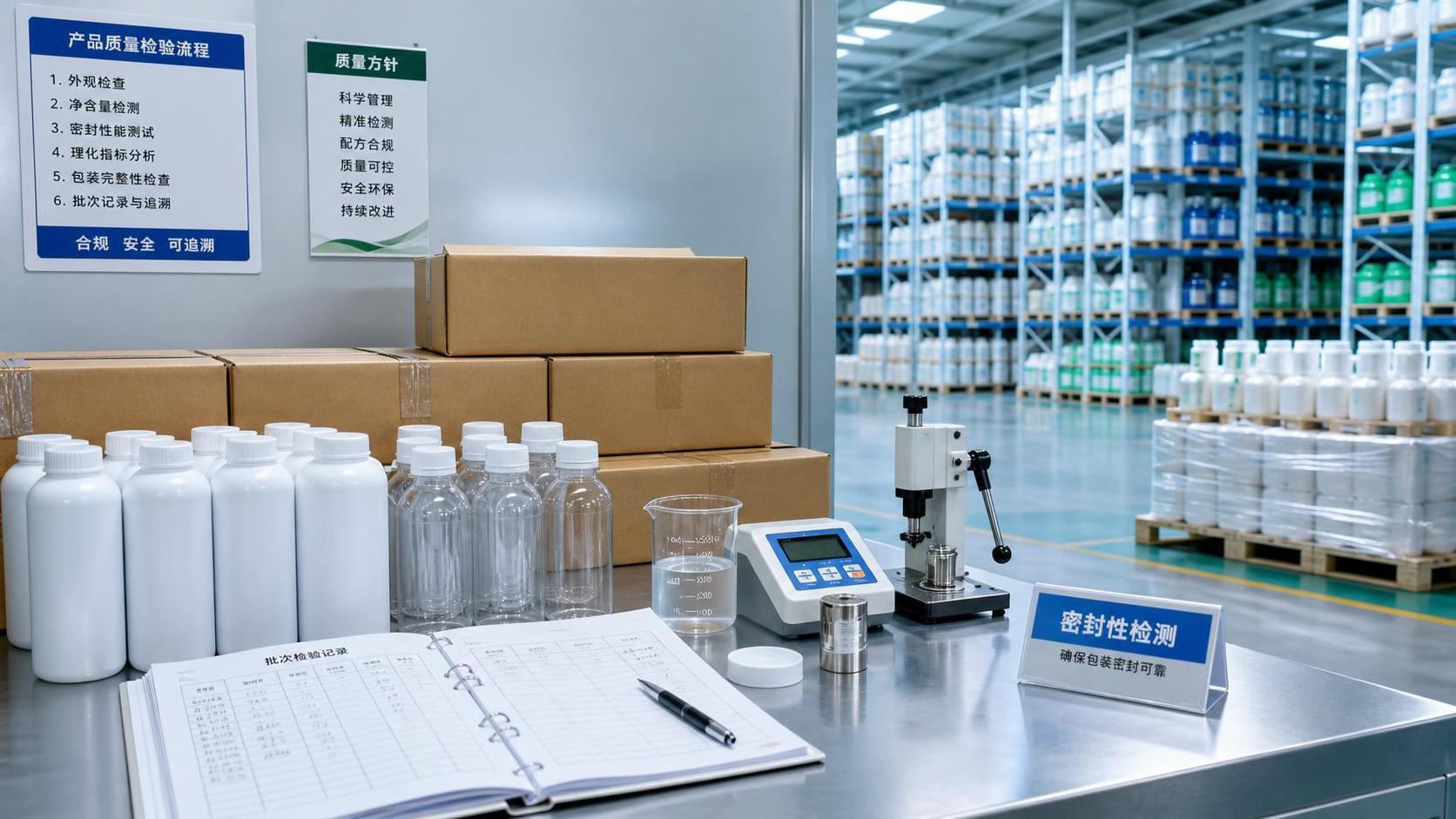
Packaging deserves more attention than it usually receives. A bulk pack may lower the unit price but raise warehouse and handling cost. Small retail packs may sell faster but require more cartons, more labeling work, and stricter tamper-evidence controls. For liquid formulations, test whether closures, induction seals, bottle resin, and carton strength remain suitable through the temperatures and transit conditions expected on the route. A leaking container can turn a minor freight saving into a claim, disposal issue, and reputational problem.
Ask for the quotation on an explicitly named Incoterm and named place or port. “CIF,” “FOB,” and “DDP” are not interchangeable commercial phrases. They allocate cost, risk, and responsibility differently. A low ex-works price is not genuinely low if the buyer must organize hazardous-goods collection, export documentation, and port handling without the necessary experience.
Also model the cost of stockout. In seasonal pest-control markets, arriving after the buying window can be worse than paying a modestly higher unit price for a supplier with reliable production slots and realistic lead times. Forecasting should include reorder capacity, not only the first container.
Inspect the Supplier’s Ability to Deliver Repeatedly
Many sourcing problems appear after the sample stage. Samples are often prepared with unusual care; commercial batches reveal whether a factory has stable raw-material sourcing, documented production controls, trained quality staff, and enough capacity to support repeat business.
Useful questions include:
- Is the supplier the actual manufacturer, an authorized exporter, or a trading intermediary?
- Which quality checks are performed on every batch, and which are performed periodically?
- Can the supplier provide batch traceability from production through shipment?
- What is the normal lead time, and what happens when demand rises or a key raw material is delayed?
- Who prepares export documents and responds if customs, freight forwarders, or regulators request clarification?
- What is the written process for investigating an off-specification claim?
There is nothing inherently wrong with working through an experienced chemical export partner. In many cases, that partner adds value by coordinating manufacturers, documentation, packaging, inspections, and freight communication. The important point is transparency: understand who controls production, who holds the export responsibility, and who has authority to resolve a quality or delivery issue.
Huafeng Chemical, based in Shandong, operates in this part of the supply chain by supporting overseas chemical trade with a broad product portfolio and export coordination. For buyers managing more than one chemical category, it can be practical to assess a partner’s document discipline across the portfolio rather than evaluating every order in isolation. For example, a product page for Potassium hexafluorotitanate CAS#16919-27-0 identifies transport and handling information for a separate industrial chemical product. It should not be confused with an insecticide or used to support an insecticide claim, but it illustrates the level of product-specific detail that responsible chemical sourcing requires.
Packaging, Labels, and Logistics Can Decide Market Access
Finished goods must arrive in a condition that can be sold. Confirm pack material, net content, pallet arrangement, carton markings, label placement, seal type, and whether the packaging is compatible with the formulation over the stated shelf life. Request photos or samples of the actual proposed pack, not only a graphic file. Where local label artwork is still being finalized, agree who owns the approval process and who bears the cost of changes.
For regulated chemical shipments, logistics should be discussed before production is complete. Freight availability, dangerous-goods declarations where applicable, port restrictions, container loading rules, and temperature exposure can affect both timing and cost. A supplier that says “shipping is no problem” but cannot provide a clear shipping plan is creating uncertainty, not solving it.
It is also wise to agree on an incident process before the first order. Specify what evidence is needed for a shortage, leak, transit damage, or quality complaint; how quickly the matter must be reported; whether samples will be tested; and how replacement, credit, or other remedies will be decided. These points are easier to settle before money and stock are at risk.
Do Not Buy Registration Risk at a Discount
Some offers appear attractive because the supplier presents a “similar” product, a generic active ingredient, or a document set prepared for another country. Similarity is not compliance. A product may be technically close to an approved item yet still require separate authorization, local data, label approval, or an import permit.
Be cautious when a seller guarantees registration approval, promises unrestricted claims, or dismisses local requirements as paperwork. Approval decisions sit with the relevant authorities, and the buyer should retain control of regulatory verification. A reliable supplier can provide supporting technical information promptly; it cannot replace the decision-making authority in the destination country.
This is especially relevant when planning private-label Insecticide Products. Private labeling can improve differentiation and margin, but it adds artwork control, trademark checks, regulatory ownership questions, minimum-order commitments, and the need for disciplined batch traceability. It suits buyers with an established route to market and a clear compliance plan. It is less suitable for a first trial order where demand and registration status have not yet been validated.
A More Practical First-Order Approach
For a new supplier or formulation, start with a controlled commercial trial rather than committing immediately to a broad portfolio. Use a written specification, approved sample, agreed label artwork, documented acceptance criteria, and a realistic delivery window. Retain a reference sample from the approved lot. Then review sell-through, customer feedback, packaging performance, delivery accuracy, and supplier response before expanding the program.
This approach does not eliminate risk, but it makes risk visible while the financial exposure is manageable. The strongest sourcing decisions usually come from repeatable controls: comparable quotes, clear documents, verified product identity, and a supplier relationship that remains responsive after the container leaves the port.
Frequently Asked Questions
Should I source technical material or finished insecticide formulations?
Choose technical material only when you have a lawful, capable local formulation route and the required registrations. Finished formulations are generally more practical when the aim is to place packaged goods into the market quickly and compliantly.
Is a Certificate of Analysis enough to verify quality?
No. It is one important record, but it should be supported by an agreed specification, consistent batch controls, representative samples, and, where the order risk justifies it, independent inspection or testing.
How can I compare two supplier quotations fairly?
Put both quotes into one landed-cost sheet using the same Incoterm, product specification, pack size, order quantity, freight assumptions, document scope, and payment terms. Compare delivery reliability and compliance support alongside the unit price.
When should I use a third-party inspection?
It is most useful for first orders, high-value shipments, new packaging formats, or products with tight specification requirements. The inspection scope should be agreed before production is finished.
Commercial success with Insecticide Products comes from buying a compliant, traceable supply program rather than simply purchasing chemical inventory. Check the product-market fit first, validate the documentation and technical specification, calculate landed cost, and confirm that the supplier can support the same standard on every repeat order.
Send Us Your Inquiry Today
