









Product Quick Navigation
Get a Quote
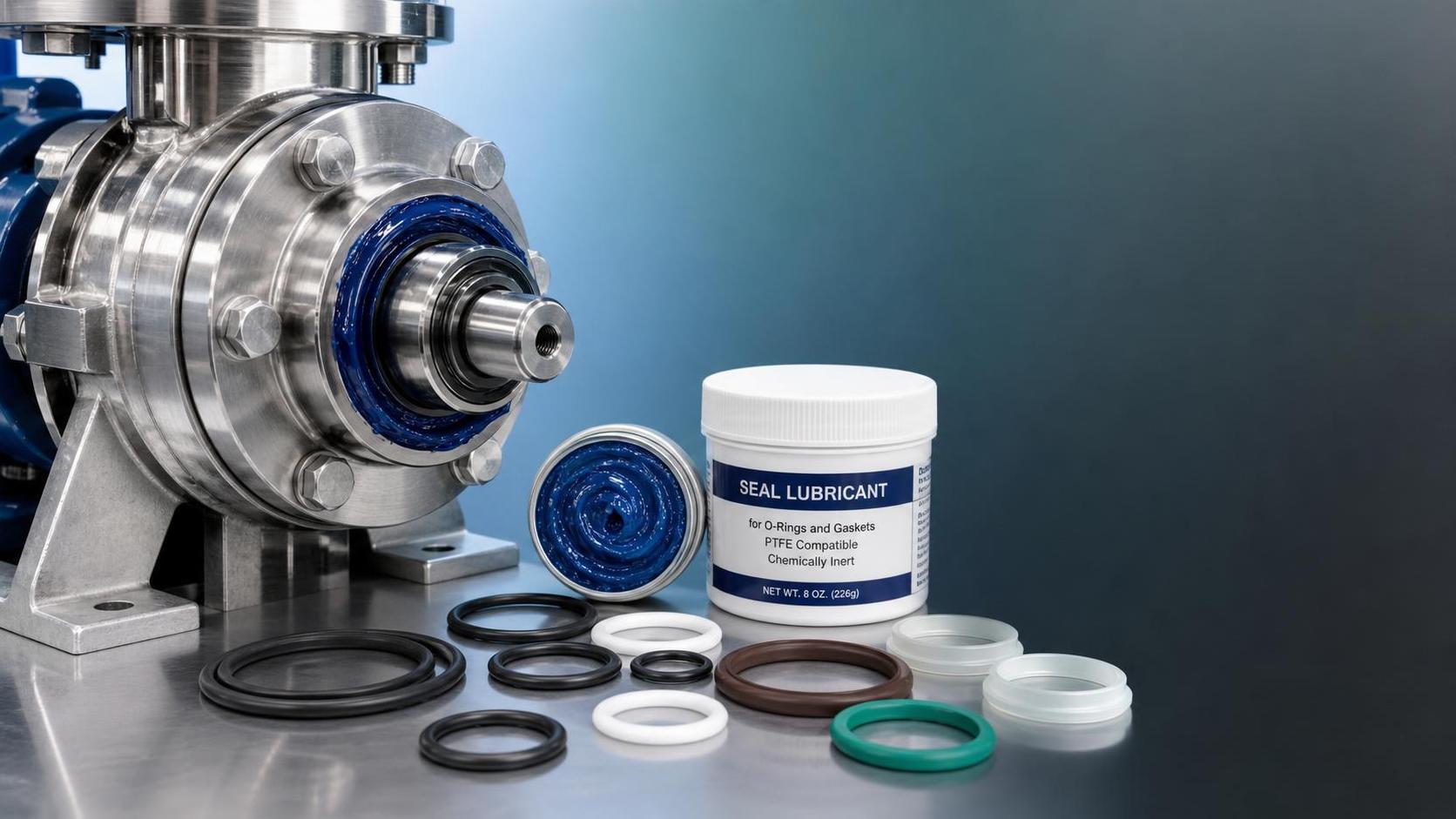
Grease and rubber compatibility is often the hidden cause behind a seal that swells, becomes brittle, or starts leaking soon after a routine service. A grease may appear suitable because it has the right temperature rating or load capacity, yet its base oil, thickener, or additives can still attack the elastomer. When that happens, replacing the seal without changing the lubrication decision only repeats the failure.
The practical rule is simple: confirm the seal material and the complete grease chemistry before applying lubricant. Do not rely on color, consistency, a general-purpose label, or the assumption that “grease is grease.” In pumps, valves, gearboxes, actuators, bearings, and chemical handling equipment, small compatibility errors can become extended downtime, contamination risks, and repeated warranty claims.
Why Grease and Rubber Compatibility Fails in Service
A grease is not a single chemical. It is a system made of base oil, thickener, performance additives, and sometimes solid lubricants. The base oil usually has the greatest influence on rubber compatibility because it can migrate into the elastomer and change its physical structure. Additives may also matter, especially in aggressive formulations designed for extreme pressure, corrosion protection, high temperature, or chemical resistance.
Rubber seals, O-rings, diaphragms, and flexible hoses are elastomers. Their resistance depends on the polymer formulation, cure system, fillers, and operating environment. Two seals that look identical can react differently if one is nitrile rubber and the other is fluorocarbon rubber. Even seals sold under the same material family may vary by compound.
When an incompatible grease contacts rubber for long enough, one of several things may happen:
- Swelling: The seal absorbs oil, expands, softens, and may lose its fit inside a gland or groove.
- Hardening: Ingredients migrate out of the elastomer or the material oxidizes under heat, leaving the seal less flexible.
- Cracking: A hardened or chemically weakened seal can crack during pressure cycling, vibration, or assembly movement.
- Shrinkage: Some fluids extract plasticizers or other components, reducing seal contact pressure and creating a leak path.
- Surface degradation: The seal may become sticky, chalky, blistered, or visibly rough before a full leak develops.
The important point is that failure is not always immediate. A seal can pass a short bench test and fail after weeks of heat, pressure pulses, washdown, or exposure to process vapors. This is why field decisions should account for actual duty cycle, not only room-temperature contact.
Start With the Seal Material, Not the Grease Brand
When a leak occurs after relubrication, the first question should be: “What elastomer is installed?” The answer is sometimes available on the equipment bill of materials, seal drawing, service manual, or supplier certificate. If documentation is missing, do not guess based on seal color. Black seals are commonly nitrile, but they can also be EPDM, fluorocarbon, chloroprene, or another black-filled compound.
The materials below cover many common service situations. They are useful for initial screening, not as a substitute for the seal manufacturer’s compatibility data.
A frequent service mistake is applying a petroleum or mineral-oil grease to an EPDM component because the grease is already approved for nearby bearings. The bearing may be fine; the EPDM seal may not be. The location is not the compatibility criterion. The materials in contact are.
Base Oil Matters More Than the Label on the Cartridge
For seal contact, identify the grease base-oil family wherever possible. Mineral oil is widely used and can be appropriate for many nitrile applications. Silicone-based greases are often chosen where plastics, rubbers, water resistance, or dielectric properties are relevant, but they should still be checked against the exact elastomer and surrounding process chemicals.
Synthetic base oils require the same discipline. Polyalphaolefin (PAO), ester, polyalkylene glycol (PAG), and perfluoropolyether (PFPE) greases have very different properties. “Synthetic” does not mean universally safer for seals. Ester oils can be excellent in the right application but may cause swelling in some compounds. PAG products are valuable in selected industrial duties but are not automatically interchangeable with mineral-oil grease. PFPE products are highly inert in many environments, yet their use should be justified by the process, temperature, cleanliness, and cost of the equipment.
Thickeners also deserve attention. Lithium, calcium sulfonate, aluminum complex, polyurea, clay, and PTFE are not interchangeable simply because all produce grease. A thickener may affect water resistance, high-temperature behavior, and grease mixing. It is usually not the first cause of elastomer swelling, but it can complicate a changeover when residual grease remains in cavities and interacts with the new product.
Direct answer: select grease only after confirming the seal compound, grease base oil, operating temperature, process exposure, and whether the old grease can be fully removed. If any one of those points is unknown, use the equipment or seal supplier’s compatibility chart and perform a controlled trial before standardizing the lubricant.
Symptoms That Point to Chemical Incompatibility
Not every leak is a grease-and-rubber problem. Shaft runout, damaged seal lips, incorrect gland dimensions, excessive pressure, dry running, poor installation, and abrasive contamination are all common causes. Still, the failure pattern can offer useful clues.
Swelling around the outside diameter of an O-ring, a seal that is unusually soft or gummy, or a lip seal that no longer sits properly often suggests fluid absorption. A hardened seal that cracks during removal may indicate heat aging, chemical extraction, or both. If several units begin leaking after a lubricant change while the equipment design and operating conditions remain unchanged, compatibility should move high on the investigation list.
Inspect the failed part before cleaning it. Record its condition, take photographs, compare its dimensions with a new unused seal, and note the grease used, batch identification, application date, temperature, pressure, and cleaning chemicals. A comparison with an unused reference seal is often more informative than visual inspection alone.
One practical warning: an oversized O-ring is not always evidence of chemical swelling. It may have been stretched during installation, trapped in the wrong groove, or exposed to pressure extrusion. Diagnose the whole assembly before assigning blame to the lubricant.
A Better Field Process Before Changing Grease
When there is no confirmed compatibility statement, a short, documented evaluation is more useful than a confident assumption. Start by gathering the seal material code and the grease technical data sheet or safety data sheet. Ask for the base-oil type and any specific elastomer compatibility guidance from the lubricant supplier.
Then review the actual environment. A grease in a clean indoor bearing may only touch an exclusion seal. In a valve actuator or process pump, it can be exposed to heat, cleaning agents, vapor ingress, pressure cycling, and product residue. The chemical process may influence the seal just as much as the grease does.
- Identify the exact elastomer, equipment location, and failure mode.
- Confirm grease base oil, thickener, additives, and approved temperature range.
- Check whether the seal manufacturer lists the grease or base-oil family as compatible.
- Clean old grease from the application where a lubricant conversion is required.
- Trial the new combination on a controlled group of assets and inspect at planned intervals.
- Document the approved combination in the maintenance record so future servicing does not substitute an unsuitable grease.
For critical equipment, laboratory immersion testing under representative temperature can provide a more defensible answer. Typical evaluations compare changes in volume, hardness, tensile properties, and appearance after exposure. Test conditions must reflect the real application; a brief ambient soak may not predict high-temperature service.
Do Not Ignore Grease Mixing
Maintenance teams often focus on whether the new grease is compatible with rubber, then overlook whether it is compatible with the grease already inside the component. Mixing can change consistency, oil separation behavior, pumpability, and water resistance. It can also make it harder to identify the source of a later seal problem.
When changing product families, purge old grease where the component design allows it. In sealed or difficult-to-clean equipment, confirm the change procedure with the equipment manufacturer. A partial changeover may leave an uncertain blend at the seal interface even when both individual greases are acceptable.
Overgreasing creates another avoidable issue. Excess grease can raise pressure behind seals, force lubricant into areas where it does not belong, and attract contamination. A grease that is chemically compatible can still contribute to leakage when applied in the wrong amount.
Supply Documentation Is Part of Reliability
In chemical-industry maintenance, lubricant selection is also a supply-chain control issue. The grease name on a purchase order is not enough when factories operate across regions or use multiple service contractors. Require a stable product identification, technical documentation, safety information, and a clear statement of any approved substitution process.
For imported chemicals and related maintenance materials, responsive documentation and traceable product data reduce the chance that a field team receives an unfamiliar formulation under a familiar commercial description. Huafeng Chemical supports overseas customers with chemical export capabilities and a broad portfolio; in practice, the useful procurement question remains specific: can the supplier provide the documentation needed to verify material compatibility, storage requirements, transport classification, and batch traceability for the intended application?
The same discipline applies in agricultural and greenhouse operations, where equipment lubrication may be handled alongside chemical-product purchasing. A material such as Daminozide CAS#1596-84-5 should be managed according to its own storage, handling, and incompatibility information. It is not a lubricant and should never be used as evidence that a grease is suitable for seals. Keeping chemical product records separate from lubrication approvals prevents a surprisingly common documentation mix-up.
When Replacement Is Already Necessary
If a seal has swollen, softened, hardened, or cracked, changing grease alone does not restore its original properties. Replace the damaged elastomer, inspect the mating surfaces, remove residual incompatible grease, and verify the replacement seal material before reassembly. Reusing a visibly degraded seal to “see whether the new grease works” usually produces another leak and weakens the diagnosis.
Also check the storage history of spare seals. Heat, ozone, direct sunlight, and poor inventory rotation can age elastomers before installation. A new seal from an old, poorly stored kit may fail even after the correct grease is selected.
FAQ
Can I use silicone grease on every rubber seal?
No. Silicone grease is often useful, but compatibility still depends on the exact elastomer, service temperature, process fluid, and equipment requirements. Confirm the seal supplier’s guidance.
Does a grease’s NLGI grade indicate rubber compatibility?
No. NLGI grade describes consistency, not chemical suitability. Two greases with the same grade can use completely different base oils and additives.
How quickly can incompatible grease damage a seal?
It varies widely. Some effects appear during assembly or early operation; others require prolonged exposure to heat, pressure cycling, or chemical contamination. Treat a successful first day of operation as insufficient proof.
Can a damaged seal be identified by color alone?
No. Color changes can help document a problem, but swelling, hardness, dimensions, surface condition, and service history provide stronger evidence.
Reliable grease and rubber decisions come from matching the actual elastomer to the full lubricant formulation and operating environment. When seal material, base oil, residual grease, and process exposure are all documented, swelling, cracking, and leakage become far easier to prevent than to troubleshoot after the equipment is already down.
Send Us Your Inquiry Today
