









Product Quick Navigation
Get a Quote
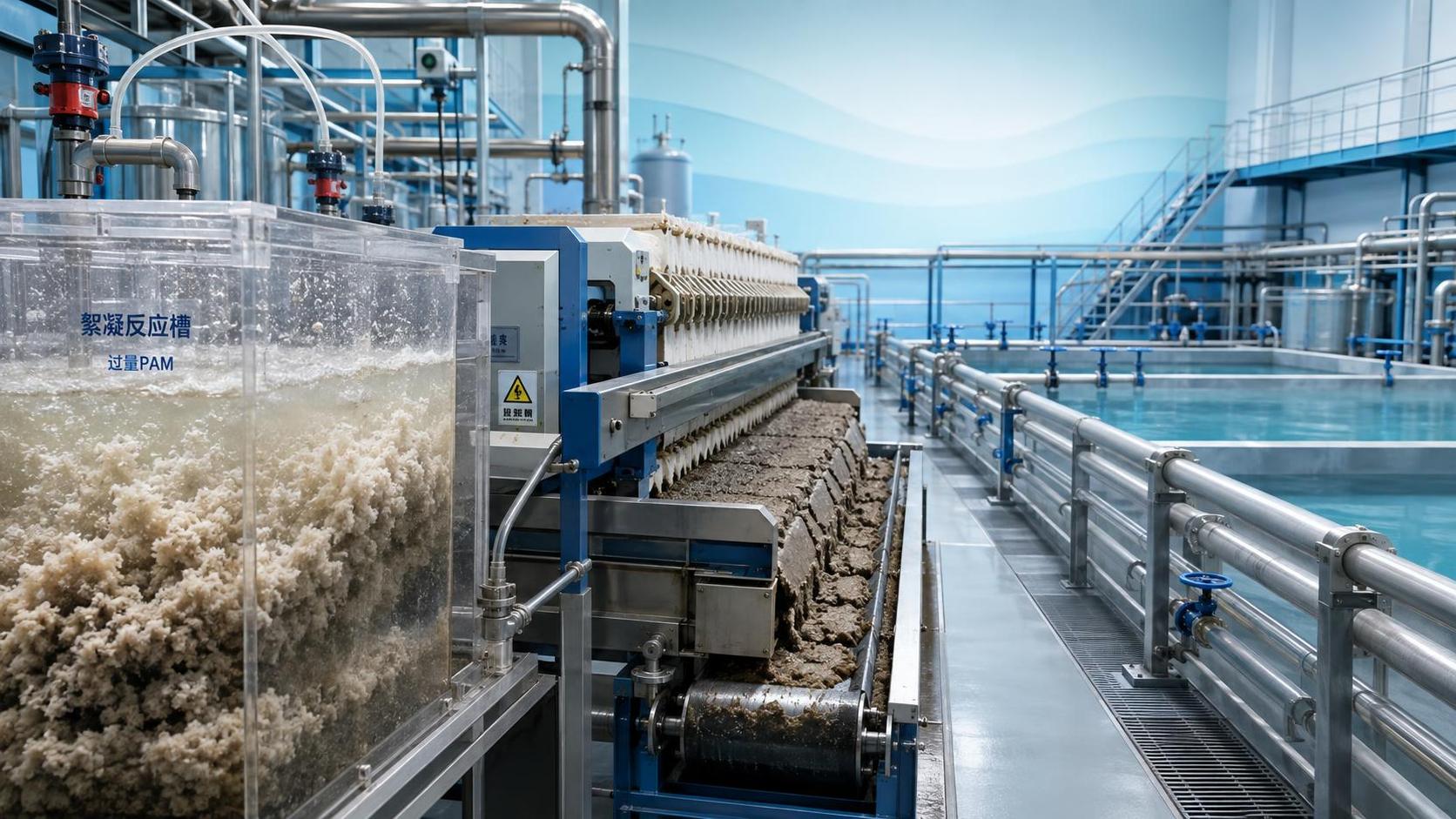
A rising Polyacrylamide Flocculant dosage can raise treatment costs even when the unit price of the product appears low. The reason is simple: dosage affects more than the chemical invoice. It also changes sludge volume, dewatering performance, operator time, treatment stability, and the likelihood of having to correct an out-of-specification result.
For a purchasing or finance review, the useful question is not “Which flocculant costs less per tonne?” It is “Which treatment program delivers the required water quality and solids separation at the lowest reliable total cost?” A lower-priced polymer can become the more expensive choice when it requires a higher active dose, performs inconsistently with changing feedwater, or creates sludge that is harder to manage.
Why more polymer does not always mean better treatment
Polyacrylamide works by helping fine suspended particles join into larger flocs that can settle, float, filter, or dewater more easily. The process depends on the polymer’s charge type, charge density, molecular structure, preparation quality, mixing conditions, and the nature of the solids in the water.
There is normally a practical dosage range. Below that range, particles remain poorly aggregated and separation is incomplete. Above it, performance may stop improving and can deteriorate. Excess polymer can interfere with particle bridging, leave residual polymer in the water, or create soft, poorly structured flocs. This is why increasing the feed rate to solve a poor result can produce a second problem rather than a better outcome.
The financial impact is often delayed. A treatment line may appear to be operating because sludge is still being produced, but the sludge may contain more water, filters may run less efficiently, or clarifier performance may become unstable. The chemical consumption figure then understates the actual cost.
The cost chain behind an excessive Polyacrylamide Flocculant dosage
These costs are connected. For example, an operator may add more polymer because dewatering is weak. If the issue is actually insufficient dilution, poor polymer maturation, an unsuitable ionic grade, or a change in feed solids, the higher dosage may increase purchase consumption without producing a firmer cake. The plant pays more and the original cause remains unresolved.
Unit price is a weak basis for approval
A financial review should be cautious when a supplier comparison is based solely on price per kilogram, drum, or tonne. Polyacrylamide products can differ in concentration, physical form, dissolution behavior, charge characteristics, and suitability for a particular sludge or wastewater stream. A product with a higher purchase price may require less product, provide more stable separation, or reduce downstream handling burden. Conversely, a low quoted price can conceal higher real consumption or operational variability.
The appropriate comparison is a controlled treatment-cost comparison under representative operating conditions. It should use the same wastewater or sludge source, similar equipment conditions, and a defined performance target. The result should be assessed against treated volume or dry solids processed, with related costs included where they materially change the decision.
That does not require an overly complex financial model. It does require procurement, operations, and finance to use the same measurement basis. If one team reports polymer purchased while another reports only water-quality results, neither view is enough to show the real economic outcome.
Situations where dosage often drifts upward
Dosage escalation is frequently a symptom of process variation. Influent quality may change because of production shifts, raw-material changes, cleaning cycles, seasonal conditions, or altered wastewater composition. A dose set for one condition can become inefficient when solids concentration, pH, temperature, oil content, or particle characteristics move outside the original range.
Preparation and feed systems deserve equal attention. Powder and emulsion polymers need correct make-down conditions before use. Inadequate dilution, inconsistent aging time, poor water quality for preparation, or unsuitable mixing can prevent the polymer from developing as intended. Raising dosage to compensate for an improperly prepared solution is an expensive workaround.
Mixing location also matters. Polymer needs enough mixing energy to contact dispersed particles, but excessive shear after flocs form can break them apart. When the injection point or mixing sequence is wrong, operators may interpret weak flocs as a product shortage and continue increasing the feed rate.
A third source of drift is grade substitution. Products described broadly as anionic, cationic, or nonionic are not automatically interchangeable. The appropriate grade depends on the solids and treatment process. Substituting based on availability or purchase price without a meaningful evaluation can lead to a permanently higher dosage requirement.
What a finance approval should ask before authorizing a higher dose
A request for more Polyacrylamide Flocculant should not be treated as a routine volume increase. It may be justified, especially when treatment load has genuinely increased, but the request should distinguish increased demand from deteriorating process efficiency.
- Has wastewater volume or dry solids throughput increased, or has polymer consumption risen faster than throughput?
- Has the feedwater or sludge composition changed in a way that affects flocculation?
- Is the polymer being prepared, aged, diluted, and injected under the intended operating conditions?
- Did the supplier or site change polymer grade, batch handling practice, packaging form, or source?
- What happened to sludge dewatering, treatment stability, and final water quality as dosage increased?
- Has the proposed dose been compared with a lower and higher range using a defined performance target?
These questions turn a chemical purchase into an operating-cost decision. They also prevent a common approval mistake: accepting a higher chemical budget because one visible output looks acceptable, while the plant absorbs hidden inefficiencies in sludge handling or rework.
Use trials to establish an operating window, not a single “correct” number
A single fixed dosage is rarely the best control method for a variable treatment stream. A more durable approach is to define an operating window: a normal range for expected conditions, together with clear triggers for adjustment when feed conditions change. The target should include separation performance and downstream consequences, not simply the visual appearance of flocs.
Small comparative trials are useful when they are designed to answer a purchasing decision. Compare candidate grades and dose ranges against the same sample conditions. Record the practical observations that affect operating cost: settling or filtration behavior, clarity of the separated water, floc strength, sludge release characteristics, and the dose needed to achieve an acceptable result. Where the treatment system is continuous, confirm that the result holds under normal plant conditions rather than relying only on a laboratory observation.
The objective is not to pursue the lowest possible dosage under ideal conditions. A dose that is too close to the failure point may look economical in a short trial but create frequent corrections during routine operation. The preferred choice is often the lowest dose that maintains a stable margin under normal variation.
Supply reliability can protect treatment economics
For imported chemical programs, supply decisions affect dosing costs as well as purchasing continuity. A change in supplier, formulation handling, documentation, shipment timing, or technical response can force plants to operate conservatively with higher inventory or higher dosage until performance is understood. That uncertainty has a cost, particularly where wastewater treatment cannot be paused.
When evaluating an export supplier, buyers should look beyond the quotation. Consistent product identification, clear technical documentation, practical communication on application conditions, and dependable delivery coordination all support more predictable dosing decisions. Huafeng Chemical, based in Shandong, provides chemical export services and a broad product portfolio for overseas buyers; in this context, the relevant procurement value is the ability to support a controlled, documented supply program rather than treating polymer as an undifferentiated commodity.
Before switching sources, establish what must remain consistent: the selected grade, packaging and storage requirements, product handling method, quality documentation, and the process checks that will be used at receiving. This reduces the risk that a supply change is followed by unexplained dosage increases.
Approve the total treatment cost, not the larger chemical invoice
Higher consumption is justified when it reflects a real increase in treatment load and delivers a measurable, necessary process outcome. It is not justified merely because operators have learned that adding more polymer is the fastest way to respond to uncertainty.
The strongest purchasing decision links polymer cost to treated throughput, treatment quality, sludge behavior, and process stability. Review dosage trends alongside feed changes and downstream operating costs. Verify that preparation and injection conditions are sound before changing the approved rate. Then compare suppliers and grades on cost per successful treatment outcome, not on price per unit of product.
That approach gives finance teams a clearer basis for approving Polyacrylamide Flocculant purchases: spend more only when the higher spend protects throughput, compliance performance, or total treatment economics, rather than masking a correctable process problem.
Send Us Your Inquiry Today
