









Product Quick Navigation
Get a Quote
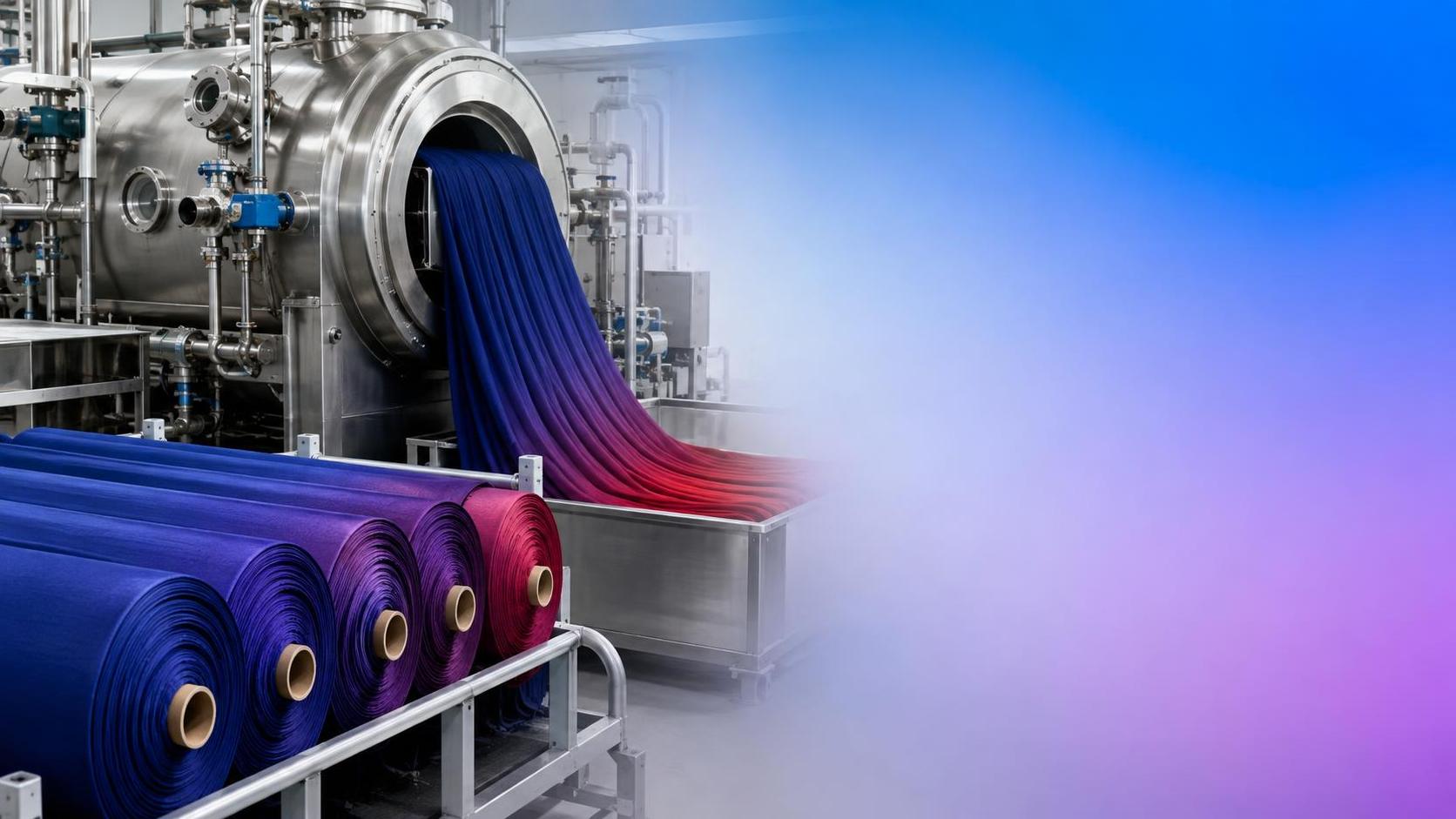
Yes. Disperse dyes are the standard dye class for polyester fabric and are generally suitable for export products when the dye selection, application process, shade approval, and restricted-substance controls match the fabric construction and destination-market requirements. Polyester is hydrophobic and has a compact molecular structure, so water-soluble dye classes do not readily penetrate it. Disperse dyes are designed as finely milled, low-water-solubility colorants that can diffuse into polyester at elevated temperature. Their suitability, however, is not established merely by obtaining a bright shade in the dyehouse. Export performance depends on reproducibility between lots, resistance to the intended end use, and control of dye residues or auxiliaries that may create compliance problems.
A polyester fabric that looks correct immediately after dyeing can still fail later through poor wash fastness, rubbing issues, heat migration, staining of adjacent materials, uneven shade after finishing, or differences between laboratory and bulk production. The practical question is therefore not whether disperse dyes work on polyester; they do. The useful question is whether a particular disperse dye range and dyeing route will meet the required performance for a specific polyester article.
Why disperse dyes match polyester
During high-temperature dyeing, polyester chains gain enough mobility for suitably selected disperse dye molecules to move from the dye dispersion into the fibre. Once the material cools, the dye is retained within the fibre structure. This differs from a surface coating effect: the desired coloration is developed inside the accessible regions of the polyester fibre.
Conventional polyester dyeing is commonly carried out under pressure at high temperature, while thermosol processes are used for certain continuous dyeing applications. Carrier-assisted methods exist, but their use requires careful review because processing chemicals and residual odour can be unsuitable for some export specifications. The selected route affects shade build-up, leveling, penetration, energy use, and the removal of unfixed dye from the fabric surface.
Disperse dyes are also relevant for polyester blends, although the result is more complex. A polyester-cotton fabric requires separate coloration strategies for the polyester and cellulosic portions. On polyester-elastane fabric, temperature exposure, tension, and reduction-clearing conditions must be compatible with elastane stability. A dye that performs well on 100% polyester woven fabric cannot automatically be transferred to a stretch knit, a brushed fabric, or a coated article without re-evaluation.
Suitability is determined by the finished fabric, not by fibre content alone
Fibre content is the starting point, but several properties change the dyeing response. Filament yarn, staple fibre, cationic-modified polyester, recycled polyester, microfibre constructions, and heavily textured yarns can show different exhaustion rates or apparent depths. Fabric density and surface geometry affect how the eye perceives shade. A deep navy on a flat woven fabric and the same laboratory recipe on a raised knit may appear materially different even when instrumental color data are close.
Recycled polyester deserves particular attention. Variation in polymer source, residual oligomers, spinning additives, or yarn history can influence dye uptake and leveling. This does not make disperse dyes unsuitable; it means that lot-to-lot pretesting becomes more important. A bulk shade recipe should be adjusted against the actual production substrate rather than relying only on a previous recipe for virgin polyester.
Finishing can also change the final appearance. Heat setting may alter shade slightly, especially with some reds, blues, and dark combinations that have greater thermal movement. Silicone softeners, water-repellent finishes, coatings, calendaring, and brushing can influence surface reflection or rubbing behavior. Color approval before final finishing is useful, but approval of the finished article is the more reliable release point for export goods.
Colorfastness requirements change the dye selection
Disperse dye ranges differ significantly in molecular size, diffusion speed, build-up behavior, and fastness profile. A dye selected mainly for rapid dyeing and excellent leveling may not provide the same sublimation resistance as one selected for high-temperature end use. This distinction matters for export products that will be heat pressed, laminated, transfer printed, stored in hot conditions, or used next to white components.
Deep black, navy, burgundy, and strong red shades require special discipline because they often combine multiple dye components. A recipe can meet a color target while containing one component that is weaker in heat resistance or wash-off behavior than the others. Evaluating each component only in isolation is insufficient; the combined shade must be tested after the actual dyeing, clearing, heat-setting, and finishing sequence.
Light shades present a different issue. Small changes in dye concentration, pH, dispersion quality, or fabric absorbency become visually obvious. Fluorescent whitening agents, optical brighteners, and the substrate's base tone can distort visual comparison under different light sources. Instrumental color measurement should be paired with visual assessment under agreed lighting conditions, particularly when the approved standard is a physical swatch rather than a digital color value.
Levelness problems are not always caused by the dye
Uneven coloration is frequently attributed to disperse dyes even when the root cause lies elsewhere. Inadequate pretreatment, residual spin finish, uneven fabric loading, temperature gradients, poor circulation, crease marks, or variable yarn composition can all create barre, streaks, or patchy areas. Dye selection remains relevant because fast-diffusing dyes can expose process variation more readily, but changing the dye alone may only conceal the underlying issue temporarily.
Dispersion stability should be checked before bulk use, especially after storage or when water quality differs from the laboratory environment. Agglomerated particles can produce specks or poor filtration performance. Excessive foam, insufficient dispersing action, or incompatible auxiliaries may interfere with circulation and deposition control. The fabric should be visually inspected both before and after reduction clearing, because some surface contamination is more apparent only once loose color has been removed.
Temperature control deserves particular care. A rapid rise through the main dye-uptake range can cause unlevel dyeing, while an extended cycle can alter productivity or affect sensitive blend components. The appropriate heating profile depends on the dye range, shade depth, machine liquor movement, substrate form, and fabric mass. A laboratory program that uses a small, well-agitated sample does not reproduce every condition found in a full production vessel.
Reduction clearing is a functional step, not a cosmetic one
After high-temperature dyeing, loosely deposited disperse dye particles and dye on the fibre surface can reduce wash fastness and staining resistance. Reduction clearing is commonly used to remove these residues, particularly for medium and dark shades. Its effectiveness depends on the chemicals used, temperature, time, liquor ratio, and rinsing sequence. Under-clearing may leave a visually acceptable fabric that later stains a lighter adjacent material. Overly harsh treatment can affect shade, damage a sensitive blend component, or create unnecessary processing load.
Some fabric constructions or dye ranges use alternative after-clearing methods, but the final decision should follow demonstrated fastness results rather than a routine sequence copied from another article. When a sample fails wet rubbing, the cause may be residual surface dye; when it fails only after softening, the finish may be mobilizing remaining color. These failures look similar at first, yet the corrective action is different.
Export controls should begin before shade approval
For export-oriented fabric, a color card alone is not a complete specification. The dyeing instruction should identify the polyester type, fabric weight or construction, target color standard, dyeing method, after-treatment, finishing route, and required test conditions. It should also state whether the material will be combined with other components, exposed to high heat, printed, coated, or packed against pale materials. These details determine which fastness properties need attention.
Chemical compliance must be managed as a document-and-process issue as well as a color issue. Destination requirements and customer restricted-substance lists can differ by product category and market. Relevant controls may extend beyond the selected dyes to dispersants, levelling agents, reduction-clearing chemicals, softeners, water-repellent finishes, print pastes, and packaging-contact materials. A statement about one raw material does not establish the status of the finished fabric after all chemical inputs have been applied.
Traceability is especially valuable when an approved shade is repeated over time. Records should link the fabric lot, yarn source where relevant, dye batch, recipe version, machine conditions, finishing sequence, and retained swatch. If a shipment later shows a shade difference or fastness complaint, these records allow the issue to be separated into substrate variation, recipe deviation, machine performance, after-treatment, or finishing interaction. Without that link, corrective work tends to become trial-and-error recoloring.
Common assumptions that create avoidable rework
- “A matching lab dip is enough.” A lab dip establishes a starting color direction. It does not prove bulk levelness, full-width consistency, post-finish appearance, or resistance to the intended use conditions.
- “The darkest shade is only a higher dosage.” Higher depth can change surface deposition, clearing demand, rubbing behavior, and heat migration. A recipe that is stable at a medium depth may need a different dye combination at a deep depth.
- “The same polyester always dyes the same way.” Differences in polymer modification, yarn manufacture, recycled content, surface finish, and fabric construction can shift uptake and perceived shade.
- “Heat fastness only matters for technical textiles.” Apparel fabrics may still encounter heat setting, ironing, fusing, transfer processes, hot storage, or contact with heat-sensitive pale components.
- “A fastness failure always calls for more dye fixation.” The failure may arise from inadequate wash-off, a finishing interaction, fibre hairiness, or mechanical rubbing rather than from dye penetration itself.
Useful questions before releasing a production shade
Does the fabric meet the color target after all planned finishing steps? This is more meaningful than approving a sample immediately after dyeing. The approved state should match the supplied state.
Has the shade been evaluated at the darkest intended depth? Problems with surface dye and migration are often more apparent there. A lighter development shade does not fully validate a deep production shade.
Are the test methods aligned with the actual end-use exposure? A general wash test may not address heat transfer, cross-staining, light exposure, chlorinated-water exposure, or contact with coatings. The relevant exposure should be identified before selecting the dye range.
Is an observed color difference a true dyeing deviation? Directional pile, gloss, fabric tension, optical brightening, and viewing light can alter perceived color. Comparing samples with consistent orientation and illumination avoids correcting a recipe for an appearance issue caused by the material surface.
Have compliance controls covered the complete process? Finished-fabric suitability requires review of all chemical stages, not just the colorant listed on the recipe.
Disperse dyes remain the appropriate and technically established choice for most polyester fabric export products. Their successful use rests on matching dye chemistry to the fabric, selecting fastness properties that reflect the finished article, maintaining disciplined after-treatment, and validating the result under the conditions the fabric will actually encounter.
Send Us Your Inquiry Today
