









Product Quick Navigation
Get a Quote
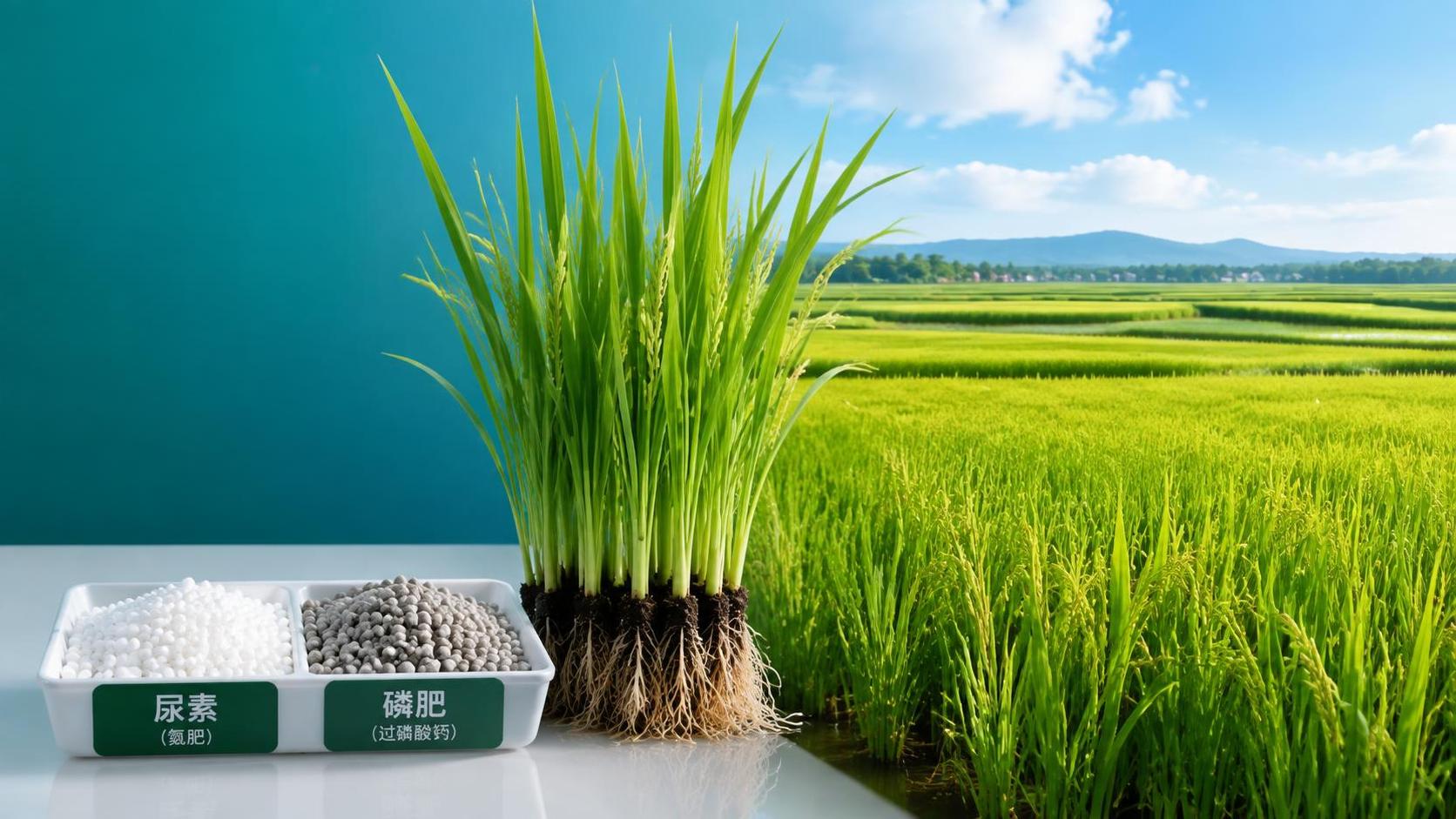
When rice input budgets are tight, the lowest price per bag can look like the obvious choice. Yet a grower may apply inexpensive urea to a field with poor early rooting and still see weak tillering, while another may spend more on a phosphorus source that corrects the real limitation and improves the response to nitrogen. The practical answer is that urea is usually more cost-effective for supplying nitrogen, whereas phosphate fertilizer is more cost-effective when soil phosphorus is limiting or when early rice establishment needs support. They are not direct substitutes.
The decision should therefore begin with the nutrient gap, not with the product price alone. Rice needs both nitrogen and phosphorus, but they perform different jobs in the crop. Comparing phosphate fertilizer and urea only by cost per ton can lead to under-fertilization of one nutrient, wasted spending on another, and avoidable yield risk.
They solve different nutrient problems
Urea is a concentrated nitrogen fertilizer. Nitrogen drives leaf area, tiller formation, canopy growth, and grain protein development. In most rice programs, nitrogen demand is larger than phosphorus demand, so urea often represents a major share of fertilizer purchasing decisions. On a nutrient-cost basis, it is commonly an efficient way to buy nitrogen, provided it is applied and managed well.
Phosphate fertilizer supplies phosphorus, often expressed as phosphate or available phosphorus content on a product label. Phosphorus supports root development, early seedling vigor, energy transfer within the plant, and productive tiller establishment. Rice may require less phosphorus by weight than nitrogen, but a deficiency can restrict crop performance long before a later nitrogen application can compensate.
A field with adequate available phosphorus does not normally benefit from repeated heavy phosphate applications simply because phosphate appears affordable at a given time. Conversely, a phosphorus-deficient field can make urea look ineffective. The crop may remain pale, slow-growing, or poorly rooted, not because nitrogen is absent, but because the plant cannot use the nitrogen efficiently under the existing nutrient balance.
Cost-effectiveness is measured per useful nutrient, not per bag
A meaningful comparison has four layers: nutrient price, nutrient availability, expected crop response, and handling cost. A fertilizer that costs less per metric ton may cost more per kilogram of actual nutrient. A product with a higher nutrient concentration may reduce freight, storage, and field handling, but only if it matches the agronomic requirement.
For urea, divide the delivered product price by its nitrogen content, then include expected application losses. A cheap urea purchase becomes less economical when it is broadcast on unsuitable soil conditions and substantial nitrogen is lost before the rice can take it up. For phosphate products, calculate the price per unit of available phosphorus rather than assuming all phosphorus sources perform identically in every field.
Freight and packaging matter as well. A lower-priced fertilizer with high transport cost, moisture-damaged bags, or inconvenient pack sizes may not be the lowest landed-cost option. This is particularly relevant where buyers are purchasing for several smaller rice areas rather than one large planting operation.
When urea is the better value for rice
Urea generally delivers the stronger return when phosphorus levels are already adequate and the rice crop is likely to respond to additional nitrogen. Fields with a history of balanced phosphorus fertilization, soil-test results showing sufficient available phosphorus, or visible healthy early root development often fall into this category.
Its value is especially clear during active vegetative growth, when rice needs nitrogen to produce and retain productive tillers. However, the rate and timing must fit the water regime, soil type, organic matter level, crop variety, and expected yield level. Applying the full nitrogen amount too early can encourage excessive vegetative growth, lodging risk, pest pressure, or losses before reproductive stages.
Splitting urea applications usually improves the chance that nitrogen is available when the crop needs it. A practical program may include a basal portion where appropriate, followed by one or more applications around tillering and later crop demand. The exact schedule should not be copied from another field without considering planting method, irrigation control, and local agronomic guidance.
Situations where urea can become falsely “cheap”
- Broadcasting onto dry soil with little chance of incorporation or timely water management can increase ammonia loss.
- Applying a large dose shortly before heavy rainfall can move nitrogen away from the active root zone or create losses in poorly drained areas.
- Using high nitrogen rates where phosphorus, potassium, zinc, or soil pH is the real limiting factor can produce weak economic returns.
- Late excessive nitrogen may increase green growth without a proportional gain in grain production.
In these situations, reducing loss and improving timing may create more value than negotiating a slightly lower urea price. Fertilizer efficiency is part of fertilizer cost.
When phosphate fertilizer earns its place in the budget
Phosphate fertilizer is often a high-value input at the beginning of the rice season when soil phosphorus is low, early growth is slow, or root development is constrained. Phosphorus does not usually need to be applied in repeated seasonal splits in the same way as nitrogen. It is commonly incorporated or placed near the root zone before planting, transplanting, or very early establishment so that young plants can access it.
Its cost-effectiveness improves when a soil test confirms low available phosphorus, when previous crops showed poor early vigor linked to phosphorus shortage, or when land has received little or no phosphorus fertilizer over time. In these conditions, applying only urea may increase foliage temporarily while leaving the crop with a weak root system and uneven tiller development.
Phosphorus behavior in soil is important. In some acidic soils, phosphorus can become associated with iron and aluminum compounds. In highly alkaline or calcareous conditions, it may react with calcium. The fertilizer is not necessarily absent, but a lower share may be readily available to rice roots. Placement, fertilizer form, soil pH, and timing influence how much of the purchased nutrient becomes useful to the crop.
For flooded rice, soil chemistry can change after inundation, which may alter phosphorus availability. That does not eliminate the need for testing or proper placement. It means that a fertilizer plan should reflect the specific field condition rather than assume that all flooded soils respond the same way.
A field-level comparison before purchase
Rather than asking which product is cheaper, begin with a short sequence of questions. The answers reveal whether the next dollar should go toward nitrogen, phosphorus, or a balanced nutrient program.
- Review soil information. Use recent soil-test results where available. Pay attention to available phosphorus, pH, organic matter, and any known potassium or micronutrient issues. A test does not replace field observation, but it prevents fertilizer selection from being based only on visual symptoms.
- Look at the crop stage. Newly transplanted or direct-seeded rice with limited roots may benefit more from correcting phosphorus availability than from a large nitrogen dose. A well-established crop entering active tillering may have a stronger immediate need for nitrogen.
- Check water control. Reliable irrigation and drainage affect urea efficiency. Where water cannot be managed, nitrogen loss risk may justify smaller, better-timed applications rather than a single low-cost bulk application.
- Calculate nutrient cost on a delivered basis. Include product nutrient analysis, freight, unloading, packaging, storage, and field application. Compare equal units of nutrient, not equal quantities of fertilizer.
- Assess the response limit. If phosphorus is deficient, more urea may not solve the yield constraint. If nitrogen is deficient and phosphorus is adequate, buying additional phosphate may tie up cash without a comparable crop response.
This process also helps avoid a common procurement error: ordering an N-only product because it has the most attractive price, then making an emergency phosphate purchase after poor early growth becomes visible. Late correction is often less efficient than supplying the right nutrient at the appropriate stage.
Do not treat phosphate fertilizer and urea as interchangeable alternatives
The title comparison can create the impression that one fertilizer should replace the other. In a sound rice nutrition plan, they often work together. Phosphate fertilizer supports the foundation of early growth; urea supplies the nitrogen needed to build productive biomass later. The appropriate balance depends on soil reserves and the crop’s expected nutrient removal.
A more accurate budget question is: “What is the least-cost combination that supplies the nutrients this field is missing, at the stages when rice can use them?” Sometimes that combination includes a phosphorus source before planting and split urea later. Sometimes soil phosphorus is sufficient, so nitrogen management deserves most of the attention. Where a compound or blended fertilizer is considered, compare its nutrient ratio with the field requirement instead of assuming the convenience of one product guarantees a lower total cost.
Small-batch purchasing can change the economics
Buyers managing trial areas, seasonal cash constraints, or multiple smaller farms often ask what is the minimum order for small batch chemical procurement. There is no universal answer. Minimum order quantities depend on the fertilizer grade, bag size, packaging format, warehouse policy, transport arrangement, destination, and whether the material is a standard stock item or requires special preparation.
For fertilizer, a small order can have a higher cost per unit because freight, handling, documentation, and loading costs are spread over fewer bags. A larger order may lower the unit price but can create storage risks, capital pressure, and leftover inventory that does not match the next season’s soil needs. Urea should be kept dry because moisture can cause caking and product deterioration during handling. Phosphate fertilizer should also be protected from moisture and contamination, with labels retained for nutrient analysis and batch traceability.
Before committing to a small purchase, request clear information on product analysis, net weight per bag, packing type, delivery terms, lead time, and any order threshold. Confirm whether the quoted amount is for the fertilizer itself or includes transport and local handling. For mixed loads, verify that the supplier can pack and document different fertilizer products separately and correctly.
Questions rice buyers often raise
Can urea correct purple or stunted rice seedlings?
Not reliably. Purpling and slow early growth can be associated with phosphorus deficiency, but they can also relate to cold conditions, poor rooting, compacted soil, water stress, or other nutrient limitations. Applying more urea without identifying the cause may increase cost without correcting the problem.
Should phosphate fertilizer be applied every rice season?
That depends on soil-test phosphorus, past application history, crop removal, and soil fixation behavior. Some fields need regular maintenance applications, while others have adequate reserves. Repeated application without evidence of need is not automatically cost-effective.
Is a higher-analysis phosphate product always cheaper?
Not necessarily. Higher analysis can reduce freight and handling per unit of nutrient, but the product must provide phosphorus in a form appropriate for the soil and application method. Compare delivered cost per unit of available nutrient, not label concentration alone.
Can one pre-plant urea application replace split nitrogen applications?
It can simplify labor, but it may reduce nitrogen-use efficiency where losses are likely or crop demand occurs later. Splitting is often more economical when water conditions and labor availability allow it, because it better matches nitrogen supply with rice uptake.
The lowest-cost rice fertilizer decision is rarely a choice between phosphate fertilizer or urea alone. Urea is usually the economical nitrogen tool when nitrogen is the limiting nutrient and losses are controlled. Phosphate fertilizer is the better investment when low phosphorus is restricting root establishment and early crop performance. Purchase quantities, delivered nutrient cost, storage capacity, and application timing should support that agronomic decision rather than replace it.
Send Us Your Inquiry Today
