









Product Quick Navigation
Get a Quote
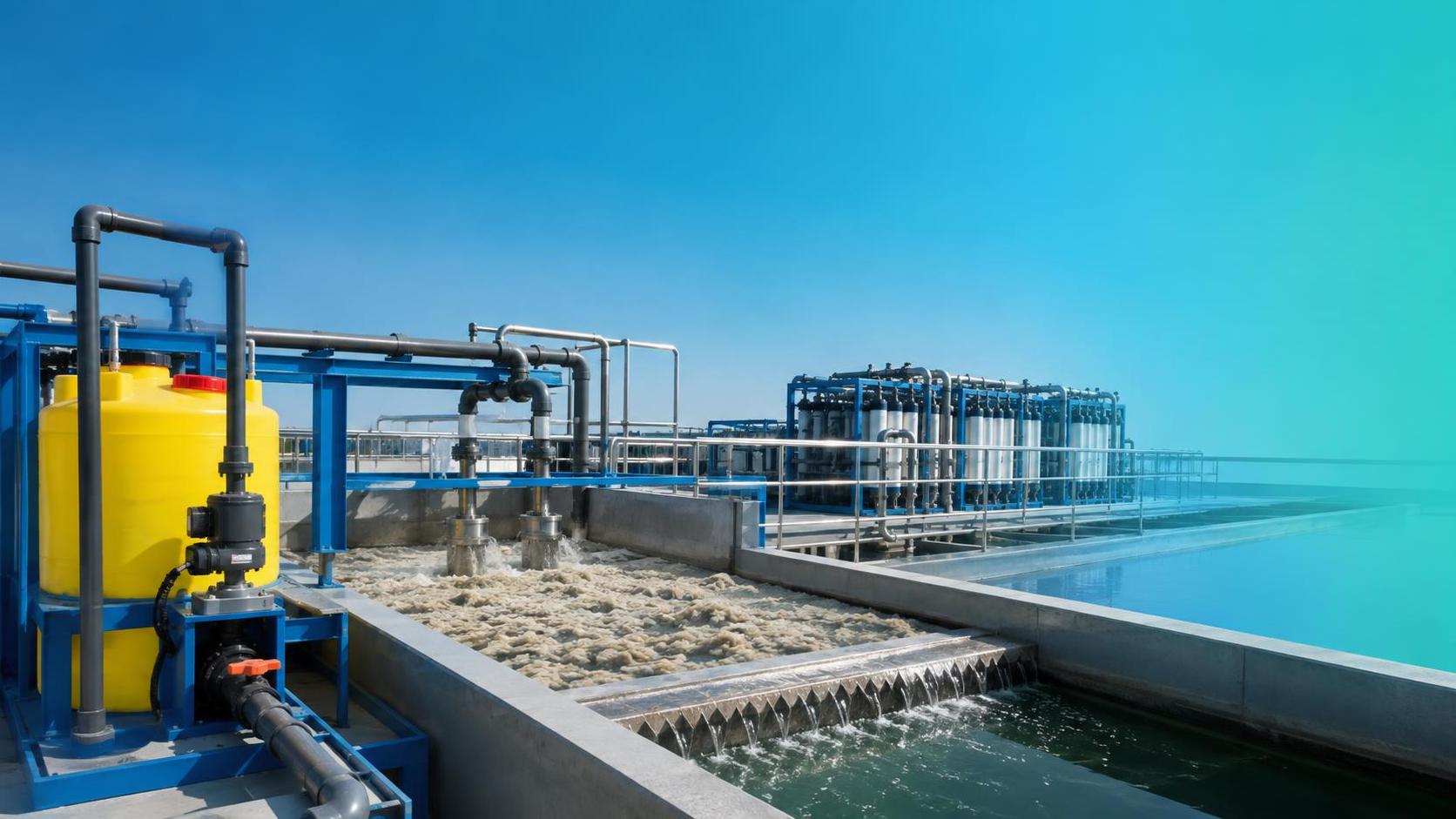
When a treatment plant sees slow settling, cloudy filtrate, rising sludge handling demands, or unstable results after a raw-water change, the coagulant is often one of the first variables to review. The question is not simply whether a chemical can remove turbidity; it is whether it can do so reliably under the site’s pH, temperature, alkalinity, organic load, and dosing conditions.
So, how does polyaluminium chloride compare to other water treatment agents? In many municipal and industrial applications, polyaluminium chloride (PAC) provides faster floc formation, a wider effective pH range, and often lower sludge production than conventional alum or ferric salts. It is not automatically the best choice in every system, however. The right comparison depends on source-water characteristics, treatment goals, downstream equipment, chemical handling practices, and the results of practical jar testing.
Why coagulant choice changes the whole treatment process
Coagulation is usually the point where fine suspended particles, colloids, color-causing matter, and some organic contaminants are destabilized so that they can form larger flocs and be removed by clarification, flotation, or filtration. When the coagulant is poorly matched to the water, operators may compensate by increasing dosage, changing polymer addition, extending settling time, or adjusting pH. Those responses can raise operating costs without fully correcting the underlying problem.
PAC is a pre-hydrolyzed aluminium-based coagulant. Unlike simple aluminium salts that depend more heavily on hydrolysis after dosing, PAC already contains polymeric aluminium species that can support charge neutralization and particle bridging. In practice, this often gives it a faster and more forgiving coagulation response, particularly where raw-water quality shifts during rainfall, seasonal changes, production cycles, or intake-source changes.
That said, comparison should never stop at “PAC works faster.” A treatment chemical must fit the entire process. A coagulant that forms dense flocs but sharply depresses pH may create additional alkali demand. One that performs well on turbidity may be less suitable where color removal, phosphorus removal, metal precipitation, or sludge dewatering is the main concern.
PAC versus alum: the most common comparison
Alum, usually aluminium sulfate, remains widely used because it is familiar, available, and effective in many conventional water treatment systems. It can produce good clarification when dosage and pH are carefully controlled. Its limitations tend to become clearer when source-water conditions are variable or when a plant has limited capacity for pH correction and sludge management.
The practical advantage of PAC is often seen at sites where treated-water quality becomes inconsistent after a moderate change in pH, turbidity, or temperature. Alum may still work, but it can require a narrower dosage window and more active pH management. PAC can reduce that sensitivity, which is valuable when operators need dependable clarification rather than frequent chemical adjustments.
Alum can still be appropriate when the raw water is relatively stable, the plant already has established pH correction systems, and its settling and filtration performance is well understood. Replacing alum with PAC should therefore be evaluated as a process change, not merely as a product substitution. The dosage cannot be converted by a simple one-to-one weight ratio because active composition and water chemistry differ.
How PAC differs from ferric chloride and ferric sulfate
Ferric chloride and ferric sulfate are iron-based coagulants. They are often selected for demanding applications, including difficult color removal, phosphorus reduction, some wastewater streams, and waters containing elevated organic matter. Ferric salts can be highly effective, but they are more acidic and may be more corrosive to storage, dosing, and transfer systems than PAC.
Where strong phosphorus removal is a primary objective, ferric coagulants may have a clear process advantage. Their iron chemistry can support phosphate precipitation, and they are commonly used where nutrient reduction is central to the treatment target. PAC can also assist with phosphorus removal under suitable conditions, but the relative performance should be verified against the required discharge or treated-water standard.
For conventional turbidity removal, PAC may offer easier day-to-day control. It often creates flocs rapidly and may impose less pH depression. This can matter in groundwater, surface water, or industrial process water with low buffering capacity. A ferric salt may still produce acceptable clarification, yet require additional alkalinity or corrosion management that changes the true cost of operation.
Iron residuals and color are also practical considerations. Improper ferric dosing or inadequate removal can contribute to visible coloration or residual iron concerns. PAC has a different residual profile, but neither chemical should be selected on assumptions alone. Treated-water testing, filter performance, sludge behavior, and downstream compatibility all need to be observed during evaluation.
Comparison with organic polymers
Organic polymers, such as cationic polyacrylamide-based products, are frequently used in water treatment. They should not always be treated as direct replacements for PAC. In many systems, polymers function best as coagulant aids or flocculants rather than as the primary destabilizing agent.
PAC primarily neutralizes particle charge and helps initiate coagulation. A polymer can then strengthen and enlarge the developing flocs, improving settling or dewatering. This combination is common when raw water contains fine particles that settle poorly after mineral coagulant addition alone. The polymer dosage must be controlled carefully: underdosing may provide little benefit, while overdosing can restabilize particles or create weak, gelatinous flocs.
In certain wastewater applications, a properly selected organic coagulant may reduce or replace mineral coagulant demand. Yet this depends heavily on wastewater composition. Emulsified oils, surfactants, dyes, suspended solids, metal-bearing streams, and biological solids do not respond in the same way. PAC is often favored where a robust inorganic coagulant is needed before polymer optimization begins.
Lime and pH-adjustment chemicals serve a different role
Lime, sodium hydroxide, sodium carbonate, and similar products may appear in the same chemical storage area as PAC, but their core function is usually pH or alkalinity adjustment rather than primary coagulation. They can be essential when water has insufficient alkalinity or when a coagulant drives pH below the effective treatment range.
Lime can also support precipitation processes, especially for hardness reduction or removal of certain dissolved metals. However, lime treatment can produce significant solids and may require more intensive sludge handling. It is not a simple substitute for PAC when the main problem is colloidal turbidity or fine suspended matter.
A common operating mistake is to judge a coagulant only by clarification at the point of dosing. A chemical may initially clear the water but create pH conditions that interfere with later filtration, disinfection, biological treatment, or discharge control. The treatment train should be reviewed as a connected system.
Use the water problem to narrow the options
Selection becomes easier when the treatment objective is stated precisely. “Improve water quality” is too broad to guide a chemical decision. The following conditions point toward different priorities:
- Rapid changes in turbidity: PAC is often worth testing because of its fast floc formation and relative tolerance to changing raw-water conditions.
- Low alkalinity or limited pH adjustment capacity: PAC may reduce the need for correction compared with alum or some ferric products.
- Strict phosphorus reduction: Ferric salts may deserve priority testing, particularly in wastewater treatment.
- High color or difficult natural organic matter: Compare PAC and ferric coagulants through jar tests across realistic pH conditions.
- Large sludge disposal burden: Evaluate PAC because lower dosage and different floc chemistry may reduce sludge volume, but confirm actual dewatered solids behavior.
- Fine flocs or poor settling after coagulation: Test PAC with a suitable flocculant rather than assuming a higher coagulant dose is the answer.
- Hardness removal or metal precipitation: Consider whether lime or another precipitation chemical is needed alongside, rather than instead of, the primary coagulant.
Run a comparison that reflects actual operating conditions
Jar testing is the most practical way to compare PAC with alternative water treatment agents before changing full-scale chemical programs. A useful test should use representative raw water, not a sample that has sat long enough for temperature, solids, or biological conditions to change. Test more than one dose for each chemical and include pH measurement before and after treatment.
Start with the same treatment sequence used at the plant: rapid mix, slow mix, settling, and, where relevant, filtration simulation. Observe not only final turbidity but also the speed at which flocs appear, floc size, floc strength, settling rate, supernatant clarity, pH shift, and the amount of solids formed. If a polymer is used in production, include it after first establishing the primary coagulant response.
- Measure raw-water pH, alkalinity, turbidity, temperature, and any site-specific concern such as color, phosphorus, oil, or metal content.
- Test PAC, alum, or ferric products at several realistic dose levels rather than selecting a single arbitrary dose.
- Maintain consistent mixing and settling conditions so results can be compared fairly.
- Record pH decline and any alkali addition needed to keep the system in its effective range.
- Examine settled sludge volume and, when possible, its dewatering behavior.
- Repeat the evaluation when raw-water conditions differ materially from the first test day.
A coagulant that looks efficient in a single test may not remain efficient during low-temperature periods, high-turbidity events, or shifts in industrial influent. Repeated testing under meaningful operating conditions provides a more reliable basis for selection than comparing purchase price alone.
Do not compare chemicals by unit price alone
PAC may have a different purchase price from alum, ferric chloride, or other coagulants, but chemical cost per tonne does not describe the full operating cost. The relevant comparison includes active dosage, pH adjustment demand, polymer use, sludge volume, sludge transport or disposal, corrosion exposure, storage needs, and labor required to keep the process stable.
For example, a lower-priced coagulant can become more expensive if it requires substantially more alkali, generates additional sludge, or causes enough water-quality variation to increase filter cleaning frequency. Conversely, PAC may not provide economic benefit where an established ferric-based process already meets a specialized removal target efficiently. The decision should be based on cost per unit of treated water under required quality conditions, not on the delivered price of the drum, bag, or bulk shipment.
Handling and control points during changeover
When changing from one coagulant to PAC, begin with controlled trials rather than immediately applying the previous dose setting. Confirm the product’s concentration, storage requirements, dilution practice, feed-point location, and compatibility with pumps, seals, and mixing equipment. PAC performance can be reduced when it is overdiluted too far in advance, poorly mixed, or introduced at a point with inadequate rapid mixing.
Monitor residual turbidity, pH, filter performance, and sludge removal during the transition. If flocs become small or weak, first check mixing intensity and polymer sequence before increasing PAC dosage. If pH falls unexpectedly, verify raw-water alkalinity and the actual chemical feed rate. A stable dose should be based on measured treatment response, not on a fixed setting carried over from another coagulant.
PAC is often the strongest all-purpose option where operators need reliable turbidity removal, faster coagulation, reduced pH sensitivity, and manageable sludge production. Alum remains workable in stable, well-controlled conventional systems, while ferric salts can be more suitable for specific targets such as phosphorus removal or difficult color. The best result comes from matching the coagulant to the water chemistry and confirming that choice through realistic process testing.
Send Us Your Inquiry Today
