









Product Quick Navigation
Get a Quote
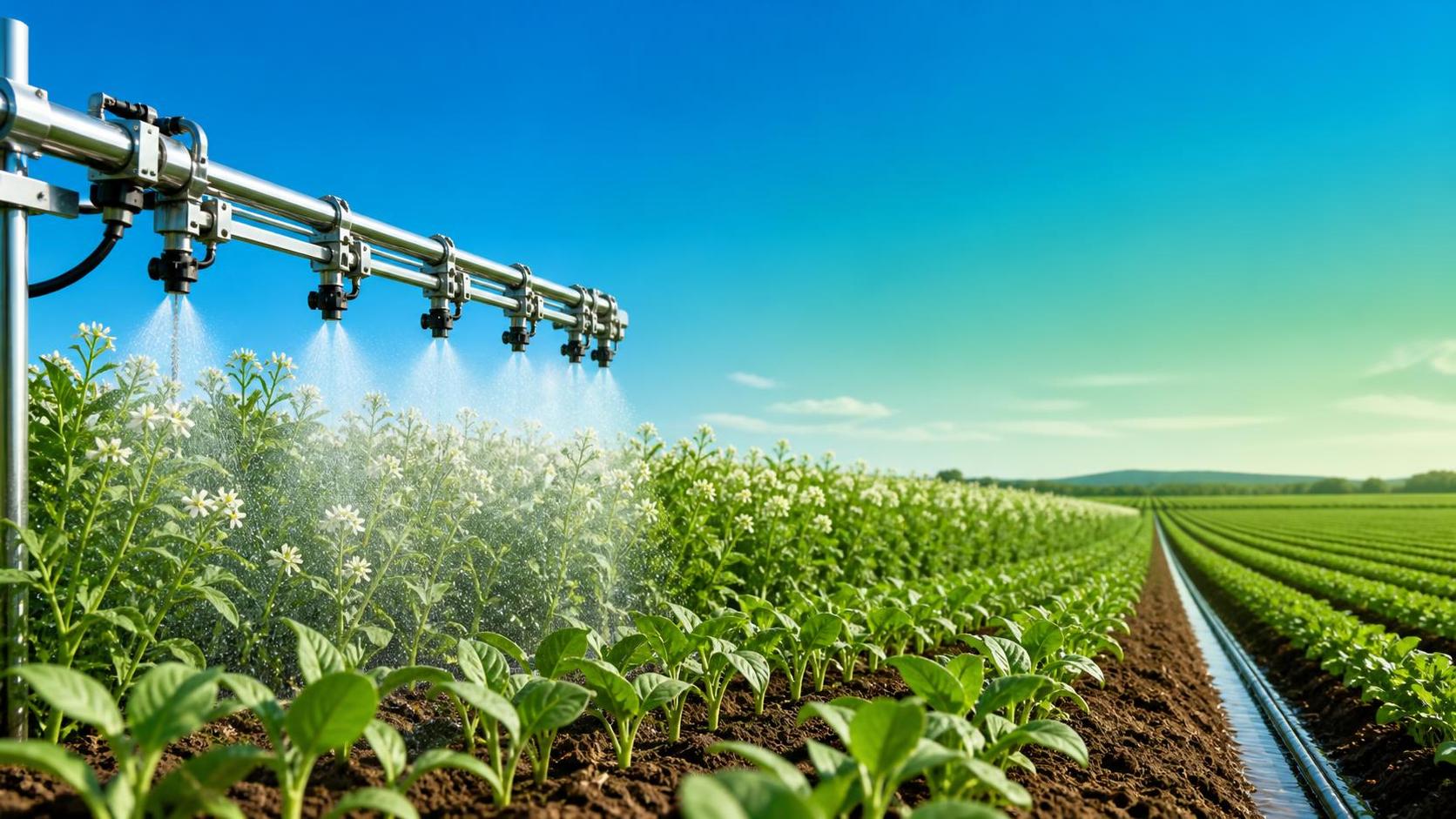
Crop protection must be designed as a moving program rather than a single treatment decision. Pest pressure changes as the crop establishes roots, expands leaf area, enters reproductive development, and approaches harvest. Weather, irrigation practices, neighboring hosts, planting density, and previous field history can alter the situation within days. A product that is technically suitable at one growth stage may be poorly timed, difficult to apply, or unnecessary at another. Effective Crop Protection Solutions therefore connect crop scouting, product selection, application planning, chemical handling, and supply continuity into one controlled field process.
The starting point is a stage map that identifies the crop's vulnerable periods and the pests most likely to cause economic damage at each point. This map should be crop- and location-specific. It should distinguish between chewing insects, sap-feeding insects, soil-borne pests, fungal pathogens, weeds, and secondary infestations that may follow plant stress. Broad categories are useful for planning, but field decisions require more detail: pest life stage, distribution pattern, infestation level, crop canopy condition, and the interval remaining before harvest all affect the available response.
Establishment: Protecting Uneven and Vulnerable Stands
Early establishment is often the point at which later field variability begins. Seedling pests, damping-off organisms, emerging weeds, and transplant shock can produce gaps that cannot always be corrected later. Protection during this period should focus on preserving uniformity without creating unnecessary chemical load in soil or young plant tissue.
Before planting or transplanting, the field plan should record prior crops, known pest reservoirs, drainage limitations, residue levels, and the intended irrigation method. A field with persistent soil moisture, for example, may require a different disease-risk approach from a well-drained field even when the same crop is planted. Seed treatment, in-furrow application, soil-directed treatment, and early foliar intervention each place active ingredients in different zones. The placement method should match the target organism and its likely point of contact.
Application quality is especially important when plants are small. A poorly calibrated sprayer can concentrate material along row edges, leave untreated bands, or deliver droplets that drift beyond the intended zone. Water volume, nozzle type, boom height, travel speed, and agitation should be verified before full-field use. Small plants do not provide much leaf area for interception, so foliar applications may require coverage-focused settings rather than the same volume used in a mature canopy.
Early weed control also needs to account for crop tolerance and soil condition. Residual herbicide performance may be affected by soil texture, organic matter, moisture after application, and disturbance of the treated layer. Mechanical activity, irrigation, or heavy rainfall can change placement and reduce the intended weed-control window. Recording these conditions alongside treatment records makes later performance assessments more credible than relying on memory alone.
Vegetative Growth: Managing Pressure Before the Canopy Closes
During vegetative growth, the crop becomes more attractive to foliar-feeding insects and diseases that spread through foliage. Dense leaf development can also make early symptoms difficult to see from field borders. Scouting should move beyond presence or absence. Record affected plant parts, the approximate location of hotspots, pest maturity, beneficial insect activity where relevant, and whether symptoms are increasing between inspections.
Aphids, mites, caterpillars, leaf miners, beetles, and disease vectors may require different coverage patterns and treatment timing. Some pests remain on leaf undersides or inside protected plant structures, while others feed openly. A chemical product selected for its active ingredient can still fail in practice when droplet size, spray angle, canopy penetration, or carrier volume does not reach the pest. In a dense crop, a water-sensitive paper trial or dye assessment can be useful for confirming deposition before a large treatment area is committed.
Resistance management belongs in the seasonal schedule, not after repeated treatments have already reduced performance. Rotation should consider the active ingredient's mode of action, not only the trade name or formulation type. Repeating products from the same mode-of-action group can maintain selection pressure even when labels and concentrations differ. Tank mixing should not be treated as automatic resistance management. Compatibility, label permissions, physical stability, target spectrum, crop safety, and the effect of water pH must all be assessed before a mixture is prepared.
Field observations should be tied to a release decision. A practical decision record includes the target, crop stage, field block, observed pressure, treatment threshold or triggering condition where applicable, selected product, application date, weather limits, re-entry requirements, and any pre-harvest restriction. This creates a usable audit trail and prevents a later application from being scheduled without awareness of what was previously applied.
Reproductive Development: Protecting Yield-Forming Structures
Flowering, fruit set, grain fill, and other reproductive phases often narrow the margin for error. Pest injury at this point can affect marketable quality as well as yield, but the crop may also be more sensitive to stress, tank-mix components, or application during high temperatures. Pollinator exposure, flowering weeds within treatment zones, and neighboring flowering crops may require additional timing and drift controls.
Protection plans should separate preventive actions from responsive actions. Where disease risk is linked to forecast conditions, crop growth, and known field history, a preventive treatment may be considered only within the relevant label directions and local requirements. Where visible pest populations drive the decision, treatment should follow confirmed field distribution rather than an assumed field-wide problem. Treating a limited hotspot may be technically appropriate when the pest remains localized and equipment can apply accurately, but this approach requires reliable mapping and follow-up scouting.
Fungicide performance during reproductive development depends heavily on timing and coverage. A product applied after infection has progressed beyond its useful activity window may not protect the intended plant tissue. Similarly, a contact product cannot compensate for unprotected new growth after an application interval. Rainfastness periods, drying conditions, and irrigation schedules must be reconciled with the spray plan. A treatment may need to be delayed when rainfall is imminent, wind prevents proper deposition, or leaf wetness makes runoff likely.
Chemical inventory should be planned against the critical windows rather than held as a generic seasonal stock. Each shipment should be checked against the required formulation, concentration, batch identification, label language, package integrity, storage limits, and applicable transport classification. Substitution based solely on a similar product description can disrupt the planned interval, active ingredient rotation, or local registration status. Technical documents and safety information should be available before material reaches the application site, not after a field condition requires rapid action.
Harvest Interval: Residue Discipline and Late-Season Decisions
Late-season crop protection decisions require a tighter control of timing. The presence of pests does not automatically justify treatment when the crop is close to harvest. The expected harvest date, pre-harvest interval, maximum permitted applications, cumulative use pattern, and intended market requirements must be reviewed together. A decision that protects appearance but creates a harvest scheduling conflict can cause greater disruption than the original pest issue.
Late-season disease management may still be warranted where the target affects harvestability, storage quality, or spread to nearby blocks, subject to approved use conditions. However, the field team should distinguish active disease from old lesions, nutrient-related symptoms, mechanical injury, and weather damage. Misidentification is common when senescence begins. Laboratory confirmation may be justified when symptoms are unusual, when treatment history has not produced the expected field response, or when a new organism is suspected.
Harvest crews and logistics schedules need access to current treatment records. Block-level identification avoids confusion where adjacent areas have different application dates or pre-harvest intervals. Equipment used for crop protection should be cleaned according to its operating procedure, with wash water and residues managed in a manner consistent with local requirements. Storage areas should also be reviewed before seasonal shutdown so that opened containers, damaged labels, obsolete material, and incompatible products are not carried into the next cycle without control.
Infrastructure Materials That Affect Application Reliability
Crop protection performance is influenced by the condition of the equipment and storage environment around the chemical program. Spray equipment, transfer lines, tank seals, protective coatings, and repair materials are not crop protection products, yet their failure can interrupt an application at a sensitive growth stage. Sealant and adhesive selection should account for the chemicals present, temperature range, cure conditions, and required maintenance window. Materials used near agricultural chemical handling areas should be evaluated for their own hazard profile and compatibility rather than assumed suitable because they are common industrial products.
For example, Dibutyltin dilaurate CAS#77-58-7 is used as a catalyst in polyurethane, silicone sealant, coating, and structural adhesive formulations. Its use belongs to formulation or maintenance-material contexts, not direct pest control. Where a cured sealant or coating is specified for equipment-related work, the finished material's chemical resistance, cure state, and site safety requirements should be assessed. The catalyst itself has significant hazard considerations, including combustible behavior, incompatibility with strong oxidizers, and controlled handling requirements. It should not be introduced into agricultural spray mixtures or treated as interchangeable with an active crop protection ingredient.
Maintenance work should be scheduled around application windows. A seal replacement, pump repair, or tank coating cure that extends beyond its expected time can remove critical equipment from service during a pest outbreak. Keeping documented specifications for wetted parts, gasket materials, hoses, nozzles, and coatings reduces improvised substitutions. Any replacement should be checked against the formulation types being handled, including emulsifiable concentrates, suspension concentrates, soluble liquids, and products containing solvents or surfactants that may affect elastomers differently.
Coordinating a Responsive Field Program
A workable program uses defined handoffs. Scouting observations must reach the treatment planner quickly enough to retain their value. Product availability must be confirmed before a treatment is scheduled. Application crews need the current block map, rate calculation, spray parameters, weather limits, and safety instructions. After treatment, the record should capture actual conditions rather than only the planned conditions. A delayed start, changed nozzle set, reduced water volume, or unexpected rainfall can explain performance variation later.
- Keep field maps aligned with lot numbers and treatment records so that a quality question can be traced to a specific area and application event.
- Set a review point after major weather events, irrigation failures, or prolonged equipment downtime, because the original pest forecast may no longer be valid.
- Segregate incompatible chemicals in storage and maintain secondary containment appropriate to the materials held.
- Use retained samples and batch documentation when permitted by internal procedures, particularly when a formulation appearance, odor, or handling behavior differs from expectations.
Crop Protection Solutions remain effective when they are revised with field evidence but controlled through disciplined chemical management. The objective is to preserve the usable treatment window at each growth stage, apply only within confirmed technical and regulatory limits, and maintain enough operational resilience to respond when pest pressure changes.
Send Us Your Inquiry Today
