









Product Quick Navigation
Get a Quote
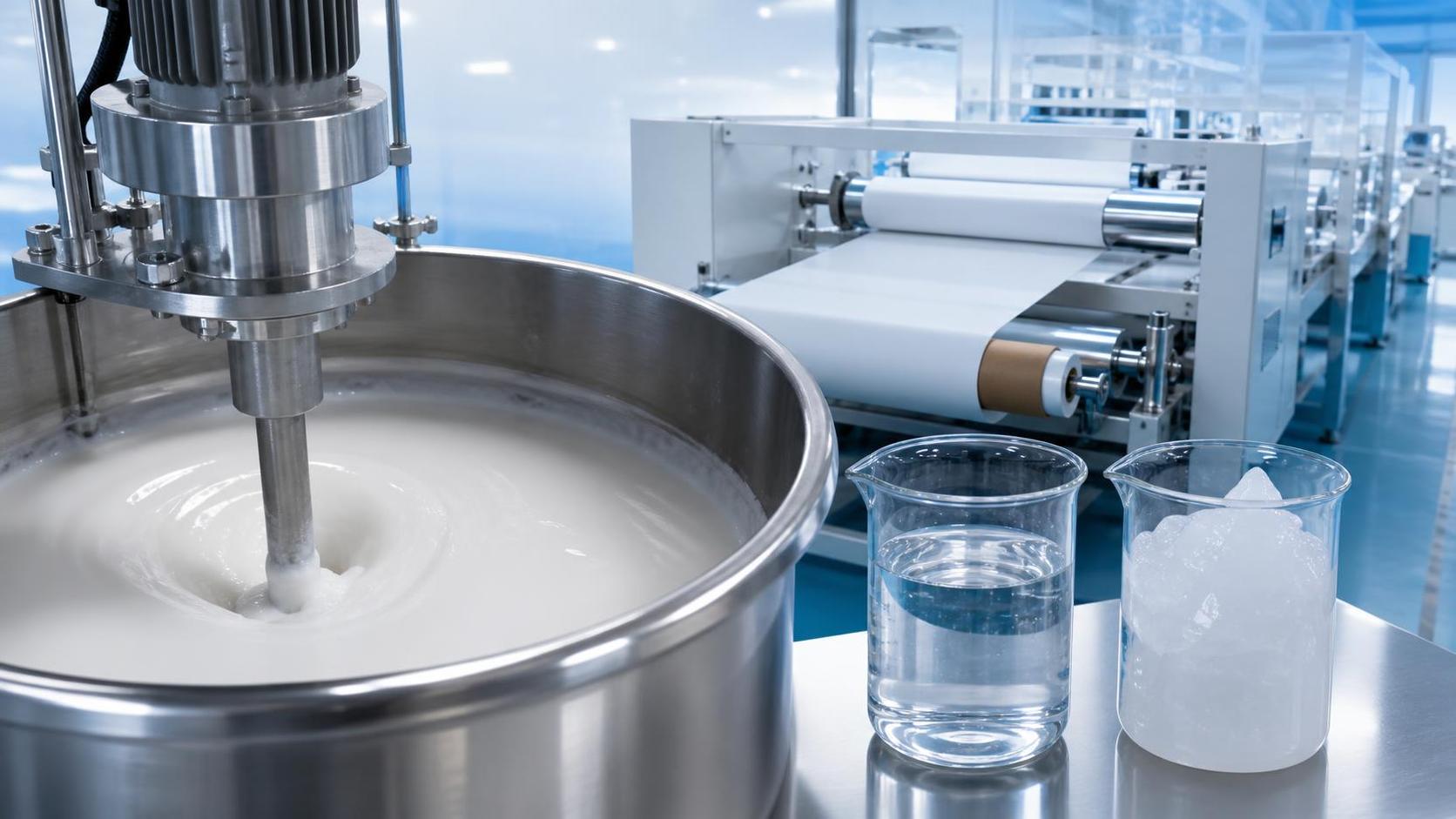
Modified Starch Products Explained: Types, Functional Properties, and Industrial Uses
Modified starch products are often described as “improved starches,” but that shorthand misses the practical reason they exist. Native starch can thicken, bind, form films, and contribute texture, yet it also has limits: it may lose viscosity under heat, break down under shear, retrograde during storage, or perform inconsistently in acidic or freeze-thaw conditions. Modification changes how the starch behaves so formulators can use it in processes where ordinary corn, potato, tapioca, or wheat starch would be unreliable.
That flexibility explains why modified starch products appear in foods, paper coatings, textile sizing, corrugated-board adhesives, pharmaceutical tablets, construction materials, and specialty chemical formulations. The same family name can cover products with very different performance profiles, however. A starch selected for a frozen sauce may be completely unsuitable for high-speed paper coating, while a low-viscosity starch for confectionery may not provide enough wet tack for an adhesive line.
For researchers and procurement teams, the useful question is not simply “Which modified starch is best?” It is: what processing stress, end-use requirement, regulatory category, and supply consistency does the application demand?
What Changes When Starch Is Modified?
Starch is made mainly of amylose and amylopectin, two glucose-based polymers arranged in granules. Their proportion, granule size, and botanical source influence native performance. Potato starch, for example, is known for strong thickening and clarity in many systems, whereas waxy starches are dominated by amylopectin and tend to deliver different texture and stability characteristics.
Modification may be physical, enzymatic, or chemical. The objective is usually to alter gelatinization behavior, molecular size, water affinity, charge, resistance to processing, or interaction with other ingredients. A treatment may make starch easier to disperse in cold water; another may reduce viscosity so it can be pumped at high solids. Some modifications introduce functional groups that improve freeze-thaw stability, reduce retrogradation, or make the starch more compatible with cellulose fibers, pigments, and mineral fillers.
In practice, “modified” does not automatically mean heavily transformed. It can describe a starch that has simply been pregelatinized for instant hydration, as well as one chemically cross-linked for demanding heat and shear conditions. The processing route matters because it affects application behavior, labeling considerations in food systems, and the documentation a buyer may need for a particular market.
The Main Types of Modified Starch
The categories below are useful for orientation, though commercial grades are frequently designed around a combination of properties rather than a single modification.
Pregelatinized grades solve a very specific operational problem: a product needs to build viscosity in cold or ambient-temperature water. This is useful in instant preparations and certain dry-blend systems, but it requires careful addition. If powder is dumped into water too quickly, even a well-designed instant starch can form lumps. In production, dispersion technique often matters as much as the specification sheet.
Cross-linked and substituted starches are more often chosen when processing conditions are severe. Think of a sauce exposed to cooking, pumping, filling, and storage, or an industrial slurry subjected to rapid agitation. Native starch may initially look acceptable in a laboratory beaker, then lose body after high shear or extended heating. This is one of the common gaps between bench formulation and plant performance.
Functional Properties That Actually Drive Selection
Viscosity is the property most buyers ask about first, but it is not enough on its own. A viscosity number only has meaning when the test method, solids level, temperature, pH, mixing conditions, and measurement equipment are known. Two grades can show similar viscosity in a supplier’s test but respond very differently in a customer’s process.
Heat resistance and shear resistance are equally important in cooked foods, paper-making operations, and adhesive preparation. A starch that maintains viscosity after cooking may still thin excessively under a high-speed mixer. Likewise, an adhesive can show good initial tack but lose bond consistency if the starch gel is unstable over the usable working period.
Other selection factors include clarity, gel texture, water retention, film strength, freeze-thaw stability, and compatibility with salts, sugars, proteins, surfactants, or fillers. In food applications, texture is often the deciding point: creamy, short, elastic, glossy, or clean-cut are not interchangeable sensory outcomes. In industrial systems, the concern may be runnability, coating holdout, fiber retention, green strength, or resistance to viscosity drift during storage.
A useful buying discipline is to ask for the property that matters at the point of use, not merely at receipt. For example, a paper producer may need viscosity after dilution and circulation; a food manufacturer may need stability after retorting or repeated freeze-thaw cycles; a tablet producer may care about flow, compactability, and disintegration behavior. These are different technical conversations.
Where Modified Starch Products Are Used
Food remains one of the most visible applications. Modified starches can thicken soups, stabilize fruit preparations, improve the body of dairy-style products, control moisture in baked goods, and support texture in sauces and frozen products. Their value is often consistency rather than dramatic transformation. A sauce should remain smooth after reheating; a fruit filling should not release excessive water; a powdered beverage should disperse without leaving gritty particles.
In paper and board production, starch is used at several points, including the wet end, surface sizing, and coating. Cationic starch can help retain fine particles and improve fiber bonding. Oxidized or otherwise controlled-viscosity grades are commonly relevant where film formation and surface strength matter. A change in starch performance can show up downstream as coating defects, dusting, poor printability, or unexpected demand for other additives, so it should not be treated as a simple commodity substitution.
Textile processors use starch-based sizing to protect yarn during weaving and to support handling. The desired balance can be delicate: enough film strength to reduce yarn breakage, but not so much rigidity that later desizing becomes difficult. In corrugated board and other starch-based adhesive systems, gelatinization temperature, solids, tack development, and water management influence line speed and bond quality.
Pharmaceutical and personal-care uses require another level of caution. Starch derivatives may serve as binders, disintegrants, diluents, or absorbent materials, but suitability depends on the precise grade, intended dosage form, impurity profile, and applicable local requirements. A technically similar industrial grade should never be assumed appropriate for regulated use without the relevant documentation and qualification process.
Starch Is Not a Universal Replacement for Synthetic Chemicals
In chemical manufacturing, formulation discussions sometimes blur the boundary between starch-based binders and solvent-based systems. Modified starch products are generally water-oriented functional materials: they build viscosity, bind solids, form films, or support adhesion. They are not substitutes for aromatic solvents in resin dissolution, coating dilution, or equipment cleaning.
For example, Xylene CAS#1330-20-7 is used as an industrial solvent and synthetic auxiliary in areas such as coatings, inks, resins, rubber processing, adhesives, and electronic cleaning. It has very low water solubility and is classified as a flammable liquid; its handling therefore belongs to a different risk and process-control framework from a starch slurry. The two materials may appear in the same plant or even within broader coating and adhesive value chains, but they solve different formulation problems.
This distinction matters when evaluating “bio-based” reformulation ideas. Replacing part of a binder system with starch may be feasible in some waterborne applications. Replacing a solvent function requires a separate compatibility, evaporation, safety, and performance assessment. Treating every ingredient as interchangeable because it is used in “adhesives” or “coatings” is a costly shortcut.
Questions to Ask Before Choosing a Grade
A sound specification usually starts with the process, then narrows toward chemistry. Buyers evaluating a new or alternative grade should clarify a few practical points:
- What is the starch source, and does it matter for the final product or market?
- Will the material be cold-water dispersible, cooked, jet-cooked, or added into an existing slurry?
- What pH, temperature, solids level, and shear will it experience?
- Which finished-product attribute is non-negotiable: texture, viscosity retention, bonding, film strength, clarity, or processing speed?
- What regulatory, food-contact, pharmaceutical, or destination-market documents must be reviewed before approval?
- How much lot-to-lot consistency is needed, and what incoming checks are realistic at the receiving site?
Sampling should imitate actual use as closely as possible. A quick cup test can screen obvious differences, but it cannot reliably predict performance on a continuous paper machine, a high-speed adhesive line, or a thermal food process. Where changeover risk is high, trial quantities, defined acceptance criteria, and retained comparison samples are usually more useful than an extended debate over a single specification value.
Supply, Documentation, and the Export Reality
Modified starch is often purchased as a functional ingredient, but international procurement adds another layer: reliable supply is not just about material availability. It includes consistent packing, traceable batch documentation, clear product naming, lead-time communication, and an accurate understanding of destination-market requirements. This becomes especially relevant when one organization sources several chemical and formulation materials across different regulatory categories.
Companies such as Shandong Huafeng Chemical Co., Ltd., based in Shandong Province, operate in a trade environment where overseas customers increasingly expect coordinated export handling alongside product availability. For starch derivatives and other chemical materials, the practical value of a supplier relationship often lies in responsiveness when specifications, shipping documents, or application questions need clarification—not in making broad claims that one grade fits every use.
The right modified starch is therefore the one that remains predictable in the real process, meets the documentation needs of the intended market, and can be supplied with enough consistency to avoid repeated reformulation. Start with the operating conditions, test the grade under those conditions, and keep starch functionality separate from solvent, resin, or surfactant functions. That approach is less glamorous than choosing by product name alone, but it is how formulation decisions tend to hold up outside the laboratory.
Send Us Your Inquiry Today
