









Product Quick Navigation
Get a Quote
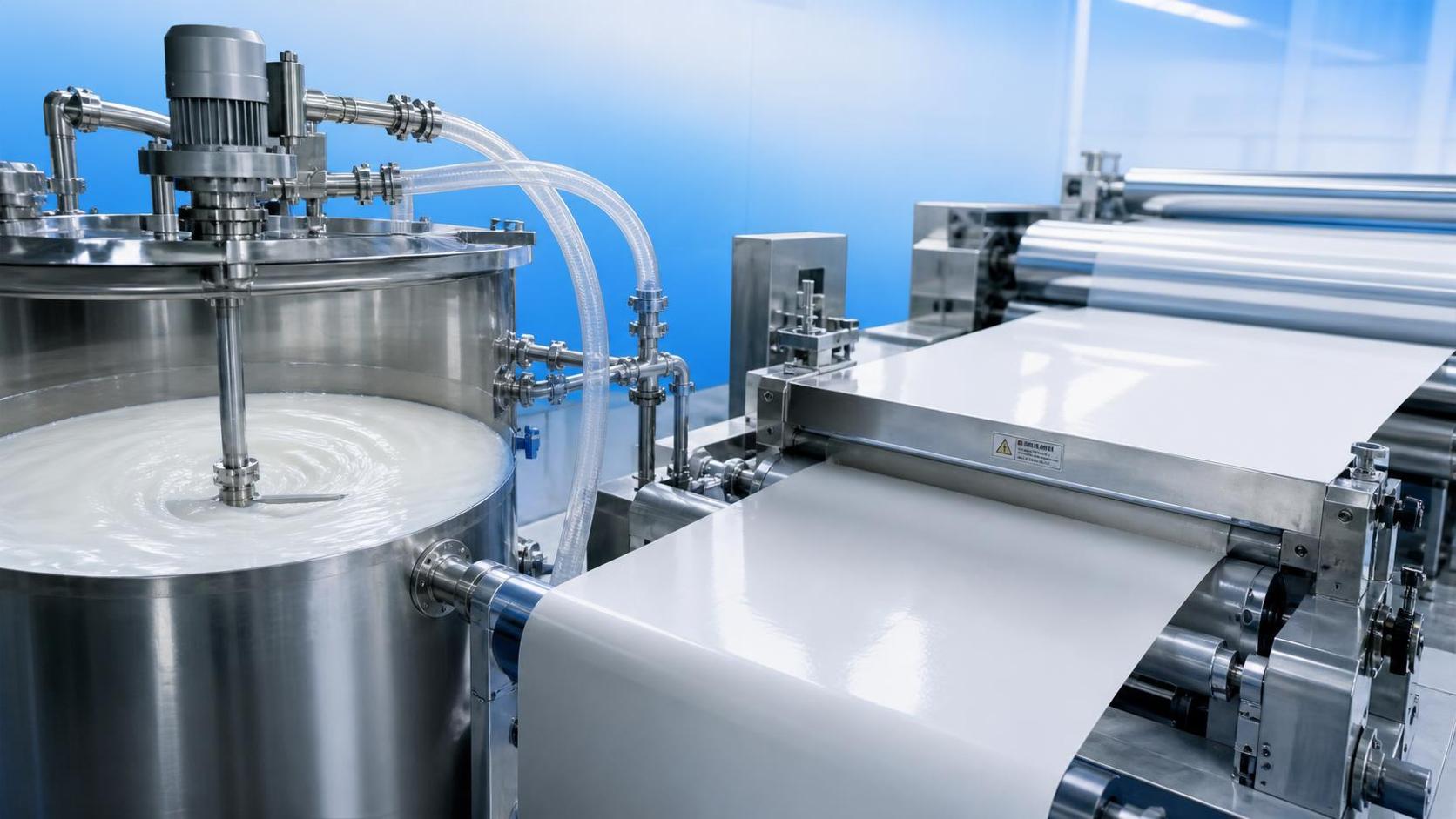
At the coater, a formulation can look acceptable in the make-down tank and still create trouble a few hours later. The viscosity may drift during circulation, the coating color may lose water too quickly on the base sheet, or the dried surface may show uneven pick resistance and weak print response. When a board grade is running at speed, these are not small laboratory observations. They can lead to more adjustment time, higher reject risk, inconsistent gloss, and uncertainty over whether the problem comes from the pigment, the binder, the water balance, or the paper itself.
A common reaction is to increase synthetic binder, add more thickener, or change the coating solids immediately. Those actions can sometimes mask a symptom, but they do not always address the reason the formulation became unstable. In many paper and board coating systems, the more useful question is whether the starch component has been selected and prepared for the real conditions of use. Modified starch is ideal for coating preparation when its viscosity behavior, film-forming contribution, compatibility, and handling profile are matched to the coating process rather than chosen only by dry price or nominal solids.
Start with the failure mode, not with a generic binder preference
Modified starch is used in coating colors because it can contribute adhesion between pigment particles and the paper or board surface while helping control the rheology of the system. Its practical value is not limited to “binding.” A suitable grade can influence water retention, color mobility, coating holdout, blade response, drying behavior, and the integrity of the dried coating layer.
However, starch is not a single, interchangeable material. Native starch, oxidized starch, enzyme-converted starch, cationic starch, hydroxyethylated starch, and other modified grades behave differently in water and under shear. A material that performs well in a packaging-board coating may not be appropriate for a lightweight coated paper, and a grade selected for size press use should not automatically be assumed to suit a high-solids blade-coating formulation.
Before reviewing supplier samples, it helps to describe the operating symptom in process language:
- Does viscosity rise after holding, pumping, or recirculation?
- Is the coating color difficult to meter at the blade or rod?
- Does the wet film penetrate too quickly into the base sheet?
- Is dry pick strength inadequate even though the binder level appears normal?
- Are gloss and ink receptivity changing between batches?
- Does the formulation become unstable after latex, dispersant, optical brightener, or other additives are introduced?
These observations point toward different root causes. For example, poor dry strength may be related to insufficient binder activity, poor dispersion, inadequate curing conditions, or a base sheet with highly variable absorbency. A viscosity problem may instead be connected to starch cooking, pH, solids, mixing order, microbial degradation, or excessive mechanical shear. Treating all of these issues by simply increasing starch dosage can create a different problem: high water demand, poor runnability, or a coating color that becomes too sensitive to temperature.
The properties that matter during coating-color preparation
When evaluating modified starch for a paper or board coating formulation, the first useful distinction is between dry-material specifications and in-use behavior. Moisture, appearance, and standard viscosity values remain important for incoming control, but they do not tell the full story. The coating kitchen needs to know how the starch hydrates, cooks, disperses, and performs after it is combined with pigment and other formulation components.
Controlled viscosity at the intended solids level
Coating colors are often prepared at solids levels that leave little room for unnecessary water. If a starch grade develops excessive viscosity during cooking or thickens unpredictably after cooling, the operator may need to dilute the batch. That can lower solids, affect drying demand, and alter application behavior. Conversely, a starch that is too low in viscosity may offer limited contribution to water retention or film integrity unless the rest of the formulation is changed.
The target is not the lowest possible viscosity. It is a stable, workable rheology at the actual solids, temperature, and shear conditions of the plant. Modified starch is ideal for coating preparation when it provides enough body to support coating structure without making pumping, screening, metering, or blade application difficult.
Adhesion without excessive brittleness
In a dry coating layer, the binder must help anchor pigment particles to one another and to the paper or board substrate. Starch can support this function effectively, especially when used with latex or another co-binder. But high binder strength alone is not sufficient. A coating that is overly rigid may crack, dust, or show poor converting performance when the board is folded, scored, or subjected to downstream stress.
For this reason, sample evaluation should include the properties that matter after drying: dry pick, wet rub where relevant, surface strength, folding response for board, print uniformity, and the visual condition of the coated surface. A laboratory drawdown is useful, but it should be compared with the expected plant drying profile. Starch film formation can be affected by drying rate and the way water leaves the coated web.
Compatibility with the complete formulation
Coating colors rarely contain only pigment, water, and starch. They may include calcium carbonate, clay, dispersants, defoamers, lubricants, insolubilizers, optical brighteners, dyes, preservatives, latex binders, and rheology modifiers. Each addition can change ionic balance, pH, foam behavior, and apparent viscosity.
A modified starch grade should therefore be evaluated after the full formulation is assembled, not only as a cooked starch solution. An apparently clear and stable starch cook may behave differently after pigment slurry is added. In particular, the addition sequence can matter. Adding a sensitive component into a concentrated starch phase may give a different result from introducing it after the pigment dispersion has been diluted and stabilized.
A practical way to narrow the selection
Instead of beginning with a broad request for “paper coating starch,” define the coating objective and operating window. A short internal specification is often more valuable than a long product list. It should identify the pigment system, target solids, application method, approximate pH range, desired viscosity range, drying conditions, board or paper grade, and whether starch will be the primary binder or only one part of a binder package.
Then compare candidate materials in stages. The first stage is a controlled cook. Use the intended water quality, heating profile, agitation level, and hold time as closely as possible. Record the time required for hydration and cooking, the visual uniformity of the solution, the viscosity after cooling, and the change after a realistic holding period. A sample that looks satisfactory immediately after preparation may not remain stable through a shift.
The second stage is a small coating-color blend. Introduce pigment, dispersant, and co-binder in the proposed production order. Observe pH response, foaming tendency, Brookfield or other relevant viscosity readings, high-shear behavior where available, and any evidence of flocculation. It is useful to inspect the mixture after rest and after recirculation simulation. This reveals whether the system is simply thick or whether it is structurally unstable.
The third stage is application-oriented testing. Apply the coating to the actual substrate or a representative base sheet. Assess coverage, leveling, penetration, blade streak tendency, drying response, and dried-surface properties. Where printing is important, compare print density, mottling tendency, ink setting, and surface uniformity under the same conditions. A binder decision should not rely on a single viscosity figure because coating performance is the result of several interacting mechanisms.
Preparation details that often decide the outcome
Even a suitable modified starch can underperform if the preparation routine is inconsistent. Water temperature, starch addition rate, agitation, cook time, and cooling all influence final behavior. Dumping powder too quickly into insufficiently agitated water can create fisheyes or partially hydrated particles. These may later appear as coating defects, screen residue, or unexplained viscosity variation.
Where the selected grade requires cooking, establish a repeatable sequence: charge water, begin agitation, add starch gradually, heat according to the grade’s recommended profile, maintain the required hold period, and cool or dilute in a controlled manner before blending with sensitive additives. Avoid assuming that a longer or hotter cook is always better. Excessive thermal exposure can reduce viscosity or alter film-forming behavior, while incomplete cooking can leave poor dispersion and variable binder performance.
pH should be checked at more than one point. The water source, pigment slurry, latex, and preservative system may each shift the final pH. If pH drifts after the starch is prepared, its viscosity and interaction with dispersants can change. In plants where batch-to-batch variation is occurring, retaining small reference samples of the cooked starch and final coating color can help separate a starch-preparation issue from a pigment or additive issue.
When starch is being blamed for the wrong problem
Some coating defects are associated with starch only because starch is the most visible change in the formulation. Before replacing it, check whether the base paper or board has changed in absorbency, roughness, moisture, or sizing level. A more porous base sheet can pull water from the coating faster and create an apparent binder problem. Likewise, a pigment batch with different particle-size distribution or dispersion demand can raise viscosity and weaken coating flow without any change in starch quality.
Microbial control also deserves attention in starch-containing systems. Starch can be susceptible to degradation in water-based processing if preservation and hygiene practices are inadequate. Unexpected viscosity loss, odor changes, or reduced storage stability should be investigated as process-control issues rather than automatically interpreted as an unsuitable modification level.
Material identification is another basic but important safeguard in chemical procurement. Similar-looking powders may belong to completely different product categories and storage requirements. For example, Metronidazole CAS#443-48-1 is a crystalline pharmaceutical substance with distinct handling and application information; it is not a paper-coating binder. Clear product names, CAS references where applicable, segregation, and documented receiving procedures reduce the risk of cross-category confusion in a broader chemical supply environment.
Building a more reliable approval routine
A useful approval routine does not need to be overly complicated, but it should connect purchasing requirements with production reality. Ask for product documentation that identifies the modification type, recommended preparation conditions, storage guidance, typical application range, and relevant quality-control items. Confirm packaging integrity and lot traceability on receipt. If the coating line is sensitive, retain enough approved material from each lot for comparison when a later process question arises.
For new or alternate sources, avoid changing several formulation variables at once. Keep pigment type, latex level, solids target, and application conditions as stable as possible during the initial comparison. If the trial requires a change in starch dosage, record both the dry-basis addition and the resulting total binder balance. Otherwise, an improvement in surface strength may be incorrectly attributed to the starch grade when it actually resulted from a higher total binder level.
Supply continuity matters as much as first-trial performance. A material that works in a laboratory evaluation but arrives with inconsistent viscosity, delayed documentation, or uncertain shipping conditions can create avoidable production risk. For export-oriented purchasing, communication around batch records, packing specifications, lead times, and storage conditions should be part of the technical review rather than treated as a separate administrative topic.
The most dependable choice is usually not the starch with the strongest single claimed property. It is the grade that can be prepared consistently, remains compatible with the full coating color, supports the required surface performance, and fits the practical limits of the coating kitchen and machine. When that evaluation is tied to a controlled preparation method, modified starch becomes a predictable working component instead of a recurring source of adjustment on the production floor.
Send Us Your Inquiry Today
