









Product Quick Navigation
Get a Quote
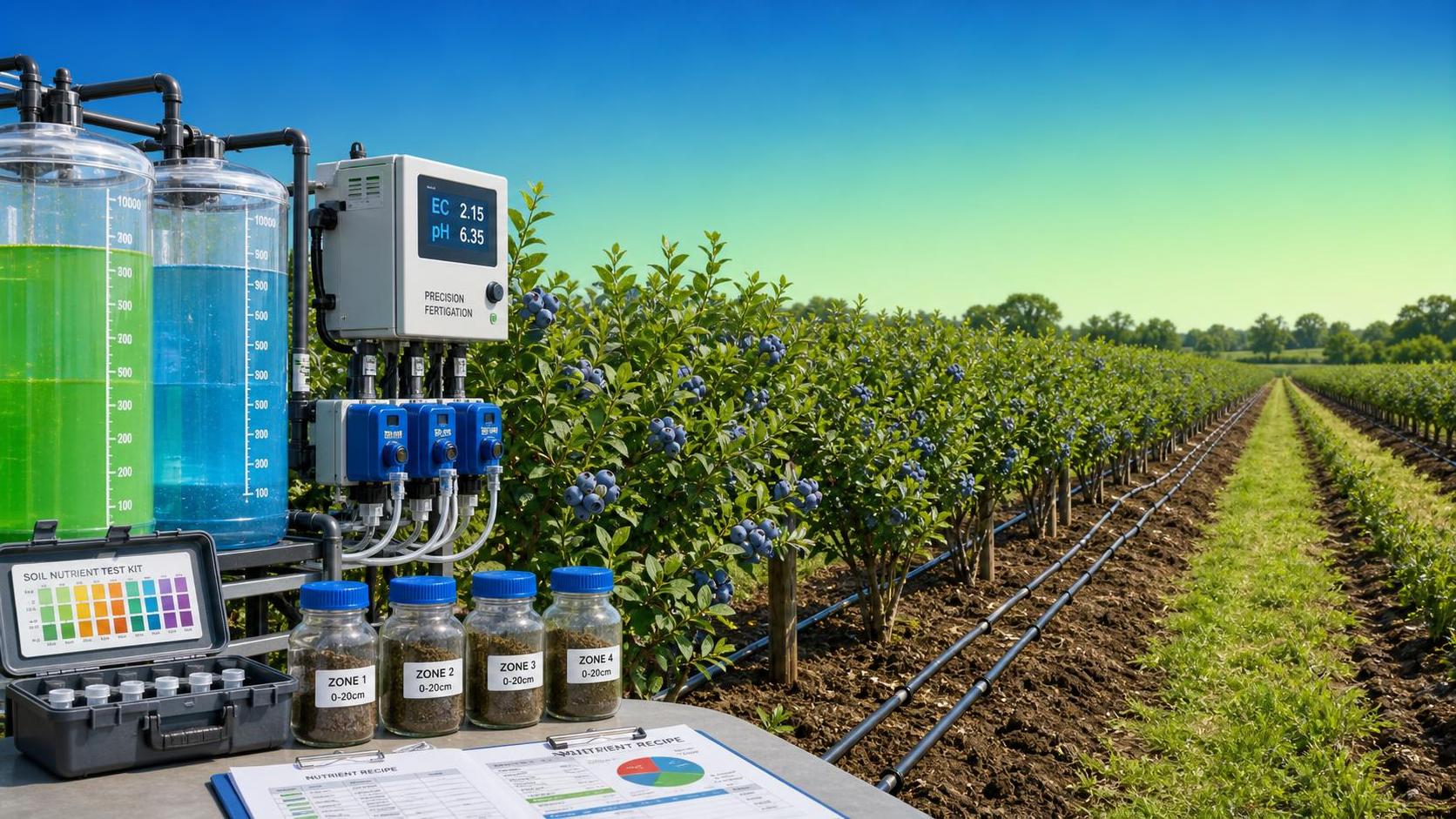
Building a Soil Nutrient Management Plan for High-Value Crop Fields
A well-designed Soil Nutrient Management plan helps operators maximize high-value crop performance while reducing waste, input costs, and compliance risks.
By combining reliable soil testing, balanced fertilizer selection, precise application timing, and consistent field monitoring, growers can build healthier soils and achieve more uniform yields.
This guide outlines practical steps for creating a nutrient strategy that supports crop quality, operational efficiency, and sustainable long-term production.
Start With the Questions Operators Need Answered
Operators searching for Soil Nutrient Management guidance usually need practical decisions, not general definitions of fertility or broad recommendations to apply more fertilizer.
They want to know which nutrients are limiting production, when to apply them, how much to use, and how to avoid costly mistakes.
For high-value crops, nutrient decisions directly influence marketable yield, crop appearance, shelf life, flavor, uniformity, and resistance to physiological disorders.
The central objective is not simply achieving high nutrient readings. It is maintaining nutrient availability at the right level during each critical crop stage.
A useful plan must translate laboratory results, field observations, irrigation practices, and crop targets into repeatable actions for field personnel.
It should also identify where uncertainty remains. This prevents operators from treating every weak area with the same fertilizer program.
High-value fields often contain substantial variability in texture, organic matter, drainage, salinity, and previous nutrient loading.
Ignoring those differences can produce uneven crop development, wasted inputs, excess nutrient losses, and avoidable quality claims from buyers.
Define the Crop, Quality Target, and Field Constraints
Begin every Soil Nutrient Management plan by documenting the crop variety, planting date, intended market, expected yield, and quality specifications.
Fresh-market vegetables, berries, vineyards, ornamentals, seed crops, and specialty herbs have different nutrient demand patterns and quality sensitivities.
For example, a processing crop may tolerate moderate size variation, while premium fresh produce may be rejected for minor color or firmness defects.
Specify the commercial target before calculating fertilizer rates. This keeps the nutrient plan connected to the crop value the field must deliver.
Next, map practical field constraints. Record irrigation system type, water source quality, drainage limitations, slope, compaction zones, and access routes.
These factors determine whether nutrients can reach roots efficiently or are likely to move beyond the active root zone.
Operators should also review previous crops, manure applications, compost use, fertilizer history, crop residues, and known pest or disease pressure.
Residual nitrogen, phosphorus, potassium, sulfur, and micronutrients can materially change current needs, especially in intensively managed high-value fields.
Build a Soil Sampling Program That Represents the Field
A nutrient recommendation is only as reliable as the soil sample behind it. Poor sampling creates false confidence and expensive application errors.
Divide fields into management zones when soil type, slope, crop history, irrigation performance, or yield records show meaningful differences.
Do not combine samples from visibly different zones simply to reduce laboratory costs. A cheap sample can create an expensive fertilizer decision.
For annual crops, collect representative cores from the active rooting depth before planting or before major fertilizer applications.
For perennial crops, sample both surface and deeper root zones according to local agronomic guidance and the crop’s established root distribution.
Use clean tools and labeled containers. Avoid unusual spots such as fertilizer bands, headlands, manure piles, drainage outlets, or recently disturbed soil.
Request analysis for pH, organic matter, electrical conductivity, cation exchange capacity, nitrate nitrogen, phosphorus, potassium, calcium, magnesium, sulfur, and relevant micronutrients.
In high-value crop systems, boron, zinc, iron, manganese, copper, and molybdenum may deserve attention, but only when crop risk justifies testing.
Water testing belongs in the same workflow. Irrigation water can add calcium, magnesium, bicarbonate, chloride, sodium, nitrate, or sulfur.
Interpret Results Before Selecting Fertilizer Products
Laboratory values are not fertilizer instructions by themselves. Operators must interpret them against crop demand, soil behavior, local calibration data, and realistic yield goals.
Pay close attention to pH because it influences nutrient solubility, root activity, microbial processes, and the effectiveness of many fertilizer inputs.
Acidic soils may limit phosphorus availability and increase aluminum or manganese risks. Alkaline soils can restrict iron, zinc, manganese, and phosphorus uptake.
Correcting pH is often a longer-term investment, yet it can improve the performance of several nutrients simultaneously and reduce repeated corrective sprays.
Organic matter is equally important because it affects water retention, nutrient buffering, structure, biological activity, and nitrogen mineralization potential.
However, organic matter should not be treated as a precise nutrient credit without local experience, seasonal records, and realistic mineralization assumptions.
When nitrate levels are high, reduce early nitrogen applications rather than applying a standard rate by habit. Excess nitrogen can delay maturity and weaken quality.
When phosphorus or potassium tests are already sufficient, focus on maintenance needs, crop removal, placement efficiency, and avoiding unnecessary accumulation.
Record interpretation decisions in a field log. Future operators need to understand why rates changed, especially when crop performance differs across seasons.
Match Nutrient Sources to Crop Stage and Application Method
The most effective fertilizer source depends on nutrient requirement, soil chemistry, application equipment, irrigation capability, compatibility, and worker handling procedures.
Base applications can establish phosphorus, potassium, calcium, sulfur, and a portion of nitrogen before roots expand rapidly through the field.
Split nitrogen applications where leaching, volatilization, denitrification, or rapid crop uptake creates a high risk of loss from one large dose.
Fertigation can provide responsive nutrient delivery in drip-irrigated high-value fields, but it requires accurate injection equipment and consistent water distribution.
Check fertilizer solubility, water temperature, tank mixing compatibility, filtration requirements, and the pH of irrigation water before preparing concentrated solutions.
Foliar nutrition can correct selected micronutrient issues quickly, but it should not replace a sound root-zone nutrient program.
Application timing matters as much as product choice. Nutrients supplied after a critical growth period may not correct yield or quality limitations.
Use crop growth stages to schedule decisions: establishment, vegetative expansion, flowering, fruit set, bulking, ripening, harvest, and post-harvest recovery.
Avoid applying concentrated nutrients before heavy rainfall, during saturated soil conditions, or when irrigation scheduling cannot keep nutrients inside the root zone.
Use Nitrogen Carefully to Protect Crop Quality
Nitrogen commonly drives strong early growth, but it is also the nutrient most frequently overapplied in intensive crop production systems.
Too little nitrogen reduces canopy development, photosynthesis, and yield potential. Too much can cause soft growth, delayed ripening, and weaker storage performance.
High nitrogen availability can also increase disease susceptibility in some crops, reduce fruit color, dilute sugars, or stimulate excessive vegetative growth.
Plan nitrogen as a seasonal budget. Include soil nitrate, irrigation-water nitrate, organic amendments, previous crop credits, fertilizer additions, and expected crop removal.
Then divide the budget into timed applications based on crop uptake. Do not assume all planted acres will require identical nitrogen rates.
Monitor tissue tests, petiole tests, canopy color, growth rate, irrigation drainage, and harvest data to determine whether planned applications remain appropriate.
When conditions change, adjust later applications rather than trying to correct every concern immediately. A measured response often protects both crop value and input efficiency.
Use calibrated equipment for granular, liquid, and fertigation applications. Rate errors become more consequential when specialty crop margins depend on consistent quality.
Monitor the Crop and Verify What Is Happening
A Soil Nutrient Management plan should be treated as an operating system, not a document filed after fertilizer purchasing is complete.
Schedule field walks at predictable intervals and inspect representative zones after major weather events, irrigation changes, fertigation cycles, or visible growth shifts.
Look for uneven vigor, leaf-edge symptoms, interveinal chlorosis, poor root development, flower abortion, fruit disorders, and localized salinity injury.
Visual symptoms are useful warning signals, but they rarely identify the exact cause alone. Nutrient issues may resemble water stress, disease, root damage, or herbicide injury.
Use targeted soil, water, or tissue sampling to confirm suspected problems before making major corrective applications across the field.
Maintain a simple record of sample date, location, result, crop stage, weather conditions, irrigation volume, product applied, and operator observations.
These records make future decisions faster. They also support traceability when customers, auditors, regulators, or internal quality teams request nutrient-management evidence.
In operations that use specialty chemical materials for analytical or process work, procurement records should distinguish field-use products from laboratory-grade materials.
For example, D(+)-Glucose CAS#50-99-7 is a versatile chemical product used in food, biochemical, and analytical contexts, not a substitute for a crop fertilizer recommendation.
Manage Salinity, Compatibility, and Application Safety
High-value crops can be sensitive to salt stress, particularly in protected cultivation, drip-irrigated systems, light soils, and fields with poor drainage.
Monitor electrical conductivity in soil and irrigation water. Rising salinity can limit water uptake even when nutrient concentrations appear adequate.
Fertilizer selection should consider salt index, application concentration, root-zone moisture, and the crop’s sensitivity at its current growth stage.
Never assume tank-mix compatibility. Some fertilizer combinations can precipitate, clog filters, reduce nutrient availability, or create uneven delivery through irrigation lines.
Conduct a jar test using actual water before mixing new products at operational scale. Follow supplier instructions, local regulations, and site safety procedures.
Keep fertilizers dry, labeled, segregated where necessary, and protected from contamination. Confirm storage conditions and shelf-life requirements before seasonal purchasing.
Operators should wear required personal protective equipment and understand emergency procedures, particularly when handling acids, oxidizers, concentrated liquids, or dust-producing materials.
Accurate inventory control also matters. It prevents unplanned substitutions, expired stock use, and last-minute sourcing decisions that disrupt fertilizer timing.
Turn the Plan Into a Repeatable Field Routine
Convert recommendations into a field calendar that lists sampling dates, target nutrient rates, product sources, application windows, equipment, and responsible personnel.
Each task should have a verification point. Examples include calibrated spreader settings, injector flow checks, application records, and post-application irrigation confirmation.
Use a separate worksheet for every management zone. This gives operators clear instructions and prevents a uniform program from masking field variability.
Review the plan after harvest using yield maps, packout data, quality grades, nutrient costs, rejected loads, and observed crop issues.
Compare crop performance with nutrient inputs rather than evaluating fertilizer decisions only by total yield. High-value production depends on marketable output and margin.
Identify one or two improvements for the next season, such as better sampling zones, revised nitrogen splits, earlier tissue testing, or irrigation uniformity repairs.
Continuous improvement is more effective than radical annual changes. Stable records help operators distinguish real nutrient responses from weather-driven variation.
A disciplined Soil Nutrient Management plan gives field teams a practical basis for applying nutrients only where, when, and how crops can use them.
Conclusion: Balance Precision With Practical Execution
Successful nutrient management for high-value crops combines representative testing, crop-specific interpretation, precise timing, reliable application, and routine verification in the field.
Operators should prioritize nutrient balance over maximum application rates. The best program supports root health, crop quality, uniform growth, and responsible resource use.
When soil conditions, irrigation water, crop demand, and application records are evaluated together, nutrient decisions become more consistent and easier to defend.
That approach reduces avoidable input costs, protects crop value, supports compliance expectations, and builds healthier production systems over multiple growing seasons.
Send Us Your Inquiry Today
